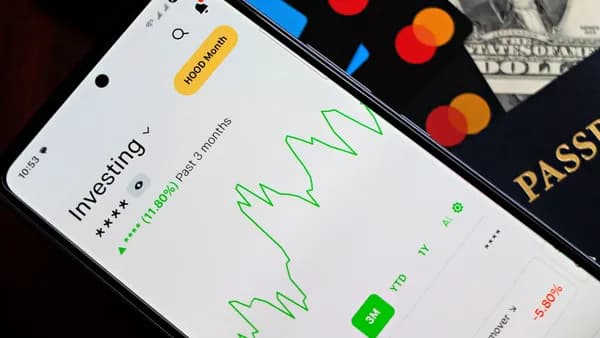
The dream of effortlessly saving money remains powerful, especially when finances feel tight. Yet, the simple act of dropping spare change into a jar has vanished in our digital world. Thankfully, a new breed of apps harnesses the same principle, automating the process of saving and investing your "spare change" from everyday purchases. These best round-up savings apps turn small, almost invisible amounts of money into a powerful engine for building savings or an investment portfolio over time. The key is finding the platform whose automation, features, and fee structure best align with your financial personality and goals.
The Psychology of 'Spare Change' Investing
Why are round-up apps so effective? The research points to powerful psychological principles that make saving feel effortless. At their core, these apps transform saving from an act of discipline into a passive byproduct of your daily life.
First, they require just one easy decision. Once you connect your accounts and activate the round-up feature, the system runs continuously in the background. This overcomes "status quo bias", the human tendency to stick with the default setting. By making automated saving the new default, the app does the heavy lifting.
Second, the amounts are small and therefore less intimidating. The research notes that trying to save hundreds of dollars a month can feel daunting. In contrast, rounding up a $3.75 coffee purchase by $0.25 is a trivial amount you're unlikely to miss. As one source describes, it's a "little and often" approach that feels manageable.
The round-ups don’t require us to make decisions each day, week or month. They happen behind the scenes, even if we forgot all about them.
Finally, this micro-saving can lead to macro results. One cited study found that saving even $100 had a profound effect on financial well-being. With the power of compounding, these small, automated deposits can grow significantly over time. For example, the data notes that investing just $50 a month over a working career could grow to over $400,000 at a hypothetical 10% annual return. While returns are never guaranteed, the principle is powerful: consistent, automated saving, even in tiny amounts, can accumulate into meaningful wealth.
Core Mechanics: How Round-Up and Automation Work
The basic function of these apps is elegantly simple, reviving the digital equivalent of the old-fashioned coin jar. You connect your checking account and the debit or credit cards you use for daily spending to the app of your choice.
When you make a purchase, say, $4.25 for lunch, the app calculates the "round-up" to the nearest dollar. In this case, it's $0.75. This amount is logged in your app account. Once your total round-ups reach a predetermined threshold (commonly $5 or more, according to the sources), the app automatically transfers that sum from your linked checking account into your designated savings or investment account within the app's ecosystem.
This is the foundational "Round-Up Rule." However, the most versatile apps, based on the research, go far beyond this single trigger. They employ additional automation rules to accelerate savings:
- Set & Forget: Automatically transfer a fixed amount to savings every week or month.
- Payday Rule: Automatically allocate a portion of each paycheck to savings as soon as it's deposited.
- Spending Rule: Save the difference when you spend less than a preset budget for a category like groceries or coffee.
- 52-Weck Challenge: Save $1 in week one, $2 in week two, and so on, building the habit.
These varied rules allow users to tailor the savings engine to their unique cash flow and goals, moving beyond only relying on their spending frequency to generate savings.
Acorns Review: From Round-Ups to Retirement (Acorns Later)
Acorns is consistently highlighted in the research as a pioneer and leader in the round-up investing space, noted for having over 9 million clients. It’s designed for users who want a completely hands-off investment experience, where professionals handle portfolio construction and rebalancing.
How it Works: Acorns operates on the classic round-up model. You link your cards, and it rounds up purchases, investing the spare change once the balance reaches $5. You can also set up recurring daily, weekly, or monthly investments. Your funds are invested into one of several pre-configured, globally diversified portfolios of low-cost ETFs (Exchange-Traded Funds). Portfolios range from conservative (100% bonds) to aggressive (100% stocks), and socially responsible options are also available, according to the source data.
Key Features & Pricing:
- Acorns Personal: Costs $3 per month. This tier includes the core Invest account (round-ups and recurring investments), an FDIC-insured checking account (Acorns Spend) with a debit card and fee-free ATMs, and a metal debit card option. Notably, the checking account does not pay interest.
- Acorns Family: Costs $5 per month. This plan includes everything in Personal plus investment accounts for kids (Acorns Early), making it a contender for families seeking a unified platform.
The Bottom Line on Acorns: Acorns is ideal for the beginner or passive saver who wants to start investing with minimal effort and decision-making. Its strength is simplicity and all-in-one banking integration. The monthly fee is a fixed cost, which can be a significant percentage of small balances but becomes more negligible as your account grows.
Oportun (formerly Digit) Analysis: AI-Powered Saving Goals
Oportun (known until recently as Digit) takes a different, goal-oriented approach. Instead of focusing on round-ups from purchases, it uses an algorithm to analyze your linked checking account's income and spending habits. The app then determines small, "safe-to-save" amounts it can automatically transfer to your Oportun savings account without causing an overdraft.
How it Works: Based on the research, you set specific savings goals within the app (e.g., "$500 for Vacation"). Oportun's AI then makes automatic transfers, typically every few days, moving money from your checking to your Oportun goal account. The sources indicate these transfers are designed to be small and frequent, based on your unique cash flow. The data mentions it was free for the first 100 days, with a subsequent fee of $2.99 per month.
Tilt (formerly Empower) is a great app that helps you save money because it uses AI to analyze your income and expenses, then automatically moves money into savings when your budget allows.
Key Differentiator: Oportun's core proposition is "artificial intelligence" saving. It doesn't require you to spend money to save; instead, it proactively finds surplus funds in your checking account. This is beneficial for those with variable incomes or who want to save aggressively without manual intervention. The savings are held in an FDIC-insured account, but the research available at the time of writing does not specify if it earns interest.
The Bottom Line on Oportun: This app is best for goal-focused savers who want an aggressive, automated system that analyzes their finances and saves for them. It’s less about "spare change" and more about intelligent, automated cash-flow management. The monthly fee is a consideration against the value of its automated savings finds.
Qapital Deep Dive: Rules-Based Saving and Spending
Qapital stands out for its highly customizable and creative "Rules," offering users unparalleled control over their automated savings triggers. It's positioned as a premier micro-investing and savings app that turns financial behaviors into savings opportunities.
How it Works: While Qapital offers a standard Round-Up Rule, its real power lies in its other behavioral triggers, as detailed in the sources:
- Spend Less Rule: Set a weekly budget for a category (e.g., $20 for coffee). If you only spend $15, the $5 difference is saved automatically.
- Guilty Pleasure Rule: Set a rule where you save a set amount every time you make a purchase at a specific retailer you designate.
- Freelancer Rule: For independent contractors, automatically set aside a percentage of large deposits (over $100) for estimated taxes.
- Apple Health Rule: Save a set amount each time you complete a fitness activity like a walk or run.
Savings can be directed to FDIC-insured spending goals or invested in one of Qapital's diversified ETF portfolios, which are tailored based on your goal timeline and risk tolerance.
Pricing & Structure: Sources show Qapital offers a tiered subscription model:
- Basic: Includes customizable Savings Rules and Goal-setting. (Pricing not explicitly detailed in sources).
- Complete: Adds Qapital Investing and a Visa® Debit Card. (Pricing not explicitly detailed in sources).
- Premium: Includes all features plus advanced money insights and priority support. (Pricing not explicitly detailed in sources).
Other sources indicate plans range from $3 to $12 a month, with a $1 per month fee specifically for investing balances under $5,000.
The Bottom Line on Qapital: Qapital is perfect for the user who loves customization, gamification, and using specific financial behaviors to fuel savings. It’s more hands-on than Acorns in setting rules but can lead to more personalized and potentially faster savings growth.
Fee Structures Unveiled: Monthly Subscriptions vs. AUM Fees
Understanding the cost is critical, as the research emphasizes that "it’s pointless to use them if the fees eat all your savings." The round-up app landscape primarily uses recurring subscription fees, not asset-based percentages.
| Fee Model | How It Works | App Examples (from sources) | Key Consideration |
|---|---|---|---|
| Monthly Subscription | A fixed monthly fee, regardless of your account balance. | Acorns ($3/$5), Qapital ($3-$12), formerly Digit ($2.99) | Can be a high percentage of small balances but becomes negligible as your account grows. |
| Free with Interest/Yield | No monthly fee; the company generates revenue elsewhere (e.g., interchange fees). Often paired with interest-earning accounts. | Chime, Current, Dave | Best for preserving all your savings growth, especially when starting out. |
| Tiered Subscriptions | Multiple service levels with increasing features and costs. | Qapital (Basic, Complete, Premium), Greenlight (for families) | Allows you to pay only for the features you need. |
The research clearly flags that all apps on credible lists cost under $10 per month, even for premium plans. It also highlights that Chime and Worthy Bonds are noted as being 100% free to use with no monthly fees. When choosing, consider how the fixed monthly fee compares to your expected monthly savings or investment gains.
Investment Portfolios: Underlying ETFs and Risk Levels
For apps that invest your money, the underlying assets matter greatly. The research uniformly indicates that the investment-focused apps (Acorns, Qapital, and others like Stash) use low-cost, diversified ETFs (Exchange-Traded Funds) to build their portfolios.
- Acorns offers pre-configured portfolios ranging from conservative (100% bonds) to aggressive (100% stocks), including socially responsible options. The app handles all rebalancing and allocation.
- Qapital's investment portfolios are also built with ETFs and are designed based on your goal's time horizon and risk questionnaire.
- Comparison: The research directly compares Acorns and Stash: "If you’re interested in building and managing your own investment portfolio of individual stocks and ETFs, Stash is the way to go. If you’d rather let the pros handle the investment decisions and rebalancing efforts, Acorns is your best bet."
Risk Management is a key metric in the source analysis. It states that "every investment-focused app on this list offers highly diversified stock and bond ETFs to help keep risks at bay." This diversification across hundreds or thousands of securities is the primary risk mitigation strategy for these automated platforms.
Additional Features: Found Money, Cashback, and Banking
Many apps bundle features to create a more comprehensive financial ecosystem, adding value beyond the core round-up mechanic.
Banking Features: Several apps offer integrated banking to keep your money in one place. Acorns Spend provides an FDIC-insured checking account with a debit card. Chime is fundamentally a neobank with checking and savings accounts, noted for features like getting paid up to two days early with direct deposit and fee-free overdraft protection up to $200 for eligible members. These features are particularly highlighted as beneficial for the underbanked.
Cashback & Rewards: Some platforms offer spending incentives. The research mentions Greenlight offers kids 1% cash back on all purchases. Chime has a credit-builder secured card with no annual fee. While "Found Money" partnerships (cashback for shopping at specific retailers) are a known feature in the space, the specific sources provided did not detail them for the apps being compared.
Family/Custodial Accounts: For those with children, this is a major differentiator. Acorns Family ($5/mo) includes custodial accounts. Greenlight, priced between $4.99 and $9.98 per month for up to five kids, is repeatedly cited as the best round-up app for kids, combining debit cards, parental controls, investing, and savings boosts like round-ups and interest.
Withdrawals and Liquidity: How Easy Is It to Access Funds?
Accessing your money is a practical concern. The process and speed vary between savings and investment accounts.
Savings-Focused Apps (e.g., Chime, Oportun, Qapital Spending Goals): Funds held in FDIC-insured savings or spending goal accounts are typically highly liquid. You can transfer them back to an external bank account, which usually takes 1-3 business days, or spend them directly if the app provides a debit card.
Investment-Focused Apps (e.g., Acorns Invest, Qapital Invest): Accessing invested funds requires selling ETF shares. This process is not instantaneous. Once you initiate a withdrawal, the sale of securities must settle, which typically takes two business days (T+2), before the cash can be sent to your linked bank account. The entire process can take 3-6 business days. It’s crucial to remember that investments are not FDIC-insured and may lose value.
Investment products and services provided by Stash Investments LLC and are Not FDIC Insured, Not Bank Guaranteed, and May Lose Value.
Choosing Your App: Aligning Features with Financial Habits
Selecting the best round-up savings app depends on your primary goal and financial personality. Use this guide based on the researched data:
| Your Primary Goal & Habit | Recommended App (from sources) | Why It’s a Fit |
|---|---|---|
| Hands-Off Investor who wants to start investing without any decisions. | Acorns | Pre-built portfolios, full automation, and integrated banking make it the simplest start. |
| Goal-Oriented Saver who wants AI to find extra money in their cash flow. | Oportun (Digit) | Its algorithm saves for you based on your income/spending patterns, independent of your purchases. |
| Customizer & Gamifier who enjoys rules and behavioral triggers. | Qapital | Extensive "Rules" (Spend Less, Guilty Pleasure, etc.) let you save based on your specific habits. |
| High-Yield Saver seeking a free app with strong interest rates. | Chime or Dave | Chime offers up to 3.75% APY; Dave offers 4.00% APY on savings goals. Both are free with automation features. |
| Parent looking to teach kids about money with controls. | Greenlight | Designed specifically for families with parental controls, custodial investing, and savings features for kids. |
| Someone Avoiding Fees above all else. | Chime | Repeatedly cited as a top free option with no monthly fees and useful banking features. |
FAQ
What is the best round-up app for saving money (not investing)? Based on the research, Chime is frequently highlighted as the top pick for pure savings. It's free, offers a competitive interest rate (up to 3.75% APY for qualifying accounts), and includes round-ups and automatic paycheck transfers to help build savings quickly.
What is the best round-up app for kids? The hands-down best app for kids, according to multiple sources, is Greenlight. It is specifically designed to give children financial independence with robust parental controls and combines a debit card for kids with savings features like round-ups, cash back, and even custodial investing in its higher-tier plans.
Do round-up savings apps really work? Yes, but their effectiveness depends on you. The research is clear: round-ups are a great way to kick-start savings, but if you don't spend frequently, they won't generate large balances. For meaningful growth, you should combine round-ups with other automated features like scheduled transfers or use an app with multiple savings triggers like Qapital or Oportun.
Which is better: Acorns or Stash? This depends on your desired involvement. The source data states that if you want to build and manage your own portfolio of individual stocks and ETFs, choose Stash. If you prefer to let professionals handle investment decisions and portfolio rebalancing automatically, Acorns is your best bet.
How much can I realistically save with these apps? Estimates from the research suggest users save an average of $30 to $50 per month through round-ups and automation. This translates to $360 to $600 per year, purely from spare change. When combined with other rules and the power of compound interest or investment growth, the potential long-term impact is significant.
Bottom Line
The best round-up savings apps successfully modernize the piggy bank by automating the process and integrating smart investing. Your choice should hinge on your primary objective: straightforward investing (Acorns), intelligent cash-flow saving (Oportun), highly customizable goal-setting (Qapital), or fee-free high-yield savings (Chime). Crucially, all recommended apps use low-cost, diversified ETFs for investing and charge under $10 per month where fees apply. The most effective strategy is to select an app whose automation style matches your financial habits, ensuring you stick with it long enough for your "digital spare change" to compound into substantial savings.