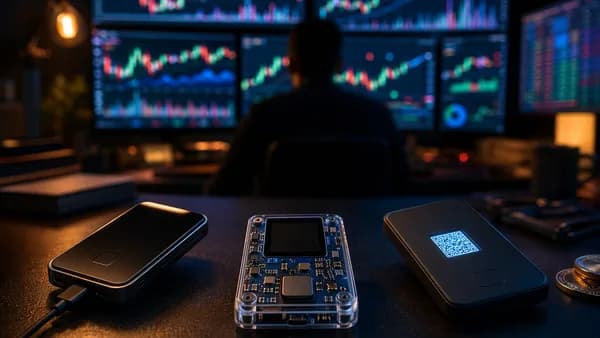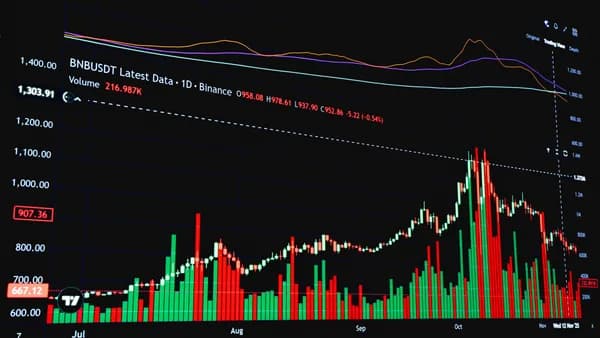
For traders searching for crypto exchanges for self custody, the goal is usually simple: buy or trade on a centralized exchange, then withdraw to a wallet where you control the private keys — often a Ledger, Trezor, MetaMask, Trust Wallet, or another non-custodial setup. The challenge is that exchange convenience and self-custody control sit on opposite sides of the crypto ownership model.
XOOMAR Intelligence
Analyst Take
This guide compares exchange choice through a self-custody lens: withdrawal paths, supported networks, limits, hardware wallet compatibility, and security controls. The available source data does not provide live withdrawal fee schedules for Coinbase, Binance, Kraken, KuCoin, or other exchanges, so this article avoids unsupported fee rankings and instead gives you a practical decision framework grounded in the documented risks, wallet compatibility, and custody trade-offs.
1. What Self-Custody Traders Need From a Crypto Exchange
A self-custody trader does not use a centralized exchange as a long-term wallet. They use it as an on-ramp, trading venue, or liquidity source — then move funds to a non-custodial wallet where they control the private keys.
Sources consistently define the core difference this way:
| Custody Model | Who Controls Private Keys? | Main Benefit | Main Trade-Off |
|---|---|---|---|
| Custodial exchange account | Exchange or service provider | Convenience, trading access, account recovery | Counterparty risk, possible withdrawal restrictions |
| Self-custody wallet | User | Full control, no third-party key access | User is responsible for seed phrase and recovery |
| Hardware wallet | User, with keys isolated on device | Strong cold-storage security | Requires careful physical and backup management |
According to Trust Wallet’s guide, centralized exchanges such as Binance, Coinbase, and Kraken operate as custodial platforms: the platform controls the private keys while users access balances through an account. Cobo’s guide makes the same distinction, describing exchanges like Coinbase, Binance, and Kraken as custodial services where assets remain in exchange-controlled wallets until withdrawal.
Key insight: For self-custody traders, the “best exchange” is not necessarily the one with the most features. It is the one that lets you reliably buy, trade, and withdraw to your own wallet using the network you actually intend to hold.
A good self-custody-friendly exchange should support:
- Direct Withdrawals: You need the ability to send crypto to an external wallet address you control.
- Relevant Networks: Bitcoin to a Bitcoin wallet, ETH to Ethereum, tokens to the correct EVM or non-EVM network.
- Clear Limits: Withdrawal limits should be visible before you deposit or trade.
- Security Controls: Account protection matters because attackers often target exchange accounts before funds reach cold storage.
- Predictable Process: The withdrawal workflow should be easy enough to repeat safely.
Self-custody is not risk-free. Bitcoin.com notes that if you lose both your wallet and seed phrase, there is no recovery service. A Reddit discussion on cold storage also highlights the emotional and operational risk: some users prefer cold storage because they control the risk factors, while others worry about losing keys, being scammed, or mishandling backups.
That means the right exchange is only one part of the system. The other part is your wallet process.
2. Key Comparison Criteria: Withdrawal Fees, Networks, Limits, and Security
When evaluating crypto exchanges for self custody, the most important comparison points are not the same as for day traders who keep balances on-platform.
For self-custody users, the withdrawal experience is the product.
Withdrawal Fees
The provided source data does not include current withdrawal fee schedules for Coinbase, Binance, Kraken, KuCoin, or other exchanges. That matters because crypto withdrawal fees can change by asset, network, congestion, and exchange policy.
So instead of claiming a cheapest exchange, use this checklist before buying:
- Fee Visibility: Can you see the withdrawal fee before confirming?
- Asset-Specific Fee: Is the fee different for BTC, ETH, stablecoins, or tokens?
- Network-Specific Fee: Does the platform charge differently across Ethereum, Bitcoin, Solana, Polygon, or other supported networks?
- Minimum Withdrawal: Is there a minimum amount that makes small withdrawals uneconomical?
- Test Withdrawal Cost: Is the fee low enough to justify a small test transaction?
Critical warning: Do not assume that the lowest trading fee equals the lowest self-custody cost. For hardware wallet users, the combined cost of trading, network selection, minimum withdrawal size, and withdrawal fee matters more.
Withdrawal Networks
Network support is central to self-custody safety. A hardware wallet is not “compatible” with an exchange in the same way a browser extension connects to a dApp. In most cases, compatibility means the exchange can withdraw on the same blockchain network as the address generated by your wallet.
For example, source data confirms:
| Wallet / Tool | Supported Assets or Networks Mentioned | Self-Custody Use Case |
|---|---|---|
| Ledger Nano X | BTC, ETH, 5,000+ or 5,500+ cryptocurrencies depending on source wording | Cold storage and mobile portfolio management |
| Trezor Model T | BTC, LTC, ERC-20 | High-level security and backups |
| MetaMask | Ethereum and EVM-compatible networks such as BNB Chain and Polygon | Ethereum, DeFi, dApps, browser/mobile wallet |
| Trust Wallet | Millions of digital assets across 100+ blockchains | Multi-chain mobile self-custody |
| Phantom | Solana, Ethereum, Polygon, Base, Bitcoin | Multi-network wallet with staking, swaps, NFT tools |
The practical rule: your exchange withdrawal network must match the receiving wallet address and asset type.
Withdrawal Limits
Bitcoin.com contrasts self-custodial wallets with custodial wallets by noting that self-custody gives full access anytime, while custodial wallets are subject to exchange policies and limited withdrawals may apply. Trust Wallet also points to risks such as frozen withdrawals, maintenance downtime, and access restrictions.
At the exchange level, check:
- Daily Withdrawal Limit: How much can you withdraw after verification?
- New Account Limits: Are withdrawals restricted for new users?
- Security Hold Rules: Does changing passwords, devices, or security settings trigger a hold?
- Fiat Deposit Holds: Are crypto withdrawals delayed after bank deposits or card purchases?
- Jurisdiction Limits: Are users in your location subject to restrictions?
The sources do not provide current limit numbers by exchange, so these should be verified directly before using any platform.
Security Controls
Security is not optional, even if your plan is to withdraw quickly. Exchange accounts can still be compromised before withdrawal.
From the source data, relevant controls include:
- 2FA: Bitcoin.com and KuCoin’s wallet guide both cite two-factor authentication as a security measure to look for.
- Biometric Locks: KuCoin’s wallet guide mentions Face ID or fingerprint-style biometric protection for wallets.
- Encryption: KuCoin’s wallet guide highlights encryption and secure local key storage in self-custodial wallets.
- Hardware Wallet Support: MetaMask can integrate with Ledger or Trezor, and Phantom supports Ledger integration.
- Seed Phrase Backups: Bitcoin.com emphasizes securely storing a 12- or 24-word seed phrase.
Address whitelisting, passkeys, and withdrawal holds are important exchange-side controls, but the provided source data does not verify which exchanges offer them at the time of writing. Treat them as features to confirm directly on the platform before funding an account.
3. Best Overall Exchanges for Frequent Hardware Wallet Withdrawals
The source data mentions Coinbase, Binance, Kraken, and KuCoin, but it does not provide verified withdrawal fees, network lists, daily limits, or address-whitelisting details for those exchanges. Because of that, a responsible comparison cannot declare one of them the “best overall” for frequent hardware wallet withdrawals based on fees.
Instead, the best overall exchange for a hardware wallet user is the one that meets all of these requirements:
Supports Direct External Withdrawals
Some platforms may make buying easy but vary in whether, how, or when they allow direct withdrawals. A self-custody trader needs direct withdrawal to a wallet address.Supports Your Exact Holding Network
If your Ledger or Trezor setup is for BTC cold storage, the exchange must support Bitcoin withdrawals. If you use MetaMask with Ethereum or EVM-compatible chains, the exchange withdrawal network must match your receiving chain.Shows Fees Before Confirmation
Since no source data gives live fees, the best practical standard is transparency at the withdrawal screen.Allows Repeatable Small Withdrawals
Frequent hardware wallet users often prefer smaller, regular withdrawals. Minimum withdrawal amounts and fixed withdrawal fees can make this expensive.Has Strong Account Security
Even short-term exchange balances are exposed to account takeover risk, phishing, and platform controls.
Best overall rule: Choose the exchange that minimizes the time and amount of funds kept in custody while giving you reliable withdrawal access to the networks your hardware wallet supports.
For frequent withdrawals, the exchange should function like a bridge — not a vault.
4. Best Exchanges for Low-Cost Bitcoin and Ethereum Withdrawals
The available research does not include live BTC or ETH withdrawal fees for any exchange. That means this section cannot honestly rank Coinbase, Binance, Kraken, or KuCoin from cheapest to most expensive.
What the data does support is a low-cost selection method.
How to Evaluate Bitcoin Withdrawal Cost
For BTC self-custody, check the exchange’s:
- BTC Withdrawal Fee: Is it fixed or dynamic?
- Minimum BTC Withdrawal: Does it make small withdrawals impractical?
- Native Bitcoin Support: Are you withdrawing real BTC on the Bitcoin network?
- Confirmation Estimate: Does the exchange show expected timing?
- Address Format Compatibility: Does your wallet support the address format you are using?
Bitcoin.com lists Ledger Nano X and Trezor Model T as self-custodial wallet options for Bitcoin storage, while Cobo identifies hardware wallets like Ledger and Trezor as suitable for long-term storage of significant personal holdings.
How to Evaluate Ethereum Withdrawal Cost
For ETH and ERC-20 assets, fees often depend heavily on network choice. Source data confirms that MetaMask supports Ethereum and EVM-compatible networks, including BNB Chain and Polygon, while Ledger Live supports managing thousands of assets.
Before withdrawing ETH or tokens:
- Confirm the Chain: Ethereum mainnet is not the same as Polygon, BNB Chain, Base, or another EVM chain.
- Confirm Wallet Support: MetaMask can manage Ethereum and EVM-compatible assets; hardware wallets can be used with MetaMask for additional security.
- Confirm Token Support: Some wallets support the network but may require manually adding token details.
- Send a Test Transaction: Especially when using a new chain or token.
| Asset Type | Wallets Mentioned in Sources | Cost-Sensitive Withdrawal Consideration |
|---|---|---|
| Bitcoin / BTC | Ledger Nano X, Trezor Model T, Bitcoin.com Wallet, Trust Wallet, Phantom | Verify native BTC withdrawal fee and minimum |
| Ethereum / ETH | Ledger Nano X, MetaMask, Trust Wallet, Bitcoin.com Wallet, Phantom | Confirm Ethereum mainnet vs EVM alternative |
| ERC-20 Tokens | MetaMask, Trezor Model T, Ledger Nano X | Confirm token contract and destination network |
| Multi-chain assets | Trust Wallet, Phantom, Ledger Nano X | Match exchange network to wallet network |
The safest low-cost strategy is not always the cheapest single withdrawal. It is the cheapest process that does not create a network mismatch or recovery problem.
5. Best Exchanges for Multi-Chain Traders Using Ledger or Trezor
Multi-chain traders need more than a cheap withdrawal fee. They need wallet and network coverage that matches how they use crypto across Bitcoin, Ethereum, EVM chains, Solana, DeFi, and NFTs.
The strongest source-backed wallet ecosystem for multi-chain self-custody includes:
| Self-Custody Tool | Source-Backed Strength | Hardware Wallet Notes |
|---|---|---|
| Ledger Nano X | Manages over 5,500 cryptocurrencies through Ledger Live according to KuCoin’s wallet guide | Hardware wallet for cold storage; Bluetooth and rechargeable battery mentioned |
| Trezor Model T | Supports BTC, LTC, ERC-20 according to Bitcoin.com | Hardware wallet with high-level security and backups |
| MetaMask | Ethereum and EVM-compatible chains such as BNB Chain and Polygon | Can integrate with Ledger or Trezor |
| Trust Wallet | Supports millions of digital assets across 100+ blockchains | Non-custodial multi-chain wallet |
| Phantom | Supports Solana, Ethereum, Polygon, Base, and Bitcoin | Supports Ledger integration |
For traders using Ledger or Trezor, the exchange should be selected based on the chains you actually withdraw to.
Multi-Chain Exchange Selection Checklist
- Bitcoin Holder: Confirm native BTC withdrawal to your hardware wallet address.
- Ethereum / DeFi User: Confirm ETH and ERC-20 withdrawals on the intended network.
- EVM Multi-Chain User: Confirm support for the same EVM networks you use in MetaMask.
- Solana User: Confirm Solana withdrawals if using Phantom.
- NFT User: Confirm the wallet can display or manage NFTs on the relevant chain.
- Stablecoin User: Confirm which networks the stablecoin is available on before sending.
Cobo’s guide notes that software wallets are often best for smaller holdings or frequent DeFi interactions, while hardware wallets are best suited for long-term storage of significant personal holdings. That suggests many multi-chain users may need both: a hardware wallet for cold storage and a software wallet interface for interacting with networks.
6. Security Features to Look For: Address Whitelisting, 2FA, Passkeys, and Withdrawal Holds
Security matters most during the short window when funds are on the exchange and during the transfer to self-custody.
The provided sources verify several security concepts, but not every exchange-specific feature.
| Security Feature | Confirmed in Source Data? | Practical Use for Self-Custody Traders |
|---|---|---|
| 2FA | Yes, discussed as a wallet/security measure | Protects account or wallet access |
| Biometric locks | Yes, discussed for wallets | Adds local device protection |
| Encryption | Yes, discussed for wallets | Protects locally stored keys |
| Hardware wallet integration | Yes, MetaMask with Ledger/Trezor; Phantom with Ledger | Keeps private keys isolated |
| Seed phrase backup | Yes, 12- or 24-word recovery phrase discussed | Required for recovery |
| Address whitelisting | Not verified by provided exchange sources | Check directly before using an exchange |
| Passkeys | Not verified by provided exchange sources | Check directly before using an exchange |
| Withdrawal holds | Platform restrictions and frozen withdrawals are discussed generally | Confirm policy before depositing |
Why Exchange Security Still Matters
Trust Wallet’s guide warns that exchange accounts expose users to platform risks, including hacks, frozen withdrawals, and business failures. Cobo similarly notes that if a custodian is hacked, becomes insolvent, or restricts access, users may have limited recourse.
A Reddit discussion adds a practical user perspective: some participants prefer cold storage because they control the risk factors, while others point out that cold storage introduces its own risks, including lost keys, poor backups, social engineering, and anxiety around transfers.
What to Enable Before Funding an Exchange
- 2FA: Use strong two-factor authentication where available.
- Withdrawal Protections: If the exchange supports withdrawal allowlists or address whitelisting, consider using them.
- Device Security: Use a clean device and avoid public Wi-Fi for withdrawals.
- Account Alerts: Enable alerts for logins, withdrawals, and security changes if available.
- Small Test Withdrawal: Test the path before sending a larger amount.
Important limitation: The source data does not confirm which named exchanges currently support address whitelisting, passkeys, or specific withdrawal hold policies. Verify these features directly in your exchange account before relying on them.
7. Common Withdrawal Mistakes When Moving Funds to a Hardware Wallet
Moving funds from an exchange to a hardware wallet is straightforward only when the asset, network, and address all match. Most mistakes happen when users rush.
1. Sending on the Wrong Network
This is one of the biggest risks for multi-chain users. ETH on Ethereum, ETH on an EVM sidechain, and wrapped assets are not interchangeable without proper bridging or support.
Avoid it by: Matching the exchange withdrawal network to the exact wallet network.
2. Skipping the Test Transaction
A small test withdrawal may cost extra, but it can prevent a much larger mistake.
Avoid it by: Sending a small amount first, confirming receipt, then sending the rest.
3. Confusing Exchange Custody With Ownership
Trust Wallet and Cobo both emphasize that when assets are held in an exchange account, the platform controls the private keys. You can trade and request withdrawals, but you do not directly control the keys until funds arrive in your self-custody wallet.
Avoid it by: Treating the exchange as temporary infrastructure, not long-term storage.
4. Mishandling the Seed Phrase
Bitcoin.com is explicit: never share your private keys or seed phrase because they grant full access to your funds. If you lose both your wallet and seed phrase, funds cannot be recovered.
Avoid it by: Storing the seed phrase offline, in correct order, with redundancy.
5. Using Hot Wallets for Long-Term Storage
Cobo distinguishes software wallets from hardware wallets. Software wallets are accessible and useful for smaller holdings or frequent DeFi interactions, while hardware wallets are better suited for long-term storage of significant personal holdings.
Avoid it by: Using hardware wallets for cold storage and limiting hot wallet balances.
6. Talking Publicly About Holdings
A Reddit discussion on self-custody highlighted personal security risk: talking about how much crypto you own can make you a target.
Avoid it by: Keeping holdings, wallet setup, and storage locations private.
8. CEX-to-Hardware-Wallet Workflow: A Safer Step-by-Step Process
Use this repeatable workflow when withdrawing from a centralized exchange to a hardware wallet.
Step 1: Choose the Wallet First
Before buying, decide where the asset will live.
- Bitcoin cold storage: Ledger Nano X, Trezor Model T, Bitcoin.com Wallet, Trust Wallet, or Phantom are mentioned as supporting BTC in the source data.
- Ethereum and ERC-20: MetaMask, Ledger Nano X, Trezor Model T, Trust Wallet.
- Multi-chain mobile use: Trust Wallet supports 100+ blockchains according to Trust Wallet’s guide.
- Solana and multi-network use: Phantom supports Solana, Ethereum, Polygon, Base, and Bitcoin according to KuCoin’s wallet guide.
Step 2: Secure the Wallet Backup
Bitcoin.com recommends writing down and safely storing a 12- or 24-word seed phrase. Do not save it digitally or share it.
Step 3: Generate the Receiving Address
Use the wallet app or hardware wallet interface to generate the address for the exact asset and network.
Step 4: Check Exchange Withdrawal Support
Before buying or trading, confirm that the exchange supports withdrawal to that asset and network.
Step 5: Enable Exchange Security
Enable available account protections before depositing funds. At minimum, use strong authentication and avoid unsecured devices.
Step 6: Send a Test Withdrawal
Send a small amount first. Wait until it arrives and appears correctly in your wallet.
Step 7: Send the Remaining Amount
Once the test transaction is confirmed, send the larger balance using the same verified address and network.
Step 8: Confirm in the Wallet
Do not rely only on the exchange withdrawal status. Confirm the asset appears in your self-custody wallet.
Step 9: Log the Transaction Privately
Keep a private record for your own tracking, taxes, or reconciliation. Do not expose wallet balances publicly.
9. Exchange Comparison Table: Fees, Networks, Wallet Compatibility, and Best Use Case
Because the provided sources do not include current fee schedules, supported withdrawal-network lists, or limit numbers for named exchanges, the table below compares only what is supported by the research.
| Platform / Category | Source-Confirmed Role | Withdrawal Fee Data in Sources | Network Data in Sources | Wallet Compatibility Lens | Best Use Case for Self-Custody Traders |
|---|---|---|---|---|---|
| Coinbase | Mentioned as a centralized custodial exchange | Not provided | Not provided | Withdrawals must be checked against your wallet network | Users who want a recognized CEX but plan to verify withdrawal terms directly |
| Binance | Mentioned as a centralized custodial exchange | Not provided | Not provided | Check asset and network before withdrawing | Traders who need exchange liquidity but do not intend to store funds there |
| Kraken | Mentioned as a centralized custodial exchange | Not provided | Not provided | Confirm direct withdrawal support and network match | Users comparing custodial exchanges for temporary trading access |
| KuCoin | Source is a KuCoin wallet guide; exchange withdrawal data not provided | Not provided | Not provided for exchange withdrawals | Use only after verifying actual withdrawal options | Multi-asset traders who independently confirm withdrawal routes |
| Decentralized / self-custody wallet route | Wallets like Trust Wallet, MetaMask, Ledger, Trezor, Phantom | Network fees may apply, but exchange fees are not relevant | Wallet network support varies by product | User controls private keys | Users prioritizing control, DeFi access, and no custodial withdrawal limits |
| Hardware wallet cold storage | Ledger and Trezor discussed as hardware wallets | Not applicable as exchange fee | Depends on wallet and asset | Strong private-key isolation | Long-term holders moving funds off exchanges |
This table may look less definitive than many exchange roundups, but that is intentional. Without verified live fee and network data, ranking exchanges by withdrawal cost would be unreliable.
For self-custody traders, the defensible comparison is:
- Can the exchange withdraw the asset?
- Can it withdraw on the network your wallet supports?
- Does it disclose the fee before confirmation?
- Are limits and holds acceptable?
- Can you secure the account before funds arrive?
10. Final Recommendations by Trader Type: Beginner, Active Trader, DeFi User, and Long-Term Holder
Different self-custody strategies call for different exchange and wallet priorities.
Beginner
Beginners should prioritize simplicity and error prevention over chasing the lowest possible withdrawal fee.
| Priority | Recommendation |
|---|---|
| Exchange Choice | Use a platform that clearly shows withdrawal steps, fees, and network options before confirmation |
| Wallet Choice | Consider beginner-friendly self-custody wallets such as Trust Wallet or Bitcoin.com Wallet, both discussed in source data |
| Main Risk | Losing seed phrase or sending to the wrong network |
| Best Practice | Start small, test withdrawals, and write down a recovery plan |
Bitcoin.com emphasizes that self-custodial wallets do not offer account recovery services if the seed phrase is lost. That makes backup discipline more important than advanced trading features.
Active Trader
Active traders often need exchange liquidity but should separate trading capital from long-term holdings.
| Priority | Recommendation |
|---|---|
| Exchange Choice | Compare trading access and withdrawal reliability directly on-platform |
| Wallet Choice | Use hardware wallets for funds not actively traded |
| Main Risk | Leaving too much capital on an exchange for convenience |
| Best Practice | Define a threshold for when profits or excess balances are withdrawn |
Cobo’s guide frames custodial exchanges as convenient but exposed to counterparty risk. For active traders, the practical compromise is to keep only active trading balances on-platform.
DeFi User
DeFi users need wallet compatibility and network awareness more than anything else.
| Priority | Recommendation |
|---|---|
| Exchange Choice | Choose an exchange that supports withdrawals to the chains you use |
| Wallet Choice | MetaMask for Ethereum and EVM-compatible networks; Phantom for Solana and supported additional networks; Trust Wallet for broad mobile multi-chain access |
| Main Risk | Wrong-chain withdrawals or malicious transactions |
| Best Practice | Use transaction previews, hardware wallet integrations, and test transactions |
KuCoin’s wallet guide notes that MetaMask can integrate with Ledger or Trezor, while Phantom supports Ledger. That combination can give DeFi users software-wallet flexibility with hardware-backed signing.
Long-Term Holder
Long-term holders should focus on cold storage, backup redundancy, and minimizing exchange exposure.
| Priority | Recommendation |
|---|---|
| Exchange Choice | Any exchange used should allow clear, direct withdrawal to your cold wallet |
| Wallet Choice | Ledger Nano X or Trezor Model T are both cited as hardware wallet options |
| Main Risk | Seed phrase loss, physical damage, poor inheritance planning |
| Best Practice | Use offline backups, avoid public disclosure, and periodically verify recovery readiness |
Cobo describes hardware wallets as best suited for long-term storage of significant personal holdings. Bitcoin.com similarly recommends hardware wallets like Ledger or Trezor for maximum security.
Bottom Line
The best crypto exchanges for self custody are not defined only by trading fees or brand recognition. For a trader who buys on a centralized platform and withdraws to Ledger, Trezor, MetaMask, Trust Wallet, or another non-custodial wallet, the key questions are withdrawal support, network compatibility, fee transparency, limits, and account security.
The provided research does not include verified live withdrawal fees or network lists for named exchanges, so no exchange can be responsibly ranked as the cheapest for BTC or ETH withdrawals here. What the evidence does show is clear: exchange accounts are custodial, self-custody wallets give users control of private keys, and hardware wallets are widely positioned as the stronger option for long-term personal storage.
Use exchanges as temporary trading infrastructure. Use self-custody wallets for ownership.
FAQ
What are the best crypto exchanges for self custody?
The source data mentions Coinbase, Binance, Kraken, and KuCoin, but it does not provide live withdrawal fee schedules, network support, or limits. For self-custody, the best exchange is the one that supports direct withdrawals to your chosen wallet network, shows fees before confirmation, and provides acceptable limits and security controls.
Is keeping crypto on an exchange the same as self-custody?
No. Trust Wallet and Cobo both explain that exchange accounts are custodial: the platform controls the private keys. Self-custody means you control the private keys through a wallet such as Ledger, Trezor, MetaMask, Trust Wallet, or another non-custodial wallet.
Which wallets work best with hardware-wallet withdrawals?
Source data identifies Ledger Nano X, Trezor Model T, MetaMask, Trust Wallet, Phantom, and Bitcoin.com Wallet as self-custody options. MetaMask can integrate with Ledger or Trezor, while Phantom supports Ledger integration.
Are hardware wallets safer than exchange accounts?
The sources describe hardware wallets as strong cold-storage tools because private keys remain under user control and are isolated from exchange custody. However, self-custody introduces responsibility: if you lose your seed phrase and wallet access, there may be no recovery option.
How do I avoid sending crypto to the wrong network?
Before withdrawing, match the exchange withdrawal network to the wallet address network. For example, Ethereum mainnet, Polygon, BNB Chain, Base, Solana, and Bitcoin are separate networks. Send a small test transaction before transferring a larger amount.
Do self-custody wallets have withdrawal limits?
Bitcoin.com states that self-custodial wallets do not have custodial withdrawal limits because users control their own funds. Exchange accounts, by contrast, may be subject to withdrawal limits, policies, or restrictions, so check those terms before depositing or trading.
Sources & References
Content sourced and verified on June 19, 2026
- 1Trust Wallet vs Exchange Accounts: Why Self-Custody Matters
https://trustwallet.com/blog/guides/trust-wallet-vs-exchange-accounts-why-self-custody-matters
- 2Self-Custody Wallet Guide: From Personal to Enterprise
https://www.cobo.com/post/self-custody-wallet-the-complete-guide-to-taking-control-of-your-digital-assets
- 3The argument against self custody. What’s your take?
https://www.reddit.com/r/Bitcoin/comments/1bly3bd/the_argument_against_self_custody_whats_your_take/
- 4Self-Custodial Bitcoin Wallet – Secure & Private Crypto Storage
https://www.bitcoin.com/wallet/self-custodial/
- 5Crypto Exchange | Bitcoin Exchange | Bitcoin Trading | KuCoin
https://www.kucoin.com/learn/web3/top-self-custody-wallets-to-store-your-crypto
- 68 Best Crypto Custody Solutions in 2026 - CoinCodex
https://coincodex.com/article/72733/crypto-custody-solution/

Written by
XOOMAR
Data desk
XOOMAR is a capital markets software and data company. Every brief on this site starts from a dataset the company collects itself from primary sources (CFTC, SEC EDGAR, FINRA, the Federal Reserve, exchange APIs) and names the numbers it is built on, with a link to the data page so you can check them. Briefs are reviewed before they go out and corrected in place when the data is revised.