Open Banking APIs have moved from regulatory jargon to the core infrastructure powering a new generation of personal finance apps. In 2026, these secure, standardized interfaces are no longer just a technical curiosity but the foundation for tools that offer unprecedented control, insight, and automation over our financial lives. This guide demystifies open banking api use cases personal finance, exploring the practical applications, from unified net worth tracking to AI-driven recommendations, that are reshaping how we manage money.
What is Open Banking? A 2026 Primer on Regulations and Standards
Open banking is a framework that allows regulated third-party providers to access a customer's payment-account data or initiate a payment through application programming interfaces (APIs), after obtaining explicit customer consent. At its heart, it’s a shift from closed, proprietary banking systems to a model of secure, permissioned data sharing designed to foster competition and innovation.
This movement is fundamentally driven by regulation. The foundational regulation is the European Union's Revised Payment Services Directive (PSD2), implemented in 2018, which mandated banks to open their services and data to licensed third parties. The PSD2 framework introduced two key roles:
- Account Information Service Providers (AISP): Entities licensed to retrieve account data (like balances and transactions) with user consent.
- Payment Initiation Service Providers (PISP): Entities licensed to initiate payments directly from a user's bank account.
The process begins with the consumer granting consent to a third-party provider to access their banking data. This consent is typically obtained through a user interface where the consumer logs in to their bank account and approves the data access request.
Since its inception, open banking has evolved into open finance, which extends these principles beyond current accounts to a broader range of financial products like savings, mortgages, investments, and insurance. Regions like Australia have implemented a Consumer Data Right (CDR), and markets worldwide are developing their own frameworks, creating a global landscape where standardized APIs are becoming the norm for accessing financial data securely.
Core Technology: How APIs Securely Connect Financial Data
So, how does an app securely pull data from your bank without storing your login credentials? The answer lies in the standardized API flow, a multi-step process designed with security and user consent at its core.
- Consumer Consent: A user within a personal finance app selects their bank and is securely redirected to their bank’s authentication portal (not the app’s). Here, they log in and explicitly grant permission for the app to access specific data (e.g., transaction history, account balances) for a defined period.
- API Request: The app (acting as an AISP) sends an API request to the bank’s endpoint, including an authorization token generated during the consent step.
- Authentication: The bank verifies the token and often employs Strong Customer Authentication (SCA), a multi-factor process, to ensure the request is legitimate.
- Data Retrieval: Upon successful authentication, the bank processes the API call, retrieving the requested data from its systems.
- Response: The bank sends a structured response (typically in JSON format) containing the consented financial data back to the app.
- Data Usage: The app uses this data solely to power its features, such as displaying a unified dashboard. A compliant platform must maintain an immutable audit trail of consent grants and revocations.
This flow removes the need for “screen scraping” (where apps mimic a user to log in) and places control firmly with the user, who can revoke access at any time through their bank.
Use Case 1: Automated Account Aggregation and Net Worth Tracking
This is the cornerstone and most prevalent open banking api use cases personal finance. It solves the universal problem of financial fragmentation.
The Problem: Most people manage money across multiple accounts: a primary checking account, a savings account at another bank, a credit card, an investment portfolio, and perhaps a loan. Getting a true, real-time picture of your financial health traditionally meant logging into 5+ different websites.
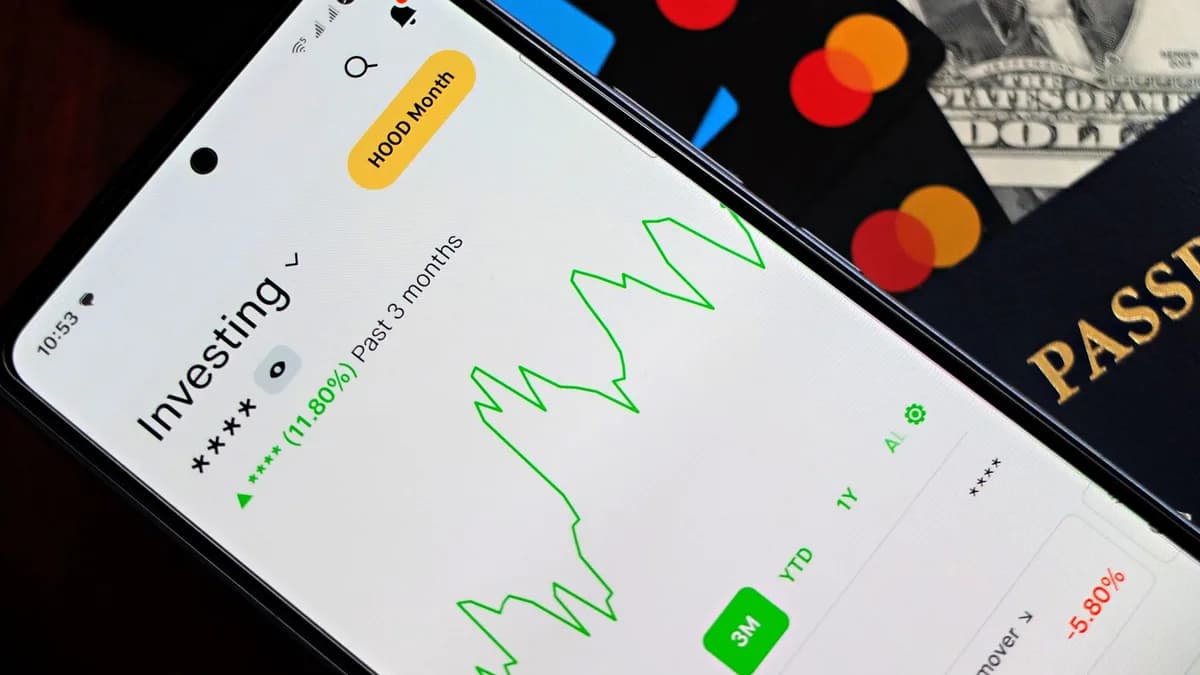
The Open Banking Solution: Using AISP APIs, a personal finance management (PFM) app can securely pull balances and transaction histories from all a user’s connected financial institutions. This creates a single, unified dashboard.
How it Works: After a user consents, the app calls dedicated balance and transaction APIs from each bank. The data is aggregated, normalized, and presented visually. For example, apps like Mint, Yolt, and Emma are built on this very principle. The Open Bank Project platform notes that its catalogue of APIs unlocks apps for Personal Finance Management (PFM), which is fundamentally aggregation.
Technical Snapshot:
# Simplified example of an aggregation function calling multiple bank APIs
import requests

def get_balances(api_endpoints, access_tokens):
    results = {}
    for institution, endpoint in api_endpoints.items():
        response = requests.get(
            endpoint,
            headers={'Authorization': f'Bearer {access_tokens[institution]}'}
        )
        results[institution] = response.json()['balance']
    return results

# The app would manage endpoints and tokens for each connected bank
Key Benefit: Instant, automated net worth tracking and a holistic financial view without manual data entry.
Use Case 2: Smart Budgeting with Real-Time Transaction Categorization
Basic aggregation is useful, but the real magic for personal finance happens when transaction data is automatically categorized and analyzed.
The Problem: Manually tagging hundreds of monthly transactions across multiple accounts is tedious and often leads to abandoned budgeting efforts.
The Open Banking Solution: PFM apps use the rich, standardized transaction data fetched via APIs to apply intelligent categorization rules. A transaction from a grocery store POS system can be automatically tagged as "Food & Groceries."
How it Works: Once transactions are aggregated, apps use a combination of merchant codes, historical user behavior, and machine learning to categorize each entry. This powers dynamic budgeting tools that show spending vs. goals in real-time. Apps like Pocketguard and Emma highlight this functionality, allowing users to connect accounts and automatically categorize expenses.
Beyond Basics: This real-time data enables proactive alerts (e.g., "You've spent 90% of your dining budget this month") and cash flow forecasting, turning static budgets into dynamic financial plans.
Use Case 3: Streamlined Loan and Mortgage Applications
This use case transforms a traditionally paper-heavy, slow process into a digital, near-instant experience, a major open banking api use cases personal finance for major life decisions.
The Problem: Applying for credit involves gathering payslips, bank statements, and other documents, followed by a lengthy manual underwriting process prone to errors and delays.
The Open Banking Solution: With user consent, lenders can use AISP APIs to pull real-time, verified transaction data directly from an applicant's bank. This provides a more accurate and comprehensive picture of income, regular expenses, and financial behavior than a static credit report.
How it Works: A digital lender integrates open banking APIs into its application flow. When an applicant consents, the lender fetches transaction data to verify income, analyze cash flow, and assess affordability automatically. This is known as affordability checking. Platforms like Credit Kudos and lenders like Upstart leverage this for automated loan decisioning, drastically reducing turnaround time.
For lenders, the benefit case should be measured with product-specific metrics such as... underwriting turnaround time.
Key Benefit: Faster approvals, potentially better rates based on a fuller financial picture, and less paperwork for consumers.
Use Case 4: Automated Savings and Round-Up Investment Tools
Open banking doesn't just provide insight; it enables automated action. This use case leverages both data access (AISP) and payment initiation (PISP) capabilities.
The Problem: Building savings or making regular investments requires discipline and manual transfers, which often fall by the wayside.
The Open Banking Solution: Apps can analyze cash flow and either set up automatic savings rules or use "round-up" features. For example, a round-up app can monitor transactions via AISP APIs, and when it sees a coffee purchase of $3.75, it can use a PISP API to initiate a transfer of $0.25 from the checking account to an investment pot.
How it Works:
- AISP Function: The app monitors transaction streams in real-time.
- Logic: It applies user-defined rules (e.g., round-ups, save $10 every Friday).
- PISP Function: It initiates a payment order directly to the user's savings or investment account, often held with a partner fintech.
This creates a seamless, "set-and-forget" saving mechanism that integrates directly with daily spending behavior.
Use Case 5: Personalized Financial Product Recommendations
With a user's holistic, consented financial data, apps can move from generic advice to hyper-personalized product matching, a sophisticated extension of open banking api use cases personal finance.
The Problem: Consumers are often unaware of better financial products (higher-yield savings accounts, lower-interest credit cards, cheaper insurance) that fit their specific profile.
The Open Banking Solution: By analyzing aggregated account data, an app can identify opportunities. For instance, if it sees a large sum sitting in a low-interest checking account, it can recommend a high-yield savings product. If it detects high credit card interest payments relative to income, it can suggest balance transfer cards.
How it Works: This is a data analytics layer built on top of aggregation. Providers like MX offer APIs that not only aggregate data but also "optimize" it, enabling banks and fintechs to generate insights. This turns the personal finance app into a financial marketplace tailored to the individual's actual cash flow and balances, not just their credit score.
Key Benefit: Drives competition and can save users significant money by connecting them with optimally suited products.
Security and Privacy: How Your Data is Protected
The central promise of regulated open banking is that it is more secure than the legacy alternatives. The security framework is multi-layered:
- Explicit User Consent: Access is granted per application, for specific data types (scopes), and for a limited time. You see and approve what you are sharing.
- Regulated Third Parties: Providers like AISPs and PISPs must be licensed and comply with strict financial regulations, ensuring they meet high security and operational standards.
- No Credential Sharing: You never give your bank login credentials to the third-party app. Authentication happens directly with your bank via secure redirects (OAuth 2.0/OpenID Connect).
- Strong Customer Authentication (SCA): Banks often require two-factor authentication (e.g., password + SMS code) during the consent process, adding another barrier to fraudulent access.
- API Standardization: Secure, standardized endpoints reduce the risk of vulnerabilities compared to ad-hoc data sharing methods.
Consent, scoped tokens, SCA, and regulated-provider controls are useful safeguards. The fintech remains responsible for least-privilege access, encrypted storage, retention rules, audit logging, and a tested revocation process.
Ultimately, you retain control. You can view and revoke data access permissions at any time, typically through your primary bank's interface or the app itself.
The Future: Open Banking and Embedded Finance
Looking ahead, open banking is the pipeline for embedded finance, the integration of financial services into non-financial platforms. This represents the next wave of open banking api use cases personal finance, where managing money becomes a seamless part of everyday digital experiences.
- In-App Financial Management: Imagine your e-commerce platform analyzing your open banking data to offer a "buy now, pay later" loan at checkout directly, using instant affordability checks.
- Business Tools: Accounting software like Xero already uses open banking to automate transaction import and reconciliation, a trend that will expand to real-time cash flow forecasting and automated tax estimations.
- Subscription Management: Services like Subaio and Trim use transaction APIs to identify and help users manage recurring subscriptions, a use case that could be embedded directly into bank apps themselves.
As the Open Bank Project notes, its platform enables not just PFM but also blockchain-based financial applications, indicating the technology is becoming the standard data layer for all next-generation financial innovation.
Conclusion: Empowering Consumers with Data Control
The shift to open banking APIs fundamentally rebalances power in the financial ecosystem. It moves control of financial data from institutions to individuals. The open banking api use cases personal finance we see today, from effortless aggregation to AI-powered recommendations, are just the beginning. They demonstrate a future where financial services are built around the user's actual behavior and needs, creating more competitive, innovative, and personalized ways to save, spend, borrow, and invest. For consumers, it means tools that offer genuine insight and automation, turning financial data from a static record into a dynamic asset for improving financial well-being.
FAQ
Is it safe to connect my bank account to a personal finance app using open banking? Yes, when using a regulated app that employs proper open banking APIs, it is safer than older methods like screen-scraping. Your login credentials are never shared with the third party; access is granted through a secure, bank-managed consent process that you can revoke at any time.
What's the difference between Open Banking and Open Finance? Open Banking typically refers to regulations (like PSD2) granting access to payment account data (current/checking accounts). Open Finance extends this principle to a wider range of financial products, including savings accounts, investments, pensions, mortgages, and insurance, providing a more complete financial picture.
Can open banking APIs be used to improve my credit score? Directly, no, as most traditional credit scoring models don't incorporate open banking data. However, some services like Experian Boost use similar consented data to give credit for on-time utility and telecom payments, which can influence certain scores. Primarily, the data helps lenders make more nuanced affordability decisions beyond your credit score.
Do I have to pay for apps that use open banking APIs? Many leading personal finance apps offering aggregation and budgeting (Mint, Emma, Yolt) have free tiers. They may generate revenue through personalized financial product recommendations (affiliate fees) or offer premium subscription tiers for advanced features.
Which banks support open banking? Support is now widespread among major banks in regions with open banking regulation (e.g., EU, UK, Australia). Banks like HSBC, Barclays, and Wells Fargo offer API portals for developers. Most modern digital banks (Revolut, Monzo, Ally) also have robust API support. Coverage can vary, so an app will typically show you a list of supported institutions during the connection process.
Bottom Line
Open Banking APIs in 2026 are the essential plumbing for modern personal finance. They securely enable five transformative use cases: automated account aggregation for a unified financial view, smart, real-time budgeting, streamlined loan applications with instant affordability checks, automated savings and investment tools, and highly personalized financial product recommendations. This shift, driven by global regulations like PSD2, places control and utility of financial data directly in the hands of consumers, powering a new generation of apps that make managing money more insightful, automated, and effective than ever before.