
If Apple's spyware alerts are supposed to signal rare, elite targeting, why are so many people getting them at once?
CybersecurityAugust 17, 2026· 6 min read· By XOOMAR Insights Team
Apple Spyware Alerts Swamp Targets In 110 Countries
Updated on August 17, 2026
XOOMAR Intelligence
Analyst Take
60/ 100
4 sources analyzedLow confidenceTrend10Freshness97Source Trust90Factual Grounding94Signal Cluster40
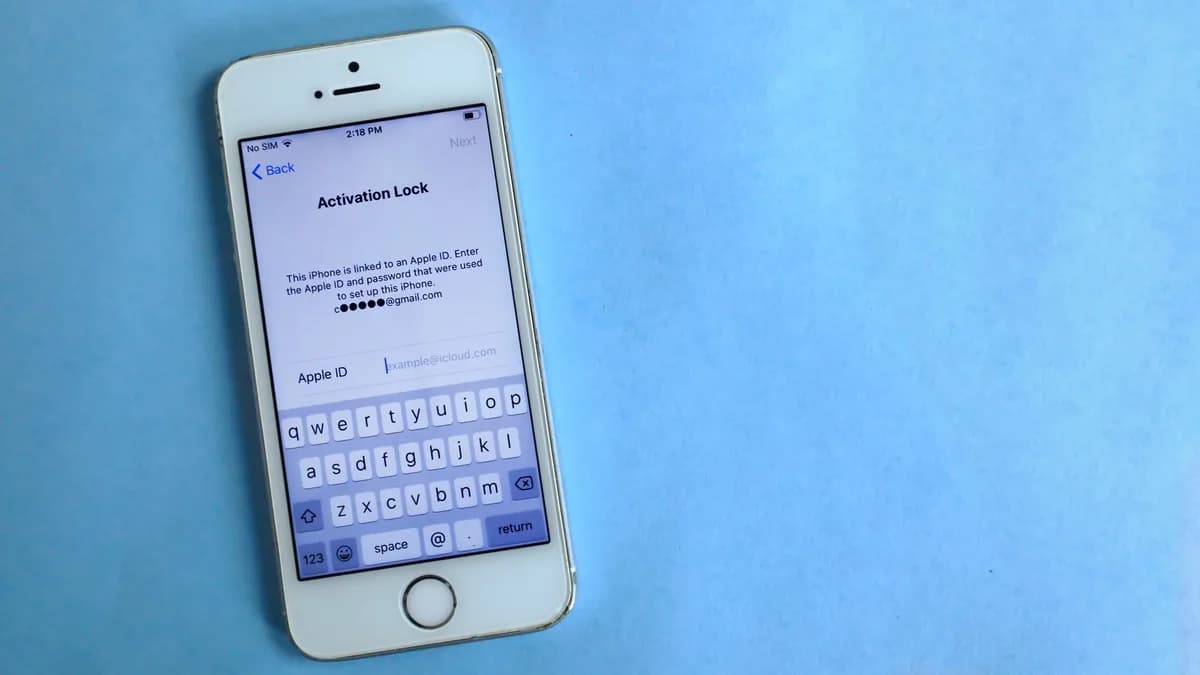
That's the unsettling question at the heart of an unprecedented wave of notifications that has cybersecurity investigators scrambling. Apple's system, designed to warn of "mercenary spyware attacks" that are "vastly more sophisticated" and cost "millions of dollars," just flagged potential victims across 110 countries. Digital rights groups are seeing a record influx of requests for help, 30% to 40% higher than usual after a notification batch. For security teams that track government-grade surveillance, this volume isn't just a spike. It's a signal flare for a new era of spyware proliferation.
How Did "Surgical Strike" Spyware Become a Scattergun Weapon?
Apple's own documentation frames these threats as the domain of state actors, targeting a "very small number of specific individuals" like journalists, activists, and politicians. The alerts are high-confidence but rare. Or they were.
The sheer scale of this wave shatters that premise. Mohammed Al-Maskati, director of the Access Now digital security helpline Apple recommends to targets, confirmed the "record high" number of people reaching out. John Scott-Railton, a senior researcher at The Citizen Lab, noted the "scale and geographic diversity of public posts about receiving notifications are pretty unprecedented." He added, "For every public notification like this, you can imagine there's a huge notification iceberg that the public will never learn about. This is a clear indication that something bigger is going on."
The source material doesn't pinpoint a single cause, but the dynamics point to a grim evolution. The commercial spyware industry, long dominated by a few vendors like NSO Group (maker of Pegasus), has fragmented. More players, more exploit kits, and a surveillance-as-a-service model have likely lowered the barrier for more clients to launch more campaigns simultaneously. What was once a scalpel is now being used as a buckshot.
XOOMAR Analysis: The data suggests the spyware ecosystem has reached an inflection point. It's no longer just about tracking a dozen dissidents. The concurrent alerts across 110 countries indicate either a single, monstrously resourced global operation or, more plausibly, the rampant, concurrent activation of multiple campaigns by various state-level actors buying from the same black market catalog.
Who Is Getting Caught in This Wider Net?
The targets are no longer just the classic profiles. A Ukraine Armed Forces soldier fighting Russia told TechCrunch he received an alert and is "aware of other people in Ukraine's military who have received the same notification." He admitted, "I was a bit surprised... I wouldn't have thought I was important enough for them to target me like this." His peers were "a bit worried."
This is a critical data point. It shows the targeting logic of mercenary spyware expanding from civil society to military personnel in active war zones. The intelligence value is obvious, but it reveals a chilling normalization: commercial spyware is now a tactical battlefield tool.
The warnings are also reaching more people because Apple has changed its delivery method. Starting this year, notifications appear on the iPhone lock screen, in Settings, via email, and on the web Apple Account page. Al-Maskati said, "Apple's new notification method has helped raise awareness of the issue's importance, making it harder for users to ignore." More visibility means more reports, which partly explains the surge in help-line traffic. But the underlying trigger, Apple's detection of "activity consistent with a mercenary spyware attack", has clearly increased dramatically.
What Does Apple Know That It Can't Say?
Apple's public position is a fortress of deliberate opacity. The company states it "relies solely on internal threat-intelligence" and "is unable to provide information about what causes us to issue threat notifications, as that may help mercenary spyware attackers adapt their behavior to evade detection in the future." It also does "not attribute the attacks or resulting threat notifications to any specific attackers or geographical regions."
This silence is a strategic defense, but it leaves victims and the public in the dark. We don't know if this wave stems from one new exploit, a vulnerability in a popular app, or the mass activation of older infrastructure. We don't know if it's one spyware family or ten.
What we can infer from Apple's actions is the severity. The company doesn't send these alerts for trivial malware. The "mercenary spyware" classification is reserved for the most advanced, state-aligned threats. The fact that Apple felt compelled to notify users across 110 countries in one batch means its internal sensors detected a coherent, high-level threat pattern across a significant portion of the globe.
This scale of detection also implies a potential scale of infection. As we've seen in other breaches, like the Valve shipping partner leak that exposed Steam users' home addresses, a single point of failure can have massive repercussions. In this case, the failure may be a widely exploited vulnerability or a compromised service.
Can Lockdown Mode Hold Back the Tide?
For recipients, Apple's core advice is to enable Lockdown Mode. The company states, "Apple has said that it is not aware of anyone who had Lockdown Mode enabled getting hacked." This extreme setting severely limits device functionality to reduce attack surface. It's a logical step for a targeted individual, but it's a drastic lifestyle change.
The broader recommendation for all users is standard but critical: update devices, use strong passwords and two-factor authentication, and install apps only from the App Store. Yet these measures are designed for common cybercriminal activity, not the "exceptional resources" of mercenary spyware.
XOOMAR Interpretation: The surge in alerts creates a new psychological burden. The promise of the iPhone as a secure walled garden is cracking. When a soldier on the front lines, following basic security hygiene, gets a warning that nation-state spies are after him, it erodes the foundational trust in the device as a safe personal space. This isn't just a technical problem. It's a reputational crisis for Apple's core security branding.
Where Does the Cat-and-Mouse Game Go From Here?
The immediate aftermath will see forensic investigators like The Citizen Lab and Access Now dissecting victim devices, trying to attribute campaigns and identify the spyware. Legally, pressure will grow on governments to regulate the commercial spyware trade, a topic gaining visibility as US courts move to disclose more about government spyware use.
Technically, the forward look is an arms race. Apple will harden its code and detection. Spyware vendors will look for new, cheaper exploit chains and more obfuscated delivery methods, potentially leveraging AI to craft hyper-personalized phishing or even more advanced zero-click exploits.
The ultimate watch point is Apple's next move. Does this "unprecedented" wave become the new normal, with quarterly mega-batches of alerts? Or was this a one-off event that triggers a seismic shift in Apple's defensive posture, perhaps integrating more aggressive, pre-emptive protections into the standard iOS experience? The volume of this alert wave is a direct challenge to Apple's security narrative. How the company responds will define the next chapter of privacy for billions of users.
Impact Analysis
- Apple's high-confidence warnings, once tied to rare, state-level targeting of specific individuals, are now reaching users in over 110 countries, suggesting spyware tools are becoming widely accessible.
- The 30-40% surge in help requests to digital security helplines indicates a new scale of potential victims, moving from targeted individual attacks to a broader, commodity-like threat.
- This unprecedented geographic spread and volume of alerts signal a dangerous proliferation of 'surgical-strike' spyware, putting activists, journalists, and everyday users at greater systemic risk.
Surge in Help Requests Following Recent Spyware Alerts
Normal Period
% of Baseline100
Post-Notification Period
% of Baseline140
Sources

Written by
XOOMAR Insights Team
Research and Editorial Desk
The XOOMAR Insights Team pairs automated research with human editorial judgment. We track hundreds of sources across technology, fintech, trading, SaaS, and cybersecurity, cross-check the facts, and explain what happened, why it matters, and what to watch next. We do not just rewrite headlines. Every article is fact-checked and scored for reliability before it goes live, and we link back to the original sources so you can verify anything yourself.
Explore More Topics
Related Articles
 Cybersecurity
Apple's Lock Screen Alert Warns iPhone Users of Spyware Attack
Apple has escalated its spyware warnings by sending high-confidence threat notifications directly to the lock screens of iPhones targeted by sophisticated, stat
Aug 14, 20266 min
 Cybersecurity
Security Chaos Floods Apple Bug Bounties With AI Slop
A flood of AI-generated reports is overwhelming companies like Apple, forcing them to cap bug bounties as attacks swamp ports, banks, and infrastructure in a se
Aug 8, 20267 min
 Cybersecurity
US Courts To Disclose Spyware Surveillance Counts
Federal courts will finally publish how often judges authorize the government to hack devices for surveillance, a first after 30 years of secrecy.
Aug 14, 20268 min
 Cybersecurity
App Store Crypto Scam Drags Apple Into $1.8M Fight
Apple faces a lawsuit after users say a fake Sparrow Wallet on the App Store drained $1.8M in Bitcoin, testing its safety pitch.
Jul 27, 20269 min
 Cybersecurity
Evil Twin Apps Slip Past macOS Gatekeeper Warnings
Researchers say macOS can let malicious app replacements inherit Gatekeeper trust after first launch. Apple isn't calling it a major flaw.
Jul 23, 20268 min
 Technology
AI Litter Robot Thinks Cats Switched Bodies
A $900 AI-powered litter robot from Whisker spent six months mixing up two cats' identities, exposing the shaky reality of pet facial recognition and biometric
Aug 17, 20268 min
 Global Trends
Australian Gambling Ad Bill Exposed as Political Theater
A bipartisan deal on gambling advertising creates a central opt-out register that critics say is a smokescreen, designed more for political victory than for rea
Aug 17, 20266 min
 Technology
AI Startup's Google Acquisition Ends in a Quiet Team Takeover
Funded AI startup Relay shut down, not through failure, but by having its entire team quietly hired by Google to work on the Chrome browser in a clear talent gr
Aug 17, 20268 min
 Trading
Dow Falls 260 Points as Iran War Shift Unsettles Markets
The Dow Jones plunged 260 points, moving below 53,500, as markets abruptly priced in heightened war risks after a critical diplomatic deadline in the Strait of
Aug 17, 20268 min
 Global Trends
Netanyahu Slams NYC Mayor as Iran Ally in Likud Billboard
Prime Minister Netanyahu's Likud party has placed NYC Mayor Zohran Mamdani on a campaign billboard alongside Iran's supreme leader, casting a local critic as pa
Aug 17, 20267 min
Don't miss the signal
Get our weekly roundup of the stories that matter across tech, fintech, and trading. No noise, just signal.
Free forever. No spam. Unsubscribe anytime.