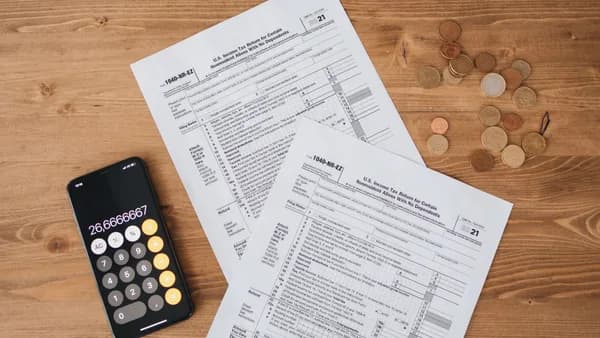
Are rising bankruptcies a real bank earnings risk, or is the credit cycle simply returning to pre-pandemic gravity?
XOOMAR Intelligence
Analyst Take
That is the sharper question heading into 2Q bank earnings, because the headline number is moving in the wrong direction while the broader context still argues against panic. Total bankruptcy filings rose 12% from Jan. 1 through June 30 versus the same period last year, according to American Banker, citing Epiq AACER data. The more pointed signal sits in small-business restructuring: subchapter V filings were up 50% in the first half of 2026.
XOOMAR’s read: rising bankruptcies bank earnings risk is flashing yellow, not red. The increase deserves attention because small-business stress can show up in credit costs before it becomes an obvious banking problem. But the absolute level of filings is still below pre-pandemic markers cited by analysts, which makes this a test of credit discipline rather than a banking-system alarm.
Are rising bankruptcies bank earnings risk or just normalization after COVID-era lows?
The answer is both, which is why this earnings season matters.
Bankruptcy filings were unusually low for years after the pandemic-era cash injection into the economy. That matters because year-over-year increases can look dramatic when the base was depressed. Christopher Ward, a partner at Lowenstein Sandler and board chair at the American Bankruptcy Institute, told American Banker that the market may be moving back toward its old baseline.
"I think what we're seeing is the market is just getting back to where it was prior to 2020," Ward said. "I think we're just back to normal levels of Chapter 11 filings from the pre-pandemic era."
Still, normalization is not the same thing as harmless. The first half of 2026 produced a clear change in direction. Individual bankruptcy filings rose 12%, matching the trend in overall filings. Small-business-oriented subchapter V filings rose much faster.
That is the number banks cannot brush aside in 2Q commentary. Subchapter V is the part of the bankruptcy code smaller companies often use to reorganize debts. A 50% rise does not prove a wave of bank losses is coming, but it does point to a borrower segment under more pressure.
Ward put it plainly:
"Main Street businesses, the smaller businesses in the country, are really struggling."
The next question for bank investors is not whether filings are up. They are. The question is whether banks have already priced that risk into reserves.
Which credit metrics will show whether banks are ahead of the problem?
The cleanest earnings tell will be provisions for credit losses.
Bankruptcy filings do not hit bank earnings in a straight line. They matter because higher expected losses can force banks to increase provisions, which cuts net income even before realized charge-offs peak. That is where 2Q reports should get interesting.
Investors should listen for changes in:
- Charge-offs: Whether actual loan losses are rising faster than management expected.
- Nonperforming loans: Whether problem credits are migrating from watch lists into harder distress.
- Criticized loans: Whether banks are quietly flagging more borrowers before defaults show up.
- Allowance for credit losses: Whether reserves are keeping pace with noncurrent balances.
- C&I credit quality: Whether small-business weakness is turning into broader commercial strain.
- Consumer books: Especially cards and auto, where Epiq AACER flagged signs of stress.
The first-quarter setup already raised the bar. FDIC data cited by American Banker showed noncurrent loan balances rose by $4.4 billion in the first quarter of 2026, while the allowance for credit losses rose by $1.6 billion.
That gap does not prove banks are under-reserved. It does mean the reserve conversation gets harder if bankruptcies keep rising.
Bank earnings are already being judged through multiple stress lenses. Deposit concentration was one in XOOMAR’s coverage of Small Bank Failure Exposes America's Deposit Divide. Payment competition is another, as seen in 7-Minute Hyundai Stablecoin Transfer Puts Banks on Notice. Rising bankruptcies add a more old-fashioned test: credit underwriting.
Why are small businesses carrying the sharpest pressure into 2Q?
The strongest stress signal is not in total filings. It is in the small-business restructuring channel.
Ward linked the pressure to a cluster of conditions: higher interest rates, inflation, and broader economic strain. He also said rates "have not gone down as most people predicted," which is now feeding into the small and mid-market.
That matters because smaller firms generally have fewer ways to absorb a debt-service shock. The source material does not provide cash-buffer data, refinancing data, or sector-level breakdowns, so the responsible conclusion is narrower: the bankruptcy data shows more small firms are seeking court-supervised restructuring relief, not that every small-business loan book is deteriorating at the same pace.
Here is the distinction bank investors should keep straight:
| Borrower group | Signal in the source material | Earnings implication |
|---|---|---|
| Individuals | Bankruptcy filings rose 12% in the first half of 2026 | Watch consumer provisions, card losses, auto commentary |
| Small businesses | Subchapter V filings rose 50% | Watch C&I migration, small-business credit language, reserve builds |
| All bankruptcy filings | Total filings rose 12% | Trend matters, but levels remain below cited pre-pandemic figures |
| Banks | Experts say current filings are not yet cause for alarm | Earnings quality depends on reserves and credit disclosure |
Michael Hunter, vice president at Epiq AACER, pointed to consumer strain as well:
"On the consumer side, we're seeing signs of strain in key areas: auto delinquencies remain near multi-year highs, foreclosure activity has risen notably, and credit card balances and other debt obligations continue to drive individuals to chapter 7 and chapter 13 relief."
That pushes the 2Q question beyond commercial lending. Banks with consumer exposure will need to show whether borrower stress is contained or spreading.
How far are filings from pre-pandemic levels?
This is where the bear case has to slow down.
Christopher Marinac, a bank analyst at Brean Capital, projects 626,000 bankruptcy filings in 2026, including individual and corporate cases. He noted that this remains below 775,000 filings in 2019 and far below 1.2 million in 2012. He also calculated that, if the change from 2025 to 2026 persists, it would take 2.5 years to reach the 2019 level.
His broader point is that the denominator has changed too. The number of businesses and individuals in the U.S. has risen.
"Try to put things on an equal footing over time, and I just think the percentage of the population who's bankrupt is still low," Marinac said.
That is the strongest argument against overreacting to the 2Q setup. The rate of change is uncomfortable. The level is not yet extreme.
A separate Janney Montgomery Scott analysis by Marinac, based on quarterly bank credit statistics from the first quarter of 2007 through the first quarter of 2025, adds a cautionary layer. It found a strong relationship between business bankruptcy filings and commercial loan write-offs, including that roughly 90% of the time, business bankruptcy filings meant an increase in owner-occupied commercial real estate write-offs. The same analysis said another 15% rise in bankruptcies should drive at least 12% more C&I losses in aggregate dollars.
That does not mean 2026 will replay a past credit cycle. It does mean bankruptcy filings deserve a place in bank-credit models.
Who has the stronger argument: executives, analysts, investors, or borrowers?
Bank executives have a credible defense if they say credit is normalizing. The numbers are still below prior benchmarks, and large banks have earnings power.
Marinac said banks active in consumer lending, especially large national players in cards and auto, can absorb surprises.
"I think it's a very addressable risk, and the banks who do consumer lending, which primarily are the big national players who are big in cards, for example, or big in auto, they've got a lot of earnings today. And if they get a couple surprises on consumer credit that they're not talking to us about, they can handle it."
He added:
"The stocks will have to adjust if you have that scenario, but I think they've got plenty of earnings and plenty of reserves."
Analysts will likely take the middle ground. The rise in bankruptcy filings is real, but it needs to be tested against pre-pandemic levels, loan mix, reserve movement, and management tone.
Investors may be less patient. Even manageable credit deterioration can hit bank stocks if executives sound vague about borrower stress or if provisions rise faster than expected.
Borrowers face the most practical consequence. If banks grow more cautious after 2Q results, weaker firms may see tougher renewals, more collateral scrutiny, or less flexibility. That is XOOMAR analysis, not a direct claim from the source data, but it follows from the basic earnings mechanic: banks that expect more losses usually get more selective.
Which 2Q bank reports will set the tone for the second half?
The first read comes from the largest banks. JPMorganChase, Bank of America, Wells Fargo, Citi, and Goldman Sachs are scheduled to report Tuesday, followed Wednesday by Morgan Stanley, PNC Financial Services Group, Bank of New York Mellon, and M&T Bank, according to American Banker.
The evidence that would confirm the yellow-light thesis is straightforward: higher provisions, more cautious credit guidance, rising noncurrent balances, and specific comments about small-business weakness. The evidence that would weaken it is just as clear: stable charge-offs, reserves that keep pace with problem loans, and management teams saying bankruptcy-linked stress remains narrow.
For now, rising bankruptcies bank earnings risk looks manageable. If filings keep climbing toward 2019 levels while charge-offs and noncurrent loans accelerate, the story changes. Then this stops being post-pandemic normalization and starts looking like the early phase of a real credit-cycle warning.
Disclaimer: This XOOMAR analysis is for informational and educational purposes only. It is not financial, investment, legal, tax, or professional advice. It does not provide buy, sell, hold, price-target, portfolio, or personalized recommendations. Verify information independently and consult qualified professionals before making decisions.
The Bottom Line
- Rising bankruptcies could increase bank credit costs during 2Q earnings season.
- Small-business restructurings are accelerating faster than overall filings, making them a key stress indicator.
- The data suggests caution rather than panic because filings remain below pre-pandemic levels cited by analysts.
Bankruptcy Signal vs. Banking-System Risk
| View | Evidence | Read-through for banks |
|---|---|---|
| Credit risk is rising | Total bankruptcy filings rose 12% year over year, while subchapter V filings rose 50% in the first half of 2026. | Small-business stress could pressure credit costs in 2Q earnings. |
| Cycle is normalizing | Analysts cited filings still below pre-pandemic markers after unusually low post-COVID levels. | The trend looks like a credit-discipline test, not a systemwide alarm. |
Bankruptcy Filing Growth in First Half of 2026
Primary Sources & Disclosures
Disclaimer: Content on XOOMAR is produced using AI-assisted research, drafting, and verification workflows and is intended for informational and educational purposes only. It does not constitute financial, investment, legal, tax, medical, or professional advice of any kind. All analysis reflects available information at the time of publication and may not be current. Verify information independently and consult qualified professionals before making decisions. Editorial policy

Written by
XOOMAR Insights Team
Research and Editorial Desk
The XOOMAR Insights Team pairs automated research with human editorial judgment. We track hundreds of sources across technology, fintech, trading, SaaS, and cybersecurity, cross-check the facts, and explain what happened, why it matters, and what to watch next. We do not just rewrite headlines. Every article is fact-checked and scored for reliability before it goes live, and we link back to the original sources so you can verify anything yourself.