
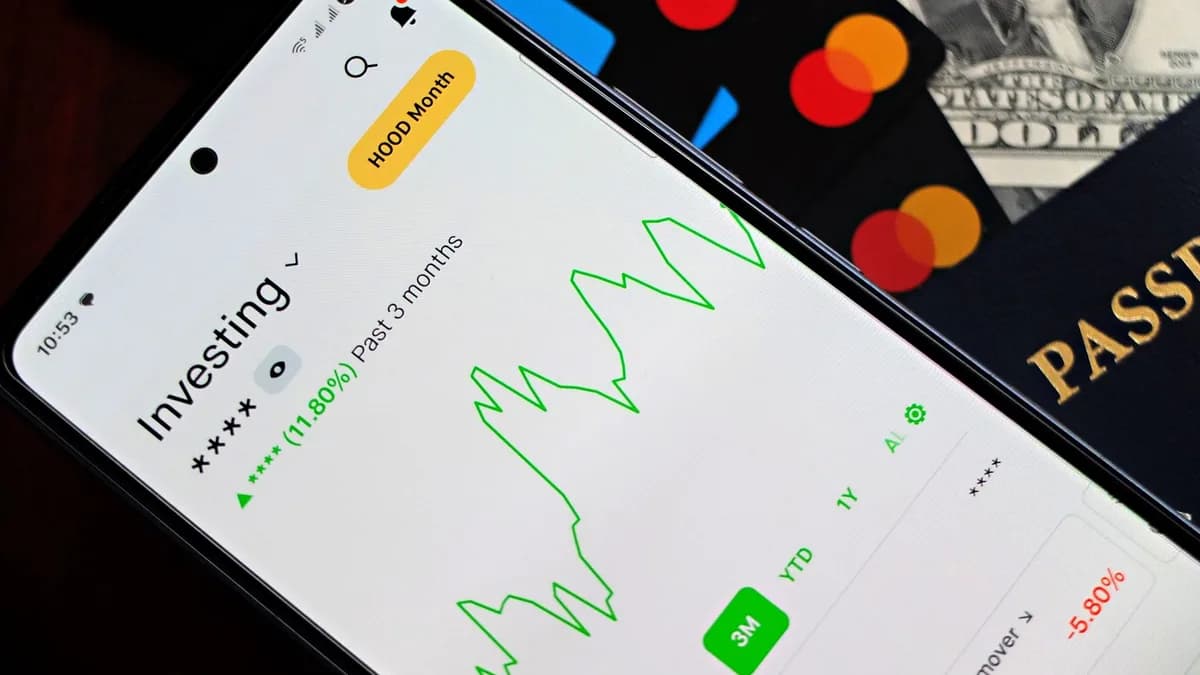
Major financial institutions from AltaOne Federal Credit Union to Pioneer Federal Credit Union are launching their own earned wage access products, a clear signal that a service pioneered by fintechs is now bank-branch mainstream. For the legacy EWA providers who built this market, however, the lenders' entry is a trigger for a high-stakes defensive gambit.
FintechAugust 10, 2026· 4 min read· By XOOMAR Insights Team
Banks Invade Earned Wage Access, Force Fintechs Out
Updated on August 10, 2026
XOOMAR Intelligence
Analyst Take
59/ 100
3 sources analyzedLow confidenceTrend10Freshness97Source Trust90Factual Grounding94Signal Cluster20
According to American Banker, this shift is forcing established players like DailyPay and Branch into a frantic search for wider distribution to protect their turf. The battlefield is no longer just the product, it's the point of access.
For Banks, Deposits and Data Trump Fee Revenue
Banks aren't adopting EWA to become the next fintech darling. Their motive is pragmatic and defensive: stopping deposit flight and capturing a new generation of customers.
When AltaOne CEO Stephanie Sievers says her credit union is looking for "innovative ways to strengthen the financial well-being of our members," she's describing a strategic survival move. EWA is a hook to keep depositors from fleeing to apps that offer faster liquidity. It's also a powerful data-gathering tool. Every advance requested reveals a customer's cash-flow gaps, spending timing, and financial stress points, data that has historically been locked inside fintech apps.
This pivot exposes a core vulnerability: for many hourly or gig economy workers, the traditional bank account has ceased to be the center of their financial life. Banks are now fighting to pull that activity back in-house, a theme we also explored in the race for tokenized deposits and blockchain settlement rails.
"Too often, financial stress is not about whether someone is responsible; it is about whether the timing of their income matches the timing of their obligations," Sievers said.
Fintechs Pivot from Pioneers to Plugins
Faced with banks leveraging their existing employer relationships, legacy EWA providers are adapting fast. Their new playbook centers on embedding their technology anywhere a worker might be, becoming a financial utility rather than a standalone brand.
Branch is explicitly pursuing this path with its new Flex model. "Our thesis is that if we live where workers are already at, they have access to their wages in a more seamless way," said founder and CEO Atif Siddiqi. The goal is to become white-label infrastructure, allowing any business app to embed wage access without a lengthy integration. This isn't just distribution, it's a fundamental redefinition of their product.
DailyPay, under CEO Nelson Chai, is doubling down on the top of its sales funnel: employers. "We are a B-to-B-to-C business, so that means continuing to build our client relationships with employers," Chai said. The company is simultaneously making a noisy public marketing push, from dominating a payroll conference to running a pop-up diner, to elevate its brand with both businesses and consumers.
XOOMAR Interpretation: This strategic fork is stark. Branch aims to be the invisible plumbing. DailyPay wants to be the branded, indispensable partner. Both are reactions to the same threat: banks owning the primary financial relationship.
A Regulatory Reckoning Looms for All Players
The scramble for market position happens under a regulatory cloud that could reshape the entire field. The industry has been "buffeted by federal regulatory upheaval," with the CFPB under Rohit Chopra issuing an interpretive rule last year that deemed many EWA payouts to be loans subject to lending laws.
This regulatory uncertainty is a massive variable. Banks, with their existing compliance scaffolding, may be better positioned to navigate a stricter regime. For fintechs, a clear regulatory framework could either legitimize their models or impose crippling new costs. The ongoing battles over consumer protection and federal oversight, including actions by the CFPB, directly impact how these financial tools can be offered, as seen in broader policy shifts like the potential for banks to charge open banking fees.
The stakes are financial, with $3.5 billion in venture capital invested over the past decade riding on the outcome. But the political stakes are just as high, pitting consumer advocates who see "profiteers" against industry voices who argue EWA is a "safe... alternative to high-interest lending products."
The bank invasion of EWA is a story of validation and co-option. Fintechs proved the demand for a product that untethers pay from the biweekly calendar. Now, the institutions with the deepest pockets and broadest relationships are moving to claim it.
What to watch next: Watch for consolidation. Banks may find it faster to acquire a Branch or DailyPay than to build competing tech. Watch the fee structures closely; banks could undercut fintechs to gain share or add hidden costs that spark new consumer protection battles. Finally, monitor which model wins loyalty: the seamless, embedded utility, or the branded, full-service provider. The winner may not be who offers the fastest advance, but who owns the most valuable data around it.
Disclaimer: This XOOMAR analysis is for informational and educational purposes only. It is not financial, investment, legal, tax, or professional advice. It does not provide buy, sell, hold, price-target, portfolio, or personalized recommendations. Verify information independently and consult qualified professionals before making decisions.
Impact Analysis
- It signals a major market shift where a fintech innovation is becoming a standard banking service, forcing all players to adapt.
- For consumers, increased competition could lead to more options for accessing earned wages, potentially impacting fees and service quality.
- The battle for customer financial data intensifies, with banks seeking to reclaim insights traditionally held by fintech apps, which could reshape financial product offerings.
Bank vs. Fintech EWA Approaches
| Player Type | Primary Motivation | Strategic Focus |
|---|---|---|
| Banks/Credit Unions | Defend deposits, gather customer data | Retention & pulling activity in-house |
| Legacy EWA Fintechs (e.g., DailyPay, Branch) | Protect market share | Expand distribution & access points |
Sources
Disclaimer: Content on XOOMAR is produced using AI-assisted research, drafting, and verification workflows and is intended for informational and educational purposes only. It does not constitute financial, investment, legal, tax, medical, or professional advice of any kind. All analysis reflects available information at the time of publication and may not be current. Verify information independently and consult qualified professionals before making decisions. Editorial policy

Written by
XOOMAR Insights Team
Research and Editorial Desk
The XOOMAR Insights Team pairs automated research with human editorial judgment. We track hundreds of sources across technology, fintech, trading, SaaS, and cybersecurity, cross-check the facts, and explain what happened, why it matters, and what to watch next. We do not just rewrite headlines. Every article is fact-checked and scored for reliability before it goes live, and we link back to the original sources so you can verify anything yourself.
Explore More Topics
Related Articles
 Fintech
$68.8M BaaS Shock Crushes Coastal Financial Shares
One fintech partner triggered a $68.8M hit at Coastal Financial, turning BaaS concentration risk into real balance-sheet damage.
Aug 2, 20268 min
 Fintech
No Securities Play Vaults InterBank to Top Performer Status
InterBank topped its peer group by skipping securities, leaning on cheap rural deposits and letting adjustable loans ride higher rates.
Jul 31, 20269 min
 Fintech
Chime Crushes Banks with Fee-Free Profitability
Chime's profitable, fee-free model, powered by debit card spending, proves neobanks don't need to act like traditional banks to succeed.
Aug 7, 20269 min
 Fintech
CFPB Opens Gate for Banks to Charge Open Banking Fees
The CFPB may scrap its ban on data-access fees, allowing banks to charge third-party apps for your transaction history and potentially crippling the free flow o
Aug 10, 202610 min
 Fintech
Return-to-Office Mandates Sabotage Bank Performance
Banks are imposing arbitrary return-to-office mandates driven by executive 'gut' feelings, prioritizing visual control over data and worsening financial perform
Aug 7, 20265 min
 Global Trends
Court Cancels Russia's Only Anti-War Party on 'Extremism'
A Moscow court disqualified Russia's only registered anti-war political party from parliamentary elections, using allegations of extremism and copyright infring
Aug 10, 20266 min
 Fintech
Brazil Aims Pix Payments at Global Payment Giants
Brazil's central bank is pushing its dominant Pix instant payment system onto the global stage, aiming to reshape cross-border payments and challenge establishe
Aug 10, 20267 min
 Technology
Zuckerberg's Personal AI Pitch Betrays Meta's True Motive
Mark Zuckerberg's new AI manifesto, promising universal 'personal superintelligence,' inadvertently exposes the commercial engagement and data-harvesting logic
Aug 10, 20265 min
 Technology
Tech Giants Lose Major Ruling, Face 2,400 Addiction Suits
A federal appeals court refused to let Meta, Google, TikTok, and Snapchat use Section 230 to quickly dismiss thousands of lawsuits accusing them of intentionall
Aug 10, 20266 min
 Technology
Bluesky Hides Reposts From That One Annoying Account
Bluesky added a feature allowing users to hide reposts from specific accounts they follow, a targeted tool for feed curation without unfollowing.
Aug 10, 20267 min
Don't miss the signal
Get our weekly roundup of the stories that matter across tech, fintech, and trading. No noise, just signal.
Free forever. No spam. Unsubscribe anytime.