
Updated July 2026: This article has been refreshed to reflect the current status after the BSP’s June clarification: Binance and BlockShoals still need locally recognized VASP authorization or integration with a licensed domestic VASP before user onboarding through Binance infrastructure can proceed.
FintechJune 11, 2026· 8 min read· By XOOMAR Insights Team
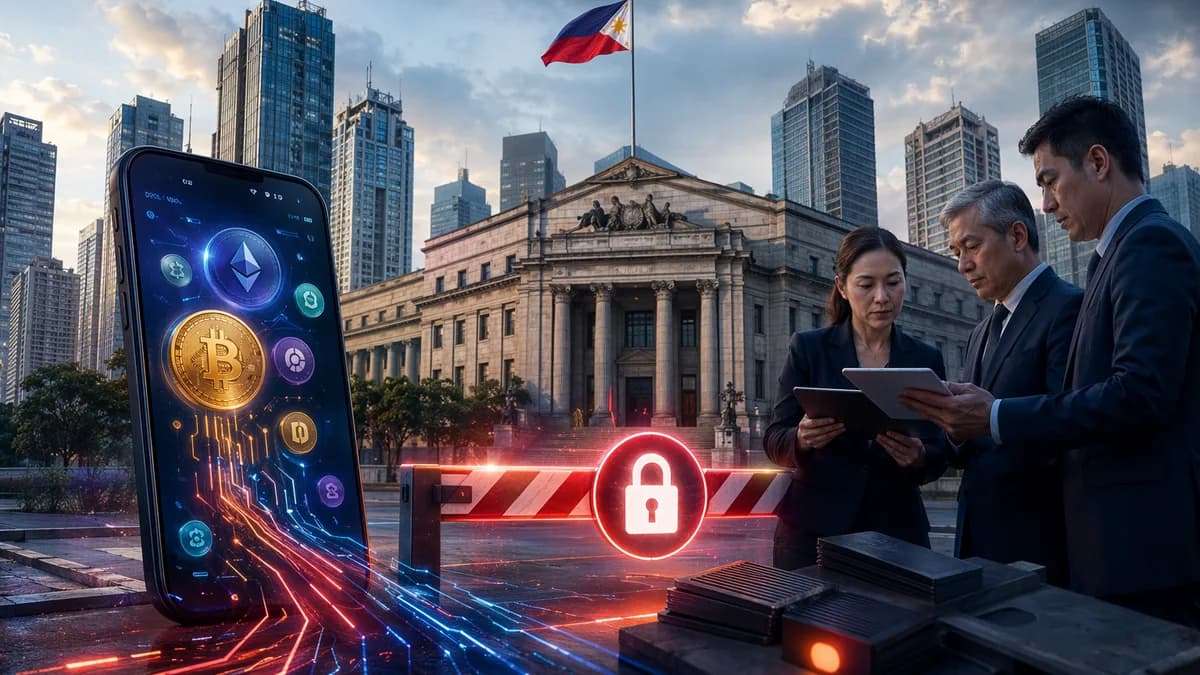
License Wall Blocks Binance Philippines Comeback Bid
Updated on July 13, 2026
XOOMAR Intelligence
Analyst Take
68/ 100
4 sources analyzedLow confidenceTrend10Freshness97Source Trust88Factual Grounding95Signal Cluster60
Binance found a Philippine partner, but the country’s central bank has made clear that a partner is not a license.
The exchange is trying to reenter the Philippines through BlockShoals Technologies Inc., yet neither company holds the Bangko Sentral ng Pilipinas license required to operate as a virtual asset service provider, according to CoinDesk. That turns Binance’s comeback plan into a test of a harder rule: local market access now depends on local authorization, not global scale or a domestic wrapper.
As of mid-July 2026, the key issue remains unresolved in the public record: SEC sandbox participation may allow supervised testing, but it does not by itself authorize Binance or BlockShoals to operate VASP rails in the Philippines.
Binance had a sandbox path. The BSP says the rails still need a license
The expectation was straightforward. BlockShoals entered the Philippine Securities and Exchange Commission’s StratBox sandbox, and Binance would support the local fintech as a global crypto partner. That looked like a controlled route back into a market where Binance had already faced regulatory action.
The reality is narrower. The BSP said the sandbox does not replace a separate VASP license. CoinDesk reported that the central bank license is needed to facilitate crypto payment and transaction rails, and that it is separate from SEC approval.
That distinction is the whole story.
The SEC sandbox can let a firm test a model under supervision. The BSP license governs whether a firm can operate as a virtual asset service provider. Binance and BlockShoals are now caught between those two regimes.
“While these frameworks are administered independently, both share the principle that sandbox participants must continue to comply with applicable laws, rules, and regulations. The BSP and SEC are coordinating on this matter.”
That statement, reported by BitPinas from the BSP, blocks the idea that one regulator’s testing clearance can quietly substitute for another regulator’s operating permission.
The licensing gap is not cosmetic
The BSP’s position means Binance and BlockShoals cannot currently present SEC sandbox participation as enough to operate as licensed VASPs in the Philippines.
Here’s the practical split:
| Issue | SEC StratBox sandbox | BSP VASP license |
|---|---|---|
| Purpose | Controlled testing of financial or crypto services | Authorization to operate as a virtual asset service provider |
| Regulator | Securities and Exchange Commission | Bangko Sentral ng Pilipinas |
| Binance status in revised language | Global crypto-asset service provider partner | Not licensed as a VASP |
| BlockShoals status | Sandbox participant | No BSP Certificate of Authority as VASP |
| Immediate constraint | Testing terms and user onboarding limits | No separate VASP authorization for transaction rails |
The SEC also revised its language around Binance. The report says Binance is now described as a global crypto-asset service provider, not a global VASP. That is not just wording. It narrows the regulatory meaning of Binance’s role in the arrangement.
The revised terms also require BlockShoals to integrate its systems with a licensed domestic VASP within 90 days before any user onboarding through Binance infrastructure can begin. That creates a clear sequencing problem. First comes local licensed integration. Only then can onboarding tied to Binance infrastructure move forward.
This follows a familiar theme in fintech regulation: slick front-end access does not erase licensed back-end obligations. We made a similar point in Cheap, Fast, Tricky: Digital Bank for Small Business, where product convenience still depends on regulated rails underneath.
The useful numbers are regulatory dates, not market hype
The most useful facts here are not trading-volume claims or adoption estimates. They are regulatory milestones.
The verified timeline is enough:
- 2023: The Philippine SEC said Binance was operating without the required authorization.
- 2024: Authorities moved to block access to Binance through internet service providers and app stores, according to CoinDesk.
- Nov. 12, 2025: BlockShoals secured initial SEC sandbox clearance, according to BitPinas.
- June 2026: The BSP publicly clarified that Binance and BlockShoals lacked the required VASP authorization.
- Second half of 2026: Live operational testing inside the SEC sandbox was scheduled to begin, according to BitPinas.
- Minimum two years: The sandbox testing phase is expected to run for at least that long.
- 90 days: BlockShoals must integrate with a licensed domestic VASP before user onboarding through Binance infrastructure can begin.
Those dates show why the BSP statement matters. Binance’s reentry is not blocked by a single missing form. It is stuck in a staged approval process where the SEC can allow testing, but the BSP can still control the rails needed for VASP activity.
XOOMAR analysis: this is a regulatory bottleneck by design. It forces Binance’s Philippine strategy to pass through a locally licensed structure before users can be onboarded through its infrastructure. That gives the domestic licensing regime real power over a global exchange’s return.
The fight looks different depending on where you sit
For the BSP, the issue is jurisdiction. If a company wants to operate as a VASP in the Philippines, it needs the central bank’s Certificate of Authority. The sandbox does not erase that requirement.
For the SEC, StratBox allows supervised testing, but the revised terms show the commission is also tightening the boundaries. Calling Binance a global crypto-asset service provider rather than a global VASP keeps the arrangement from implying authorization that the BSP has not granted.
For BlockShoals, the next obstacle is both operational and regulatory. It must connect with a licensed domestic VASP within the required 90-day period before onboarding through Binance infrastructure can start.
For Binance, the lesson is sharper. A local partner can open a conversation with regulators, but it cannot automatically import Binance’s global exchange model into a domestic market.
That point echoes the larger compliance argument in Hill Says Crypto Bill Needs Law, Not Regulator Mercy: crypto firms increasingly need clear legal authority, not informal tolerance or piecemeal permission.
Binance’s Philippine record already made regulators cautious
Binance was previously active in the Philippines. Then the SEC said in 2023 that it was operating without the required license. The following year, authorities moved to block access through internet service providers and app stores.
That history makes the new BSP statement more than a technical objection. It is a reminder that Philippine regulators have already treated Binance access as an authorization problem, not just a consumer choice issue.
The BlockShoals partnership was Binance’s attempt to return through a more formal channel. The problem is that formal channels have multiple gates. SEC sandbox approval is one gate. BSP VASP authorization, or integration with a licensed local VASP, is another.
XOOMAR analysis: the Philippines is drawing a line between “testing with a local partner” and “operating crypto transaction infrastructure for users.” Binance may still be able to participate through BlockShoals, but only if the structure satisfies both regulators.
The immediate risk is delay, not a confirmed shutdown of the plan
The available reports do not say Binance’s Philippine reentry is permanently dead. They say Binance and BlockShoals lack the required BSP VASP license, and that onboarding through Binance infrastructure depends on integration with a licensed domestic VASP.
That leaves several open paths:
- License path: Binance or BlockShoals could pursue clearer BSP authorization.
- Partner path: BlockShoals could integrate with a licensed domestic VASP as required.
- Scope path: The companies could limit activity to what the SEC sandbox permits until licensing issues are resolved.
- Delay path: The second-half 2026 testing schedule could slip if integration or licensing questions take longer than expected.
For Filipino users, the main takeaway is narrower than “Binance is back” or “Binance is banned.” The verified position is that public onboarding through Binance infrastructure cannot begin under the revised terms until BlockShoals completes the required integration with a licensed domestic VASP.
For Philippine fintech firms, the signal is direct. Sandbox approval can help test new models, but it will not override a separate regulator’s license requirements. That can slow launches. It can also make licensed local VASPs more important gatekeepers for crypto market access.
Binance’s next move will show whether global exchanges can still enter by partnership
Binance now has to prove that its Philippine return fits inside the country’s rulebook. The next evidence to watch is concrete: whether BlockShoals completes the 90-day integration with a licensed domestic VASP, whether BSP authorization appears, and whether the SEC allows onboarding to proceed under the revised sandbox terms.
If those steps happen, the BlockShoals structure could become a template for controlled reentry. If they do not, the Philippines will have shown that a sandbox partnership is not enough to reopen a market after prior licensing trouble.
The bigger signal is already clear. In the Philippines, the next phase of crypto access will be decided less by who has the biggest exchange brand and more by who can prove they are operating inside the financial system.
Disclaimer: This XOOMAR analysis is for informational and educational purposes only. It is not financial, investment, legal, tax, or professional advice. It does not provide buy, sell, hold, price-target, portfolio, or personalized recommendations. Verify information independently and consult qualified professionals before making decisions.
Impact Analysis
- Binance’s Philippine reentry plan hinges on local authorization or integration with a licensed domestic VASP, not just a partnership with BlockShoals.
- The BSP’s stance separates experimental sandbox access from full operating permission for crypto transaction rails.
- Crypto firms seeking Philippine market access face a clearer but tougher compliance path, with licensed local infrastructure now central to any comeback strategy.
Philippines Crypto Authorization Paths
| Regime | What It Allows | What It Does Not Replace |
|---|---|---|
| SEC StratBox sandbox | Supervised testing of a fintech model | A BSP virtual asset service provider license |
| BSP VASP license | Authorization to operate crypto payment and transaction rails | SEC sandbox participation |
Sources
Disclaimer: Content on XOOMAR is produced using AI-assisted research, drafting, and verification workflows and is intended for informational and educational purposes only. It does not constitute financial, investment, legal, tax, medical, or professional advice of any kind. All analysis reflects available information at the time of publication and may not be current. Verify information independently and consult qualified professionals before making decisions. Editorial policy

Written by
XOOMAR Insights Team
Research and Editorial Desk
The XOOMAR Insights Team pairs automated research with human editorial judgment. We track hundreds of sources across technology, fintech, trading, SaaS, and cybersecurity, cross-check the facts, and explain what happened, why it matters, and what to watch next. We do not just rewrite headlines. Every article is fact-checked and scored for reliability before it goes live, and we link back to the original sources so you can verify anything yourself.
Explore More Topics
Related Articles
 Fintech
Clarity Act Draft Kicks Trump Crypto Fight to 2029
The Clarity Act draft advances crypto rules but punts the ethics fight, with conflict limits expiring in 2029.
Jul 26, 20268 min
 Fintech
20% Market Share Lures Binance.US Into a Crypto Fee War
Binance.US wants 20% U.S. market share back, betting near-zero fees can pull traders in before trust and liquidity catch up.
Jul 13, 20267 min
 Fintech
Revolut Valuation Rockets to $115B in Employee Share Sale
Revolut’s $115B employee share sale crowns it Europe’s top private company and puts fresh heat on its banking ambitions.
Jul 27, 20265 min
 Fintech
Open USD Threat Drags Circle Stock Call Down to $50
Mizuho says Open USD threatens Circle's USDC economics, cutting its rating to underperform and price target to $50.
Jul 14, 20267 min
 Fintech
Crypto Lobby Sues to Kill Illinois Digital Asset Tax
The Digital Chamber sued to block Illinois' 0.2% digital asset levy before 2027, making it a major state crypto tax test.
Jul 26, 20269 min
 Trading
Safe-Haven Premium Cracks as Silver Price Slides Before Fed
Silver fell near $57.55 as geopolitical fear cooled, but the Fed decision and a stronger dollar keep XAG/USD exposed.
Jul 28, 20266 min
 Technology
RT6 Fleet Storms London Robotaxi Race for Lyft, Baidu
Baidu's RT6 test cars put Lyft into London's robotaxi fight, turning a 2027 launch plan into a regulatory and trust test.
Jul 28, 202611 min
 Global Trends
Oil Shock Exposes Germany Energy Drag Behind Ifo Jump
Germany’s Ifo jump may be stale. Commerzbank sees oil costs capping 2026 growth at just 0.6%.
Jul 28, 20267 min
 Trading
GBP/USD Price Forecast Wobbles Before Fed-BoE Showdown
GBP/USD is stuck near 1.3300. Fed and BoE signals may decide whether sterling holds or slides toward 1.3000.
Jul 28, 202612 min
 Trading
War Risk Bet Unwinds as Brent Crude Crashes 8.7% in a Day
Brent crude’s 8.7% plunge shows traders dumping war-risk premium, not proof that Gulf energy flows are out of danger.
Jul 28, 20265 min
Don't miss the signal
Get our weekly roundup of the stories that matter across tech, fintech, and trading. No noise, just signal.
Free forever. No spam. Unsubscribe anytime.