
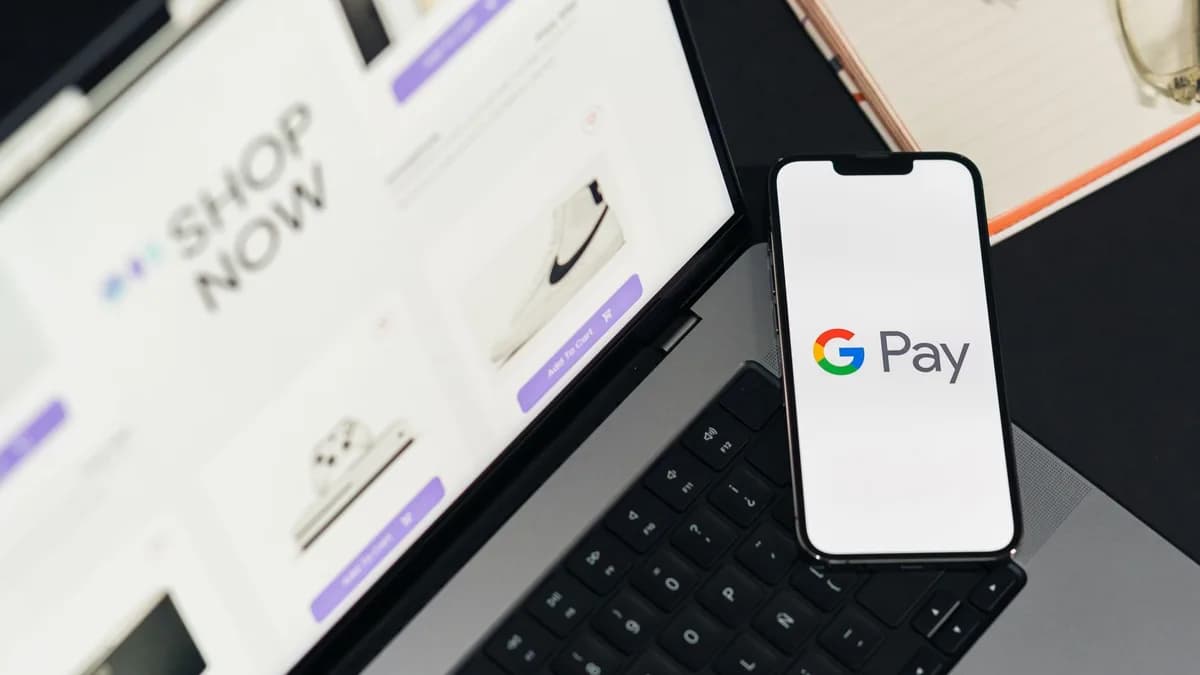
Google is turning the family allowance into a digital training ground. The company announced on Thursday that its digital wallet now lets parents in the U.S. set up a secure, parent-managed balance for children under 18, as TechCrunch first reported. This is Google's direct answer to a modern parental dilemma: how to give kids financial independence without writing a blank check. The feature, now rolling out in the U.S., brings Google Wallet more in line with competitors like Apple Cash Family.
FintechAugust 6, 2026· 7 min read· By XOOMAR Insights Team
Google Wallet Creates Parent-Controlled Money Pools for Kids
Updated on August 6, 2026
XOOMAR Intelligence
Analyst Take
63/ 100
3 sources analyzedLow confidenceTrend10Freshness100Source Trust90Factual Grounding93Signal Cluster60
For families already embedded in Android and Google services, this isn't just a new button. It's a significant shift from handing out cash to managing a real-time financial dashboard for your child.
Why Giving Your Kid a Card Is a Rite of Passage in a Digital World
Cash is disappearing. The envelope of allowance money is being replaced by Venmo requests and debit cards. Parents want to teach financial literacy early, but the tools are often binary: hand over a traditional debit card linked to a real bank account and hope for the best, or micromanage every penny.
This leaves a gap. Parents need a middle ground, a way to grant autonomy with guardrails. They want to know if their teen spent $25 at the food court, not just that their bank balance dropped. The goal is to turn a weekly lunch budget into a teachable moment, not a source of mystery. Google's new supervised balances aim to fill that gap by design, positioning the smartphone as the new wallet for the next generation.
How Google's 'Parent-Managed Balances' Actually Work
Setting up a balance requires a family structure already established in Google's ecosystem. According to Google's support documentation, the child must be under 18 and have a supervised Google Account within a Family Group. The family manager, typically the parent who created the group, initiates the setup through the Google Family Link app or the Google Wallet website.
Once created, the parent controls the purse strings. They can: Add Money: Fund the child's balance from their own linked payment methods. Set Daily Limits: Cap how much can be spent in a 24-hour period. Monitor Transactions: View a real-time history of where and when money was spent. Lock Remotely: Instantly freeze the balance if a phone is lost.
The child’s experience is intentionally simple. They see their balance in their own Google Wallet app and can use tap-to-pay with their Android phone or Wear OS smartwatch anywhere Google Pay is accepted. They can view their own transaction history and see their daily spending limit. Critically, this is a closed loop. The child cannot use this balance for online shopping, send money to friends, or withdraw cash. It’s a physical-world-only payment tool, built for real stores and real-world independence.
The Invisible Guardrails That Keep Kids' Spending in Check
The power is in the background controls that shift money management from reactive to proactive.
Tip: Parents can manage their child's spending by setting a daily spending limit or locking the balance. Individual transactions can't be sent for approval beforehand.
This note from Google's help page is telling. Parents can't approve each $3 soda purchase. Instead, they set the boundaries and receive alerts. When a purchase is made, a parent can receive a notification via Family Link. If a child tries to exceed their daily limit, the transaction is simply declined. This turns a potential "you spent too much" lecture on Friday into a real-time, tangible lesson on budgeting on Tuesday when a payment doesn't go through.
The system also includes a "spending timeout" feature, letting parents pause all spending temporarily. This could be used for grounding, after a lost device, or simply to enforce a break from spending. It’s a level of fluid control that cash or a basic debit card can't match, creating digital guardrails that make financial mistakes less costly.
Does a Built-In Wallet Beat a Dedicated Kid's Card?
This move squarely targets the competitive landscape of family fintech.
| Feature | Google Wallet Supervised Balance | Apple Cash Family | Dedicated Kid Debit Cards (e.g., Greenlight) |
|---|---|---|---|
| Core Purpose | Tap-to-pay allowance with oversight | Send money & monitor spending via iMessage | Full-featured teen banking with chore tracking |
| Parental Controls | Daily limits, real-time alerts, remote lock | Spending limits, transaction review | Custom merchant controls, automated allowance |
| Child's Access | Android/Wear OS tap-to-pay only | Apple Pay in stores, Messages, App Store | Dedicated debit card (physical & digital) |
| Key Differentiator | Deep integration with Android OS | Seamless iMessage integration | Educational tools, savings goals, investment options |
Google's play is less about matching every feature of a startup like Greenlight and more about leveraging its entrenched position. For the millions of families using Android phones, this feature removes the friction of signing up for a separate service. The wallet is already on the phone. Now it can be activated for the whole family.
As our analysis of previous Google payments strategies shows, the company often prioritizes ecosystem lock-in over being the first mover. This feature makes the Google Wallet indispensable for the entire household, not just the primary account holder.
A Real-World Test Drive: The Smith Family's Weekly Lunch Budget
Consider a practical scenario. A parent sets up a $40 weekly balance for their 15-year-old’s school lunches, loaded every Monday. The teen uses tap-to-pay at the cafeteria and a nearby convenience store.
By Wednesday, they’ve spent $28. A notification pings the parent’s phone for a $5 smoothie purchase. The parent doesn't intervene, but the teen now sees they have only $12 left for Thursday and Friday. This might lead them to choose a water instead of another drink on Thursday, a small but real budgeting decision.
On Friday evening, instead of asking "where did all your lunch money go?", the parent can open the Google Wallet transaction log. The conversation shifts from accusation to analysis. "I see you bought snacks at the convenience store three times this week. Did packing a granola bar from home a couple of days help your budget?" The data provides a neutral starting point for coaching, turning abstract financial concepts into a review of concrete, personal choices.
What Parents Should Know Before They Hit 'Send'
Before setting up a digital allowance, there are clear constraints.
This is an Android-first, U.S.-only feature for now. Both parent and child need compatible Android or Wear OS devices for the tap-to-pay function to work. The child's balance cannot be used for online purchases or peer-to-peer transfers. It exists solely for in-store, contactless payments.
Privacy is a necessary consideration. Google states that parents can monitor transactions and that the family manager can download balance statements. This inherently means Google collects and processes this financial data. For families already trusting Google with Family Link for screen time and app management, this is an extension of that existing relationship. For others, it’s a new data point to consider.
XOOMAR Analysis: This is a tactical, ecosystem-deepening move. It’s not about beating Apple or banks at their own game, but about making the Android phone the central hub for family logistics, now including money. Its success hinges entirely on adoption within existing Google-centric families. The unknown is Google's commitment. Will it iterate with more sophisticated controls or savings features, or will it remain a basic allowance tool? Given the company's history with consumer finance products, parents should view this as a convenient utility, not necessarily a long-term financial partner for their child's growth.
Disclaimer: This XOOMAR analysis is for informational and educational purposes only. It is not financial, investment, legal, tax, or professional advice. It does not provide buy, sell, hold, price-target, portfolio, or personalized recommendations. Verify information independently and consult qualified professionals before making decisions.
What This Means For You
- Teaches financial literacy with real-time oversight, letting kids manage money while parents see every transaction.
- Fills the gap between giving cash with no visibility and handing over a full debit card with minimal controls.
- Represents the shift from physical cash to digital wallets for the next generation's allowance and spending habits.
Platform Comparison for Family Payment Features
| Feature | Google Wallet | Apple Cash Family |
|---|---|---|
| Parent-managed balances | Yes | Yes |
| Age limit | Under 18 | Under 18 |
| Real-time transaction visibility | Yes | Yes |
| Supervised accounts required | Yes | Yes |
Sources
Disclaimer: Content on XOOMAR is produced using AI-assisted research, drafting, and verification workflows and is intended for informational and educational purposes only. It does not constitute financial, investment, legal, tax, medical, or professional advice of any kind. All analysis reflects available information at the time of publication and may not be current. Verify information independently and consult qualified professionals before making decisions. Editorial policy

Written by
XOOMAR Insights Team
Research and Editorial Desk
The XOOMAR Insights Team pairs automated research with human editorial judgment. We track hundreds of sources across technology, fintech, trading, SaaS, and cybersecurity, cross-check the facts, and explain what happened, why it matters, and what to watch next. We do not just rewrite headlines. Every article is fact-checked and scored for reliability before it goes live, and we link back to the original sources so you can verify anything yourself.
Explore More Topics
Related Articles
 Fintech
Google Wallet Turns Kids' Phones Into Allowance Trackers
Google Wallet now lets U.S. parents fund and control a child's spending balance, locking it down instantly and setting daily limits on their device.
Aug 6, 20266 min
 Fintech
Visa BioCatch Acquisition Pulls Fraud War Into Bank Apps
Visa is paying $2.4B for BioCatch to move fraud checks deeper into bank apps, where behavior signals can flag scams before payment.
Aug 3, 20268 min
 Fintech
Musk Turns Paid X Users Into X Money App Banking Test
X Money is live for paid U.S. subscribers, turning Premium users into Musk’s first real test of banking inside X.
Jul 28, 20268 min
 Fintech
AI Banking OS Startup Raises $30M to Replace Ancient Loan Tech
Startup Maximum raised a massive $30 million seed round to build an AI-native operating system from the ground up, aiming to replace banks' decades-old core pla
Aug 6, 20267 min
 Fintech
Asian FX Carry Trade Collapses Amid Currency War Fears
A global political shift is forcing Asian policymakers to abandon weak-currency strategies, ending a lucrative era for carry trades and creating new market inst
Aug 5, 20266 min
 Technology
Trump AI Framework Excludes Open Models in Cybersecurity Blind Spot
The Trump administration's AI testing framework excludes open models, creating a two-tier system that favors corporate labs and leaves a critical cybersecurity
Aug 5, 20267 min
 Technology
Google Shakes Top AI Leadership as OpenAI Rivalry Intensifies
Google's leadership shakeup removes key AI research leaders, signaling a chaotic corporate pivot towards aggressive product shipping to rival OpenAI and Anthrop
Aug 6, 20267 min
 Technology
Disney Bets TikTok Creators Beat AI for Subscribers
Disney is abandoning its walled garden, importing TikTok creators and their fan-made videos directly into Disney+ to stave off subscriber fatigue after a failed
Aug 5, 20266 min
 Technology
U.S. Left and Right Unite Against Data Center Bans
A national, bipartisan revolt is blocking data center construction, uniting activists over fears of AI's environmental and social impact.
Aug 6, 20268 min
 Fintech
SoftBank Paid Trump’s Library for a 9.2-Gigawatt Federal Deal
A $50 million SoftBank donation to Trump's presidential library preceded the approval of a multi-gigawatt AI data center deal on federal land, raising corruptio
Aug 6, 20266 min
Don't miss the signal
Get our weekly roundup of the stories that matter across tech, fintech, and trading. No noise, just signal.
Free forever. No spam. Unsubscribe anytime.