
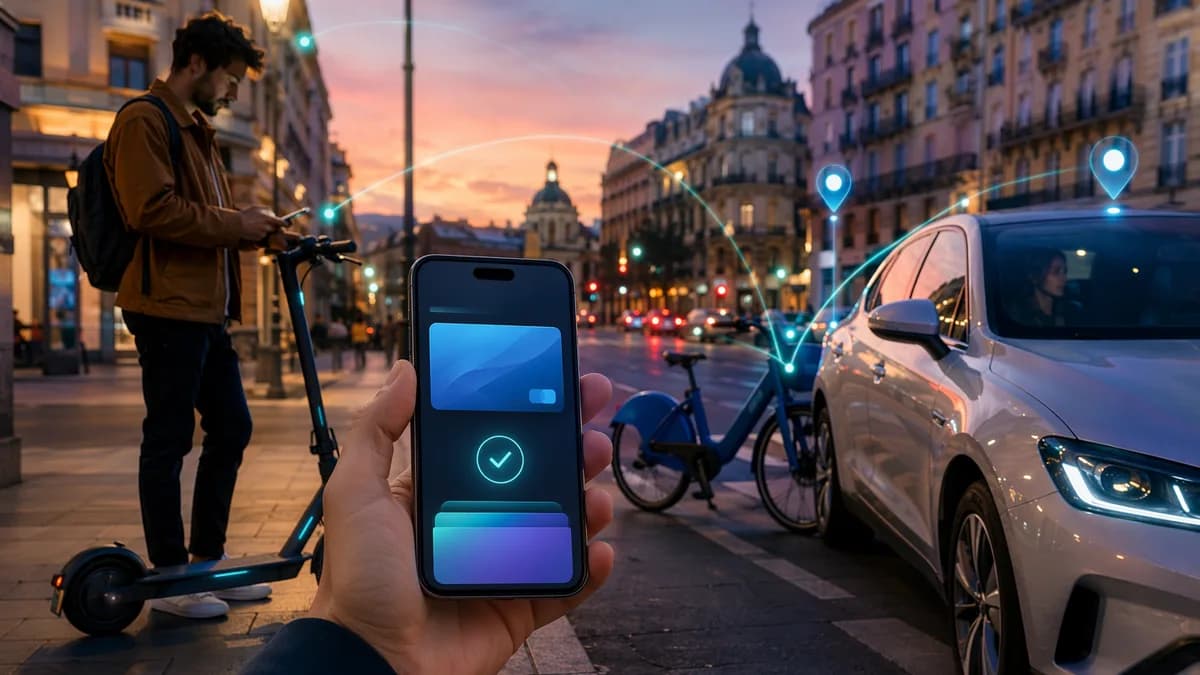
On Wednesday (June 17), Klarna moved further away from being just a checkout option for online shopping and into the daily commute, with Bolt adding Klarna payments for rides, scooters and car rentals in four European markets, PYMNTS reported.
FintechJune 17, 2026· 7 min read· By XOOMAR Insights Team
Klarna Bolt Integration Grabs Europe's Daily Commute
Updated on June 17, 2026
XOOMAR Intelligence
Analyst Take
74/ 100
4 sources analyzedMedium confidenceTrend10Freshness97Source Trust88Factual Grounding93Signal Cluster40
The Klarna Bolt integration is rolling out now and is expected to be fully available across Germany, Sweden, Norway and Finland by the end of June 2026. Car rentals will be available only in Germany. The real signal is not that riders can split a mobility bill. It’s that Klarna is pushing its “pay in full” option into a high-frequency app category where consumers make small, repeated decisions under time pressure.
June 17 marks Klarna’s move from checkout choice to mobility habit
Klarna’s headline product has long been associated with pay later flows, but the Bolt deal leads with something simpler: paying in full through Klarna inside the Bolt app.
That matters. A car ride, scooter unlock or rental booking is not the same kind of purchase as a fashion cart. It is more routine, more time-sensitive and often more tied to daily movement. If Klarna can sit inside those moments, it gets repeated exposure without needing the transaction to be credit-led.
Bolt framed the partnership as a convenience upgrade.
“By adding Klarna, we’re giving our customers another convenient way to pay for the transport services they use most often,” Kaspar Loog, commerce and payments group product manager at Bolt, said.
XOOMAR analysis: Klarna is using “pay in full” as a bridge product. It keeps the brand inside checkout, but avoids making installment debt the center of the story. That is useful for a company trying to be seen as a broader payments network, not only a BNPL lender.
End-of-June rollout puts Germany, Sweden, Norway and Finland first
The rollout geography is tight and deliberate. Bolt users in Germany, Sweden, Norway and Finland will be able to pay for car rides and scooters with Klarna. In Germany, the integration also extends to car rentals.
The payments layer is built on tokenized payments, meaning stored credentials can be used without the rider reentering details for each trip. In mobility, that is not a small detail. Checkout friction is more painful when someone is trying to leave an airport, get to work or unlock a scooter on the street.
The additional company release carried by BusinessWire says Bolt serves more than 200 million customers across over 50 countries and 850 cities, with more than 4.5 million drivers using the platform. Klarna, in the same release, is described as having over 119 million active users worldwide. Those figures explain why the Klarna Bolt integration is not just a product toggle. It connects two large consumer platforms at the payment point.
Frequency is the strategic prize. A customer might shop retail occasionally, but urban transport can happen weekly or daily. Even if each transaction is smaller, the repetition can build habit.
Pay in full gives Klarna a cleaner entry point than monthly financing alone
The source material says customers can choose to pay in full or pay monthly with Klarna in all four markets. The emphasis on pay in full is the sharper strategic move.
Pay in full lets Klarna compete for payment preference without requiring a borrowing decision every time. That can help in categories where the consumer wants speed, not a financing prompt. A ride-hailing payment should feel almost invisible. If Klarna makes it feel familiar and fast, it earns a place in the payment stack.
Björn Bryngelson, Klarna’s head of Nordics, described the ambition directly.
“We are building Klarna into the moments that make up daily life, and few things are more everyday than how you move around your city,” Bryngelson said.
That quote is the thesis. Klarna wants to be present before the customer decides whether they need credit. For readers tracking the difference between BNPL as a credit product and BNPL companies as broader payment platforms, XOOMAR’s Digital Banks With BNPL Rein In Pay Later Spending and BNPL No Hard Credit Check Apps Hide Costs You May Miss offer useful adjacent context.
Bolt gets checkout convenience, Klarna gets repetition
The deal looks different depending on who is holding the phone.
| Stakeholder | What the Bolt Klarna deal changes | XOOMAR read |
|---|---|---|
| Bolt | Adds Klarna as another payment option inside the app | A familiar brand may reduce payment friction for users who already trust Klarna |
| Klarna | Gains placement in rides, scooters and German car rentals | Repeated mobility payments can build habit beyond online shopping |
| Riders | Can pay through stored credentials using Klarna | The near-term value is speed and fewer payment steps |
| Banks and card issuers | No direct response is cited in the source material | The watch item is whether branded payment layers become more visible than the underlying card relationship |
This is not a claim that banks are losing share from this deal. The source does not show that. The more grounded point is narrower: when a payment brand sits inside a daily-use app, it has a shot at becoming the customer-facing choice.
For Bolt, the commercial logic is straightforward. Mobility apps compete on availability, price, speed and ease of use. Payment is part of that experience. A failed or annoying checkout can sour the whole trip.
For Klarna, the data value is also different from retail. Mobility transactions can reflect location, timing and travel behavior. The sources do not say how Klarna will use that information, so the responsible read is limited: the category gives Klarna more frequent payment interactions than occasional e-commerce purchases.
From retail carts to scooter unlocks, Klarna is following the wallet playbook
Klarna’s shift resembles the path many payment products try to take: start in one recognizable use case, then expand until the brand becomes a default reflex.
The Bolt partnership follows another mobility-related Klarna deal. PYMNTS reported that Klarna partnered with Arrive in May to bring its pay in full option to Arrive’s EasyPark app, with Arrive’s parking network covering millions of spots in more than 20,000 cities and 90 countries.
That sequence matters. Parking, rides, scooters and rentals all sit close to the same consumer need: moving through a city without payment getting in the way. Klarna is not randomly adding merchants. It is pushing into categories where speed and stored payment credentials matter.
The difference between e-commerce and mobility is pressure. A shopper can abandon a cart and return later. A rider trying to get across town is less patient. That favors payment options already stored, trusted and one tap away.
The next deadline is full availability by end of June 2026
The immediate watch item is execution. Klarna and Bolt expect full availability across Germany, Sweden, Norway and Finland by the end of June 2026. If that rollout lands cleanly, the next evidence point will be whether Klarna keeps adding similar high-frequency categories.
PYMNTS reported in May that Klarna management said the company wants parity and ubiquity with traditional payment networks by offering payment methods suited to merchant categories including subscriptions, groceries, ridesharing and airlines. The Bolt deal fits that stated direction.
The stronger version of Klarna’s strategy is clear: use pay in full to enter everyday spending, then keep optional monthly payments available where they make sense. The weaker version would show up if these integrations remain isolated placements without visible repeat use or broader category expansion.
For now, the Klarna Bolt integration is small in the way a stored card was once small. It is just another payment button, until it becomes the one people tap without thinking.
Disclaimer: This XOOMAR analysis is for informational and educational purposes only. It is not financial, investment, legal, tax, or professional advice. It does not provide buy, sell, hold, price-target, portfolio, or personalized recommendations. Verify information independently and consult qualified professionals before making decisions.
The Bottom Line
- Klarna is expanding into high-frequency daily spending beyond e-commerce checkout.
- The Bolt partnership gives Klarna repeated exposure in routine transport decisions across four European markets.
- Leading with pay-in-full may help Klarna reduce reliance on its BNPL image.
Klarna’s Shift From Online Checkout to Everyday Mobility
| Previous Klarna positioning | Bolt integration signal |
|---|---|
| Associated mainly with online shopping checkout and pay-later flows | Embedded in Bolt for rides, scooters and car rentals |
| Focused on larger, less frequent e-commerce purchases | Targets small, repeated transport payments |
| BNPL identity was central | “Pay in full” helps position Klarna as a broader payments network |
Sources
Disclaimer: Content on XOOMAR is produced using AI-assisted research, drafting, and verification workflows and is intended for informational and educational purposes only. It does not constitute financial, investment, legal, tax, medical, or professional advice of any kind. All analysis reflects available information at the time of publication and may not be current. Verify information independently and consult qualified professionals before making decisions. Editorial policy

Written by
XOOMAR Insights Team
Research and Editorial Desk
The XOOMAR Insights Team pairs automated research with human editorial judgment. We track hundreds of sources across technology, fintech, trading, SaaS, and cybersecurity, cross-check the facts, and explain what happened, why it matters, and what to watch next. We do not just rewrite headlines. Every article is fact-checked and scored for reliability before it goes live, and we link back to the original sources so you can verify anything yourself.
Explore More Topics
Related Articles
 Fintech
BNPL No Hard Credit Check Apps Hide Costs You May Miss
No-hard-check BNPL can still charge fees, interest, or report missed payments. Compare the big apps before you split a purchase.
Jun 17, 202618 min
 Fintech
Klarna vs Affirm Travel Pits Pay in 4 Against Big Loans
Klarna fits shorter, flexible travel payments. Affirm is stronger for big trips, longer terms, and travel-brand acceptance.
Jun 16, 202620 min
 Fintech
3.28% Klarna Savings Raids Big Banks for US Deposits
Klarna is putting 3.28% APY savings inside its US app, using WebBank for FDIC-insured deposits and taking aim at banks.
Jun 9, 20265 min
 Fintech
BNPL Apps for Travel Turn Refunds Into the Real Risk
Travel BNPL can backfire if refunds, cancellation rules and credit checks don't line up with your trip.
Jun 16, 202622 min
 Fintech
BNPL Apps Can Punish Debit Users, Compare Fees First
Debit card BNPL can stay interest-free, but failed autopay, fees, and limits decide which app is safest.
Jun 16, 202623 min
 SaaS & Tools
Hetzner vs DigitalOcean vs Vultr Splits Budget VPS Race
Hetzner wins price, DigitalOcean wins polish, Vultr wins reach. The best budget VPS depends on your workload.
Jun 17, 202620 min
 SaaS & Tools
Mullvad vs Proton VPN 2026 Reveals a Privacy Winner
Mullvad is the privacy purist’s pick. Proton VPN wins if you want more servers, streaming, and everyday flexibility.
Jun 17, 202621 min
 Technology
Pentagon AI Reports Throw Congress on the Back Foot
The Pentagon says AI can cut congressional reports from 200 hours to five. That speed puts military oversight under pressure.
Jun 17, 20267 min
 SaaS & Tools
Cheap VPS Hosting for Docker Can Punish Apps in 2026
The best Docker VPS in 2026 isn't the cheapest. CPU, RAM, NVMe, bandwidth, backups, and tooling decide what survives production.
Jun 17, 202623 min
 Trading
10 CFD Brokers That Shield You From Negative Balances
Negative balance protection can cap CFD losses at deposits, but broker rules, regulation and client status decide how strong the shield is.
Jun 17, 202620 min
Don't miss the signal
Get our weekly roundup of the stories that matter across tech, fintech, and trading. No noise, just signal.
Free forever. No spam. Unsubscribe anytime.