
New South Wales is preparing to wield cash against an estimated 274,000 registered firearms, directly in response to a terror attack where the primary weapon was a knife. According to BBC World, it’s a move that could see the state attempt to corral nearly a quarter of its legally owned guns.
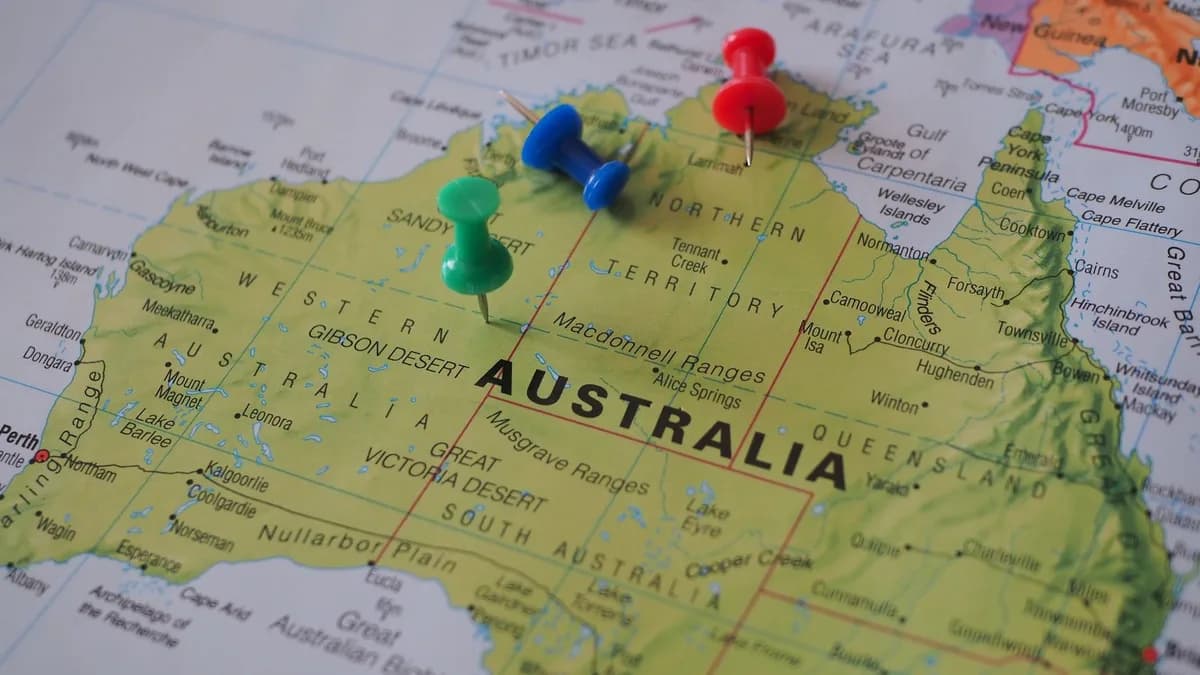
Global TrendsAugust 15, 2026· 6 min read· By XOOMAR Insights Team
Australia to Confiscate 274,000 Guns After Knife Attack
Updated on August 16, 2026
XOOMAR Intelligence
Analyst Take
60/ 100
4 sources analyzedLow confidenceTrend10Freshness95Source Trust92Factual Grounding95Signal Cluster40
The Bondi Beach attack on December 14 last year, which killed 15 people at a Jewish festival, did not involve a firearm. The attackers used knives. Yet the government’s primary legislative response involves tightening firearm ownership laws and launching a National Gun Buyback Scheme. Australia's most populous state will be the first to put federal cash on the table, setting an awkward precedent: a policy framework forged by one type of tragedy (mass shootings) is being reactivated by another (a mass stabbing).
A 274,000-Gun Math Problem
The scope of the effort hinges on the estimated 274,000 registered firearms, about 24% of the state’s registered total, no longer permitted under stricter ownership caps introduced after Bondi.
The new rules: Individuals can now own only four firearms, with some farmers and sports shooters capped at 10. This is a sharp reduction; previously, the only limit was what your license category allowed. The second trigger for the buyback is a reclassification of certain weapons, including banning those that allow multiple shots without reloading.
The cash offer: It rolls out in two phases.
- Phase 1 begins November 2. It features fixed, relatively modest payments: AUS$1,000 for a revolver, AUS$850 for a semi-automatic handgun, AUS$450 for an air rifle. Rifles and shotguns fall within a AUS$650 to 1,000 range.
- Phase 2 starts in early 2027 and targets "higher-value firearms" valued above AUS$3,000, with compensation capped at AUS$10,000 per weapon.
For perspective, the cost of this operation is shared between the New South Wales and federal governments. They'll also spend up to AUS$25,000 per business in grants to help dealers adjust, plus one-off license fee relief. This suggests a significant fiscal and administrative undertaking.
XOOMAR Interpretation: The math here is stark. The buyback is voluntary and compensates at fixed rates, not market value (except for Phase 2's higher cap). A legal owner of a dozen mid-tier sporting rifles now forced to surrender eight of them faces taking a haircut on their investment. How many will participate? The Premier, Chris Minns, said the move "could see hundreds of thousands of guns surrendered," but that depends entirely on compliance, a prospect now challenged by political resistance from One Nation. The state is estimating 24% of its registered stock is affected, but actual surrender rates could be far lower. The logistical challenge for NSW Police, who are administering the scheme, will be immense.
The Knife That Cut Through a Policy Legacy
This policy is significant because it emerges directly from a specific, horrific event. But it acts upon a category of risk, firearms, that wasn't the instrument of that event. This generates a complex political signal we've also seen in other reactive policy environments, such as in the wake of incidents like the Mass Suspect Hunt After Virginia State University Campus Shooting.
Australia’s modern gun control identity was forged in 1996 after the Port Arthur massacre, leading to a sweeping national buyback of semi-automatic and pump-action firearms. The legacy since has been one of comparative stability and a global reputation for restrictive laws. The Bondi attack, while a starkly different type of violence, has nonetheless shattered a political consensus that major firearm reforms were a settled matter. Pressure to be seen "doing something" proved stronger than a strict cause-and-effect policy link.
Prime Minister Anthony Albanese stated the goal plainly: "We must do everything we can to make sure the antisemitic terrorist attack in Bondi doesn't happen again. That includes meaningful nationwide gun reform." The logic connects a broader societal threat (violent extremism) with a specific tool (firearms). It’s preventative policy, but its genesis is deeply reactive.
Chris Minns, NSW Premier: "We want those guns handed in, compensated for and safely destroyed. This is a big undertaking, but the principle behind it is simple: fewer dangerous guns in our community means a safer New South Wales."
The Funding and Federal Friction
A critical detail in the source material underscores a national tension. The National Gun Buyback Scheme is a federal initiative announced after Bondi, but New South Wales is the first and so far only state to commence it. The Bernama-Xinhua report notes, "The federal government has also proposed a national gun buyback scheme, though most other jurisdictions have opposed or not committed to the programme."
This signals a potential post-Bondi fragmentation. A nationally consistent firearms agreement has been a cornerstone of Australian policy since Port Arthur. If NSW proceeds alone, with its own new caps and buyback, it creates a state-level patchwork. Other states may face renewed pressure to follow, especially if future tragedies occur elsewhere, but for now, national unity on this reform is broken.
XOOMAR Interpretation: The split funding model (50/50 with the Commonwealth) and the business support packages indicate the scheme is designed to be politically palatable to those directly impacted, the licensed owners and the industry. It’s not a punitive confiscation; it’s a compensated, negotiated reduction. However, the mandatory new ownership caps are the stick that makes the cash carrot necessary. The long-term success metric won't be the dollar amount spent, but the final tally of firearms surrendered versus that initial estimate of 274,000 affected guns.
The Policy Litmus Tests Ahead
The NSW gun buyback will be measured by several tangible outcomes over the next two years:
Voluntary Surrender Rate: Will the fixed payments in Phase 1 be enough incentive? If surrender numbers are low by late 2027, does the political pressure for a more coercive "mandatory" scheme increase?
The Illicit Stock Question: This program only targets registered firearms from licensed owners. It does nothing to address the black market or illicitly held weapons. Its impact on overall public safety will be debated solely within the context of the legal pool.
The National Domino Effect: Will other states, under public pressure, adopt similar caps and join the federal scheme? Or will Australia's gun laws become increasingly state-based, undermining the "nationally consistent" ideal recommended by the recent royal commission on antisemitism?
The Next Crisis: Any future mass casualty event in Australia, regardless of the weapon used, will now be viewed through the lens of the Bondi response. If it involves a firearm, questions will immediately focus on why more wasn't done faster. If it involves another method, it may trigger yet another cycle of policy in an unrelated domain.
The ultimate paradox is that Australia is using a tool from its most successful public safety playbook, the compensated buyback, in a context unmoored from its original purpose. The goal, as Premier Minns states, is a safer community. But the direct line from the tragedy at Bondi Beach to a gun collection depot in 2026 is a lesson in how political imperatives can shape policy, sometimes bending the narrative of cause and effect itself. As with other reactive economic measures, the full impact often becomes clear only later, similar to how markets assessed the Australian Dollar Plunges After RBA Pivots on Rates.
Impact Analysis
- This marks a significant shift in firearm policy, directly impacting 274,000 registered guns, following a tragedy.
- The law tightens ownership caps to 4-10 firearms and introduces mandatory buybacks, affecting many law-abiding owners.
- The program uses substantial public funds, establishing a potentially controversial national precedent for non-firearm attack responses.
NSW Gun Buyback Payment Phases
Pistol
AUD1,000
Air Rifle
AUD450
Rifle
AUD1,000
Sources

Written by
XOOMAR Insights Team
Research and Editorial Desk
The XOOMAR Insights Team pairs automated research with human editorial judgment. We track hundreds of sources across technology, fintech, trading, SaaS, and cybersecurity, cross-check the facts, and explain what happened, why it matters, and what to watch next. We do not just rewrite headlines. Every article is fact-checked and scored for reliability before it goes live, and we link back to the original sources so you can verify anything yourself.
Explore More Topics
Related Articles
 Global Trends
One Nation Blocks Bondi Attack Gun Buyback Over Rights
Pauline Hanson's One Nation party is vowing to block a federal and NSW government gun buyback, triggered by the Bondi terror attack, framing it as an overreach
Aug 16, 20266 min
 Global Trends
Hero's Assault Charges Scrapped in Deferred Prosecution Deal
Australian hero Ahmed al-Ahmed will not face assault charges after agreeing to a court order, as the prosecution withdrew its case following the alleged victim'
Aug 13, 20265 min
 Global Trends
Coalition Slashes Code by 96 Percent as Housing Crisis Soars
Australia's opposition Coalition will push to drastically cut net migration and strip away 96% of the national construction code, turning energy efficiency and
Aug 11, 20266 min
 Global Trends
Australia Caves To LGBTQ+ Advocates On Census Identity
Australia reversed a week-old decision and will include optional questions on sexual orientation and gender identity in its 2026 census after intense advocacy.
Aug 11, 20266 min
 Global Trends
Prison System Nears 'Total Gridlock' With 86,500 Inmates
England's prisons hold 86,500 inmates in a system designed for 70,000, creating a political firestorm over early release schemes that masks a fundamental breakd
Aug 12, 20266 min
 Fintech
KPMG Made This Whistleblower Cave In
KPMG's apology to a company whistleblower was a cynical move to appease a parliamentary inquiry after a partner allegedly pushed for 'revenue growth at all cost
Aug 15, 20266 min
 Fintech
SEC Exits Crypto After Admitting Rulemaking Defeat
The SEC voted to propose new rules giving crypto projects a legal pathway to operate outside its purview, marking a dramatic policy reversal after years of enfo
Aug 15, 20264 min
 Global Trends
Trump's Harvard Antisemitism Suit Dismissed as 'Political Theater'
A federal judge dismissed the Trump administration's lawsuit against Harvard, ruling it failed to show a current civil rights violation and amounted to politica
Aug 16, 20266 min
 Trading
Loonie Soars on Its Own Merits, Defies Dollar Dominance
The Canadian dollar staged a defiant rally that began before dismal US retail sales data, signaling a potential market re-rating as the Loonie starts to trade o
Aug 15, 20269 min
 Fintech
UK Growth Puzzles Bank of England With Stubborn 1.3% Surge
Stronger-than-expected 1.3% UK growth for 2026 complicates the Bank of England's inflation fight, potentially locking rates on hold.
Aug 15, 20267 min
Don't miss the signal
Get our weekly roundup of the stories that matter across tech, fintech, and trading. No noise, just signal.
Free forever. No spam. Unsubscribe anytime.