
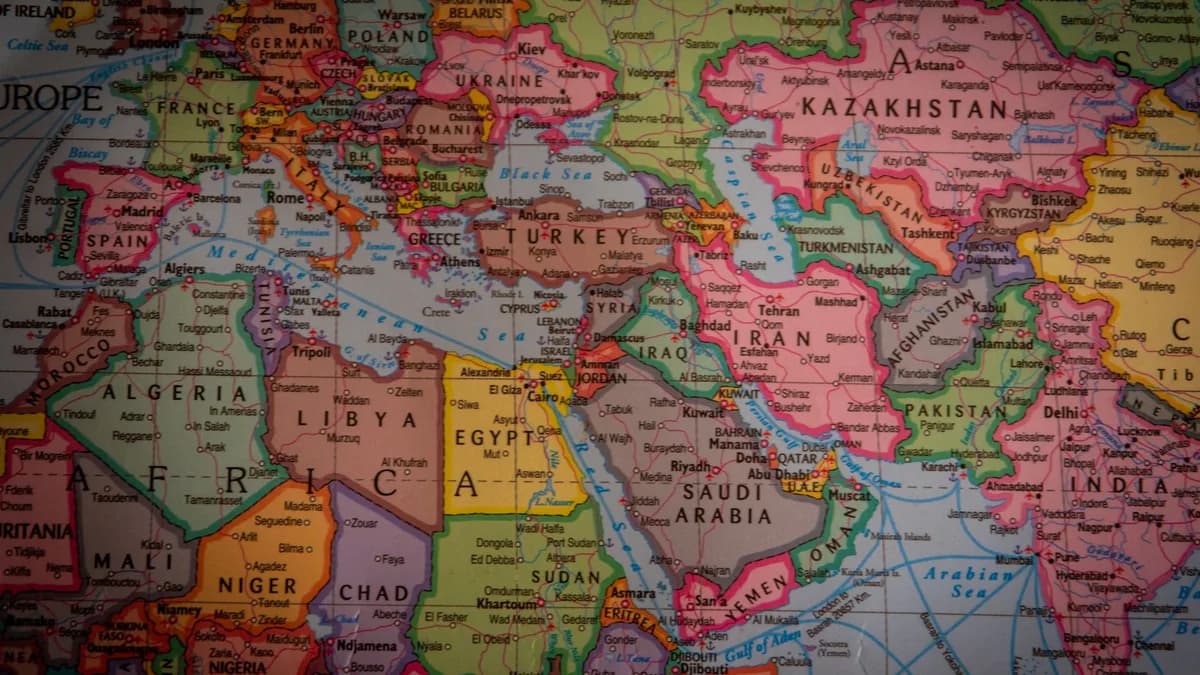
The White House said on Thursday that more than 40 countries, including major allies like Canada, Japan, and South Korea, have helped China sidestep US tariffs, framing a bilateral trade war as a sprawling global affair according to BBC World. This report, arriving weeks before a planned meeting between President Donald Trump and Chinese leader Xi Jinping, exposes the fundamental leak in a unilateral tariff strategy. It's not a story of one nation cheating. It's a story of global commerce, when faced with a costly new barrier, finding the path of least resistance.
Global TrendsAugust 14, 2026· 7 min read· By XOOMAR Insights Team
Global Coalition Smuggles China Past US Tariffs
Updated on August 14, 2026
XOOMAR Intelligence
Analyst Take
58/ 100
4 sources analyzedLow confidenceTrend10Freshness94Source Trust92Factual Grounding96Signal Cluster20
The Tariff Dodge is a Global Affair, Not a Solo Heist
The Trump administration’s focus has consistently been on China. The new report, however, shifts the blame onto a network of over four dozen nations. By naming allies and trading partners, the White House is acknowledging a painful truth: its signature trade policy has created a perverse incentive for the entire global trading system. The supply chains Washington sought to reshape were too interconnected to contain with a single-point tariff. Instead of onshoring production to the US, the policy appears to have offshored it to a constellation of intermediary nations. This transforms the narrative from a US-China duel into a more complex management problem, where enforcing rules means pressuring friends from Ottawa to Seoul.
Mapping the Unofficial Silk Road: How the Goods Rerouted
The mechanics are logistical, not clandestine. The process, known as transshipping, involves moving Chinese-made goods through a third country before final shipment to the United States. The White House accuses China of repackaging goods or conducting limited assembly in these transit hubs to legally alter the “country of origin” on paperwork, a practice it calls “fraud cloaked in paperwork.”
Key transit nodes include Mexico, India, and Malaysia, nations with lower US tariff rates. A product manufactured in Shenzhen might be shipped to a factory in Mexico, where it is unboxed, given a new serial number or minimal finishing touch, and re-boxed for export to the US as a “Mexican” product. This isn’t espionage. It’s a predictable corporate adaptation to market friction, a mundane recalibration of logistics to maintain profit margins. The scale, however, is what makes it strategic.
A Numbers Game: Billions Lost and the Illusion of Tariff Walls
The financial scope of this rerouting is vast, but estimates are tellingly wide. The White House report cites government and private sector figures suggesting between $30 billion and roughly $300 billion in goods are transshipped annually. Using a central figure of $75 billion, the administration estimates annual US tariff revenue losses of $19 billion to $26 billion.
“What has changed in today's Great Transshipment Scam is not merely the speed and scale of this modern form of smuggling, but the breadth, depth, and sophistication of the global Shadow Transshipment Network through which China's tariff evasion now moves,” the White House wrote.
These numbers undermine the tariff wall’s effectiveness. If the upper estimates are accurate, a significant portion of targeted Chinese goods never actually faced the higher duty. The stated goal of protecting US industry and jobs morphs into an outcome where those tariff costs are avoided, intermediary nations capture economic activity, and the US Treasury misses out on revenue. For freelancers and small businesses navigating complex import rules, this level of large-scale evasion presents a stark contrast to their own compliance burdens, a topic we’ve explored in guides on freelancer tax deductions.
From Vietnam to Mexico: Why Partner Nations Looked the Other Way
The economic incentive for transit countries is straightforward and powerful. Becoming a transshipment hub boosts port activity, warehousing, and logistics employment. It offers a short-term GDP lift without the need for significant capital investment in full-scale manufacturing. For nations like Vietnam or Mexico, capturing even a fraction of redirected Chinese export flow is a tangible economic win.
Diplomatically, these countries walk a tightrope. They must balance appeasing Washington, a major security ally and trading partner, with seizing a lucrative, market-driven opportunity. From their perspective, this isn’t necessarily malfeasance; it’s smart arbitrage. They are providing a service global commerce demanded the moment the US raised tariffs on China. The White House report, by publicly naming them, is the first step in applying pressure to close that arbitrage window.
The Historical Playbook: This Isn't the First Trade Policy End-Run
Evading concentrated protectionism is a near-constant in trade history. In the 1980s, Japanese automakers responded to “voluntary” export restraints by shipping more expensive, feature-loaded cars and by moving production to US plants. Textile and apparel quotas for decades spawned a cat-and-mouse game of sourcing and labeling. Today’s transshipping is a digital-age iteration of that same principle: capital seeks efficiency, and punitive tariffs are just another cost to be engineered out of the system.
The through-line is clear. Blunt, unilateral trade measures have always spawned creative, global workarounds. The current episode is distinguished only by the speed of digital logistics and the sheer volume of trade involved, making the workarounds more visible and systemic.
For US Policymakers and Companies, a Brutal Reality Check
The implications of this report are a brutal reality check for two groups.
For US Policymakers: It suggests that broad, unilateral tariffs may be inherently leaky. They distort trade flows rather than stop them, enriching intermediaries and complicating alliances. Future policy must account for the agility of global supply chains or face the same outcome. The legal challenges to Trump’s tariffs, including a recent Supreme Court strike-down, underscore the domestic complexity of sustaining such a strategy, similar to the contentious legal battles seen in attempts to defund universities.
For Multinational Corporations and Importers: A new compliance burden emerges. The report signals that US Customs and Border Protection (CBP) will intensify scrutiny of country-of-origin documentation. Importers face increased due diligence requirements and the risk of retroactive tariffs if fraud is discovered. An unintended consequence is already visible: US companies, seeking to de-risk from China, are now actively diversifying supply chains into many of the very transit countries, like Mexico and Vietnam, that the White House report just implicated in the transshipment network.
The Next Front in the Trade War: Data, AI, and Real-Time Enforcement
The response outlined in the report points to a new front in trade enforcement: technology. The White House stated that US Customs has begun deploying artificial intelligence (AI) tools in a prototype program to detect transshipment patterns. This forecasts a shift from blunt tariff instruments to smarter, data-driven enforcement.
Watch for two developments next:
- Increased Pressure for Customs Data Sharing: The US will likely push allies for deeper, real-time customs cooperation and shared shipment data, a new potential source of diplomatic tension. The ask will be for partners to help police flows they currently benefit from.
- A Move Toward Targeted Measures: The difficulty of policing economy-wide tariffs may push future trade disputes toward more targeted, sector-specific measures (like those already seen on drones or humanoid robots) where supply chains are easier to trace and enforcement is more feasible.
The upcoming Trump-Xi meeting will now occur with this report on the table. It provides the US side with a new talking point: that China’s evasion is a global problem requiring a global solution. But it also reveals the limitations of America’s current approach. The real-world result of the tariffs hasn’t been a defeated China or a revived US factory floor. It’s been the rapid, opportunistic growth of a shadow logistics network spanning dozens of countries. Closing that network will be far harder than building it.
Impact Analysis
- It reveals that unilateral tariffs are creating widespread, systemic evasion rather than reshaping trade as intended.
- It could force the US to apply pressure on dozens of allied economies, straining international relations beyond China.
- It demonstrates how global supply chains are inherently flexible and resistant to containment by blunt, single-nation policies.
Reported Scale of Contribution to Tariff Diversion
Any Country
countries40
Allies/Partners
countries3
Key Transit Hubs
countries3
Sources

Written by
XOOMAR Insights Team
Research and Editorial Desk
The XOOMAR Insights Team pairs automated research with human editorial judgment. We track hundreds of sources across technology, fintech, trading, SaaS, and cybersecurity, cross-check the facts, and explain what happened, why it matters, and what to watch next. We do not just rewrite headlines. Every article is fact-checked and scored for reliability before it goes live, and we link back to the original sources so you can verify anything yourself.
Explore More Topics
Related Articles
 Global Trends
Canada Mocks Trump's Conspiracy Rhetoric Amid Trade War
PM Mark Carney publicly ridiculed Trump's conspiracy claims, marking a sharp diplomatic break as a serious trade cold war escalates between the US and Canada.
Aug 9, 20265 min
 Global Trends
Americans Face Empty Tables as Avocado Pipeline Shuts
America's avocado supply chain from Mexico, worth $3.65 billion annually, is frozen after the U.S. government suspended all operations—including safety inspecti
Aug 9, 20265 min
 Global Trends
Trump Slaps 15% Tariff on China's Chip Silicon
A new US policy levies a 15% tariff and minimum price on imported polysilicon, directly targeting Chinese control over the foundational material for chips and s
Aug 7, 20268 min
 Global Trends
China Evacuates a Million Ahead of Record Typhoon Strikes
Authorities have relocated over a million people as China's most powerful storm this year, Typhoon Dolphin, slams into the coast, causing widespread flooding an
Aug 10, 20264 min
 Global Trends
Netanyahu Rejects Gaza Deal as US Observes Ground Troop Arrival
Israel's Prime Minister publicly rebuffs a US-sponsored peace deal while, on the ground, international forces prepare to move in. The rejection is a political g
Aug 14, 20266 min
 Trading
Cooling Inflation Crushes Dollar as Fed Hike Bets Vanish
A weak Producer Price Index report for July has dramatically lowered expectations for a Federal Reserve rate hike, sparking a sharp selloff in the US Dollar Ind
Aug 14, 20266 min
 Technology
Flock Safety Builds Nationwide Panopticon for Profit
A private corporation is building a nationwide, AI-powered surveillance network that tracks all vehicle movements, shifting policing from targeted investigation
Aug 14, 20265 min
 Trading
Swiss Franc Rallies as US Inflation Miss Unsettles Dollar
A soft U.S. inflation report shattered the dollar's momentum, sending traders fleeing into the Swiss franc as expectations for Federal Reserve tightening collap
Aug 14, 20266 min
 Future Fiction
Manufactured Nostalgia Fuels Summer's Box Office Dark Horse
A new dinosaur blockbuster isn't just a movie, it's a pure-play business strategy betting that low-friction, nostalgic spectacle can still unlock a windfall at
Aug 14, 20267 min
 Technology
TAG Heuer Recolors Motor Racing Legend for Surfers
TAG Heuer's limited edition orange F1 watch faithfully revives a 1980s model originally designed for surfers, revealing how the brand's racing identity was buil
Aug 14, 20267 min
Don't miss the signal
Get our weekly roundup of the stories that matter across tech, fintech, and trading. No noise, just signal.
Free forever. No spam. Unsubscribe anytime.