
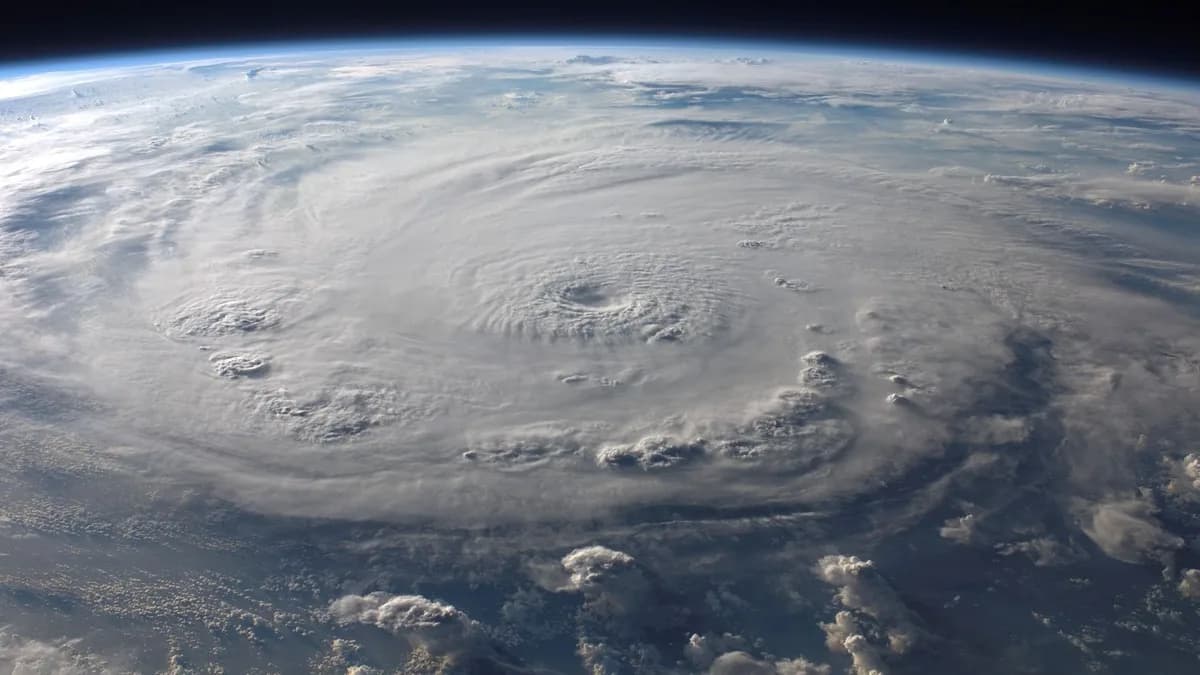
Hurricane Lala weakened to a tropical storm on Sunday, August 16, 2026, after passing south of Hawaii, but the relief that should bring is contradicted by cascading failures across the state. According to a report by Al Jazeera and the Associated Press, the storm's core grazed the Big Island, sparing it a direct landfall for the first time in 155 years. Yet the result is catastrophic flooding, a mounting death toll, and a massive power outage. The headline "storm weakens" dangerously misrepresents the reality on the ground. The real story isn't about wind speed, it's about water volume, and Lala demonstrates that a storm's official category can be a deceptive precursor to its true destructive power.
Global TrendsAugust 16, 2026· 6 min read· By XOOMAR Insights Team
Hurricane Lala's Deadly Category Lie
Updated on August 16, 2026
XOOMAR Intelligence
Analyst Take
73/ 100
4 sources analyzedLow confidenceTrend20Freshness91Source Trust85Factual Grounding93Signal Cluster80
The Metric That Failed: Wind Speed vs. Water Volume
The core narrative trap is our dependence on the Saffir-Simpson Hurricane Wind Scale. By Sunday, Lala's maximum sustained winds had dropped, technically declassifying it from a Category 1 hurricane. But this framing ignores the physics that made Lala a uniquely dangerous rainmaker for Hawaii. The US National Hurricane Center (NHC) explicitly warned that hurricane-force gusts would continue, and more critically, that wind speeds atop mountains could be 30% stronger than the near-surface readings used for categorization.
This mattered because Lala's slow movement and interaction with Hawaii's volcanic topography turned it into a atmospheric water pump. The NHC forecast up to 90cm (35 inches) of rain on the Big Island's higher windward slopes, with a widespread expectation of up to one metre (three feet). In this context, the storm's "weakening" is a meteorological technicality. The threat fundamentally shifted from wind-driven structural damage to hydrologic chaos: flash floods that can sweep homes from their foundations and mudslides that bury communities. This event is a clear case study in how official storm classifications can misdirect public attention from the deadliest hazard.
A Snapshot of the Deluge: Where the Chaos Landed
The immediate impacts show a system overwhelmed not by wind, but by water. The numbers, while still emerging, paint a dire picture:
- Power and Infrastructure: More than 130,000 households were without power Sunday morning across Hawaii's main islands. At least three hospitals were running on generators, a precarious situation during a flooding crisis.
- Human Toll and Rescue: At least one person died in a car accident in the Big Island's South Point area. A critical search-and-rescue mission was launched after flash floods swept several occupied homes off their foundations in the coastal communities of Na'alehu and Wai'ohinu.
- Physical Damage: Hawaii Governor Josh Green reported 19 roofs were lost, but the greater damage is likely unseen: washed-out roads, crippled bridges, and contaminated water systems. Governor Green noted crews had already responded to "more than 30 sites" of road impacts by Saturday evening.
Resident anecdotes from the source material underscore the pervasive, grinding nature of the flood threat. Christine Matsuda of Waimea described "big gusts every few minutes rattle the whole house," while others, like fire captain Mike Caputo, focused preparedness on flash flooding and the risk of immense, shallow-rooted albizia trees blocking roads. This isn't hurricane hunkering; it's a battle against inundation, a scenario for which the "tropical storm" label feels woefully inadequate.
The Gridlock of Response: Evacuation vs. Economic Stasis
The storm's mixed signals created a crisis of response priorities. Governor Green urged residents, "You definitely want to be home, do not be out on the roads," and shelters opened across the islands. This official stance clashed with the economic inertia of Hawaii's tourist economy, which often promotes a "ride it out" mentality to avoid costly, reputation-damaging shutdowns.
The logistical strain is acute. Response efforts must be coordinated across multiple island counties, Maui, Hawaii, Kauai, Oahu, each with limited shared resources and unique topographies under threat. The activation of Civil Defense, the National Guard, and the Coast Guard for the home-sweeping incident shows the severity is pulling in military-grade assets. This event will test whether disaster protocols built for wind and storm surge are agile enough to pivot to a widespread, concurrent inland flood and landslide emergency. For more on the human impact of major storms, see our report on Japan’s Deadly Storm Strands Thousands in Airport Shelter.
Recalibrating Resilience for a Wetter Future
Hurricane Lala's legacy should be a forced reevaluation of risk communication and infrastructure planning in Hawaii and beyond.
- Communication Priority: Public advisories must visually and verbally prioritize rainfall forecasts, flood maps, and landslide risks with the same prominence as the wind-speed cone. The public needs to understand that a "weaker" storm can be more dangerous than a fast-moving, windy one if it parks itself and pours.
- Infrastructure Focus: Investments must shift toward slope stabilization, modernized drainage systems capable of handling meter-scale rainfall, and aquifer recharge projects to manage the deluge. Hardening the grid against wind is less urgent than protecting communities from waterborne debris and ensuring water systems remain potable.
- Financial Realities: The insurance industry will be forced to re-evaluate. If "mere" tropical storms can cause this level of freshwater flooding damage, flood risk models and premiums will need recalibration, potentially placing new financial burdens on homeowners far from the coast.
XOOMAR Analysis: The source material hints at a deeper vulnerability: many on the Big Island "live off the grid in improvised housing," areas acutely susceptible to the life-threatening mudslides forecasted. This storm exposes socioeconomic fault lines where resilience is lowest.
What to Watch as the Water Recedes
The immediate watch points are clear, linked directly to the source material's reporting:
- The Death Toll: Will the single confirmed fatality in South Point remain the only one? The success of the active search-and-rescue mission for the swept-away homes is the most urgent metric.
- Secondary Crises: Officials raised the fear that strong winds could "spark catastrophic wildfires" in the storm's aftermath, a cruel irony following a flood. Dry, hurricane-force gusts hitting waterlogged, debris-strewn terrain create a new fire hazard.
- Long-Term Displacement: How many of the 19 lost roofs and the homes swept from foundations translate into long-term homelessness? The recovery timeline for isolated communities will be a key indicator of systemic resilience.
Hurricane Lala's lesson is blunt. As climate patterns shift, tropical storm flooding may become a more frequent and devastating seasonal threat than direct hurricane hits. The operational strain on emergency management will be immense if every "weak" storm requires a full-scale, multi-agency flood response. The central tension exposed here is critical for all Pacific communities: a storm can successfully "weaken" on a meteorologist's chart while its capacity for destruction intensifies on the rain-lashed ground. For ongoing coverage of this event's aftermath, follow our analysis at Hawaii's Hurricane Near-Miss Kills One, Shatters Power Grid.
Why This Changes Everything
- Demonstrates that a hurricane weakening in wind speed doesn't mean the danger is over—persistent water volume is a more critical threat.
- Exposes a flaw in public reliance on the Saffir-Simpson scale for gauging overall storm risk, which could mislead communities and officials.
- Highlights that meteorologists warned of continued hurricane-force gusts and up to 90cm (35 inches) of rain despite the 'weakening' label, showing the vital need to heed all forecast elements.
Hurricane Lala Rainfall Projection vs. Threat Perception Gap
Wind Speed Classification (Category 1->TS)
%75
Rainfall Potential (on slopes)
%100
Sources

Written by
XOOMAR Insights Team
Research and Editorial Desk
The XOOMAR Insights Team pairs automated research with human editorial judgment. We track hundreds of sources across technology, fintech, trading, SaaS, and cybersecurity, cross-check the facts, and explain what happened, why it matters, and what to watch next. We do not just rewrite headlines. Every article is fact-checked and scored for reliability before it goes live, and we link back to the original sources so you can verify anything yourself.
Explore More Topics
Related Articles
 Global Trends
Hawaii's Hurricane Near-Miss Kills One, Shatters Power Grid
Hurricane Lala's near-miss with Hawaii's Big Island still caused a fatality, widespread destruction, and a massive power outage, exposing the thin margin betwee
Aug 16, 20266 min
 Global Trends
Typhoon Dolphin Unloads Beijing's Annual Rainfall in a Day
Typhoon Dolphin is delivering over a third of Beijing's annual rainfall in just 24 hours, forcing thousands to evacuate and testing the inland capital's flood d
Aug 13, 20268 min
 Global Trends
Europe's Core Burns As Belgian Wildfire Threatens Germany
Belgium's historic wildfire, fueled by its fifth heatwave, has burned over 6,700 acres and forced 600 people to flee as it advances towards Germany, marking a n
Aug 16, 20264 min
 Global Trends
Wildfire Survivors Face 'Total Incinerated Destruction' in Okanagan
Thousands of evacuees from the affluent Okanagan region are confronting 'total incinerated destruction,' a climate catastrophe that has turned their prepared co
Aug 14, 20269 min
 Global Trends
Brother's Vigil Haunts Colombia Quake Rubble Rescue
A brother's agonizing wait at the rubble of a collapsed apartment building captures the human toll as rescuers race to find survivors of Colombia's devastating
Aug 11, 20265 min
 Trading
Retail Sales Crash Revives Gold's $100 Rally
Gold surged $100 as plummeting U.S. retail sales crushed expectations for a Federal Reserve rate hike, turning the metal into a direct trade against a weakening
Aug 17, 20268 min
 Technology
Hayden Panettiere, Heroes Star, Dies Unexpectedly at 36
Actress Hayden Panettiere, famous for 'Heroes' and 'Nashville,' has died at age 36, just days before her birthday, weeks after publishing a memoir detailing her
Aug 17, 20264 min
 Fintech
Euro Shocks With €8.6 Billion Surplus, Defies Dollar
The Eurozone shocked markets with a sudden €8.6 billion trade surplus, propelling the euro higher and providing fundamental support that strengthens the ECB's h
Aug 17, 20264 min
 Global Trends
Mob Heist Steals $93 Million Renaissance Art in Italy
Thieves stole Renaissance artworks worth up to €80 million from a Sicilian museum by exploiting a crowded city festival, making off with some of Antonello da Me
Aug 17, 20264 min
 Global Trends
Crown Prince’s Protest Exposes Imperial Monarchy Rift
Japan’s Crown Prince Akishino broke royal protocol by publicly opposing the government’s new male-only succession law, exposing a deep rift within the imperial
Aug 17, 20265 min
Don't miss the signal
Get our weekly roundup of the stories that matter across tech, fintech, and trading. No noise, just signal.
Free forever. No spam. Unsubscribe anytime.