
More than 267,000 Indiana customers lost power in a single day last week when severe thunderstorms hit the U.S. Midwest. That’s 8% of the state's 3.3 million utility customers, according to data from PowerOutage.us reported by the Guardian World. Statewide, the outages were spearheaded by a single utility where over half its customers went dark.
Global TrendsAugust 16, 2026· 5 min read· By XOOMAR Insights Team
Midwest Winds Snap Power for Half a Million Homes
Updated on August 16, 2026
XOOMAR Intelligence
Analyst Take
69/ 100
3 sources analyzedMedium confidenceTrend10Freshness97Source Trust90Factual Grounding90Signal Cluster20
This isn’t an anomaly. It’s the annual bill for living in a region where the power grid meets volatile spring and summer weather. The recent storm that cut supply to 540,000 homes and businesses across multiple states is a brutal case study in a recurring problem, similar to a recent hurricane's impact on Hawaii's power grid.
Why Storms Paralyze the Midwest Grid Every Year
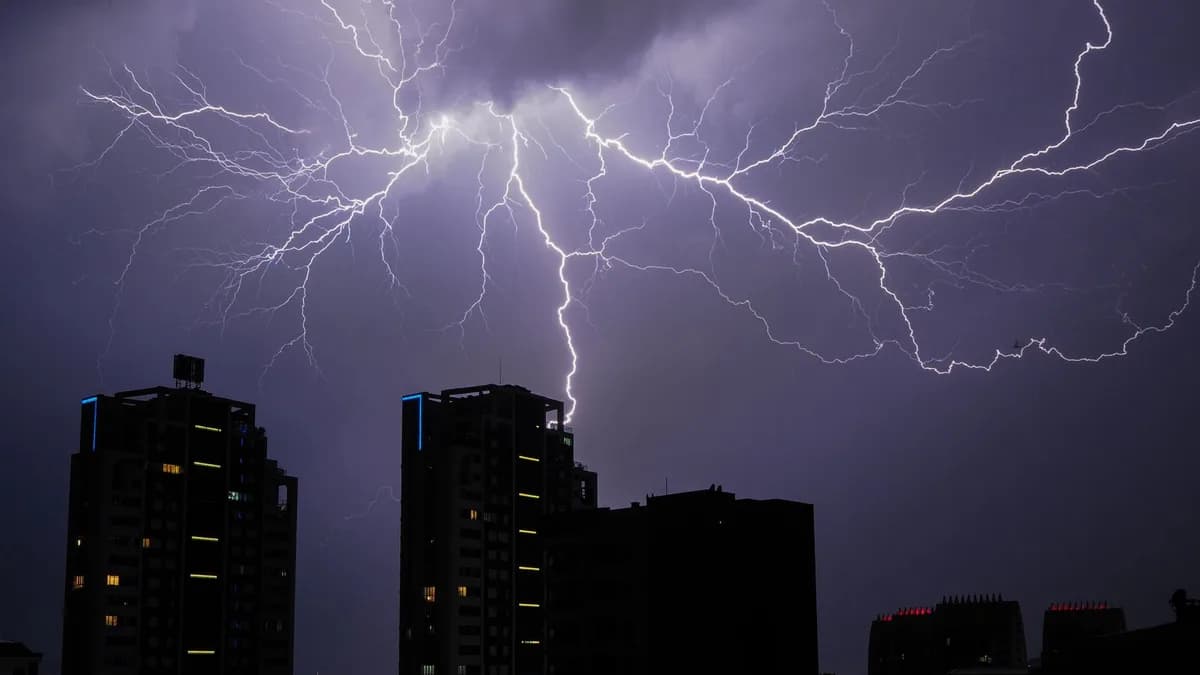
The Midwest is uniquely vulnerable to severe convective storms: systems that spawn tornadoes, derechos, and straight-line winds. These aren't gentle rains. AccuWeather forecasters warned of "damaging wind gusts" and "repeated downpours" that could trigger flash flooding. Wind is the primary culprit for mass outages, snapping poles and hurling trees into lines.
The economic ripple effects extend far beyond a dark house. Perishables spoil. Businesses shutter. Critical infrastructure strains. As we've seen in cases where vendor mortality scars businesses left without data, dependency on constant power creates cascading risk. When the grid fails, everything connected to it falters.
How 90 MPH Winds Topple a Regional Power System
The physics are simple. A mature tree weakened by saturated soil meets a wind gust. It falls, taking out a distribution line that feeds hundreds of homes. Repeat this thousands of times across a state. The source material notes "widespread damage to electric infrastructure, including downed poles, power lines and trees."
This damage pattern highlights a key weakness. Rural and suburban grids, with miles of above-ground lines running through wooded areas, are hit hardest. Denser urban centers often have more protected, redundant infrastructure. The storm in Indiana devastated the service area of the Northern Indiana Public Service Company (Nipsco), leaving 258,885 of its 468,000 customers without power. That’s a 55% failure rate for one utility, indicating damage was intensely concentrated where lines are most exposed.
“There is widespread damage to electric infrastructure, including downed poles, power lines and trees,” Nipsco stated, warning restoration could take days in some areas.
The Human Toll When the Lights Go Out for Days
Beyond the numbers, these outages are a public safety crisis. The storms turned deadly, including a four-year-old killed in Indiana flooding:
- A four-year-old boy was killed in Geneva, Indiana, when a tree fell on his home.
- In Roseville, Ohio, a resident died during a health emergency because flooded roads blocked first responders.
- Officials investigated whether weather caused a fatal house explosion in Portage, Indiana.
The aftermath creates a days-long scramble. Traffic lights die, closing intersections. Schools cancel classes. Without air conditioning in summer heat or heat in winter storms, vulnerable populations face medical risks. As food spoils and gas stations can't pump fuel, communities rely on generators, if they have them. This event required 40 Ohio Army National Guard members and dozens of out-of-state departments to assist with water rescues and recovery, stretching emergency services thin.
Grid Hardening: A Multi-Billion Dollar Question
The solution is known, but staggeringly expensive. Grid hardening involves:
- Strategic vegetation management: Aggressive tree trimming near rights-of-way.
- Stronger infrastructure: Replacing wooden poles with composite or steel, reinforcing transmission towers.
- Undergrounding lines: Burying cables to protect them from wind and trees, a process that can cost millions per mile.
Who pays? The cost typically falls to utilities, which seek rate increases from regulators, passing the bill to customers. For a massive, aging grid, the capital required is in the tens of billions. This creates a brutal calculus: invest enormous sums to mitigate occasional severe events, or accept periodic, costly blackouts. Modern smart grid technology and microgrids can help by automatically isolating damage and rerouting power, but they require upfront investment too. It's a long-term challenge, similar in scale to the infrastructural dependencies highlighted when Romania's nuclear power fails as Danube runs dry.
How to Weather the Next inevitable Outage
Since these storms are a recurring fact of life, preparedness is personal infrastructure.
Build an outage kit now: Include flashlights, batteries, a battery-powered radio, non-perishable food, water (one gallon per person per day), and cash. Keep critical devices charged.
Know your utility's tools: Bookmark your provider's outage map and reporting page. Northern Indiana Public Service Company (Nipsco) and Duke Energy, which deployed 1,000 additional workers in Ohio, offer these resources.
Consider backup power carefully:
- Portable generators: Provide essential power but must be operated outdoors to avoid fatal carbon monoxide poisoning.
- Home battery systems (like power walls): Offer seamless, safe backup but at high installation cost.
The forward-looking implication is clear. Last week’s 540,000-customer outage is a benchmark, not a ceiling. As long as overhead wires, mature trees, and severe winds occupy the same space, the cycle will continue. The watch item isn't the next storm forecast, it's whether utilities and regulators start treating grid resilience as a continuous capital project rather than a recurring cleanup cost. For residents, the takeaway is simpler: have a plan, because the grid remains fragile.
Impact Analysis
- Massive outages like the 540,000 homes and businesses affected disrupt daily life, businesses, and critical infrastructure, creating cascading economic and safety risks.
- The Midwest's unique vulnerability to severe convective storms with 90+ mph winds makes this an annual, recurring problem rather than a one-off event, highlighting systemic grid weaknesses.
- The dependency on constant power means any failure has far-reaching consequences—from spoiled perishables to shuttered businesses—exposing the fragility of modern infrastructure.
Outages as % of Indiana Customers
Indiana
%8
Midwest Region
%0
Sources

Written by
XOOMAR Insights Team
Research and Editorial Desk
The XOOMAR Insights Team pairs automated research with human editorial judgment. We track hundreds of sources across technology, fintech, trading, SaaS, and cybersecurity, cross-check the facts, and explain what happened, why it matters, and what to watch next. We do not just rewrite headlines. Every article is fact-checked and scored for reliability before it goes live, and we link back to the original sources so you can verify anything yourself.
Explore More Topics
Related Articles
 Global Trends
Four-Year-Old Among Six Dead in Record Indiana Flood
Six people are dead, including a young boy, after historic storms shattered flooding records and ravaged Indiana, the state's worst deluge in over 30 years.
Aug 16, 20265 min
 Global Trends
Hawaii's Hurricane Near-Miss Kills One, Shatters Power Grid
Hurricane Lala's near-miss with Hawaii's Big Island still caused a fatality, widespread destruction, and a massive power outage, exposing the thin margin betwee
Aug 16, 20266 min
 Global Trends
Puerto Rico Cuts Off Water For Two Days At A Time
Puerto Rico has imposed a 48-hour water cutoff on thousands of residents, its most severe rationing yet, as a historic drought pushes its neglected water system
Aug 9, 20266 min
 Global Trends
Lake Mead Hits All-Time Low, Threatens Hoover Dam
Lake Mead, the largest U.S. reservoir, just fell to its lowest level ever, moving the Southwest's foundational water crisis into the present and endangering the
Aug 15, 20266 min
 Global Trends
Tokyo Floods Kill Four, Paralyze Airport Amid Record Rain
Four people died and thousands were stranded at an airport after a single, record-breaking night of rain flooded Tokyo’s eastern commuter region, revealing a de
Aug 14, 20267 min
 Trading
Retail Sales Crash Revives Gold's $100 Rally
Gold surged $100 as plummeting U.S. retail sales crushed expectations for a Federal Reserve rate hike, turning the metal into a direct trade against a weakening
Aug 17, 20268 min
 Technology
Hayden Panettiere, Heroes Star, Dies Unexpectedly at 36
Actress Hayden Panettiere, famous for 'Heroes' and 'Nashville,' has died at age 36, just days before her birthday, weeks after publishing a memoir detailing her
Aug 17, 20264 min
 Fintech
Euro Shocks With €8.6 Billion Surplus, Defies Dollar
The Eurozone shocked markets with a sudden €8.6 billion trade surplus, propelling the euro higher and providing fundamental support that strengthens the ECB's h
Aug 17, 20264 min
 Global Trends
Mob Heist Steals $93 Million Renaissance Art in Italy
Thieves stole Renaissance artworks worth up to €80 million from a Sicilian museum by exploiting a crowded city festival, making off with some of Antonello da Me
Aug 17, 20264 min
 Global Trends
Crown Prince’s Protest Exposes Imperial Monarchy Rift
Japan’s Crown Prince Akishino broke royal protocol by publicly opposing the government’s new male-only succession law, exposing a deep rift within the imperial
Aug 17, 20265 min
Don't miss the signal
Get our weekly roundup of the stories that matter across tech, fintech, and trading. No noise, just signal.
Free forever. No spam. Unsubscribe anytime.