
Starbucks Korea will close more than 2,000 stores early on June 22 for staff history training after a “Tank Day” tumbler promotion landed on the anniversary of the Gwangju Uprising, where at least 165 civilians were killed by the military.
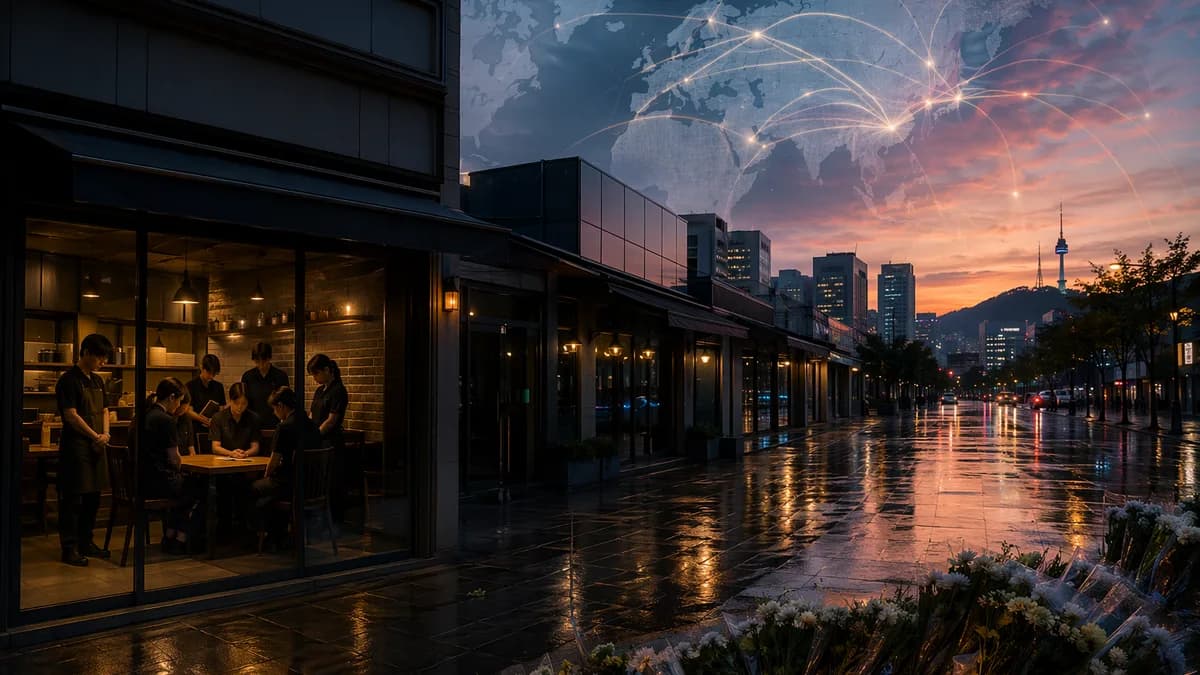
Global TrendsJune 15, 2026· 6 min read· By XOOMAR Insights Team
Starbucks Korea Shuts 2,000 Stores After Tank Day Fury
Updated on June 15, 2026
XOOMAR Intelligence
Analyst Take
61/ 100
4 sources analyzedLow confidenceTrend20Freshness93Source Trust92Factual Grounding94Signal Cluster20
That is the core of the Starbucks Korea Tank Day backlash: a retail campaign collided with one of South Korea’s most painful democratic memories. The company’s South Korean operator, Shinsegae Group, fired the local chief executive on the day the scandal broke and said staff will receive training in historical awareness and social sensitivity, according to BBC World.
South Korea’s President Lee Jae Myung condemned the episode as “this inhumane and disgraceful conduct” on social media during the backlash.
The closure is not a routine HR session. It is a public admission that the mistake was not just bad copy. It exposed a failure to read the country where the brand operates.
Why did Starbucks Korea's May 18 promotion trigger such a fierce backlash?
The promotion ran into the May 18 anniversary of the 1980 Gwangju Uprising, when military forces violently suppressed pro-democracy protesters. The official toll cited in the source material is at least 165 civilians killed, though many believe the real figure is higher.
The problem was the wording and timing. Starbucks Korea promoted reusable cups under a “Tank Day” campaign for its Tank Series tumblers, which were marketed as having “spacious volume” for coffee. On another date, “tank” might have passed as awkward product branding. On May 18 in South Korea, it carried a far heavier charge.
The backlash moved quickly. Protests were held outside shops, calls to boycott followed, and the chain reportedly suffered a significant drop in sales. Shinsegae Group then announced a rare nationwide early closure for staff education. For a shorter update on the closure plan, see XOOMAR’s Starbucks Korea Training Shuts Stores After May 18 Row.
Analysis: the force of the reaction shows how little margin brands have when marketing brushes against national trauma. Starbucks Korea was not judged only as a coffee chain. It was judged as a public actor operating inside South Korea’s democratic memory.
What happened with the “Tank Day” campaign at Starbucks Korea?
Starbucks Korea said the Tank Series was one of several tumbler lines in a campaign running from 15 to 26 May. But the phrase “Tank Day” landed on the Gwangju anniversary, and that made the campaign look jarring rather than clever.
The company initially apologized “for causing inconvenience and concern to our customers due to this”. That did not stop the fallout. Shinsegae Group fired the country’s chief executive, and Chairman Chung Yong-jin will also take the training.
Stores across South Korea are set to close at 15:00 local time, or 06:00 GMT, for three hours of training and will not reopen until the following day. AFP, via The Straits Times, reported that a handful of airport outlets are excluded. The closure is described as the first nationwide early closure of Starbucks Korea since the chain opened in the country in 1999.
A second issue deepened the anger. Promotional material reportedly used the Korean phrase “tak on the table!”. “Tak” can sound like an object being slapped on a table, but it was also used in a controversial police statement in 1987 about the death of a student activist in custody.
Shinsegae Group said marketers chose the slogan after using an AI tool to help with suggestions. That detail matters because it shifts the lesson from one bad phrase to a broken approval process.
Why does May 18 still shape how South Koreans read corporate messaging?
The Gwangju Uprising is not distant history in South Korea’s public life. In May 1980, citizens in Gwangju protested against military rule. Troops under the military regime of Chun Doo-hwan responded with deadly force.
Later investigations confirmed not only killings, but also rape and sexual assault by troops. The uprising became a rallying point for pro-democracy activists and fed into the June 1987 movement that toppled Chun’s regime. His rule ended in 1988. He was convicted of treason and corruption in 1996, later released after a presidential pardon, and died in 2021 aged 90.
That is why a tank reference on May 18 does not read as a small branding slip to many South Koreans. It can read as disrespect toward victims, survivors, and the democratic struggle that followed.
The Starbucks Korea Tank Day case also shows why symbols matter. Dates, slogans, and product names can carry meanings that are invisible to a marketing team looking only at product features.
How did public pressure force Starbucks Korea into a visible apology?
In this case, pressure came through several channels at once: public criticism, protests outside shops, boycott calls, presidential condemnation, and reported sales damage. Shinsegae Group’s response moved from apology to personnel action to operational disruption.
That sequence is important.
| Pressure point | Starbucks Korea response |
|---|---|
| Public outrage over “Tank Day” timing | Apology to customers |
| Leadership scrutiny after the scandal | Local CEO fired |
| Questions over cultural awareness | Staff history and sensitivity training |
| Approval-process failure | Marketing review overhaul planned |
Reuters reported that Starbucks Korea plans to revise marketing approval procedures, including a social-sensitivity checklist covering history, commemorative dates, politics, disasters, military issues, gender, violence, and hate expressions.
That is the practical repair job. The closure gets attention, but the checklist is where recurrence risk should fall. Public anger forcing institutional response is not limited to corporate cases, as seen in XOOMAR’s coverage of Burnham Scraps Cash Hope for Waspi Women After Uproar, though the facts and stakes differ sharply.
What should global brands learn from Starbucks Korea Tank Day?
The lesson is blunt: cultural risk cannot sit only with legal review or a social media team. If a campaign uses charged words, historical dates, national symbols, or AI-generated slogans, someone with local authority needs power to stop it before launch.
A concrete example from this case: a coffee chain promoting a Tank Series tumbler between 15 and 26 May should have checked whether any date inside that window carried military or democratic significance. May 18 did. The campaign still went live.
The use of an AI tool adds another warning. AI can generate phrases that sound catchy while missing historical weight. That does not absolve the company. It raises the standard for human review.
Starbucks Korea’s store closure is a necessary repair step, but the deeper test is procedural. Watch whether Shinsegae’s new sensitivity checks become a real veto point in marketing approval, or just another box staff tick after the next campaign is already built.
Impact Analysis
- The backlash shows how brand campaigns can become national controversies when they ignore historical trauma.
- Closing more than 2,000 stores signals a rare public corrective action by a major retailer.
- The episode raises pressure on global brands to localize marketing with deeper cultural and historical awareness.
Starbucks Korea stores closing early for staff training
Stores
stores2,000
Sources

Written by
XOOMAR Insights Team
Research and Editorial Desk
The XOOMAR Insights Team pairs automated research with human editorial judgment. We track hundreds of sources across technology, fintech, trading, SaaS, and cybersecurity, cross-check the facts, and explain what happened, why it matters, and what to watch next. We do not just rewrite headlines. Every article is fact-checked and scored for reliability before it goes live, and we link back to the original sources so you can verify anything yourself.
Explore More Topics
Related Articles
 Global Trends
Korean Police Raid Starbucks Over Ghoulish Uprising Tumbler
South Korean police executed a raid on Starbucks Korea’s headquarters, sharply escalating a criminal investigation into the company’s controversial ‘Tank Day’ p
Aug 9, 20264 min
 Fintech
DOJ Charges 455 Providers for $6.5B in Healthcare Fraud
The Department of Justice has replaced traditional fraud investigations with AI-driven analytics, charging 455 defendants in a $6.5 billion scheme and forcing p
Aug 10, 20267 min
 Fintech
Poland Launch Tests Paysafe's Legacy Card Pivot
Paysafe's launch in Poland is a strategic test of whether it can upgrade its existing prepaid card users into full digital wallet customers, following a wave of
Aug 10, 20266 min
 Technology
Microsoft's PC Tax Hike Ignites Sticker Shock on New Windows
Microsoft is implementing a 7-10% price hike for Windows 11 licenses to PC makers, a significant increase that will add further cost pressure to new computers a
Aug 10, 20267 min
 Technology
Pentagon Bets $1.4B on China-Free Battery Breakthrough
The Pentagon issued a $1.4 billion loan to Sila Nanotechnologies to build next-generation batteries in the U.S., a direct move to break China's grip on critical
Aug 10, 20265 min
 Global Trends
Powerful 7.4 Quake Collapses Buildings Across Colombia
A 7.4 magnitude earthquake struck western Colombia, collapsing buildings in Cali and damaging regional airports while violent shaking was felt in the capital, B
Aug 10, 20264 min
 Cybersecurity
Ceva Logistics Hack Exposes Millions of Customer Data Records
A cyberattack on global shipper Ceva Logistics has compromised customer name, address, and contact data, rippling out to major clients including banks, luxury r
Aug 10, 20266 min
 Technology
Hall Effect Keyboard Hits Historic Low At $104
Keychron's flagship Hall effect keyboard has dropped to its lowest-ever price of $104, part of a broader trend where premium PC and gaming hardware is becoming
Aug 10, 20265 min
 Trading
AUD Climbs Past Key Support As Dollar Sentiment Shifts
The Australian dollar is rallying on shifting risk appetite, defending its 200-day moving average and aiming for a technical breakout toward $0.7120 against the
Aug 10, 20267 min
 Technology
Meta Claims Zuckerberg Yacht Crew Missed Distress Call
Meta says the crew aboard Mark Zuckerberg's superyacht didn't hear a Coast Guard radio call to assist a stranded boat, sparking outrage over wealth and duty.
Aug 10, 20266 min
Don't miss the signal
Get our weekly roundup of the stories that matter across tech, fintech, and trading. No noise, just signal.
Free forever. No spam. Unsubscribe anytime.