
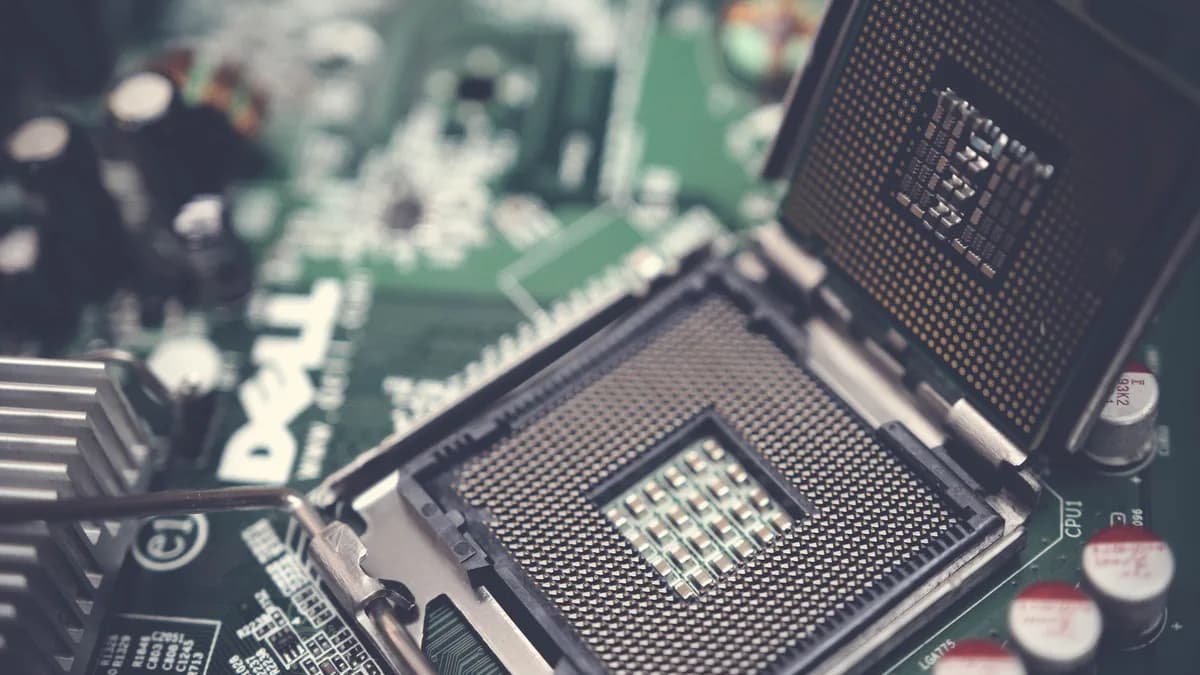
The headline is straightforward: Anthropic is building a custom AI chip team. The obvious conclusion is that it wants to cut costs. But for a lab with a model as large as Claude, trimming compute bills isn't just good business. It's an existential bet that the next leap in AI capability requires a hardware brain built specifically for its software mind. According to the TechCrunch report, Anthropic is aiming for "co-design," shaping hardware and models in tandem for speed and efficiency.
TechnologyAugust 9, 2026· 5 min read· By XOOMAR Insights Team
Anthropic Tightens Grip With Custom AI Chip Team
Updated on August 9, 2026
XOOMAR Intelligence
Analyst Take
62/ 100
4 sources analyzedLow confidenceTrend10Freshness95Source Trust90Factual Grounding94Signal Cluster60
This move confirms Anthropic's entry into the AI chip race, but with a critical difference from rivals. OpenAI builds its Broadcom-made Jalapeño chip for inference. Google and Meta run on their own TPUs and MTIA accelerators. Each has a clear endgame. Anthropic's announcement is murkier: a hiring plan, not a product launch. It raises a core strategic question other labs have already answered.
Is This an Escape from Nvidia, or Just an Expensive Hedge?
Anthropic was blunt: this isn't a break. The company maintains a multi-chip approach with partners like AWS, Google, Nvidia, and AMD. A spokesperson framed the goal as making "Claude runs faster and more efficiently at the scale users require."
XOOMAR Analysis: The phrasing is deliberate. This is a hedge, not a flight. Building custom silicon is a years-long, capital-intensive process costing hundreds of millions. Relying solely on that path would be reckless when you need to scale now. Anthropic’s massive, pre-existing commitments prove the point. The company secured a staggering 3.5 gigawatts of next-generation TPU capacity from Google and Broadcom for 2027, on top of another gigawatt arriving in 2026.
"So the announcement is a hiring plan attached to a design philosophy. Every part of the sentence that would make it a break with the existing supply chain is missing."
Anthropic isn't quitting the Nvidia ecosystem. It's building a parallel, proprietary track alongside it. The real goal is optionality, which brings its own set of risks.
Why Would a $30 Billion AI Lab Risk a Costly, Slow Silicon Project?
The answer is in the arithmetic. Anthropic’s revenue run-rate has reportedly surged past $30 billion, tripling from late 2025. It serves billions of tokens daily. At that scale, even a microscopic reduction in the cost per query compounds into billions in savings annually. That financial heft makes a chip program feasible for the first time.
But there’s a catch. General-purpose GPUs carry silicon "overhead" for workloads a lab like Anthropic never runs. A chip co-designed with Claude could strip that out, making every watt and transistor count. The tradeoff is stark.
Performance vs. Pace: A custom chip must target a specific, stable model architecture. But AI model architectures evolve rapidly. Can Claude’s core design stay still long enough for a hardware team to catch up? If the model leaps forward, the bespoke silicon could be obsolete on arrival. This tension between innovation and optimization is the central gamble.
Who Really Wins If Anthropic Actually Builds a Claude Chip?
A custom Anthropic chip wouldn't cannibalize spending from the broader semiconductor industry. It would redistribute it. This isn't a zero-sum game for chipmakers.
- Foundries (like TSMC or Samsung) win. They get a new, deep-pocketed customer for advanced manufacturing. Reports from July indicated Anthropic was already scouting Samsung as a potential partner.
- ASIC Designers (like Broadcom) win. They are the likely partners to turn Anthropic’s architectural ideas into physical silicon. Broadcom already supplies Google's custom TPUs and has supply commitments with Anthropic through 2031.
- Cloud Providers face a dilemma. For partners like Google Cloud and AWS, a major tenant designing its own core infrastructure changes the relationship from pure vendor-client to a more complex co-opetition. It reshapes the value proposition of their cloud platforms, as seen in recent shifts like the Google AI leadership shakeup amid its OpenAI rivalry.
For enterprise customers, the long-term promise is potentially lower inference costs and unique performance for Claude. The near-term reality is continued reliance on conventional hardware from cloud partners. Anthropic's move signals confidence in its model's future roadmap but offers no immediate relief from today's compute bills.
The Watch: Does Co-Design Unlock a New Class of AI Model?
The forward-looking question isn't just about cost. It's about capability. True co-design could enable architectures currently impossible on general-purpose silicon. What if you could design a model layer that assumes a certain memory bandwidth or compute pattern that only your custom chip provides?
This is the endgame. A fragmented hardware landscape where each leading AI model has its own bespoke silicon brain. Google is already there. OpenAI is on the path. Meta is building its stack. Anthropic has now placed its bet.
Watch for two signals in the next 12-18 months:
- Architectural Lock-in: Does Anthropic's next major Claude model release (Opus 6, Sonnet 6) reveal architectural choices that look odd for a GPU but perfect for a custom chip?
- Partner Depth: Does the "custom silicon team" listing lead to a formal partnership announcement with a semiconductor foundry and design house, moving beyond the hiring phase?
If both happen, this isn't a hedge. It's the foundation of a new, vertically integrated AI giant. If progress stalls, it becomes a costly lesson in the limits of startup ambition against semiconductor reality. For now, Anthropic has ensured its seat at the most exclusive and expensive table in modern technology.
Impact Analysis
- Anthropic's push into custom chip design signals a strategic shift toward hardware-software co-design, potentially lowering compute costs and boosting performance for Claude.
- The move highlights the intensifying competition and capital requirements in the AI race, as labs seek independence from dominant suppliers like Nvidia.
- For the broader market, this could drive innovation in specialized AI hardware and influence cloud infrastructure pricing and availability.
Key AI Chip Strategies of Major Labs
| Company | Chip Name/Initiative | Focus | Capacity Secured |
|---|---|---|---|
| Anthropic | Custom AI chip design team | Co-design for speed/efficiency | 3.5GW TPU capacity for 2027 + 1GW for 2026 |
| OpenAI | Jalapeño (Broadcom-made) | Inference (presumed) | Not mentioned (likely ongoing partnerships) |
| TPUs | Training & inference | N/A (owns hardware stack) | |
| Meta | MTIA accelerators | Internal AI workloads | N/A (owns hardware stack) |
Sources

Written by
XOOMAR Insights Team
Research and Editorial Desk
The XOOMAR Insights Team pairs automated research with human editorial judgment. We track hundreds of sources across technology, fintech, trading, SaaS, and cybersecurity, cross-check the facts, and explain what happened, why it matters, and what to watch next. We do not just rewrite headlines. Every article is fact-checked and scored for reliability before it goes live, and we link back to the original sources so you can verify anything yourself.
Explore More Topics
Related Articles
 Technology
AMD Ditches PC Gaming as AI Datacenter Revenue Doubles
AMD's latest earnings show the company has fundamentally shifted,with AI infrastructure revenues now double the size of its gaming and PC businesses combined.
Aug 4, 20266 min
 Technology
Redditor's Code Prevents $4,800 GPU From Melting Its Power Cables
A developer released an open-source tool that shuts down a PC when it detects dangerous power imbalances on specific Asus RTX 5090 cards, preventing the 12VHPWR
Aug 8, 20266 min
 Technology
AmEx GBT's AI Agent Books a $1.6 Trillion Test
American Express Global Business Travel is deploying an AI agent to autonomously plan and pay for corporate trips, testing the technology's ability to handle tr
Aug 8, 20266 min
 Technology
Google Shakes Top AI Leadership as OpenAI Rivalry Intensifies
Google's leadership shakeup removes key AI research leaders, signaling a chaotic corporate pivot towards aggressive product shipping to rival OpenAI and Anthrop
Aug 6, 20267 min
 Technology
Betting Half Its Cash, Mirendil Locks $100M Cloud Deal
AI startup Mirendil spent over $100 million on Google Cloud compute weeks after its seed round, signaling that AI's new frontier is locked-in infrastructure, no
Aug 6, 20267 min
 Technology
Your Phone Battery Myths Are Costing You Money
Most common phone charging tips are based on old battery tech and actively harm modern lithium-ion batteries, creating unnecessary anxiety and potential cost.
Aug 9, 20266 min
 Global Trends
Michigan Democratic Primary Fractures Party Ahead of Senate Bid
Abdul El-Sayed's razor-thin Michigan Senate primary win handed progressives a symbolic victory but exposed deep Democratic fractures, offering a problematic blu
Aug 9, 20267 min
 Trading
Euro's 100-Pip Trap Tests the Dollar's Dominant Grip
The euro is consolidating in a tight 1.15-1.16 range against the dollar, a move Scotiabank calls a bullish shift that's now testing immediate resistance and the
Aug 9, 20265 min
 Technology
Tinder Surrenders Swiping, Ditches App Dating
Tinder is abandoning its core swiping business, racing to launch events in dozens of cities after losing 7% of its users and watching its stock crash.
Aug 9, 20266 min
 Global Trends
Americans Face Empty Tables as Avocado Pipeline Shuts
America's avocado supply chain from Mexico, worth $3.65 billion annually, is frozen after the U.S. government suspended all operations—including safety inspecti
Aug 9, 20265 min
Don't miss the signal
Get our weekly roundup of the stories that matter across tech, fintech, and trading. No noise, just signal.
Free forever. No spam. Unsubscribe anytime.