
The CMF Clip Pro earphones cost $99, but launched at a discount of $79. That's less than half the price of major clip-style earbuds from Bose or Sony. according to The Verge, the new model from Nothing's budget sub-brand forces a question few manufacturers want consumers to ask: are the compromises inherent to open-ear design worth a $200 premium, or has the category just been overpriced?

TechnologyAugust 14, 2026· 7 min read· By XOOMAR Insights Team
Nothing's $79 Clip Earbuds Expose Overpriced Market
Updated on August 14, 2026
XOOMAR Intelligence
Analyst Take
71/ 100
4 sources analyzedMedium confidenceTrend10Freshness100Source Trust88Factual Grounding82Signal Cluster20
How well do cheap clips handle the core compromises?
Clip-style earbuds are an exercise in physics. They avoid jamming into your ear canal, which means better comfort and natural ambient awareness. The trade-offs are severe: sound response suffers, especially bass, and you may have to crank the volume to hear your music, which then leaks audio to people nearby. Premium brands like Bose, Sony, and Shokz often charge $200 or more for managing these trade-offs.
The CMF Clip Pro enters at under $100. The question isn't whether it has compromises. It does. The question is how well it handles them at this price.
Reviewers agree it delivers on comfort. The flexible titanium wire band avoids pinching, and the design feels secure, making it a strong option for people who can’t wear traditional in-ear buds. On sound, the consensus is that it's competent for the format. The 10.8mm dual-magnet driver includes a bass enhancement feature that reviewers from The Verge and Gizmodo found effective without being overpowering. It's not for critical listening, but for playlists and podcasts, it works.
"The earbuds are good at what they do under the constraints of the technology. And their comfort, along with their price, make them great when you don't want something deep in your ear," writes John Higgins at The Verge.
The known limits remain. Volume can struggle in loud environments like a subway, and sound will leak at high levels. The anti-leakage mode in the app cuts higher frequencies, hurting sound quality. Call quality is a mixed bag, with an aggressive noise gate that can clip words but generally keeps your voice understandable in normal conditions. For technologists, this is a familiar pattern of complex problems being solved by a suite of software tools, much like AI apps automating 30% of your workweek for you.
What does a $100 price tag do to a $200+ category?
The price differential is stark. The CMF Clip Pro's $79 launch price is a strategic grenade. It's not just cheaper, it redefines the value proposition for a product defined by inherent limitations.
Bose Ultra Open Earbuds retail for $299. Sony LinkBuds Clip are $229.99. Even Shokz OpenDots 2 command a premium. CMF, as Nothing's budget line, operates on different margins and material choices. The $79-99 pricing asserts that competent execution of the clip-on form shouldn't cost a small fortune. This doesn't mean the CMF product is equal to the Bose in every measure. Gizmodo's reviewer noted the Clip Pro "struggled just a bit more than higher-end pairs from Shokz and Bose" in loud noise. But it does ask whether the delta in performance justifies a 200-300% price increase for the average user.
XOOMAR interpretation: This pricing is a classic market-entry tactic from a budget sub-brand. It applies pressure not by matching flagship features, but by delivering 80% of the core experience for 40% of the cost. It makes the premium option a harder sell unless it can demonstrate unambiguous, significant superiority.
Is the "Smart Dial" case a gimmick or a genuine interface shift?
Beyond price, CMF attempts to differentiate with hardware: the Smart Dial on the charging case. It's a twistable dial and button that can control volume, play/pause, skip tracks, or summon a voice assistant, all programmable via the Nothing X app.
Reviewers were split on its ultimate utility but united on its appeal. The Verge found the dial lacked resistance, leading to accidental volume changes in a pocket, and the reviewer disabled it. Mashable's reviewer, however, "found myself using it to adjust the volume of my music a lot," appreciating an alternative to awkward on-ear long-press controls. Gizmodo called it "satisfying" even if not super practical, and a "solid fidget toy."
The dial represents an attempt to solve a real problem: precise, convenient volume control for tiny earbuds. Its mixed reception highlights the challenge of innovating on fundamental user interfaces. Sometimes, visual tools can provide the clarity engineers need, similar to how traders stop coding their trades to backtest them visually.
Case Controls: Practical or Novel?
| Feature | Pro | Con |
|---|---|---|
| Smart Dial | Satisfying tactile control, precise volume adjustment alternative. | Can be activated accidentally in pocket, slight delay in response. |
| On-Ear Buttons | Physical feedback, customizable via app. | Can be awkward for volume adjustment, slight delay noted. |
| Phone Control | Most reliable, no accidental input. | Defeats purpose of "untethered" audio, requires pulling out device. |
Who is the CMF Clip Pro buyer, and who should avoid it?
The profile is clear. This product is for the comfort-first, situational-awareness listener.
Buy it if:
- Comfort is king: You hate the sealed, in-ear feeling of traditional earbuds.
- You're price-sensitive: You want to try the clip-on form factor without a major investment.
- Your environment is moderate: You listen in offices, at home, or on quiet commutes. You don't need thunderous bass.
- You value convenience: The case dial and long 10-hour battery life appeal to you.
Avoid it if:
- Sound quality is paramount: You're an audiophile or do critical listening.
- Your world is loud: You need to drown out a noisy gym, construction site, or packed train.
- You need stellar call quality: Your calls happen in chaotic environments and clarity is non-negotiable.
- You're prone to losing small things: The case's fingerprint-magnet finish and the earbuds' open design might not survive a chaotic lifestyle.
How will Bose, Sony, and Shokz respond to a budget contender?
The CMF Clip Pro doesn't beat the premium players on specs. It beats them on value. This creates distinct pressure points.
For consumers, it provides a legitimate, low-risk entry point into open-ear audio. It could expand the total addressable market by convincing people who were priced out to try the category.
For established competitors, the pressure is to justify their premium. They must either:
- Innovate faster: Add features CMF can't match, like vastly superior noise-handling algorithms or materials.
- Create a budget line: Follow CMF's playbook and offer a stripped-down model to protect market share, similar to how bands must adapt when their work streams instantly on platforms like Starz streaming a Jackson hit in record time.
- Double down on luxury: Market their products as superior, professional-grade tools, hoping a segment of buyers will always pay for the best.
XOOMAR interpretation: The likely short-term response is option 1. Brands like Bose and Sony will trumpet superior audio processing, call quality, and perhaps brand-new features. A budget line from them would be a major strategic shift. The long-term effect may be a de facto segmentation: value-clips under $100 (CMF, EarFun) and premium-clips over $200 (Bose, Sony, Shokz), with little in between.
The CMF Clip Pro succeeds by embracing its category's compromises instead of pretending to solve them at a low price. It offers good-enough sound, standout comfort, and clever hardware for less than $100. That's its entire pitch. It proves competent open-ear audio doesn't require a luxury budget, a realization that will now force every other brand in the space to prove why theirs does. The race is no longer just about who makes the best clip-ons, but who can best defend their price. Watch for feature announcements from the incumbents in the next 6-9 months. That will be the real measure of CMF's impact.
Key Takeaways
- CMF challenges premium pricing by offering functional clip-style earbuds at less than half the price of competitors.
- The affordable open-ear design provides a comfortable alternative for people who can't wear traditional in-ear buds.
- This product forces consumers to question whether the compromises of open-ear design justify a $200+ premium from established brands.
Clip-Style Earbud Price Comparison
| Brand | Price | Key Feature |
|---|---|---|
| CMF Clip Pro | $79 ($99 MSRP) | 10.8mm dual-magnet driver, bass enhancement |
| Bose / Sony / Shokz | $200+ | Premium sound/leakage management |
Clip Earbud Price Comparison
CMF Clip Pro
$79
Typical Premium Brands
$200
Sources

Written by
XOOMAR Insights Team
Research and Editorial Desk
The XOOMAR Insights Team pairs automated research with human editorial judgment. We track hundreds of sources across technology, fintech, trading, SaaS, and cybersecurity, cross-check the facts, and explain what happened, why it matters, and what to watch next. We do not just rewrite headlines. Every article is fact-checked and scored for reliability before it goes live, and we link back to the original sources so you can verify anything yourself.
Explore More Topics
Related Articles
 Technology
iPhone Arms Users With Weapon Against AI Deepfakes
Apple is building a cryptographic feature called Apple Reference Image to let iPhone users prove their photos are original camera shots, not AI-generated deepfa
Aug 13, 20268 min
 Technology
Apple Splits iPhone 18 Launch, Delays Base Model Until 2027
Apple is fracturing its iconic September launch, planning to debut only iPhone 18 Pro models this fall and holding the standard iPhone 18 until 2027.
Aug 12, 20267 min
 Technology
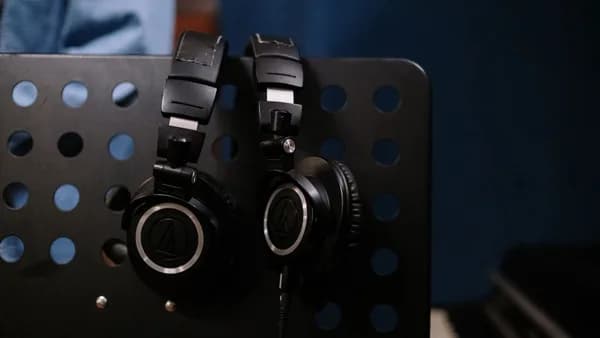
Audiophile Quality Meets AI Silence: 2026 Headphones
Guide to the top noise-cancelling headphones of 2026, focusing on AI-powered adaptive cancellation, spatial audio, and features that blend premium sound with wo
Aug 13, 202612 min
 Technology
AI Coffee Crawl Stumbles Over Real Cup of Coffee
Using ChatGPT to plan a coffee shop crawl delivers a perfectly optimized but utterly soulless checklist, stripping away the personal discovery that defines a re
Aug 12, 20265 min
 Technology
Your Next Phone's Single Most Important Feature
The best smartphone for you isn't the one with the highest specs, but the one where a single feature—like the Pixel's 2032 software support or iPhone's 18-hour
Aug 13, 202613 min
 Cybersecurity
Valve's Shipping Partner Exposes Steam Users' Home Addresses
A cyberattack on Valve's European shipping partner, CEVA Logistics, leaked the personal data of Steam hardware customers, proving physical addresses are now a c
Aug 14, 20267 min
 Global Trends
Belgian Builders Unearth €9 Million Hoard In Cellar Wall
Construction workers in Belgium found €9 million in gold hidden in a cellar wall. Their honest reporting kickstarted a legal process that could take five years
Aug 14, 20267 min
 Global Trends
Masters' $10M Paintings Snatched in Record Three Minutes
Italian police recovered three masterworks five months after thieves stole them in a three-minute operation, highlighting a surge in surgical art heists across
Aug 14, 20265 min
 Cybersecurity
US Courts To Disclose Spyware Surveillance Counts
Federal courts will finally publish how often judges authorize the government to hack devices for surveillance, a first after 30 years of secrecy.
Aug 14, 20268 min
 Global Trends
Police Arrest Nearly 500 People for Starting French Wildfires
French police have arrested 474 people this summer for allegedly starting wildfires, reframing the crisis as a major human-driven disaster that goes beyond clim
Aug 14, 20268 min
Don't miss the signal
Get our weekly roundup of the stories that matter across tech, fintech, and trading. No noise, just signal.
Free forever. No spam. Unsubscribe anytime.