
A five-second clip of a crocheted duck keychain handed to Peter Pan at Disneyland last month ignited an online inferno, transforming creator Toni Kulusich into “Peter Pan Girl,” a viral villain accused of stalking park performers. This firestorm, chronicled in detail by Wired, exposes the raw tension where personal fandom, performer safety, and social media’s appetite for judgment collide.
TechnologyAugust 18, 2026· 7 min read· By XOOMAR Insights Team
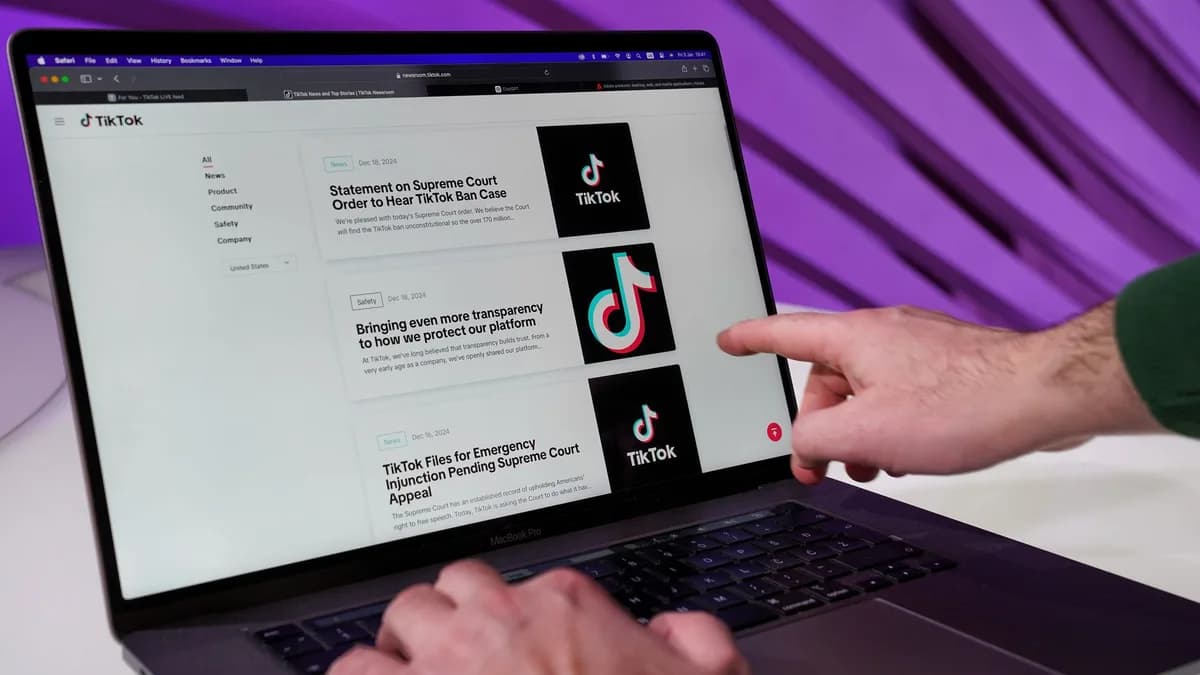
TikTok Kidnaps 'Peter Pan Girl' in Stalking Firestorm
Updated on August 18, 2026
XOOMAR Intelligence
Analyst Take
59/ 100
4 sources analyzedLow confidenceTrend10Freshness97Source Trust88Factual Grounding86Signal Cluster40
Who Is the “Peter Pan Girl”? A Creator Defines Her Own Narrative
Toni Kulusich is a 27-year-old manager from Los Angeles and a self-proclaimed “Disney Adult.” Using the handle @babytoni99 online, she documents her roughly weekly trips to Disneyland on her annual pass, a hobby she maintains alongside her full-time job and marriage of four years. Her content frequently features characters, but a specific focus emerged on Peter Pan, the “boy who never grew up.” Her videos show playful interactions, skipping, playing tag, and exchanging small gifts.
The controversy isn't about a single visit. Critics unearthed 10-year-old videos, creating a narrative of a long-running fixation. A momentshe posted on July 31 of gifting a crocheted duck keychain to a Peter Pan performer became the focal point, its view count exploding from 10,000 to over a million and turning intensely negative. Kulusich found herself labeled a “crazy stalker lady,” with commenters analyzing the performer’s body language for signs of discomfort and a Change.org petition circulating to have her banned.
How a Collection of Moments Became a “Stalking” Case
The accusation of stalking didn't stem from a single act but from the accumulation and visibility of many small ones. Social media algorithms strip away original timelines, presenting years of periodic encounters as one continuous, obsessive event. As compilations spread, viewers saw what appeared to be a pattern: repeated, personalized interactions with the same character type over a decade. This shifted perception from innocent fandom to potential boundary-crossing.
The psychological mechanism at play is a classic parasocial relationship, where a fan feels a one-sided connection with a public figure. In this case, the “figure” is a fictional character, but the human performer beneath the costume is the one who must navigate the interaction. Critics argued that the frequency and personal nature of Kulusich's visits, knowing performers by name, them remembering her gifts, crossed from guest experience into something more intimate and potentially uncomfortable for the actor, whose job requires unwavering friendliness.
XOOMAR Analysis: The debate is less about legality and more about an emerging social etiquette. When does enthusiastic patronage become perceived as harassment? The line is blurry, and social media amplifies the ambiguity by presenting a curated, out-of-context narrative directly to a jury of millions.
The Unseen Rules That Trap Performers in “Character”
The situation is uniquely complicated by Disney’s own operational magic. Performers portraying “face characters” like Peter Pan must stay in character at all times while in the parks. They cannot break the illusion to set a firm personal boundary, express actual discomfort, or ask a guest to stop filming. Their training emphasizes maintaining “character integrity,” leaving them reliant on guest etiquette and internal Disney protocols for protection.
Kulusich is aware of these rules, even using Disney-approved terminology like “friend of Peter” to refer to the actor. She says, “I would never put him in a situation that would harm him or his role or his career or his character integrity.” Yet this very framework, where professional friendliness is mandatory, can make it impossible to discern genuine rapport from professional duty. As former Peter Pan performer Andrey Lull told USA TODAY, he had regulars who learned his schedule, showing up for every set. He had to “learn how to deal with them” within the constraints of his role.
This structural vulnerability isn't new. Past incidents, like the mid-2010s Tumblr fandom around “Spieling Peter” or reports of guests asking inappropriate questions, show recurring pressure points. The explosion of TikTok and Instagram content creation has simply made the phenomenon more visible and scalable.
“A Special Friendship” Versus a Professional Relationship
In her defense, Kulusich frames her actions differently. To her, this isn't stalking but a “special friendship” cultivated over time with multiple performers who have donned the green tights. She pushes back against the scale of the accusation, pointing to a personal tracking post showing she met Peter only seven times out of her last 30 park visits.
“Seeing him makes me happy; dressing up makes me happy; going to Disneyland once a week makes me happy,” she told WIRED. “If people are going to hate on me, I’m not going to let it stop me. Because I know I’m not doing anything wrong.”
This is the core gray area. From the creator's perspective, she is a respectful, regular guest participating in an offered experience. From a critic's perspective, and potentially from a weary performer's viewpoint, the regularity and expectation of a personalized interaction transforms a public transaction into a private burden. The magic of Disney, which encourages guests to believe in the character, actively obscures the line between a cherished fantasy and a workplace interaction.
The Algorithm’s Role in Modern Public Shaming
The “Peter Pan Girl” saga is a textbook case of social media dogpiling. A niche behavior within a specific fandom (Disney park visitors) was lifted out of context by algorithms and commentary videos, framed with the inflammatory language of “stalking,” and presented to a general audience primed to critique “Disney Adults.” The result was a rapid, harsh consensus built on incomplete information.
Kulusich faced tangible consequences beyond hate comments: someone posted her workplace address, forcing a change in her hours for security. The backlash became so severe she avoided the parks for weeks and initially steered clear of Fantasyland upon returning, fearing she’d “mak[e] everything worse.”
This pattern reflects a broader, uneasy evolution in social media norms around filming in semi-public spaces. As we've seen in other contexts, from Reddit AI Narrates Your Posts as Podcasts to Retain Users to viral videos of service workers, there's a growing debate about implied consent and the right to be forgotten, even during public-facing work. The online reaction to Kulusich signals a crowd-sourced, if often misapplied, attempt to enforce boundaries where formal rules are unclear.
Can Theme Parks Adapt Their Magic for the Creator Era?
The incident forces a difficult question: how can immersive theme parks protect their employees without shattering the illusion they sell? Direct, public confrontation by a performer breaks character. Relying solely on guest decency is demonstrably insufficient, as history shows.
Potential solutions are operational and subtle. Parks could empower “handlers” or other cast members to more discreetly intervene with persistent guests. Internal tracking of guest interactions could be used to privately counsel or, in extreme cases, ban individuals without a public scene, a power Disney has stated it holds. Furthermore, content platforms themselves may need to consider policies around the repetitive filming of individuals in service roles, even in public settings, much as they grapple with other forms of potential harassment.
The future of fan-performer interactions is being written now. For creators like Kulusich, who has since returned to the parks and shared that a Peter Pan performer waved her over to ride the carousel with him, the path forward is navigating a world where every friendly exchange is a potential viral clip. For parks, the challenge is updating the unspoken contract of their magic. It must ensure the wonder for guests doesn't come at the cost of the wellbeing of the cast members who create it. The spell can only hold if the people inside the costumes feel truly safe.
Why This Changes Everything
- This story highlights how social media algorithms can distort timelines and context, turning a fan's documented park visits and harmless gifts into a perceived pattern of stalking.
- It underscores the growing tension between performers' right to safety and personal boundaries, and the blurred lines of public interactions in immersive theme park settings.
- The viral backlash reveals how quickly online mobs can form and assign labels, impacting real lives and raising ethical questions about digital documentation and consent.
Sources

Written by
XOOMAR Insights Team
Research and Editorial Desk
The XOOMAR Insights Team pairs automated research with human editorial judgment. We track hundreds of sources across technology, fintech, trading, SaaS, and cybersecurity, cross-check the facts, and explain what happened, why it matters, and what to watch next. We do not just rewrite headlines. Every article is fact-checked and scored for reliability before it goes live, and we link back to the original sources so you can verify anything yourself.
Explore More Topics
Related Articles
 Technology
Reddit AI Narrates Your Posts as Podcasts to Retain Users
Reddit is using AI voices to turn text posts into short videos and podcasts, a strategic push for passive engagement in a video-first internet.
Aug 18, 20266 min
 Technology
X Opens Shadowbanning to Scrutiny with Its Ranking Code
X released the source code for its 'For You' feed, allowing users to see if they've been 'shadowbanned', a move that aims to preempt political bias accusations
Aug 13, 20267 min
 Technology
Spotify Revives Human Stories In Playlist Notes
Spotify has launched Playlist Notes, letting users and editors attach personal stories to songs, aiming to add human context to its massive, often anonymous, mu
Aug 17, 20265 min
 Technology
Instagram Trades Handwritten Scripts For A Sharp Sans-Serif Rebrand
Instagram just refreshed its logo to look modern, but it's a distraction from bigger product problems.
Aug 16, 20265 min
 Technology
French Court Torpedoes Macron's Social Media Ban for Minors
France's Constitutional Council struck down a landmark law that would have banned children under 15 from social media, ruling the blanket restriction violated c
Aug 14, 20264 min
 Fintech
X Dangles Cash in Your Feed to Hijack Your Wallet
X is dangling financial incentives like high APY and cashback directly inside the social feed, a risky attempt to turn your scrolling time into transaction time
Aug 18, 20267 min
 Technology
Meta Designs Addiction Facing $1.4 Trillion Lawsuit
29 states are suing Meta, claiming it intentionally engineered Facebook and Instagram to be addictive for children, facing a potential financial penalty that co
Aug 18, 20265 min
 Global Trends
Supreme Court Forces Imran Khan Into Hospital Care
Pakistan's Supreme Court ordered former Prime Minister Imran Khan's transfer to a hospital, directly intervening in a case where his lawyers claim his vision ha
Aug 18, 20264 min
 Technology
OpenAI's ChatGPT For Teens Admits Its Emotional Danger
OpenAI launched a restricted ChatGPT for teens with new guardrails against romantic talk and emotional overreliance, reacting to lawsuits over AI safety as most
Aug 18, 20265 min
 Technology
Peacock Jump Starts Price Sticker Shock for Subscribers
Peacock has hiked its subscription prices again, boosting its ad-free tier to $19.99 as the streamer transitions from a loss-leader to a profit engine, banking
Aug 18, 20265 min
Don't miss the signal
Get our weekly roundup of the stories that matter across tech, fintech, and trading. No noise, just signal.
Free forever. No spam. Unsubscribe anytime.