
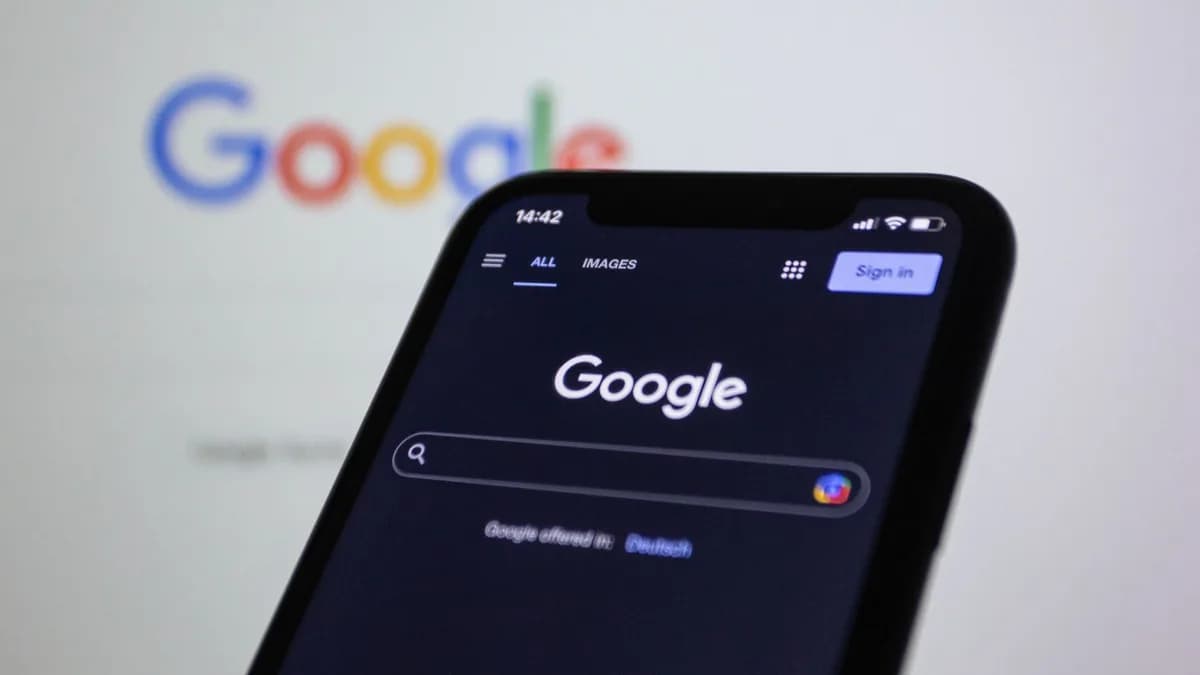
A tiny corner sparkle has been the visual tax of using Google’s AI to generate professional artwork, video, or music. Now, users can turn it off.
TechnologyAugust 15, 2026· 5 min read· By XOOMAR Insights Team
Google Axes Mandatory AI Watermark for User Media
Updated on August 15, 2026
XOOMAR Intelligence
Analyst Take
58/ 100
4 sources analyzedLow confidenceTrend10Freshness95Source Trust90Factual Grounding92Signal Cluster20
Google announced on August 14, 2026 that it will allow users to remove the visible watermark from AI-generated images, video, and music according to TechCrunch. The change, a significant shift in the industry’s approach to labeling AI media, gives creators a toggle for “Settings > Media Watermark” in both Gemini and the video editor Flow, with support for Search coming soon.
The visible watermark, a branding mark users often found intrusive, can now be turned off in the coming days. The invisible ones, however, remain locked on.
Visible Checkbox, Invisible Anchor
The core of Google’s strategy is a distinction between what users see and what a machine can verify. The toggle applies to all Nano Banana (image), Omni (video), and Lyria (music) models. Turning it off removes the small "sparkle" icon.
This does not affect two other layers of metadata embedded in every file:
- Invisible SynthID watermarks: Patterns woven into the media data itself that survive compression and edits.
- C2PA standard-related metadata: A digital "nutrition label" that travels with the file, recording its provenance.
As Google VP Josh Woodward stated, the move is about finding a balance. He wrote, “We’re striking a balance here between creative control and safety: while the visible watermarks are now optional, invisible SynthID watermarks and C2PA metadata are still being used for transparency. So you can still use Gemini or Search to see if an image was AI-generated.”
In short, the branding is optional. The built-in accountability is not. This pivot acknowledges that a visible mark, while a clear signal, acted as professional friction, making generated content less suitable for client work or commercial use.
Google Bets on Hidden Forensics Over Visible Clutter
Google’s policy shift bets that most people won't remove a visible watermark, but that it’s more important to have a robust, hidden system in the first place.
This is a direct upgrade in the integrity of AI provenance. The visible watermark is inherently superficial. The new default is a forensic fingerprint, a far more durable and useful form of traceability that doesn't compromise the creator’s final product.
SynthID invisible watermarks and C2PA metadata are still being used for transparency., Google’s Gemini account
Google is backing this infrastructure play with a new open-source tool, continuing its long history of innovative public releases as seen in Google's forgotten experiments archive. The company announced Credentio, a library that lets developers build local validation into their own apps. This means a platform could check if an image has a SynthID fingerprint without needing to connect to Google's servers, a move that decentralizes verification capability.
This approach stands in direct contrast to a recent move by competitor Anthropic, as more platforms wrestle with regulatory demands, like those coming from Europe's AI Act. This follows a broader trend where AI giants are redefining their core services, as seen when they began to charge for speed as latency becomes a billable commodity.
The Creator-Friendly Path Diverges From Regulator-First Mandates
Where Google offers a user-facing toggle, Anthropic has taken a different route. This week, Anthropic announced a policy to invisibly watermark all Claude-generated text and files globally, a direct response to EU AI Act compliance. There is no user toggle.
The philosophical fork is now clear:
- Google optimizes for creative flexibility backed by mandatory machine-readable provenance.
- Anthropic optimizes for regulatory certainty with a one-size-fits-all invisible mark.
Neither approach is inherently wrong, but they present different priorities for users and the information ecosystem.
Creative Control: For professionals, Google’s change is a straightforward win. Their Gemini outputs are now cleaner and instantly more useful in commercial pipelines, while retaining a verifiable digital trail. This scenario is becoming common, where user experience is balanced against corporate control, a dynamic also playing out in Google's anticompetitive app store roadblocks.
Regulatory and Social Risk: The open question is whether invisible marks alone are enough. In contexts demanding immediate visual transparency, like news media or political advertising, a hidden fingerprint is useless to a casual viewer or a journalist on a deadline. Regulators may yet decide that some visible signal remains a non-negotiable public good.
Google’s roll-out begins immediately. The immediate next steps are practical. Users will find the toggle in Gemini and Flow settings shortly. Search integration will follow.
The larger watch item is the reaction from the creative industry and policymakers. Will this make AI-generated media more accepted in professional workflows? Or will it make the already-chaotic digital landscape even harder to parse at a glance? Google's gamble is that the trade-off is worth it, placing its faith in the long-game reliability of hidden forensic tech over the immediate-but-clumsy signal of a visible watermark.
The sparkle icon is going away. The trace, for now, is here to stay.
Key Takeaways
- Gives creators more professional control over AI-generated content by removing visible branding.
- Maintains accountability through invisible, persistent watermarks (SynthID) and provenance metadata (C2PA).
- Signals a broader industry shift towards balancing transparency with user experience and creative freedom.
Sources

Written by
XOOMAR Insights Team
Research and Editorial Desk
The XOOMAR Insights Team pairs automated research with human editorial judgment. We track hundreds of sources across technology, fintech, trading, SaaS, and cybersecurity, cross-check the facts, and explain what happened, why it matters, and what to watch next. We do not just rewrite headlines. Every article is fact-checked and scored for reliability before it goes live, and we link back to the original sources so you can verify anything yourself.
Explore More Topics
Related Articles
 Technology
AI Giants Charge for Speed as Latency Becomes Billable
OpenAI and Google have shifted the AI pricing battle from capability to pure speed, launching premium fast-lane services that charge for lower latency.
Aug 15, 20267 min
 Technology
Choosing LLM Paths Could Make Or Break Your Project
The choice between open-source and paid LLM platforms is now a critical strategic decision for developers, directly affecting cost, data sovereignty, and long-t
Aug 13, 202611 min
 Technology
AI API Price War Slashes 2026 Output Cost by 80%
LLM API pricing has collapsed, making cheap paid models like Qwen3.7 Flash at $0.03/M tokens a smarter strategic move than free tiers for most serious applicati
Aug 13, 202613 min
 Technology
Anthropic Bakes Undetectable AI Watermarks into Claude
Anthropic is introducing a cryptographic watermark for all Claude AI text, designed to survive copying and editing, to comply with EU law and trace AI-generated
Aug 13, 20265 min
 Technology
Klaviyo Leaked Users' Passwords to Facebook, Google, Microsoft
A Klaviyo website bug leaked new users' plaintext passwords, emails, and phone numbers directly to Facebook, Google, and Microsoft ad trackers for nearly two ye
Aug 14, 20265 min
 SaaS & Tools
AI Unearths Shopify's Buried $1 Billion Niche Market
AI-powered search on Shopify is finally monetizing the 'long tail,' with 75% of its AI-attributed purchases coming from obscure products outside the mainstream
Aug 15, 20265 min
 Technology
Inside Google's Archive of 1,605 Forgotten Experiments
A public archive reveals 1,605 failed and weird Google projects. They show a more honest, chaotic picture of innovation than today's slick AI launches.
Aug 15, 20266 min
 Technology
Lenovo's $819 OLED Gaming Monitor Has a Dark Secret
Lenovo's new $819 Legion Pro 32UD-10 delivers flagship 4K 240Hz OLED specs at a disruptive price, but makes a calculated sacrifice on HDR brightness that forces
Aug 15, 20266 min
 Global Trends
Israeli Airstrike Kills Seven Civilians, Shatters Lebanon Truce
An Israeli airstrike leveled a home in southern Lebanon, killing seven civilians and critically undermining a recently brokered truce between Israel and Hezboll
Aug 15, 20264 min
 SaaS & Tools
Databricks Raises $5 Billion as Investor FOMO Floods AI
Databricks planned a $1 billion raise but settled on taking $5 billion due to $15 billion in investor demand, revealing the immense capital pressure fueling the
Aug 15, 20266 min
Don't miss the signal
Get our weekly roundup of the stories that matter across tech, fintech, and trading. No noise, just signal.
Free forever. No spam. Unsubscribe anytime.