
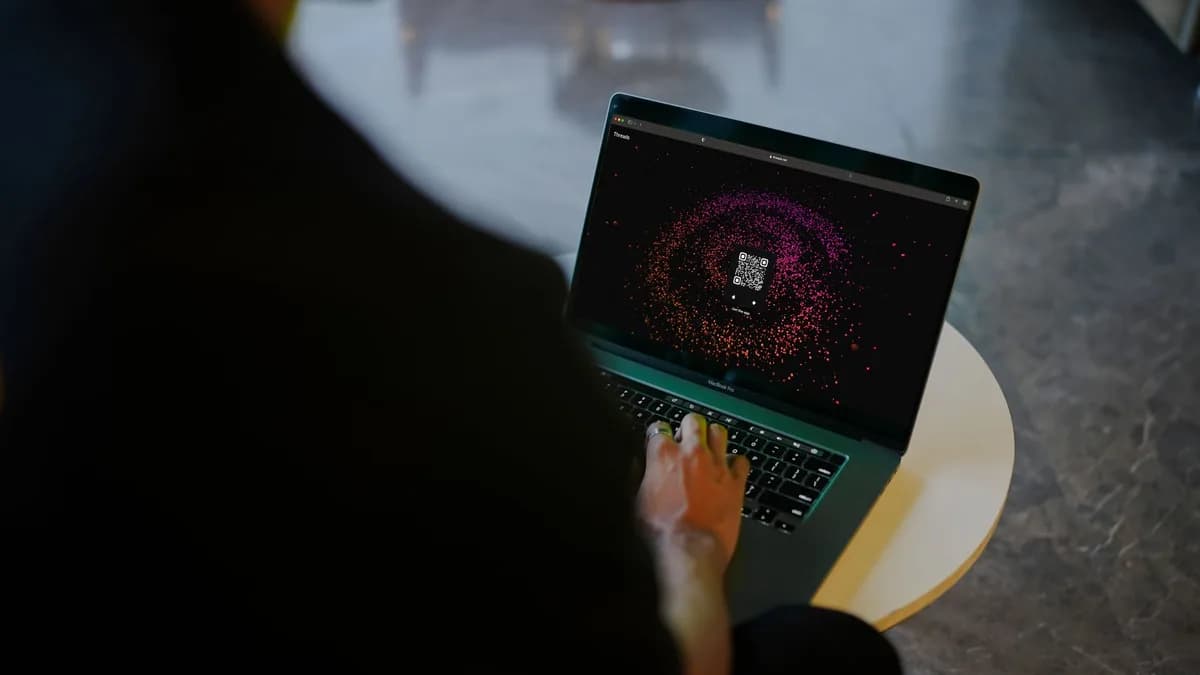
Apple has engineered a premium tax for the multi-monitor workflow for years, but a $150 dock built on an Intel Hoover Ridge controller just punched a hole in that business model according to ZDNet. The thesis is simple: the driverless dual-display Mac dock is no longer a sketchy compromise riddled with lag and black screens. It is a mature, enterprise-ready accessory that makes Apple’s hardware segmentation feel increasingly arbitrary for anyone who just needs more screen real estate. This product isn't just a good buy. It's a signal that the third-party accessory market has finally engineered a clean escape from Apple's walled-garden approach to basic I/O.
TechnologyAugust 14, 2026· 6 min read· By XOOMAR Insights Team
Mac Users Buy Driverless Docks Against Apple's $150 Tax
Updated on August 14, 2026
XOOMAR Intelligence
Analyst Take
58/ 100
4 sources analyzedLow confidenceTrend10Freshness98Source Trust85Factual Grounding95Signal Cluster20
A Technical Workaround That Now Works
The core problem has always been Apple's refusal to support Multi Stream Transport (MST), a DisplayPort standard Windows has used for over a decade. Without it, a dock can only mirror your laptop's screen. The old solution was DisplayLink, a software-driven hack that created a second display by compressing video and shoving it over USB.
The most immediately noticeable issue is lag, caused by the time the software requires to process the video stream... [it] can introduce glitches, washed-out colors, and compression artifacts.
Worse, DRM-protected content from Netflix or Disney+ would often go black, reminiscent of the security warnings seen in an Apple spyware lock screen alert. The workaround was to use a browser with hardware acceleration off. It was a mess.
The StarTech Driverless Dual 4K sidesteps this entirely. Its Intel Hoover Ridge USB4 controller supports "native DisplayPort tunneling." It doesn't create a fake display. It uses the GPU's native video output, just as a Thunderbolt dock would, but over the more common USB4 standard. The result is a dual-display experience with "no lag and no DRM limitations" per the review. The catch is entirely on Apple's side, dictated by your Mac's chip generation.
The $150 Dock's Chip-Based Compromise Table
The dock’s promise comes with a crucial, non-negotiable caveat: your experience is rigidly defined by your Mac's processor. This isn't a performance gradient. It's a series of hard gates.
| Mac Chip Generation | Supported Display Mode | Maximum Refresh Rate (Dual 4K) |
|---|---|---|
| M4 Pro, M4 Max, M5 | Extended Desktop | 144Hz |
| M3, M4 (non-Pro/Max) | Extended Desktop | 60Hz |
| M1, M2 | Mirrored Displays Only | (Mirrored) |
The 144Hz capability for the latest high-end chips is itself an engineering feat. A single 4K stream at 144Hz requires roughly 40Gbps, but DisplayPort 1.4 maxes out at 25Gbps. The dock uses Display Stream Compression (DSC), a 3:1 "visually lossless" codec with latency in the microsecond range, to make it work. This is the same technique high-end monitors and Thunderbolt docks use, bringing near-native performance to a mid-tier price point.
For users on M3 or standard M4 chips, you still get a true dual 4K desktop, just at a standard 60Hz. The true cutoff is the M1/M2 generation. If you own those machines, this dock offers you nothing over a basic USB-C hub. Your only upgrade path is a new Mac or reverting to the old, laggy DisplayLink drivers. This stark compatibility list is the clearest evidence of Apple's deliberate control over external display functionality at the silicon level. Companies seeking to deploy these docks at scale might find this helpful. For more on how new tools are shaking up established tech markets, see our analysis on Startup Rival Intel Tools Outrun Free Alternatives in 2026.
Why This Isn't Just Another Dongle
Beyond video, the StarTech Driverless Dual 4K is built like an IT department's dream, which reveals its true target. It includes a 2.5Gbps Ethernet port with Wake-on-LAN and PXE support for network booting, a host USB-C connection with screw threads for security, and slots for K-Slot, Noble Wedge, and Nano Slot cable locks. It can be VESA-mounted to a monitor. Its "drab, gray plastic" avoids drawing attention.
This is not a flashy consumer gadget. It's a tool designed to be forgotten on a desk, reliably adding ports without demanding driver installations or IT support tickets. The power supply is rated for 21V/6.4A, chosen to cleanly deliver 100W to a laptop while maintaining a 1V buffer as per USB Power Delivery rules. This level of detail is typically reserved for docks costing twice as much.
The Practical Recalculation for Mac Buyers
The existence of a competent, driverless dual-display dock at this price forces a financial recalculation. Previously, getting dual external displays on a MacBook Air or base-model MacBook Pro meant either tolerating a subpar software hack or spending a minimum of $300 on a Thunderbolt dock. Now, the barrier is $150 plus the cost of your displays.
This changes the value proposition of Apple's own hardware upgrades. Do you buy a MacBook Pro with an M3 Pro chip for multi-monitor support, or stick with a standard M3 MacBook Air and invest the $1000+ difference in a superior desk setup, including this dock? For knowledge workers in spreadsheets, code editors, and browser-based tools, the answer is suddenly obvious. The dock wins. The tool is finally good enough to decouple a core productivity feature from Apple's premium silicon tier. This shift towards empowering non-technical users to solve complex problems extends to software, too, as seen in the rise of Train Your AI Chatbot Without a Developer in Minutes.
Power users working with color-critical video or needing the absolute lowest latency for competitive gaming will still justify the Thunderbolt and Pro-chip route. But that group is a minority. For the majority, the calculus has shifted.
Watching Apple's Next Silicon Countermove
The forward-looking question isn't whether more companies will release similar Hoover Ridge-based docks. They will. It's whether Apple will tacitly accept this new, more open reality for mid-tier users or will engineer it closed again.
Apple's control point is the chip. The current compatibility cliff at the M2/M3 boundary is no accident. Future iterations of Apple silicon could further integrate display controller functions, potentially making such "native tunneling" solutions impossible without Apple's blessing. Alternatively, Apple could finally adopt the MST standard it has ignored for a decade, making docks universally compatible and collapsing this entire market niche.
Watch the fine print on the next generation of base M-series chips. If they gain support for dual external displays without a Pro suffix, Apple will have conceded the point to market pressure. If they don't, and the next chipset boundary (M5 to M6, perhaps) again excludes a feature like 144Hz support, you'll know the segmentation game is still very much on. The driverless dual-display Mac dock proves the accessory market can keep pace with, and even exploit, Apple's silicon strategy. The real test is whether Apple decides to change the rules of the race.
What This Means For You
- You can now add reliable dual 4K displays to your Mac for $150 without the lag, black screens, or software hassles of old workarounds.
- This breaks Apple's long-standing premium tax on multi-monitor workflows, giving budget-conscious pro users a mature, enterprise-ready alternative.
- It signals that third-party accessories have engineered a clean escape from Apple's walled-garden approach, potentially reshaping the Mac accessory market.
Apple vs Third-Party Multi-Display Solutions
| Solution | Technology | Lag | DRM Support | Approx. Cost |
|---|---|---|---|---|
| Apple Official/Mac Studio | Thunderbolt & proprietary | No | Full | $300+ |
| Legacy Third-Party (DisplayLink) | Software compression over USB | Yes | No (black screens) | $100-$200 |
| New Solution (StarTech Dock) | Intel Hoover Ridge USB4, native DP tunneling | No | Full (no limitations) | $150 |
Cost Comparison for Dual-Display Mac Docks
Apple Official/Mac Studio
$300
Legacy Third-Party (DisplayLink)
$150
New StarTech USB4 Dock
$150
Sources

Written by
XOOMAR Insights Team
Research and Editorial Desk
The XOOMAR Insights Team pairs automated research with human editorial judgment. We track hundreds of sources across technology, fintech, trading, SaaS, and cybersecurity, cross-check the facts, and explain what happened, why it matters, and what to watch next. We do not just rewrite headlines. Every article is fact-checked and scored for reliability before it goes live, and we link back to the original sources so you can verify anything yourself.
Explore More Topics
Related Articles
 Technology
Desktop Performance Fits Inside Any Bag in 2026
The new generation of ultraportable laptops, led by Apple's M5 and Qualcomm's Snapdragon X, now packs desktop-level power into sub-3-pound frames with 15-plus h
Aug 13, 202613 min
 Technology
iPhone Arms Users With Weapon Against AI Deepfakes
Apple is building a cryptographic feature called Apple Reference Image to let iPhone users prove their photos are original camera shots, not AI-generated deepfa
Aug 13, 20268 min
 Technology
Orion Browser Cracks Google's Surveillance Monopoly
The Orion browser, a zero-telemetry alternative built on Apple's WebKit engine, has launched in beta for Linux, offering a direct challenge to Google's data-ext
Aug 14, 20266 min
 Technology
Microsoft Merges Copilot Apps in AI Super App Launch
Microsoft has merged its consumer and enterprise Copilot apps into one interface, taking the first concrete step toward launching an AI-powered 'super app' and
Aug 13, 20267 min
 Technology
Apple Splits iPhone 18 Launch, Delays Base Model Until 2027
Apple is fracturing its iconic September launch, planning to debut only iPhone 18 Pro models this fall and holding the standard iPhone 18 until 2027.
Aug 12, 20267 min
 Cybersecurity
Apple's Lock Screen Alert Warns iPhone Users of Spyware Attack
Apple has escalated its spyware warnings by sending high-confidence threat notifications directly to the lock screens of iPhones targeted by sophisticated, stat
Aug 14, 20266 min
 Fintech
Tariff Rebates Send $9.6 Billion to Apple, Nike
Corporate giants, led by Apple and Nike, are cashing billions in retroactive tariff refunds, creating an unexpected windfall while consumers get nothing.
Aug 13, 20267 min
 Cybersecurity
Insider Demands $7,540 For Cache Of Corporate Secrets
A data analyst contractor was sentenced to two years in prison for stealing employee data and trying to extort $2.5 million, but the company paid just $7,540 to
Aug 14, 20267 min
 Global Trends
Stolen Matisse Artworks Fester in São Paulo Suburb
A stash of stolen Matisse artworks recovered from a São Paulo suburb eight months after the theft illuminates the surprising illiquidity and logistical pitfalls
Aug 14, 20266 min
 Technology
Klaviyo Leaked Users' Passwords to Facebook, Google, Microsoft
A Klaviyo website bug leaked new users' plaintext passwords, emails, and phone numbers directly to Facebook, Google, and Microsoft ad trackers for nearly two ye
Aug 14, 20265 min
Don't miss the signal
Get our weekly roundup of the stories that matter across tech, fintech, and trading. No noise, just signal.
Free forever. No spam. Unsubscribe anytime.