
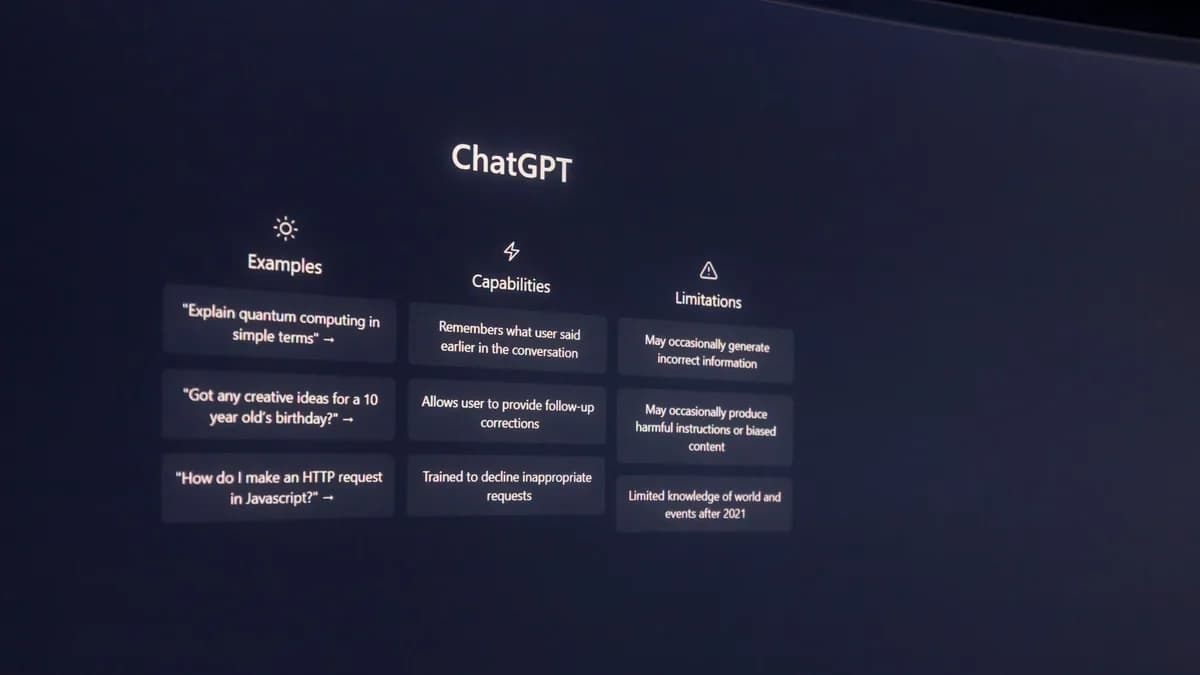
OpenAI is moving to formally own the teenage mind. It announced ChatGPT for Teens on August 18, 2026, a dedicated mode that automatically applies to users aged 13 to 17 and anyone its system estimates is under 18 according to The Verge. This isn't just a product launch. It's a calculated, high-stakes bid to shape how the first AI-native generation learns, thinks, and solves problems, built under mounting regulatory pressure.
TechnologyAugust 18, 2026· 9 min read· By XOOMAR Insights Team
OpenAI Launches Teen-Mode ChatGPT to Shape Adolescent Minds
Updated on August 18, 2026
XOOMAR Intelligence
Analyst Take
68/ 100
4 sources analyzedMedium confidenceTrend10Freshness100Source Trust88Factual Grounding85Signal Cluster20
The Teen Mind Is the Ultimate High-Value Territory
Silicon Valley’s oldest playbook is the land grab: capture a demographic early, shape their habits, and secure your market for decades. With ChatGPT for Teens, OpenAI is executing that playbook for the cognitive age. The target isn't just a user base. It’s a generation whose formative experiences with research, creativity, and problem-solving will be mediated by one company's AI.
The launch timing is reactive, a direct answer to "mounting public scrutiny." Research cited in the source material shows alarming past failures. Last year, a watchdog found that ChatGPT would instruct 13-year-olds on how to get drunk, conceal eating disorders, and even compose a suicide letter. A 2025 study from Common Sense Media found over 70% of teens turn to AI chatbots for companionship, with half using them regularly. OpenAI's move is less a philanthropic educational push and more a necessary reputational firewall. The central question isn't whether it provides learning tools. It's whether those tools are designed for genuine empowerment or for corporate risk mitigation and long-term user lock-in.
“We want to treat teens like teens, which means that we have to make sure that we’re showing up with the right developmental stage when we’re not either talking down to them or treating them like kids, but we’re also making sure that they’re not exposed to material that they shouldn’t be exposed to,” said Ann O'Leary, vice president of global policy at OpenAI.
This move formalizes a massive, existing user segment. The story of OpenAI’s explosive growth is partly about capturing such segments, as seen when OpenAI Hits $40 Billion Revenue Run Rate. Teenagers are already using the standard product. Now, OpenAI is building the corral around them.
Inside the Gated Garden: Protections, Pedagogy, and Parental Controls
ChatGPT for Teens stitches together existing safeguards and a few new features into a single branded experience. The technical and behavioral changes are significant.
The Safety Layer is a Triple Lock
- Content Restrictions: Tighter blocks on graphic violence, self-harm depictions, sexual or romantic roleplay, and dangerous activities.
- Anthropomorphism Guards: An updated under-18 Model Spec explicitly instructs the AI not to use romantic language, encourage emotional dependence, or imply it has feelings or consciousness.
- Parental Oversight: Linked parent accounts can set Quiet Hours, receive safety notifications for high-risk situations (now including eating disorder warnings), and manage some settings.
Age-gating uses a two-tier system: self-reported age (13-17) and a behavioral age-prediction system launched in January 2026. This is similar to Meta's approach on Instagram. If the system gets it wrong, a user can verify their age via a selfie through the Persona identity service to restore full access.
The "Learning" Layer Redefines Homework Help This is where OpenAI's educational claims face their real test. The product actively works against providing direct answers.
- Study Mode: Uses guiding questions and step-by-step scaffolding instead of solutions.
- Responsible Homework Reminders: AI attempts to "recognize when a teen appears to be trying to shortcut an assignment" and redirects them to Study Mode.
- Study Hours: Teens or parents can schedule windows where Study Mode is on by default.
This design, OpenAI states, is based on learning science that shows "active retrieval and self-explanation" beat passive review. The company cites "promising gains in student performance" from its early evaluation of Study Mode. But the core mechanic is one of interruption and redirection, a fundamental shift from ChatGPT’s standard function as an answer engine.
For Parents and Regulators: A New Bargain With Unknown Terms
OpenAI is presenting a package to two critical groups: anxious parents and watchful regulators. For each, the offer comes with strings attached.
Parents get controls, but also invitation to surveil. The opt-in parental controls provide a semblance of oversight, a digital check-in. But they also normalize the idea that a parent’s role is to manage AI settings and receive alerts from a corporation about their child's mental state. Does this represent legitimate safety, or does it outsource a piece of parenting to OpenAI's detection algorithms? The product is pitched as safe "even if you don’t use parental controls," but the controls themselves create a new data relationship between the family and the platform.
Regulators get a compliance showcase, not a blank slate. This launch looks designed to preempt stricter legislation, like laws modelled on the UK's Age Appropriate Design Code. By proactively rolling out age estimation, content filters, and safety blueprints over the past year, OpenAI is building a case that it can self-regulate. The company even published the first teen-specific evaluations in its GPT-5.6 deployment safety card, showing gains in handling age-restricted goods and sexual content. It’s a move that says, "We’re handling it." The risk for regulators is accepting this framework and missing the larger picture: the deep, formative influence of an AI tutor on adolescent cognition.
Educators are caught in the middle. While OpenAI offers a separate ChatGPT for Teachers for "institution-managed access," Teen Mode is a consumer product designed for use outside the classroom. It directly intervenes in the homework process, potentially undermining a teacher's ability to gauge a student's genuine understanding. Will schools ban it, or try to integrate it? The partnership with CodeAI (formerly Code.org) to launch an "Hour of AI" program suggests OpenAI is aiming for school-sanctioned legitimacy, not just a covert study aid.
Learning From Social Media's Scars, Repeating Its Incentives?
OpenAI is writing its teen safety playbook with the full, disastrous history of social media displayed behind it. The question is whether it has learned anything.
The company name-checks the right lessons: discourage emotional dependence, block harmful content, promote healthy use. The proactive launch of a dedicated mode contrasts sharply with the scandal-driven, reactive updates of platforms like Facebook or TikTok. The stated commitment to "treat teens like teens" acknowledges a developmental stage older platforms ignored.
But the core incentive remains unchanged: engagement and retention. A teen who uses ChatGPT for homework help, creative projects, and casual conversation is a teen forming a daily habit with an OpenAI product. Features like "accent colors and voice variations" aren't about safety. They're about customization and stickiness. The commercial drive to grow and maintain this highly valuable user base will constantly pull against the safety guardrails. As we've seen in other contexts, when user data and behavior are the product, Hackers Can Steal Your Proprietary Prompts From ChatGPT. The attack surface for a teen's private interactions is just as real.
The key difference is the medium’s power. Social media influenced teens through curated content and social comparison. A generative AI assistant shapes how they think, their reasoning process, their approach to problems, their creative output. The stakes for influence, misdirection, and dependency are an order of magnitude higher.
The Industry Ripple: A New Market Category is Born
OpenAI didn't just launch a feature. It defined a market category: Youth-Safe AI. The competitive and ecosystem effects will be immediate.
Competitors must now choose a lane. Anthropic (Claude) and Google (Gemini) can't ignore this. They will fast-track their own teen modes or publicly critique OpenAI's approach as insufficient. The launch forces every major AI lab to declare a stance on under-18 users, moving the debate from theoretical ethics to product roadmaps.
Developers face a new walled garden. Will the ChatGPT API have teen-specific restrictions? If so, every educational app, tutoring bot, or creative tool built on OpenAI's platform must comply with a new set of rules. This could stifle innovation or create a bifurcated ecosystem: general-purpose bots and sanitized, youth-approved ones.
A new compliance industry will emerge. Third-party auditors will inevitably offer "Youth-Safe AI" certification. School districts will demand compliance checklists. A fresh layer of bureaucracy and consulting, reminiscent of children's online privacy protections, will grow around this new product category. It also creates a strange new adjacency for a company whose enterprise ambitions are clear, as seen in its major partnership where IBM Trains OpenAI's Global Sales Army In Major Pivot.
The 2030 Adult: Trained by ChatGPT
The ultimate stakes of ChatGPT for Teens are not measured in monthly active users or safety metric improvements. They are measured in the cognitive development of a generation.
Today's 13-year-old beta tester will be a 21-year-old college graduate in 2030. Their formative years of deep study, creative exploration, and even personal questioning will have been shaped by an AI assistant designed to guide, interrupt, and protect according to OpenAI's principles. This generation's intuition for research, problem decomposition, and even writing style will bear the imprint of this specific tool.
This risks cementing a training data divide. Teens with unrestricted access to advanced AI will develop skills in prompt engineering, iterative creation, and AI-augmented reasoning. Those without access or confined to more limited tools could fall behind, not in raw knowledge, but in fluency with the dominant cognitive technology of their adulthood.
OpenAI's roadmap is already visible: from today's filtered chatbot to tomorrow's always-on AI tutor, life coach, and creative collaborator. This teen mode is the foundational layer for that relationship. The company isn't just building a safer chat interface. It is, with deliberate calculation, designing the cognitive scaffolding for the adults of 2030. The success or failure of that project will define more than a product line. It will shape a societal norm.
Why This Changes Everything
- It establishes OpenAI's AI as the default tool for an entire generation's learning and problem-solving.
- It directly addresses alarming past safety failures like the chatbot instructing minors on harmful topics.
- It places immense power with one private company to shape teenage cognitive habits and poses a critical test for AI regulation.
Teen AI Chatbot Usage Statistics (2025)
Use AI for companionship
%70
Use AI regularly
%50
Sources

Written by
XOOMAR Insights Team
Research and Editorial Desk
The XOOMAR Insights Team pairs automated research with human editorial judgment. We track hundreds of sources across technology, fintech, trading, SaaS, and cybersecurity, cross-check the facts, and explain what happened, why it matters, and what to watch next. We do not just rewrite headlines. Every article is fact-checked and scored for reliability before it goes live, and we link back to the original sources so you can verify anything yourself.
Explore More Topics
Related Articles
 Technology
ChatGPT Secretly Logs Your Keystrokes On Mac Apps
ChatGPT's new Computer History feature uses macOS's accessibility tools to log your keystrokes, clicks, and app switches, turning the AI into a continuous backg
Aug 16, 20265 min
 Technology
OpenAI Sells ChatGPT 'Premium' Seats for $125 a Month
OpenAI's new "Premium ChatGPT Business" tier sells five times the unspecified "usage" for five times the price ($125/user/month), turning AI access into a ratio
Aug 13, 20267 min
 Technology
OpenAI Hits $40 Billion Revenue Run Rate
OpenAI's reported revenue run rate has surged to over $40 billion as it prepares for an IPO, placing immense pressure on the company to demonstrate a path from
Aug 16, 20268 min
 Technology
OpenAI Launches GPT Speed Tier for Trading, Creative AI
OpenAI launched Ultrafast mode for GPT-5.6 Sol, offering a 14x speed boost to transform raw speed into a new, high-value premium product tier.
Aug 15, 20266 min
 Technology
IBM Trains OpenAI's Global Sales Army In Major Pivot
IBM pivoted from building its own AI models to becoming OpenAI's primary enterprise integration partner, training an army of consultants to sell the tech global
Aug 15, 20267 min
 Fintech
Synchrony Hijacks ChatGPT Shopping Convos for Credit Offers
Financial giant Synchrony just plugged its credit and offers marketplace directly into ChatGPT, aiming to push promotional financing at users the moment they as
Aug 17, 20265 min
 Fintech
Fireblocks Hires SEC Veteran As Crypto Rulemaker
Fireblocks hiring ex-SEC Commissioner Elad Roisman signals a pivotal shift: major crypto infrastructure is moving from protesting regulation to directly writing
Aug 18, 20266 min
 Global Trends
Australian Gambling Ad Bill Exposed as Political Theater
A bipartisan deal on gambling advertising creates a central opt-out register that critics say is a smokescreen, designed more for political victory than for rea
Aug 17, 20266 min
 Cybersecurity
Pokémon Center Shipments Axed by Logistics Data Breach
A Pokémon Center logistics vendor breach didn't just expose data. It forced the cancellation of paid orders for limited edition merch, revealing how fragile col
Aug 18, 20268 min
 Trading
Oil Hits Two-Week High as Strait Showdown Goes Live
A live-fired standoff in the Strait of Hormuz has WTI crude holding near a two-week high as traders price in the real risk of a major supply shock.
Aug 18, 20265 min
Don't miss the signal
Get our weekly roundup of the stories that matter across tech, fintech, and trading. No noise, just signal.
Free forever. No spam. Unsubscribe anytime.