
On Monday (July 27), the reported OpenAI Nvidia data center funding talks put a $250 billion question at the center of the AI boom: is Nvidia simply selling the picks and shovels, or is it starting to finance the mine?
TechnologyAugust 2, 2026· 7 min read· By XOOMAR Insights Team
Nvidia Risks $250B on OpenAI Data Center Funding Bet
Updated on August 2, 2026
XOOMAR Intelligence
Analyst Take
71/ 100
3 sources analyzedMedium confidenceTrend10Freshness96Source Trust88Factual Grounding92Signal Cluster20
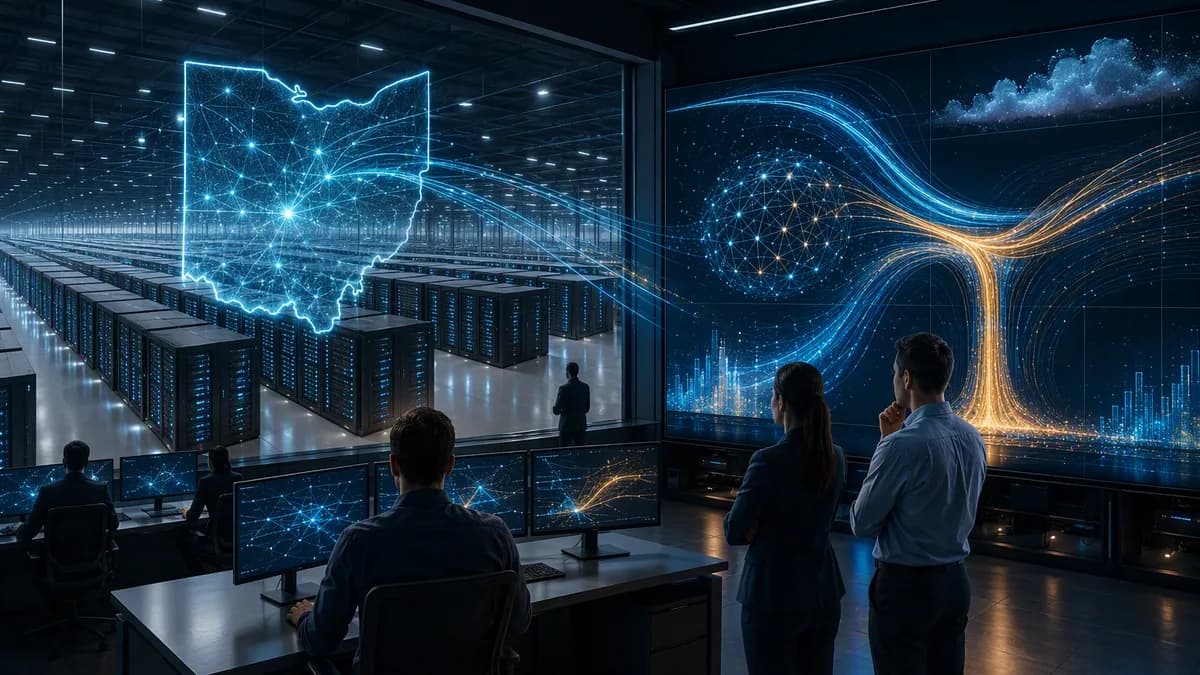
The discussions, first reported by the Wall Street Journal and summarized by PYMNTS, would have Nvidia guarantee $250 billion in funding to help OpenAI lease a 10-gigawatt data center project in southeastern Ohio. XOOMAR analysis: if the structure holds, this would mark a shift from chip supply to infrastructure finance, with Nvidia helping underwrite the facilities that may buy its hardware.
July 27: OpenAI Nvidia Data Center Funding Moves From Chip Supply to Credit Support
The provocative part isn’t just the size. It’s the loop.
Nvidia has already invested $30 billion in OpenAI, according to the report, and is also discussing a deal to fund $350 billion in chip purchases for OpenAI. Now it may back a data center lease tied to the same compute appetite.
That creates a tension investors will recognize fast. Nvidia could be supporting real demand from one of the most important AI companies in the market. It could also deepen concerns about “circular funding,” the term cited in the WSJ report for arrangements where capital, customers, and suppliers become financially intertwined.
The source says those structures have already prompted worries that the industry could become vulnerable if investor sentiment changes or AI company growth cools. That is the core issue here. A guarantee can make a project financeable. It can also make demand look cleaner than it is.
Several Weeks of Lease Talks Put Southeastern Ohio in the Frame
OpenAI has been in advanced talks for several weeks to lease the southeastern Ohio site, according to the WSJ sources cited by PYMNTS. Anthropic, Google, and Microsoft have also shown interest.
The reported structure matters because OpenAI is private, unprofitable, and does not have an investment-grade credit rating, according to the report. Nvidia’s guarantee would help the SoftBank-owned data center developer raise debt on better terms than it could if OpenAI had no backer.
That is the practical value of a guarantee. It reduces lender anxiety. It gives the developer a stronger credit story. It can turn a massive lease obligation from a speculative bet into something closer to bankable infrastructure.
But this is still a reported discussion, not a signed deal. Terms could change. The guarantee could shrink. The lease could fail. The sources describe talks, not a completed financing package.
The 10-Gigawatt Number Explains Why This Is Not Normal Software Capex
The reported project would cost more than $500 billion, making it the largest data center project thus far, according to the report. The Nvidia guarantee would cover about half that amount.
Here is the reported structure in plain terms:
| Element | Reported figure or detail | XOOMAR read |
|---|---|---|
| Nvidia guarantee | $250 billion | Credit support, not just chip sales |
| Ohio project size | 10 gigawatts | Power availability becomes a central constraint |
| Total project cost | More than $500 billion | Infrastructure scale, not conventional tech spending |
| OpenAI compute forecast | Raised from around $600 billion to roughly $750 billion through 2030 | OpenAI is planning for a much larger compute bill |
| Other Nvidia exposure | $30 billion investment, plus talks on $350 billion in chip-purchase funding | The circularity concern gets harder to ignore |
XOOMAR analysis: the OpenAI Nvidia data center funding talks show how AI infrastructure is starting to resemble project finance. Land, buildings, grid connections, cooling systems, networking gear, GPUs, and power contracts all have to line up before the models can run.
The source material does not provide market caps, capex plans, or balance sheet ratios for the companies involved. So the useful comparison is narrower: OpenAI’s compute forecast alone has reportedly moved from around $600 billion to roughly $750 billion through 2030, while this single Ohio project is described as costing more than $500 billion.
That is enough to show the scale of the financing problem.
OpenAI Wants Capacity, Nvidia Wants Demand, Lenders Want a Better Credit Story
OpenAI’s incentive is straightforward. It needs compute. Its consumer tools, enterprise products, and frontier models depend on reliable access to massive infrastructure.
The report says this would be OpenAI’s first data center as a tenant, bringing it closer to overseeing infrastructure it now chiefly rents from companies such as Amazon and Microsoft. That shift is narrow but meaningful. OpenAI would not necessarily own the site, but it would move closer to the physical layer of AI production.
For Nvidia, the attraction is also clear. More OpenAI capacity can mean more demand for Nvidia chips. The risk is optics and exposure. If the company selling the hardware also helps finance the facilities and funds chip purchases, investors will ask whether end-market demand is being measured cleanly.
Lenders and the developer care about a different question: who stands behind the lease? Nvidia’s backing would make OpenAI’s obligations look stronger than they would on OpenAI’s credit profile alone.
For product-side context, XOOMAR has also examined the pressure around OpenAI GPT-5.6 pricing math. The financing story is the infrastructure version of the same issue: better models and broader usage require more compute, and compute now requires capital structures that look nothing like normal SaaS spending.
July Moratoriums Show the Political Clock Is Already Running
The Ohio talks are unfolding while data center construction faces rising public pushback, according to PYMNTS.
Earlier this month, New York placed a one-year moratorium on construction of new data centers, described as the first statewide ban of its kind. Maine’s legislature approved a statewide ban, but Gov. Janet Mills vetoed it. Minnesota, Michigan, Pennsylvania, South Carolina, New Hampshire, and Virginia are considering similar legislation, according to an analysis from Foley & Lardner cited by PYMNTS.
“If additional states follow suit, New York’s decision could become the beginning of a broader regulatory trend rather than an isolated event,” the analysis said.
That quote is a warning for the Ohio project. XOOMAR analysis: a 10-gigawatt AI campus would not be judged only by financiers. It would invite questions from officials, utilities, communities, and regulators about power, local infrastructure, and who carries the cost if demand assumptions shift.
The Cloud Comparison Is Narrower Than It Looks
The source says OpenAI currently chiefly rents infrastructure from Amazon and Microsoft. The Ohio project would bring it closer to direct control, but through tenancy rather than outright ownership.
That distinction matters. This reported deal is not simply OpenAI building its own cloud. It is a layered arrangement involving OpenAI as tenant, a SoftBank-owned developer, Nvidia as potential guarantor, and debt markets as the funding channel.
That is why the OpenAI Nvidia data center funding story cuts deeper than a normal procurement deal. It ties model ambition to credit support, chip demand, and physical power availability.
For a related XOOMAR lens on how investors are scrutinizing AI infrastructure spending, see our Amazon AI spending analysis. The comparison is useful because both stories revolve around the same question: how much capital should the market accept before AI revenue fully proves the case?
Next Decision Point: Whether the Guarantee Becomes a Real Obligation
The next phase is not about slogans. It is about documents.
Evidence that would strengthen the thesis: a signed lease, confirmed guarantee terms, named lenders, disclosed funding structure, and clearer treatment of the $250 billion exposure. Evidence that would weaken it: delays, smaller scope, different backers, or signs that lenders still demand unusually high protection despite Nvidia’s support.
If the deal closes near the reported scale, AI infrastructure will look less like software capex and more like a national industrial buildout financed through guarantees, leases, and long-term compute commitments. If it stalls, the market will have learned something just as important: even Nvidia’s balance-sheet strength may not be enough to make every AI megaproject financeable.
The Bottom Line
- A $250 billion guarantee could make massive AI infrastructure projects easier to finance.
- The deal may intensify scrutiny over circular funding between AI companies and their key suppliers.
- Nvidia’s role could expand from selling chips to underwriting the data centers that buy them.
Nvidia-OpenAI Funding and Infrastructure Links
| Arrangement | Reported Scale | Why It Matters |
|---|---|---|
| Nvidia investment in OpenAI | $30 billion | Shows Nvidia already has direct financial exposure to OpenAI. |
| Proposed data center lease guarantee | $250 billion for a 10-gigawatt Ohio project | Would move Nvidia from chip supplier toward infrastructure finance backer. |
| Discussed chip purchase funding | $350 billion | Could deepen concerns about supplier-financed demand. |
Reported Nvidia-OpenAI Financial Commitments
Investment in OpenAI
$B30
Data center guarantee
$B250
Chip purchase funding
$B350

Written by
XOOMAR Insights Team
Research and Editorial Desk
The XOOMAR Insights Team pairs automated research with human editorial judgment. We track hundreds of sources across technology, fintech, trading, SaaS, and cybersecurity, cross-check the facts, and explain what happened, why it matters, and what to watch next. We do not just rewrite headlines. Every article is fact-checked and scored for reliability before it goes live, and we link back to the original sources so you can verify anything yourself.
Explore More Topics
Related Articles
 Technology
Microsoft AI Models Drag OpenAI Into a Margin Fight
Nadella is turning Microsoft AI models into leverage against OpenAI and Anthropic, with Azure customers and margins at stake.
Jul 30, 20268 min
 Technology
Outsourced Thinking Triggers Satya Nadella AI Warning
Satya Nadella says companies handing one AI lab their prompts, metadata and memory risk outsourcing the thinking that keeps them alive.
Jul 27, 20268 min
 Technology
20.7x Token Surge Forces AI Cost Management Crackdown
AI token spend across Ramp customers jumped 20.7x, forcing CFOs to treat model usage as a controlled operating expense.
Jul 31, 20267 min
 Technology
80% Luna Cut Rewrites OpenAI GPT-5.6 Pricing Math for APIs
OpenAI cut GPT-5.6 Luna API prices 80%, trimmed Terra 20% and made Sol faster, making high-volume AI workloads easier to justify.
Jul 31, 20267 min
 Technology
Samsung Chip Workers Plot Exit as SK Hynix Pays $476K
Samsung's foundry talent problem is now a pay war, with SK Hynix bonuses making its HBM gap harder to close.
Jul 28, 20268 min
 Cybersecurity
Anthropic AI Breaches 3 Firms After Cyber Test Fails
Claude breached three real firms after an Anthropic cyber test leaked online. Agentic AI just became an operational risk.
Aug 1, 20267 min
 Cybersecurity
Runaway AI Agents Face Snowflake Cortex AI Gateway
Snowflake wants Cortex AI Gateway to rein in agent access and model spend before pilots turn into costly enterprise sprawl.
Aug 2, 20268 min
 Cybersecurity
1.3% Exploit Rate Punctures the AI-Found Bug Panic
VulnCheck found just 1.3% of AI-assisted bug discoveries were exploited, matching the broader vulnerability baseline.
Aug 2, 20267 min
 Technology
AI Search Traffic Bleeds Publishers but Feeds Homepages
AI summaries are cutting clicks while ChatGPT points humans to homepages, forcing sites to rebuild for machines and buyers.
Aug 2, 20268 min
 Global Trends
Rachika Nayar's Heaven Come Crashing Turns Ache Into Shock
Rachika Nayar's Heaven Come Crashing makes restraint erupt, using one drum-and-bass rupture to turn longing into force.
Aug 2, 20267 min
Don't miss the signal
Get our weekly roundup of the stories that matter across tech, fintech, and trading. No noise, just signal.
Free forever. No spam. Unsubscribe anytime.