
On June 28, 2026, The Verge tested the TMD Chain Lock and landed on the right question: how much do you hate keys? My answer is blunt: the TMD keyless bike lock is not a mass-market breakthrough. It’s a niche security product for riders trying to protect an expensive e-bike, not a sane default for everyone else, according to The Verge.
TechnologyJune 28, 2026· 7 min read· By XOOMAR Insights Team
TMD Keyless Bike Lock Turns $60 Security Into $280 Bet
Updated on June 28, 2026
XOOMAR Intelligence
Analyst Take
71/ 100
3 sources analyzedMedium confidenceTrend10Freshness100Source Trust88Factual Grounding92Signal Cluster40
The price is the problem. TMD charges €249, about $283, for a lock competing against analog options that can cost far less. The Verge points to the ART-2 certified ABUS 8900, in the same flexible 110cm length, at around €60, about $68. That gap is too wide to wave away with Bluetooth.
June 28 review: TMD Chain Lock belongs near the $10,000 e-bike tier
The Verge tested the TMD Chain Lock on a $10,000 e-bike, and that context matters more than the gadget pitch. A $280 lock starts to look defensible when the bike being protected costs enough to make theft financially painful. On an ordinary bike, it looks indulgent.
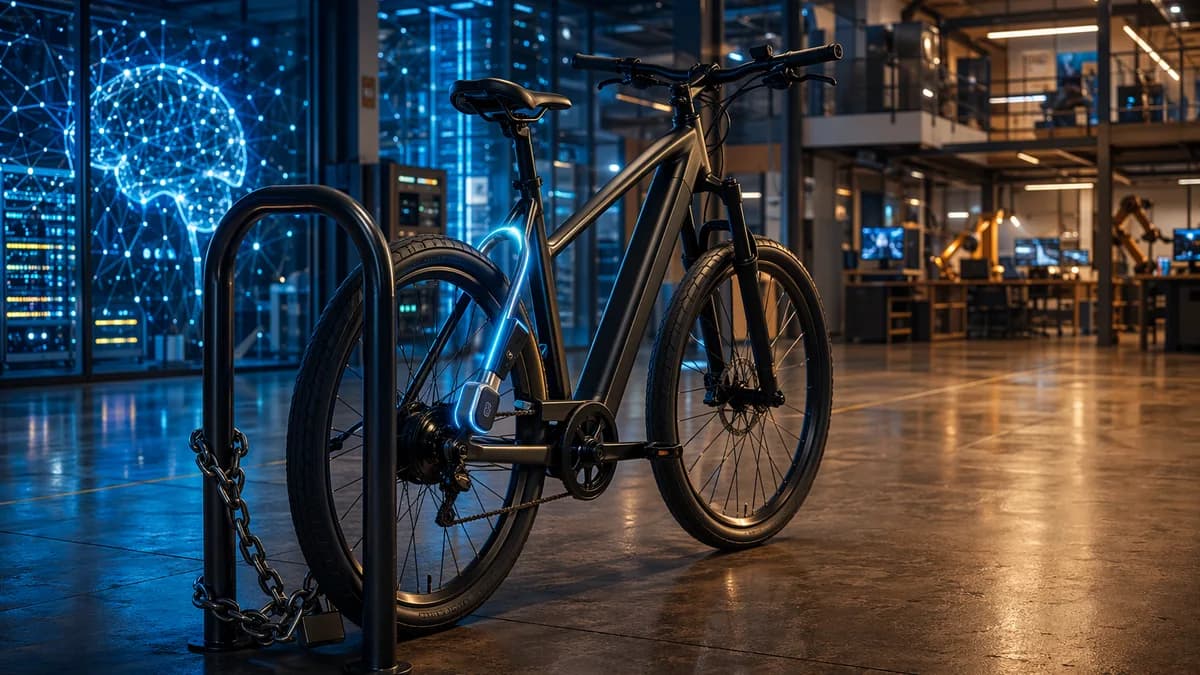
TMD’s case is not ridiculous. The lock combines a Bluetooth proximity sensor, motion alarm, and hardened steel chain wrapped in a soft sleeve made with Dyneema and Kevlar fibers. It’s keyless, shareable through an app, and designed to resist shock, rain, dust, and extreme temperatures.
Still, the core buying decision is brutally simple:
| Lock | Price cited by The Verge | Certification | Core appeal |
|---|---|---|---|
| TMD Chain Lock | €249, about $283 | ART-2 | Keyless Bluetooth, app sharing, alarm |
| ABUS 8900 | Around €60, about $68 | ART-2 | Lower-cost analog security |
That table is the whole debate. TMD has to prove the smart layer is worth roughly four times the cited analog alternative.
For readers tracking the broader pain of expensive consumer hardware, XOOMAR has applied the same price discipline in At $1,049, Steam Machine Trips Over Its Own Promise and Xbox Price Increase Shoves Series X to $799 in Cost Shock. Different categories, same pressure point: the premium has to earn its keep.
During testing: Bluetooth convenience exposed the wrong security question
The Verge found the TMD keyless bike lock usually worked as intended. In testing with an iPhone 15 Pro, it recognized the reviewer’s approach in about 19 out of every 20 attempts, then unlocked with a button press. When it hesitated, the delay was no more than a second.
That’s good product behavior. It’s also not the main security question.
Thieves don’t care whether a lock opens with a key, phone, or proximity sensor. They care about the chain, the anchor point, the time needed to attack it, and whether anyone reacts. Bluetooth makes the owner’s life easier. It doesn’t magically make the lock harder to cut.
TMD’s electronics also create new failure modes. The Verge reported two awkward proximity problems: the bike stayed within Bluetooth range while parked outside a cafe, and it could automatically unlock while parked outside a kitchen window. In both cases, the workaround was moving the bike or turning off the phone’s Bluetooth radio.
That’s not a fatal flaw, but it’s a real one. A lock should reduce mental load. A smart lock that makes the owner think about Bluetooth range has traded one nuisance for another.
At ART-2: hardened steel, Dyneema, and Kevlar give TMD its best argument
TMD deserves credit for not treating “smart” as a substitute for physical security. The TMD Chain Lock uses a hardened steel chain core, while the soft sleeve helps keep it flexible and less likely to scratch the bike. That matters in daily use. A lock that’s too awkward to carry often gets left behind.
The flexible chain format is also practical. E-bikes can be bulky. Racks can be badly placed. Fixed objects are not always where riders want them. A chain gives more options than a rigid lock when the real world refuses to cooperate.
The strongest detail is ART-2 certification. The Verge says the rating comes from an independent Dutch organization that certifies bike locks on a one-to-five scale, and that most Dutch insurance companies require ART-2 at minimum for expensive e-bikes and cargo bikes.
TMD also says the Chain Lock is:
“immune to conventional drilling and picking”
That claim is useful, but it should not distract from the reviewer’s more important reminder: all bike locks can be defeated by a determined thief. Certification improves trust. It does not suspend physics.
At claim time: insurance turns premium locks into paperwork tools
The insurance angle is where the TMD keyless bike lock starts to make more sense. The Verge reports that if a bike is stolen, the TMD app can produce a digital log file as official proof that the bike was locked.
That changes the value equation. The lock is no longer just a theft deterrent. It becomes evidence.
For owners of expensive e-bikes and cargo bikes, that matters. A certified lock that helps satisfy policy requirements can justify a higher price more easily than Bluetooth alone. The buyer is paying for metal, electronics, and documentation.
This is also where the category gets uncomfortable. If certification becomes the real gatekeeper, riders may feel pushed toward pricier locks not because they stop every theft, but because they make the paperwork cleaner after one. TMD is not responsible for that dynamic by itself. But its product sits right in the middle of it.
Before checkout: the strongest defense is that expensive e-bikes deserve expensive protection
The best argument for TMD is simple: protecting a high-value e-bike with a cheap lock is false economy. The Verge’s test bike was a $10,000 e-bike. Against that, €249 stops looking absurd.
There’s also a behavior argument. A lighter, flexible, certified lock with a loud alarm may get used more often than a heavier lock that stays at home. The Verge measured the motion alarm at 100dB, and said it was “less shrill” than expected but did the job when the lock was jostled.
The shareability matters too. TMD lets users give digital access to friends and family through the app. For households sharing a bike, or for someone who wants another person to pick it up later, that’s genuinely useful.
The critique still holds. TMD has shown convenience. It has shown credible certification. It has not shown that Bluetooth adds protection equal to its price premium.
The next test for TMD: prove the steel before selling the app
TMD’s biggest near-term fix is obvious: reduce the ways the smart layer annoys the owner. The Verge called out loud operating tones, including a 75dB unlock tone measured at one meter, and TMD said a future software update will let users disable those sounds.
Charging is another sore point. TMD chose a shallow magnetic pin connector instead of USB-C, citing water and dust protection and room for the battery and speaker. The Verge’s test unit dropped 16 percent after one week, although the reviewer noted indoor storage may have kept the Bluetooth radio active more often than normal.
TMD has already announced an “anti angle grinder” U-Lock and GPS-equipped Ring Lock coming later this year. That’s the decision point. If the company can make multiple locks work together without multiplying battery anxiety, charging cables, app dependence, and proximity quirks, the price story gets stronger.
Bike lock makers should stop pretending Bluetooth is the revolution. Publish tougher independent results. Be honest about grinder resistance. Make certification obvious before checkout. Riders should match the lock to the bike’s value, parking habits, and insurance terms.
A $280 lock can be smart money on a $10,000 e-bike. The steel has to earn the price before the app does.
Key Takeaways
- The TMD Chain Lock costs roughly four times more than a cited analog ART-2 alternative.
- Its smart features may make sense for protecting expensive e-bikes, especially models around $10,000.
- For most riders, the review suggests price and security certification matter more than Bluetooth convenience.
TMD Chain Lock vs. ABUS 8900
| Lock | Price cited | Certification | Core appeal |
|---|---|---|---|
| TMD Chain Lock | €249 / about $283 | ART-2 | Keyless Bluetooth, app sharing, motion alarm |
| ABUS 8900 | Around €60 / about $68 | ART-2 | Lower-cost analog security |
Bike Lock Price Comparison
TMD Chain Lock
$283
ABUS 8900
$68
Sources

Written by
XOOMAR Insights Team
Research and Editorial Desk
The XOOMAR Insights Team pairs automated research with human editorial judgment. We track hundreds of sources across technology, fintech, trading, SaaS, and cybersecurity, cross-check the facts, and explain what happened, why it matters, and what to watch next. We do not just rewrite headlines. Every article is fact-checked and scored for reliability before it goes live, and we link back to the original sources so you can verify anything yourself.
Explore More Topics
Related Articles
 Technology
Apple Splits iPhone 18 Launch, Delays Base Model Until 2027
Apple is fracturing its iconic September launch, planning to debut only iPhone 18 Pro models this fall and holding the standard iPhone 18 until 2027.
Aug 12, 20267 min
 Technology
Amazon Hides Your Order Data From AI Agents
Amazon has stripped product names from order confirmations to lock customers into its app and prevent AI shopping agents from accessing purchase data.
Aug 11, 20267 min
 Technology
Anker's Universal Charger Halts Travel Adapter Chaos for $20
The Anker Nano Travel Adapter consolidates four international plug types into one compact device on sale for $19.99, but it only adapts plugs, not voltage.
Aug 10, 20267 min
 Technology
Bluesky Hides Reposts From That One Annoying Account
Bluesky added a feature allowing users to hide reposts from specific accounts they follow, a targeted tool for feed curation without unfollowing.
Aug 10, 20267 min
 Technology
Hall Effect Keyboard Hits Historic Low At $104
Keychron's flagship Hall effect keyboard has dropped to its lowest-ever price of $104, part of a broader trend where premium PC and gaming hardware is becoming
Aug 10, 20265 min
 Cybersecurity
AI Wrote a Zoom Hack in Under 20 Prompts
Researchers weaponized a critical Zoom flaw using fewer than 20 AI prompts, collapsing the barrier to sophisticated cyberattacks and turning screen-sharing into
Aug 11, 20265 min
 Cybersecurity
Germany Scraps Postwar Spy Curbs After Security Lapses
Germany dismantles the core legal restrictions on its intelligence agencies established after WWII, a historic pivot from defensive caution toward proactive, of
Aug 12, 20265 min
 Fintech
Western Union Buys a Sinking Ship for $500 Million
Western Union's $500 million deal for remittance firm Intermex looks disastrous as revenue plunges 18%, revealing the company's frantic—and failing—defense agai
Aug 12, 20266 min
 Technology
AI's Founders Declare Open Models Unstoppable
Three AI pioneers argue that open-weight models are an irreversible reality, and the US must compete within that open world or risk ceding control to a closed e
Aug 12, 20266 min
 Fintech
Dime Bank Bets Everything on New Jersey Escape
Dime Commercial Bancshares is abandoning its 162-year-old identity as a thrift, gutting its multifamily loan portfolio and hiring from collapsed rivals to reinv
Aug 12, 20267 min
Don't miss the signal
Get our weekly roundup of the stories that matter across tech, fintech, and trading. No noise, just signal.
Free forever. No spam. Unsubscribe anytime.