
Bitcoin is trading near $64,000, up 1.9% in 24 hours, despite news that a fourth wave of thefts drained roughly 449 bitcoin from 709 wallets linked to the Coldcard hardware device over just a few days. The disconnect is stark, and according to CoinDesk, the market's steady advance shows traders are pricing a fundamentally different set of risks than the ones flashing red on security forums.
TradingAugust 4, 2026· 8 min read· By XOOMAR Insights Team
Bitcoin Defies $15 Million Coldcard Sweep with Gains
Updated on August 4, 2026
XOOMAR Intelligence
Analyst Take
58/ 100
4 sources analyzedLow confidenceTrend10Freshness97Source Trust88Factual Grounding92Signal Cluster20
For a market once defined by its hair-trigger reactions to any threat, this apparent indifference is a signal. It suggests traders are now grading negative events on a scale of systemic versus contained. A major exchange hack that could crater liquidity is one thing. A series of targeted thefts from what appears to be a specific set of devices, while alarming, is being treated as something else entirely. This isn't complacency. It's a recalibration of what actually moves the needle on price.
Dissecting the Fourth Sweep: A Supply-Chain Nightmare Confirmed
The mechanics of the attack are what make it uniquely troubling. This wasn't a phishing scam or a hot wallet breach. A "sweep" attack in this context means an entity gained the ability to generate the private keys for a vast number of addresses created by the affected Coldcard firmware. Once armed with that mathematical flaw or backdoor, the attacker could automatically "sweep" funds from any of those addresses the moment a transaction landed in them.
The recovery came without any resolution to the Coldcard situation. A fourth wave of sweeps... ran through Monday, taking roughly 449 bitcoin from 709 addresses on the revised count, and Galaxy Research has not confirmed whether the same operator is behind it.
The implication is a deep compromise, likely at the firmware or entropy-generation level. It strikes at the heart of the "not your keys, not your coins" mantra by targeting the very tool meant to secure those keys, amplifying fears illustrated by stories of Bitcoin's 12-year vaults opening. As we previously analyzed, this kind of exploit rattles Bitcoin’s cold-storage faith in a way a central exchange failure does not. It turns a symbol of absolute security into a vector of failure.
Quantifying the Market's Shrug: A $105 Million Sale Gets More Attention
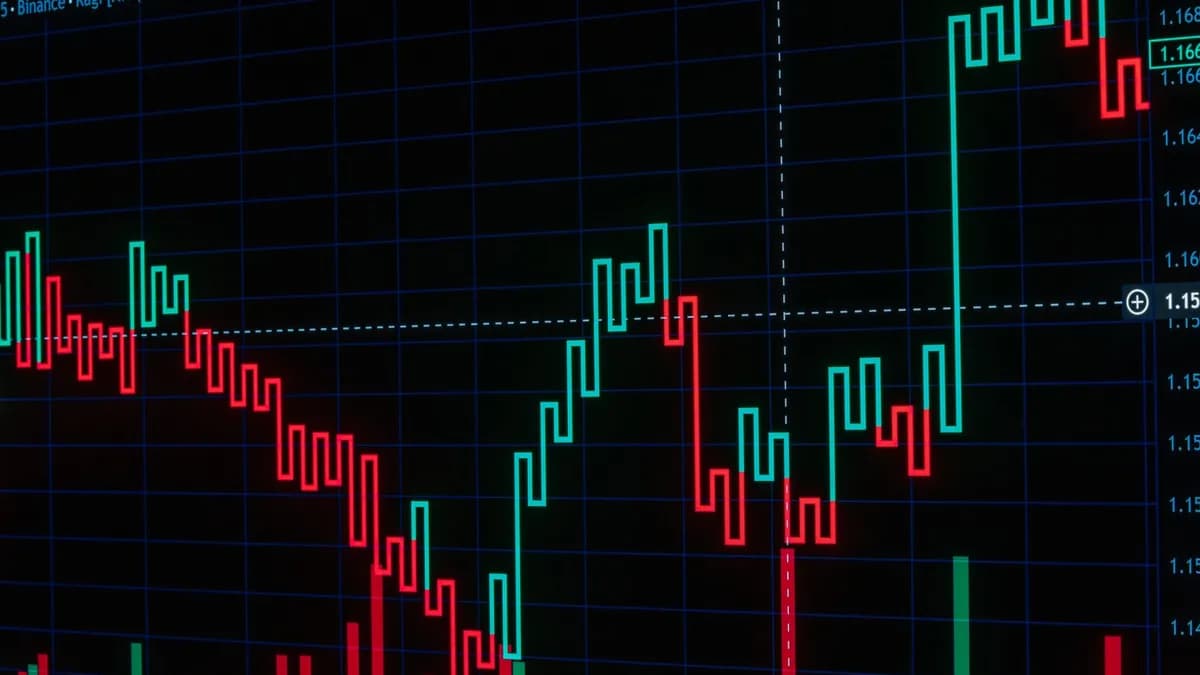
The price action tells a clearer story of market priorities than any commentary could. While the thefts progressed, bitcoin reclaimed the $63,000 level it had lost, bouncing from a low near $62,250 to briefly over $64,100.
Major Cryptocurrency Performance (Weekly View)
| Token | Price | Weekly Change | Note |
|---|---|---|---|
| BTC | ~$64,000 | +1% | Recovering key level |
| ETH | ~$1,865 | -1% | Only major in weekly red |
| BNB | ~$591 | +5% | Leader for the week |
| XRP | ~$1.08 | +2% | Steady gain |
| SOL | ~$74 | +1% | Following broader trend |
The data shows a broad-based, if modest, rally. Tellingly, the market seemed more focused on the disclosed actions of a known entity than the anonymous thief. Strategy, a major corporate holder, filed with the SEC that it sold 1,638 bitcoin for about $105 million between July 27 and Aug. 2. The company sold at an average price of $63,957, well below its cost basis of $75,419, and used the proceeds for dividends and stock buybacks, not to rebuy BTC.
This corporate divestment, its third of the year, arguably provided more transparent sell-side pressure for traders to model than the opaque Coldcard outflows. The market absorbed both.
The Clash of Narratives: What Different Camps See in the Chaos
The muted price reaction has exposed a fundamental divide in how different participants interpret the same events.
The Maximalist/Trader View: Macro Over Micro For this group, the Coldcard incident is a severe but isolated technical failure. Bitcoin's network and protocol integrity remain untouched. The dominant price drivers are elsewhere: the potential for softer Fed policy, progress on U.S. crypto regulation like the CLARITY Act, and correlation with tech equity momentum. One analyst cited by Forbes framed it succinctly: "When negative headlines struggle to push prices lower, it often indicates that bearish positioning has eased and buyers are becoming more willing to step in." This view prioritizes liquidity and macro trends over a non-systemic security event.
The Security-First View: A Stark Ecosystem Warning This camp argues the market is dangerously complacent. An attack on a premier hardware wallet isn't a "user error" story, it's a catastrophic failure of a critical trust layer. It validates every regulator's fear about consumer self-custody and makes a forceful case for insured, institutional-grade custody solutions. The lack of a price drop isn't resilience, it's a failure to properly price existential risk to the storage infrastructure the entire ecosystem relies upon.
The fact that ether is the only major token still down on the week adds another layer. It may indicate that traders see the Coldcard issue as a Bitcoin-specific hardware problem, not a contagion risk to smart contract platforms or the broader digital asset class.
From Mt. Gox to Multisig: How the Market Learned to Absorb Shocks
The evolution of the threat environment explains a lot about today's reaction. A decade ago, the collapse of an exchange like Mt. Gox was an existential market event because it represented a massive, centralized point of failure for liquidity and trust. The industry response was the mass migration to self-custody and hardware wallets.
Now, the attack has evolved to target that solution. The market's response, in turn, has evolved again. The development of multisignature setups, distributed custody, and regulated custodians has created a more robust risk-management toolkit. An exploit of one hardware model, while devastating for its users, does not threaten the solvency of major lending platforms or exchange reserves.
The market is treating this as a contained risk. The systemic risk would be a flaw in the Bitcoin protocol itself, a compromise of a major custodian holding ETF assets, or a liquidity crisis in a core decentralized finance protocol. By that grading scale, the Coldcard sweeps, for all their severity, don't rank.
Selective Amnesia as a Market Signal: Lessons for Every Participant
The market's ability to "look past" this event offers practical, if harsh, lessons.
For Retail Holders: The assumption that a premium hardware wallet is a magic talisman is dead. This is a brutal reminder that seed phrase hygiene and understanding your device's entropy source are paramount. Diversification of storage methods, including considering simple, open-source software wallets for smaller amounts, is no longer paranoia, it's prudence.
For Institutions and Builders: This incident is a validation of the business model for regulated, insured custody services. It provides a clear answer to the question "Why can't we just use hardware wallets?" For project founders, it highlights that security narrative management managing communications during a crisis without inducing panic is a core competency in a market that can now shrug off serious breaches.
The core takeaway is that market efficiency in crypto no longer means reacting to every negative headline. It means correctly diagnosing which headlines threaten the core value proposition of scarcity, decentralization, and network security, and which threaten only specific implementations of that proposition.
The Watch Points: Where the Real Price Catalysts Lie Now
Forward-looking analysis suggests the Coldcard saga will fade from price charts faster than it will from security post-mortems. The key watch points are elsewhere.
Short-term: The $63,000 Battlefield As the source notes, traders are watching "whether bitcoin can hold above $63,000 through the U.S. session." This level has been reclaimed and lost twice in three days. A third failure would signal weakening support and could see a retest of the $62,250 low. The directional cue will come more from traditional markets, where Asian equities sold off on "AI-trade jitters," while U.S. futures hinted at resilience.
Medium-term: The Custody Bifurcation Watch for a sharp divide in the hardware wallet market. Demand will likely surge for devices with verifiably open-source, auditable firmware and transparent entropy generation. The incident may accelerate the institutional shift toward multisignature arrangements that distribute trust, making a single point of hardware failure less catastrophic.
The Contrarian Bull Signal: The most significant bullish signal from this entire episode may be the market's demonstrated resilience. The ability to absorb a $100+ million theft from a revered security product without derailing a broader uptrend shows a depth of buyer support and a maturity in risk assessment that simply didn't exist in prior cycles. It suggests the market is being driven by forces larger than any single exploit. As we've seen in periods of thin volume, the true test of this resilience will come when broader macro headwinds align, not just when crypto faces its own internal demons. For now, traders have voted with their bids: the narrative of institutional adoption and macro correlation outweighs the narrative of security fragility. That's the new reality, ready or not.
Disclaimer: This XOOMAR analysis is for informational and educational purposes only. It is not financial, investment, legal, tax, or professional advice. It does not provide buy, sell, hold, price-target, portfolio, or personalized recommendations. Verify information independently and consult qualified professionals before making decisions.
Impact Analysis
- The market's resilience despite major thefts suggests traders now view security breaches as contained rather than systemic risks, signaling a maturing market.
- The attack method undermines the core security promise of hardware wallets, eroding trust in fundamental tools used to protect crypto assets.
- As the theft total grows, it may pressure regulators to scrutinize hardware wallet security and supply-chain integrity more aggressively.
Bitcoin Price & Coldcard Theft Impact
Bitcoin Price
$64,000
Stolen Bitcoin
$449
Sources
Disclaimer: Content on XOOMAR is produced using AI-assisted research, drafting, and verification workflows and is intended for informational and educational purposes only. It does not constitute financial, investment, legal, tax, medical, or professional advice of any kind. All analysis reflects available information at the time of publication and may not be current. Verify information independently and consult qualified professionals before making decisions. Editorial policy

Written by
XOOMAR Insights Team
Research and Editorial Desk
The XOOMAR Insights Team pairs automated research with human editorial judgment. We track hundreds of sources across technology, fintech, trading, SaaS, and cybersecurity, cross-check the facts, and explain what happened, why it matters, and what to watch next. We do not just rewrite headlines. Every article is fact-checked and scored for reliability before it goes live, and we link back to the original sources so you can verify anything yourself.
Explore More Topics
Related Articles
 Trading
Bitcoin July Gain Exposes a Market Drained of Sellers
Bitcoin’s 7.5% July rise looks less like fresh demand and more like a market where forced sellers were already cleaned out.
Aug 1, 20269 min
 Trading
Coldcard Exploit Rattles Bitcoin’s Cold-Storage Faith
A $114M Coldcard exploit dented bitcoin and ether, but the real risk is fading faith in crypto cold storage.
Aug 3, 20267 min
 Trading
Bitcoin Defies Oil Spike as Fed and Iran Rattle Markets
Bitcoin held near $64K as oil surged 8% after Iran strikes and the Fed split hawkish, but the calm looks fragile.
Jul 30, 20266 min
 Trading
Yen Shock Fails to Crack Bitcoin as Dollar Takes Blame
Bitcoin barely flinched after the yen intervention. The bigger threat looks like dollar strength, not a carry-trade unwind.
Aug 3, 20268 min
 Trading
Clarity Act Odds Crash to 31%, Threatening Bitcoin
Bernstein warns a stalled Clarity Act could trigger another crypto leg lower, even if regulators step in later.
Aug 3, 20267 min
 Fintech
Bitcoin's 12-Year Vaults Open as $130M Hack Terrorizes HODLers
Ancient Bitcoin wallets, dormant for up to 12 years, are moving billions in a panic-driven exodus after a $130 million exploit shattered the 'set and forget' se
Aug 4, 20267 min
 Fintech
Trump Media Bitcoin Move Traps Its BTC Stash in Debt
A $165 million BTC move left tagged Trump Media wallets almost equal to the amount pledged as loan collateral.
Aug 3, 20267 min
 Fintech
Matt Prusak Jumps to Giga Energy as Miners Chase AI Power
Matt Prusak's jump to Giga Energy signals bitcoin mining's new power race, where AI-ready sites may matter more than hashrate.
Aug 3, 202612 min
 Global Trends
Cyclospora Deaths Shift U.S. 'Nuisance Bug' to Crisis
Two people in Michigan have died from cyclosporiasis, marking the first U.S. fatalities in a massive outbreak with thousands of cases. Public health officials a
Aug 4, 20267 min
 Global Trends
Record Cyclospora Outbreak Kills Two in Michigan
Two people in Michigan have died in a record U.S. Cyclospora outbreak, marking the first fatalities and showing the parasite's dangerous potential for the medic
Aug 4, 20267 min
Don't miss the signal
Get our weekly roundup of the stories that matter across tech, fintech, and trading. No noise, just signal.
Free forever. No spam. Unsubscribe anytime.