
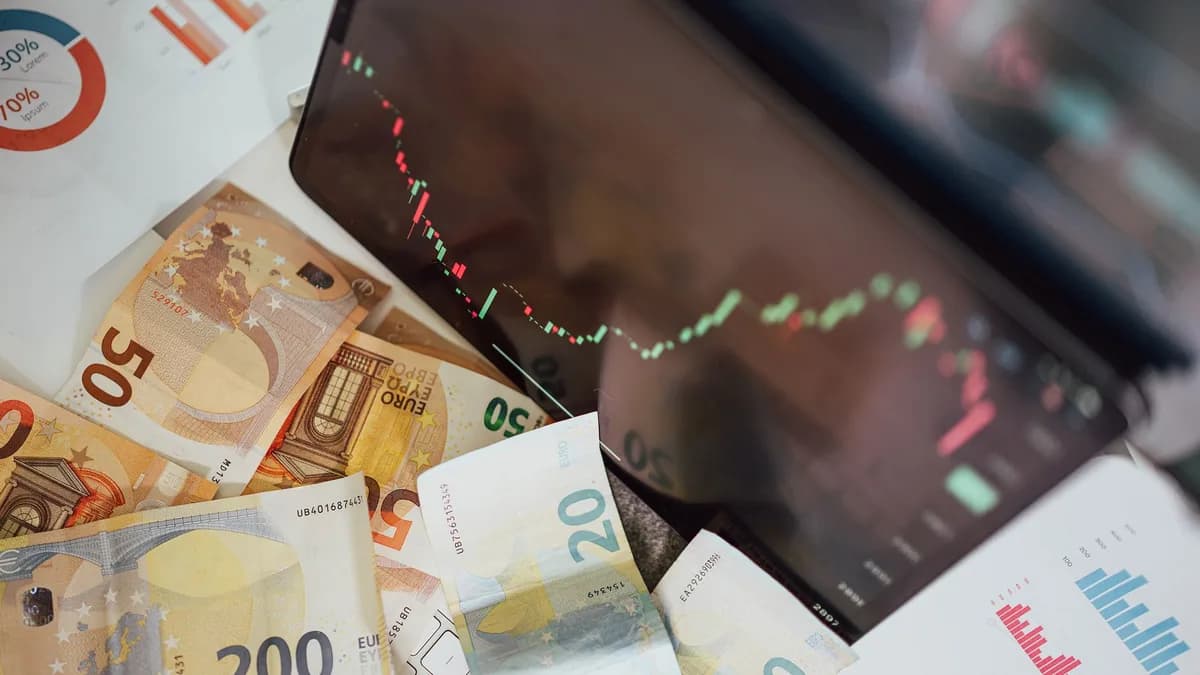
In early August, a single weak US jobs report didn't just shift the market, it cracked the Federal Reserve's hawkish narrative wide open. The US Dollar weakened immediately as traders slashed their expectations for further Fed rate hikes, allowing EUR/USD to briefly reach its highest level in almost two months at 1.1581, according to analysis from the Danske Research Team at FXStreet. This wasn't a gradual drift, it was a sudden repricing where data decisively overpowered weeks of central bank posturing on policy.
TradingAugust 10, 2026· 6 min read· By XOOMAR Insights Team
Bad Jobs Report Smashes Dollar, Pumps Euro to Two-Month High
Updated on August 10, 2026
XOOMAR Intelligence
Analyst Take
57/ 100
3 sources analyzedLow confidenceTrend10Freshness99Source Trust84Factual Grounding77Signal Cluster40
For dollar bulls, the report was a cold shower. Nonfarm payrolls came in at -23k, a stunning miss against a consensus expectation of +80k. Cumulative revisions for May and June added another -103k of downside surprise. While the unemployment rate fell to 4.1%, the labor force participation rate slumped to 61.4%, its weakest level since February 2021. The immediate market verdict was unambiguous: growth is stumbling.
The Fed's Calculus Cracks
"We do not think this report is as unambiguously dovish as the initial moves in UST yields and USD FX implied, leaving the Fed in a difficult position balancing below-expectations job growth against a still-declining unemployment rate," Danske noted.
Despite this caveat, the trading algorithms moved first and asked questions later. The market reaction was a direct assault on the dollar's primary support pillar: the prospect of more Fed hikes. Danske reported that the market's pricing shifted dramatically, now discounting just 11 basis points of hike for the September meeting. That’s a fraction of a single 25-bps move. This rapid unwind of hawkish bets drained the dollar's momentum, triggering a classic "buy everything but the dollar" flash mob across major currencies.
Why the Euro Won the Lottery In that environment, the euro became the default beneficiary. It's the most liquid alternative to the dollar, and crucially, the European Central Bank was not simultaneously pivoting toward easier policy. As we reported earlier this week, the jobs report has become the dominant market narrative, and this time it exclusively punished the dollar story. The euro’s rise to 1.1581 wasn't driven by a surge of confidence in Europe, which has its own political and growth challenges. It was purely a function of capital fleeing a suddenly less attractive US yield outlook.
The Immediate Aftermath: A Fragile Victory for the Euro
The spike was sharp but the follow-through is the real test. The euro’s ability to hold gains above 1.15 will determine whether this is a genuine regime shift or another fleeting correction within a broader downtrend. History offers cautionary tales. The euro has seen similar "dollar fatigue" rallies before, like the surge in late 2018 when the Fed paused, only for the pair to roll over again as US economic resilience reasserted itself.
The structural difference this time might be the starting point. The US is slowing from a period of exceptional outperformance, while the Eurozone, while fragile, is not in an acute crisis. The political overhang in France, with a confidence vote looming for Prime Minister François Bayrou, remains a potent risk, yet the euro held firm. This suggests the dollar’s weakness is the dominant, if not sole, driver.
A Trio of Consequences from a Softer Dollar
The fallout from this repricing creates distinct winners and losers on the global chessboard.
Winner: The European Central Bank and Exporters A stronger euro complicates the ECB's inflation fight by making imports cheaper, but a measured appreciation from depressed levels acts as a pressure valve. It marginally eases imported inflation without crushing the export sector. For European exporters, a euro trading near 1.16 is far more palatable than one threatening parity, offering a buffer against slowing global demand.
Loser: The Dollar-Long Complex Strategies built on relentless "US exceptionalism" and a forever-strong dollar face immediate mark-to-market pain. This jobs report forced a painful, rapid liquidation of these crowded trades, a dynamic that can feed on itself as stops are triggered. The US Dollar's recent ability to slam other asset classes into retreat has been abruptly put on hold.
Spectator: Other Central Banks on Standby For the Bank of Japan and the Swiss National Bank, a softer dollar subtly alters their FX intervention calculus. It reduces the immediate pressure to defend their currencies from extreme weakness. This could allow them to conserve firepower, turning them from active sellers of dollars to cautious observers.
From Flash Mob to Firm Trend: What Validates the Move
For the EUR/USD repricing to stick, the upcoming data must confirm the jobs report was not an outlier.
The US CPI Litmus Test All eyes now turn to the next US inflation print. A cooler reading would cement the dovish Fed narrative, potentially pushing EUR/USD toward the next technical resistance levels. A hot number, however, would resurrect stagflation fears and could halt the euro's advance in its tracks, testing the 1.15 support level that has recently acted as a ceiling.
Europe's Growth Check On the euro side, the second release of Eurozone Q2 GDP will be critical. It provides the detailed breakdown the market needs to assess whether the bloc's economy has any underlying momentum or is solely reliant on a weaker dollar for support. A poor showing could remind traders that this is not a story of euro strength.
XOOMAR Analysis: The path forward now hinges on this sequence of data. The initial jobs shock gave the euro a clear runway, but it needs both a follow-up soft US inflation print and non-disastrous Eurozone GDP to fuel a sustained climb. Failure on either front could see the pair fall back into the frustrating 100-pip ranges that have characterized much of the recent trading.
What to Watch Next:
- U.S. CPI Data: Does it confirm a cooling trend, allowing the Fed to pivot, or re-ignite inflation fears?
- Eurozone Q2 GDP Details: Does the data show resilient domestic demand or confirm stagnation?
- ECB Rhetoric: At what EUR/USD level will policymakers begin to verbally push back against excessive euro strength, capping the rally?
The trade for the rest of the period is clear: the burden of proof has shifted. It's now on US data to stay soft and on European data to not collapse. Until then, the euro's rally lives on borrowed time, the borrowed time of a faltering dollar narrative.
Disclaimer: This XOOMAR analysis is for informational and educational purposes only. It is not financial, investment, legal, tax, or professional advice. It does not provide buy, sell, hold, price-target, portfolio, or personalized recommendations. Verify information independently and consult qualified professionals before making decisions.
The Bottom Line
- A surprisingly weak US jobs report caused traders to dramatically lower expectations for Fed rate hikes, weakening the dollar.
- The Euro immediately strengthened to a two-month high (€1=1.1581 USD) as capital shifted away from the dollar.
- This rapid repricing shows how single data points can override central bank guidance and create sharp market volatility.
US Labor Data vs Expectations
Nonfarm Payrolls (Aug)
-23
May-Jun Revisions (Cumulative)
-103
Labor Force Participation Rate (%)
61.4
Sources
Disclaimer: Content on XOOMAR is produced using AI-assisted research, drafting, and verification workflows and is intended for informational and educational purposes only. It does not constitute financial, investment, legal, tax, medical, or professional advice of any kind. All analysis reflects available information at the time of publication and may not be current. Verify information independently and consult qualified professionals before making decisions. Editorial policy

Written by
XOOMAR Insights Team
Research and Editorial Desk
The XOOMAR Insights Team pairs automated research with human editorial judgment. We track hundreds of sources across technology, fintech, trading, SaaS, and cybersecurity, cross-check the facts, and explain what happened, why it matters, and what to watch next. We do not just rewrite headlines. Every article is fact-checked and scored for reliability before it goes live, and we link back to the original sources so you can verify anything yourself.
Explore More Topics
Related Articles
 Trading
Hot Eurozone Inflation Rescues EUR/USD From Dollar Trap
EUR/USD bounced toward 1.1530 after firm Eurozone inflation, but hawkish Fed talk and Dollar strength kept the rally boxed in.
Jul 31, 20265 min
 Trading
Friday's Jobs Report Crowns King of All Market Narratives
Friday's July jobs report is the single most important market catalyst of the month, with its power to lock in a Fed rate hike or trigger a dovish reassessment
Aug 7, 20266 min
 Trading
EUR/USD Options Flash Euro Pain Before Fed Decision
EUR/USD is calm near 1.13, but options traders are paying up for euro downside protection before the FOMC decision.
Jul 30, 20267 min
 Trading
Pound Gripped Below 1.3450 Before US Job Report Shock
The British pound is stuck below 1.3450 against the dollar as traders refuse to move ahead of the volatile US jobs report, which could shock the market and send
Aug 7, 20265 min
 Trading
Dollar Flips Its Script As Silver Rally Collapses
Silver's rally is collapsing under pressure from a rebounding U.S. Dollar and shifting Fed rate expectations ahead of key employment data.
Aug 6, 20268 min
 Fintech
CPI Print Holds Key to Crypto Rally or Ruin
Crypto's fate this week balances on a knife edge, with the July CPI report poised to dictate Fed policy and market risk appetite, while earnings reveal which co
Aug 10, 20266 min
 Fintech
Thames Water Flushes £1m Fee to CFO as Nationalisation Looms
Thames Water used £1 million from its emergency creditor bailout to pay a signing fee for its CFO while staring down potential government takeover, triggering a
Aug 10, 20267 min
 Technology
AI Erases Expense Reports in Corporate Travel Revolution
AI agents are automating the entire expense report workflow, moving from reactive reimbursement to proactive policy enforcement before corporate travel spending
Aug 10, 20266 min
 Trading
Silver Soars Past $63.30, Triggers Bullish Signal Toward $67
XAG/USD has confirmed a bullish Head and Shoulders bottom breakout above $63.30, signaling a major downtrend reversal and targeting approximately $67.17.
Aug 10, 20267 min
 Fintech
AI Agents Shift Loyalty and Liability in Payments, Pioneer Warns
AI agents making payments are forcing a total renegotiation of brand-customer relationships, with trust now becoming the core product and the key competitive ad
Aug 10, 20266 min
Don't miss the signal
Get our weekly roundup of the stories that matter across tech, fintech, and trading. No noise, just signal.
Free forever. No spam. Unsubscribe anytime.