
Hot German inflation data just slammed the brakes on a risk-off rally in the British Pound, proving that for the EUR/GBP pair, domestic price pressures can still shout louder than distant geopolitical explosions according to FXStreet. On Wednesday, the Euro clawed back from session lows against the Pound after Germany's Harmonised Index of Consumer Prices (HICP) accelerated to 2.8% year-over-year in July. This jump from 2.4% in June, fueled by energy inflation rocketing to 7.3%, forced a swift market recalculation: the European Central Bank's inflation fight is far from over.
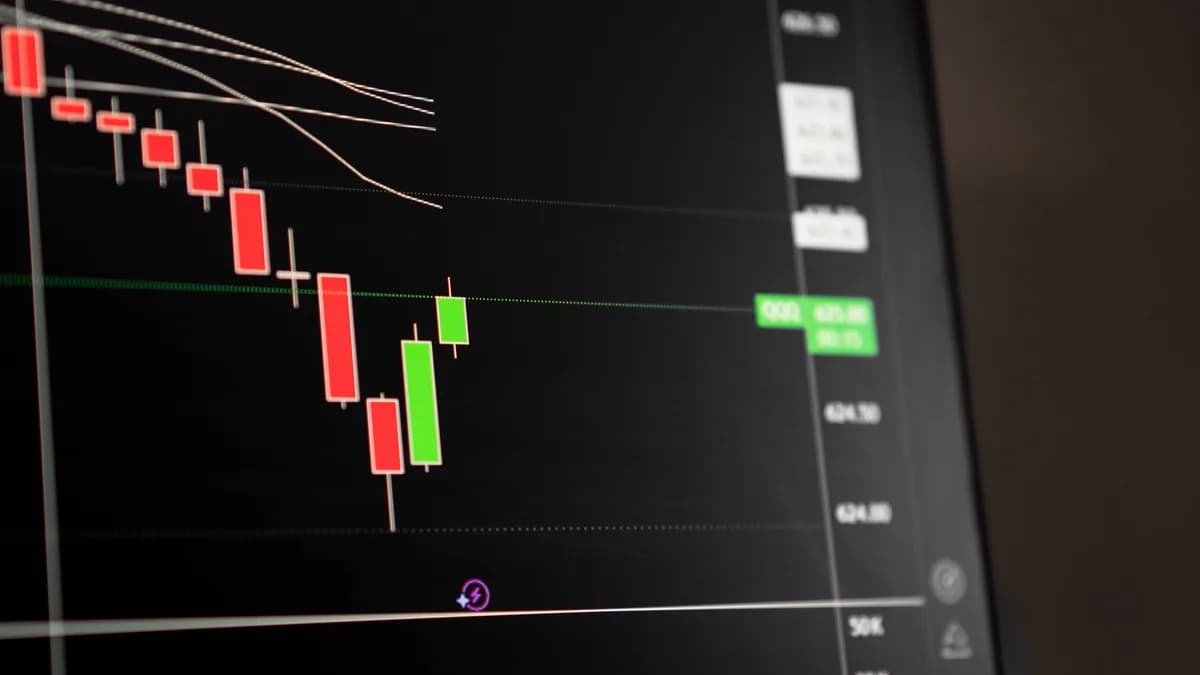
TradingAugust 12, 2026· 5 min read· By XOOMAR Insights Team
German Energy Shock Traps ECB in High-Inflation Loop
Updated on August 12, 2026
XOOMAR Intelligence
Analyst Take
62/ 100
3 sources analyzedLow confidenceTrend10Freshness100Source Trust84Factual Grounding95Signal Cluster60
While Middle East tensions had initially buoyed Sterling, a single data point from Europe's largest economy commanded immediate attention. The reaction exposes a core tension in forex markets right now.
German Inflation Hands the ECB a Justification to Wait
The data wasn't just hot, it was scalding in a key component. The confirmed German HICP figures show price pressures are not just persistent, they are re-accelerating. The leap in annual energy inflation to 7.3% from 2.7% is particularly stark, directly linking to the geopolitical events that were supposedly aiding the Pound.
The barrel of Brent Oil appreciated to levels beyond $88.00 on Wednesday, about 13% up from last week’s highs, fuelling inflationary pressures across the board and adding pressure on the Eurozone’s Oil-importing economies.
This creates a punishing feedback loop for ECB policymakers. Soaring energy costs, partly triggered by the same Middle East risks that boost safe-haven flows into currencies like the Pound, simultaneously trap the Eurozone in a high-inflation environment. The data gives the ECB's hawkish members concrete, Germany-specific evidence to argue against any near-term policy easing. For the Euro, this means its yields are unlikely to fall relative to the Pound's anytime soon, providing a fundamental floor for the currency pair. This dynamic of Middle East tumult muting central bank signals is not isolated to Europe.
Sterling's Safe-Haven Boost Meets a UK Growth Dilemma
The Pound's early Wednesday strength had a clear catalyst: a flight to safety. The source details Iran-backed Houthi militants attacking an Egyptian vessel in the Red Sea and a US Army engagement with a ship attempting to break an Iranian blockade. These events rattled the US-Iran peace negotiations and pushed investors toward traditional havens.
However, the UK currency now faces a domestic reckoning that could undermine this geopolitical support. Strategists at Brown Brothers Harriman highlight a critical vulnerability for Sterling: UK rate expectations.
They note the consensus looks for Q2 GDP growth of 0.4% quarter-over-quarter, while the Bank of England projects a softer 0.3%. The warning is explicit: “absent a GDP beat, UK rate pricing looks vulnerable to a dovish repricing against the Pound.”
This sets up a brutal showdown for Sterling on Thursday. A strong GDP print could validate the Pound's strength, blending safe-haven flows with solid economic fundamentals. A miss, however, exposes a fault line. Traders would be forced to choose between a currency buoyed by global fear and one undermined by local economic weakness. The Pound's resilience is about to be stress-tested by its own data.
The Instant Pivot From Geopolitics to Spreadsheets
The precise market sequence on Wednesday is instructive. Risk-off sentiment, fueled by headlines from the Red Sea, was pushing the EUR/GBP pair toward session lows. Then, the German Statistics Office released its report.
The EUR/GBP pair ticked up to levels above 0.8540, a direct and immediate reversal. This wasn't a gradual shift, it was a pivot. Traders collectively decided that a 0.4 percentage point jump in German year-over-year inflation, and the explicit threat of even higher energy prices, demanded a more urgent repricing than the unfolding Middle East drama.
It demonstrates a current market hierarchy for this pair: high-impact, validated inflation data from a core economy can temporarily override moderate geopolitical flare-ups. The mechanism is clear. German inflation data directly informs ECB policy, which directly sets Euro interest rates. Geopolitics, while affecting risk sentiment and energy costs, is a more diffuse and slower-acting channel for currency valuation. In this case, the direct monetary policy signal won the hour.
The Stakes for Thursday's UK GDP Print
All of this sets the stage for an exceptionally consequential data release. Thursday's preliminary UK GDP report is no longer just a measure of economic health, it's the arbiter between two competing narratives for Sterling.
- If UK GDP beats expectations (consensus 0.4% q/q): It validates the Pound's strength. The narrative becomes one of a resilient UK economy deserving of its safe-haven flows, potentially pressuring EUR/GBP lower again. The BoE would have less reason to sound dovish.
- If UK GDP misses or merely meets expectations: The German inflation story dominates. The price action suggests traders are primed to punish Sterling if its domestic story falters. The warning from Brown Brothers Harriman would likely manifest as a swift drop in UK rate hike expectations, sending the Pound lower and allowing EUR/GBP to climb further.
The outcome will determine whether Wednesday's Euro rebound was a temporary corrective bounce or the start of a more sustained move driven by a widening policy divergence. For businesses and traders, the volatility underscored by this clash of narratives highlights the acute sensitivity of this cross to scheduled data. Being caught unhedged between these releases is an increasingly risky proposition.
As we've seen in periods where the Euro rally gets trapped, these pairs can stall until one central bank's narrative breaks decisively from the other's. Thursday provides that opportunity.
Disclaimer: This XOOMAR analysis is for informational and educational purposes only. It is not financial, investment, legal, tax, or professional advice. It does not provide buy, sell, hold, price-target, portfolio, or personalized recommendations. Verify information independently and consult qualified professionals before making decisions.
The Bottom Line
- Persistent high inflation justifies the ECB maintaining higher interest rates, supporting the Euro's yield advantage.
- Re-accelerating energy costs create a feedback loop, complicating the ECB's policy decisions despite global risk-off flows.
- The data exposes that domestic inflation in Europe's largest economy can override short-term geopolitical market movements for the EUR/GBP exchange rate.
German HICP & Energy Inflation Re-acceleration
German HICP YoY (June)
%2.4
German HICP YoY (July)
%2.8
German Energy Inflation YoY (June)
%2.7
German Energy Inflation YoY (July)
%7.3
Sources
Disclaimer: Content on XOOMAR is produced using AI-assisted research, drafting, and verification workflows and is intended for informational and educational purposes only. It does not constitute financial, investment, legal, tax, medical, or professional advice of any kind. All analysis reflects available information at the time of publication and may not be current. Verify information independently and consult qualified professionals before making decisions. Editorial policy

Written by
XOOMAR Insights Team
Research and Editorial Desk
The XOOMAR Insights Team pairs automated research with human editorial judgment. We track hundreds of sources across technology, fintech, trading, SaaS, and cybersecurity, cross-check the facts, and explain what happened, why it matters, and what to watch next. We do not just rewrite headlines. Every article is fact-checked and scored for reliability before it goes live, and we link back to the original sources so you can verify anything yourself.
Explore More Topics
Related Articles
 Trading
Euro Rally Trapped at Sterling's July Ceiling
The EUR/GBP's rally has stalled at a key technical resistance of 0.8586, creating a stalemate as strategists warn of looming political pressure on the Pound.
Aug 9, 20264 min
 Trading
Sterling Loses Its Crown as EUR/GBP Breaks Higher Again
EUR/GBP's rise is less a Euro rally than a Sterling downgrade as markets price a weaker Bank of England rate edge.
Aug 1, 20268 min
 Trading
Euro Drops as US-Iran Peace Hopes Fade
The Euro retreated as hopes for a quick US-Iran peace deal vanished, removing a key support. The stalemate is pushing oil prices higher, creating a painful econ
Aug 11, 20267 min
 Trading
Japanese Yen Intervention Jolts FX Traders as JPY Jumps
Confirmed US-Japan yen buying sparked a broad JPY rally, turning intervention credibility into the market's next test.
Aug 3, 20268 min
 Trading
EUR/USD Options Flash Euro Pain Before Fed Decision
EUR/USD is calm near 1.13, but options traders are paying up for euro downside protection before the FOMC decision.
Jul 30, 20267 min
 Fintech
RBA Hawkish Hold Boxes Aussie Dollar Into Data Trap
The RBA's latest hawkish hold has backfired, with its own forecasts and statement softening its position and leaving the Australian dollar stuck, dependent on f
Aug 11, 20265 min
 Fintech
Japan's Billions Lost Yen Intervention as Dollar Pounces
Japan's massive FX intervention is already unraveling, erasing 40% of its gains because the underlying incentive to sell yen for higher-yielding dollars remains
Aug 11, 20264 min
 Technology
AI Coffee Crawl Stumbles Over Real Cup of Coffee
Using ChatGPT to plan a coffee shop crawl delivers a perfectly optimized but utterly soulless checklist, stripping away the personal discovery that defines a re
Aug 12, 20265 min
 Global Trends
Prison System Nears 'Total Gridlock' With 86,500 Inmates
England's prisons hold 86,500 inmates in a system designed for 70,000, creating a political firestorm over early release schemes that masks a fundamental breakd
Aug 12, 20266 min
 Technology
Yulu Plots Army of 200,000 EVs for Instant Delivery Wars
Yulu's $93 million funding round fuels a plan to explode its electric vehicle fleet from 50,000 to 200,000 units, directly supplying the drivers powering India'
Aug 12, 20265 min
Don't miss the signal
Get our weekly roundup of the stories that matter across tech, fintech, and trading. No noise, just signal.
Free forever. No spam. Unsubscribe anytime.