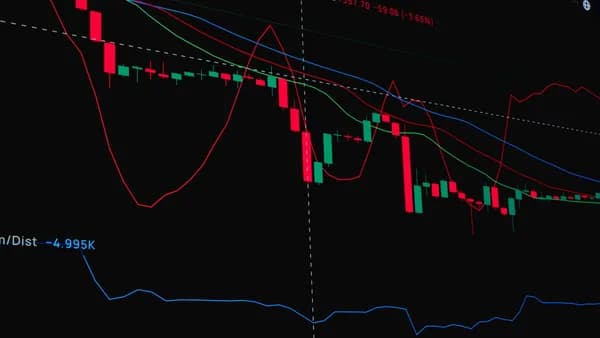
The catalyst was precise. On Monday, China’s National Bureau of Statistics reported Retail Sales grew just 0.6% year-on-year in July, missing the 1.5% expectation and slowing from 1.0% in June. Concurrently, Industrial Production rose 4.5%, falling short of the 5.3% forecast. Statistics Bureau spokesperson Fu Linghui cited "geopolitical pressure abroad and high temperatures domestically" as drags.
For New Zealand, these aren't abstract numbers. They are leading indicators for the two pillars of its China-facing economy: demand for its commodity exports, chiefly dairy, and forecasts for the return of high-spending Chinese tourists. A slowdown in Chinese factory output suggests softer future demand for raw materials. A stalling consumer directly threatens tourism revenue, a sector New Zealand has been banking on for a post-pandemic recovery. The transmission is direct and brutal, as we saw when the Kiwi Dollar ignored its own domestic dynamics and fell in lockstep with the news. This stands in contrast to recent sessions where the Kiwi pushed to two-month highs as the US Dollar weakened on fading Fed hike bets.
The reaction underscores a key divergence: while domestic news like the NZIER survey points to a cautious RBNZ on hold, the external shock from China carries more immediate weight in the forex market.
Historically, the NZD was often viewed through the lens of its relationship with Australia, the "Aussie proxy." Post-2008, that dynamic transformed. China's explosive growth and insatiable appetite for proteins and commodities rewired New Zealand's trade map. China is now, unequivocally, New Zealand's largest trading partner.
This fundamental economic shift created a financial footprint. The Kiwi Dollar has evolved into a favored, liquid instrument for global traders to express a view on China's economy without directly trading the CNY, which is capital-controlled. It's a cleaner proxy than the Australian Dollar, which is also influenced by iron ore cycles and domestic mining booms. The correlation between NZD movements and Chinese macroeconomic surprises has tightened significantly.
The irony is palpable. Domestically, New Zealand often cultivates an image of a "fortress" economy, insulated and self-reliant. Financially, its currency trades as a pure beta play on Chinese demand, making it more exposed to Beijing's policy missteps or economic transitions than perhaps any other developed market currency.
The fallout from this dependency manifests in three distinct sectors.
For the FX Trader, this move validates a tactical playbook. The immediate focus shifts to technical supports, with 0.5855 (the Bollinger middle band) and 0.5830 (the 100-day moving average) cited as key levels. A break lower would signal a deeper correction is underway, likely triggering a spike in hedging activity from corporate clients exposed to further NZD depreciation. The price action shows traders are now pricing in a higher probability of persistent Chinese weakness, overshadowing the supportive factor of a less hawkish Federal Reserve.
For the Tourism Operator, the calculus is grim. A weaker Kiwi is normally a tailwind, making New Zealand a more affordable destination. But if the driver of that weakness is collapsing demand from your #1 source market, it's a net negative. Operators are now forced to revise down arrival forecasts from China for the coming peak season and reconsider pricing and marketing strategies focused on other Asian markets.
For the Dairy Exporter, the scenario presents a perverse short-term benefit but a long-term threat. A weaker NZD immediately boosts the New Zealand Dollar value of export contracts, which are typically priced in USD. This provides a revenue windfall. However, if the currency's decline is rooted in a fundamental drop in Chinese demand for milk powders and butter, that windfall is a fleeting consolation. The real fear is that this data marks the start of a structural, not cyclical, slowdown in China's appetite, an existential risk for the entire sector.
Where NZD/USD goes from here maps a multi-dimensional risk landscape.
China Dependency Risk: This is now the dominant narrative driver. Every major Chinese data point, PMIs, fixed asset investment, credit growth, will be amplified in NZD volatility. The July data miss was not an outlier; it fits a pattern of sluggish post-stimulus recovery, as seen in other indicators like softening copper import premiums.
Domestic Policy Divergence: The RBNZ is expected to hold its OCR steady at 5.50%, with a hawkish bias due to sticky domestic inflation. Commerzbank’s Volkmar Baur notes that after a July hike, a pause is now likely, but the tone will remain vigilant. This should offer some support, but as this episode proves, it can be utterly swamped by the China factor.
US Dollar and Global Sentiment: The Kiwi remains a risk-sensitive currency. A broader "risk-off" move in markets, perhaps triggered by a sharper global slowdown, would hit it doubly hard, through the China channel and the sentiment channel. Conversely, if US data continues to softens and the Fed remains sidelined, the USD weakness could provide a temporary cushion, as it did earlier in the week.
Comparing Proxy Vulnerability: NZD vs. AUD
| Factor |
New Zealand Dollar (NZD) |
Australian Dollar (AUD) |
| Primary China Exposure |
Consumer Demand (Dairy, Tourism) |
Industrial Demand (Iron Ore, LNG) |
| Domestic Economy |
Smaller, less diversified |
Larger, more resource-diverse |
| Central Bank Posture |
Hawkish Hold (RBNZ) |
More Dovish Potential (RBA) |
| Key 2024 Risk |
Chinese consumer recession |
Chinese property/construction crisis |
The table illustrates that while both are China proxies, the NZD's link to the fragile Chinese consumer may make it more vulnerable in the current climate than the AUD, which is tied more to industrial and infrastructure spending.
This episode should force an uncomfortable conversation in New Zealand's financial and policy circles about overdependence. The economy's "financial plumbing", the channels through which capital flows and currency values are determined, is wired directly to Shanghai and Beijing.
There's a palpable policy tension. The RBNZ is tasked with fighting domestic inflation, which may require maintaining a relatively strong currency to lower import costs. Yet, the currency's value is increasingly set by external factors it cannot control, often moving in the opposite direction of the central bank's domestic needs. It's trying to steer a boat in a storm generated thousands of miles away.
The long-term solution isn't to abandon the China trade, that's unrealistic. It's about deliberate, accelerated diversification. We are seeing nascent shifts: increased trade and investment outreach to other ASEAN nations, India, and the wider Pacific. Rewiring the financial plumbing means building deeper capital and trade links with these alternative growth engines to dampen the violent swings caused by a single data point from a single trading partner.
Expect the Kiwi Dollar's sensitivity to Chinese data to remain acutely high through 2024. Each release will be a potential volatility event.
Scenario 1: A Cyclical Chinese Dip. If China's slowdown is temporary, spurred by one-off factors like the weather cited by officials, the NZD could recover swiftly, especially if coupled with a firm RBNZ and a soft USD. The technical path higher toward 0.5945 remains possible.
Scenario 2: A Structural Slowdown. If the July data is a precursor to a deeper, longer-term retrenchment of the Chinese consumer, a "balance sheet recession", then the NZD faces a prolonged depreciation trend. Key technical supports at 0.5830 and 0.5765 would be tested, and the currency's role as a favored China proxy would become a persistent millstone.
New Zealand's geographic and economic reality won't change. China will remain its largest partner. Therefore, the imperative shifts to building better financial shock absorbers. This means deeper forex hedging markets for businesses, a central bank communication strategy that explicitly acknowledges and manages this external vulnerability, and a national investment strategy that actively cultivates alternative economic arteries. The NZD's drop to 0.5895 isn't just a Tuesday morning blip. It's a warning siren that the rules of the game have changed.
Disclaimer: This XOOMAR analysis is for informational and educational purposes only. It is not financial, investment, legal, tax, or professional advice. It does not provide buy, sell, hold, price-target, portfolio, or personalized recommendations. Verify information independently and consult qualified professionals before making decisions.
- New Zealand's currency has shifted from being tied to Australian cycles to being a direct proxy for the volatile Chinese consumer, drastically changing its risk profile.
- A 0.6% miss in Chinese retail sales can now outweigh local central bank policy moves, isolating the NZD from its own domestic economic narrative.
- The slowdown threatens two key pillars of New Zealand's economy: future demand for commodity exports like dairy and the return of high-spending Chinese tourists.