
The most important move in global markets is one that isn't happening. While volatility rattles currency pairs from the Swiss franc to the Australian dollar, the USD/CNH is trapped in a paralyzingly tight corridor. according to FXStreet, United Overseas Bank (UOB) analysts Quek Ser Leang and Lee Sue Ann see the pair stuck in a 100-point "narrow intraday range," a technical cage that amplifies a far more profound tension. This isn't calm. It's exhaustion. The relentless, opposing pressures of U.S. hawkishness and Chinese economic fragility have created a force field, locking what should be the world's most geopolitically sensitive exchange rate in a holding pattern. The only question left isn't which way it breaks, but what it will take to shatter the deadlock.
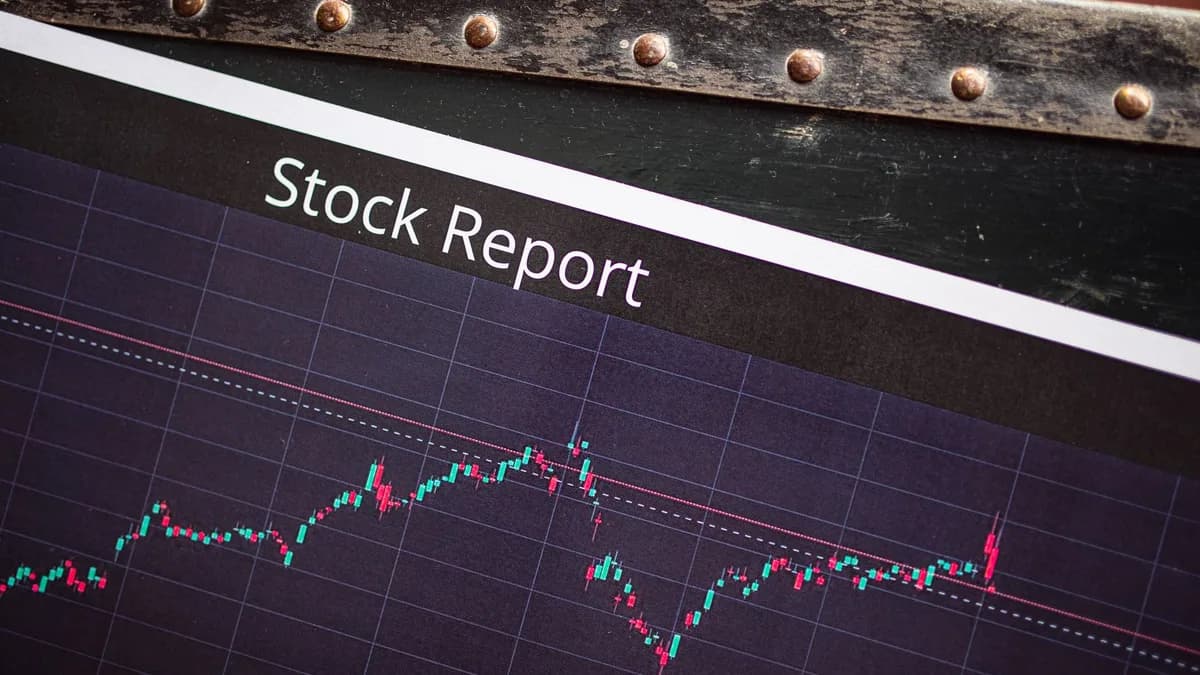
Why China's Yuan Is Stuck in Glue as Fed Tightens
XOOMAR Intelligence
Analyst Take
Why Is This Corner of the FX Market Stuck In Glue?
Globally, currency markets are in flux. The U.S. Dollar has proven relentless, exerting pressure on traditional safe havens and fueling moves in everything from gold to emerging market pairs. Yet USD/CNH has become a stunning exception. The source data shows a market grinding to a standstill: a paltry daily range of just 6.7410 to 6.7510 with "flat momentum indicators" suggesting this torpor will persist.
This isn't the result of balanced, healthy forces. It is a dead heat born of policy collision. From one side, the Federal Reserve's unwavering focus on inflation continues to underpin fundamental dollar strength, a theme seen in other markets as we reported in Swiss Franc Loses Safe-Haven Crown to Surging Dollar. From the other, the People's Bank of China's imperative to stimulate a faltering economy exerts persistent downward pressure on the yuan. The result is a brutal tug-of-war. Neither side yields, leaving the pair to oscillate in a tiny, meaningless range, symptomatic of a market that has lost its directional conviction and is waiting for a decisive policy signal.
How Are the World's Two Biggest Central Banks Colliding Here?
The standoff is a pure expression of diametrically opposed policy mandates. The Fed's toolkit is single-minded: interest rates as a blunt instrument against inflation. This stance, absent a U.S. recession, inherently supports the dollar's yield appeal. Conversely, the PBOC is fighting a multi-front war against deflationary pressures, a property sector crisis, and weak domestic demand. Its tools, targeted lending, reserve requirement cuts, and moral suasion, are designed to keep credit flowing and the export sector competitive. A stronger yuan would choke that lifeline.
UOB's analysis captures this tension perfectly. While they see a "chance for USD to edge lower toward 6.7300" in the 1-3 week view, they simultaneously note that the "strong resistance' level is now at 6.7580." This 280-pip zone between support and resistance is the current battlefield. The Fed wants a strong dollar; the PBOC cannot afford a strong yuan. The market, caught in the crossfire, has chosen to do nothing.
What Do the Precise Numbers Reveal About Market Paranoia?
The technical levels cited by UOB tell a story of extreme caution. The recent "fresh low of 6.7400" probes the downside boundary, while the newly elevated strong resistance at 6.7580 contains any bullish dollar enthusiasm. This creates a box roughly between 6.7300 and 6.7580.
| **Range | Daily Movement | Implied Market Sentiment** |
|---|---|---|
| 6.7410 - 6.7510 (24-hour) | ~0.15% | Paralysis. No conviction, flat momentum. |
| 6.7300 - 6.7580 (1-3 week) | ~0.42% | Cautious Stalemate. A slightly wider cage, but breakout requires a major catalyst. |
The minute daily ranges, 6.7427 to 6.7478 on a recent session, a move of just 0.08%, are not signs of stability but of a market in "wait and see" mode. Trading desks aren't positioning for a trend; they are fading the edges of the range, a strategy that works until it doesn't. The price action screams that neither bulls nor bears have enough confidence to force a sustained move, fearing immediate counter-action from the opposing central bank.
Who Benefits From a Yuan Frozen In Place?
A stalled USD/CNH rate creates clear winners and losers, redistracting risk and opportunity silently.
Chinese exporters are the primary beneficiaries. After periods of yuan strength that squeezed margins, a steady, slightly weak yuan around the 6.75 level provides predictable pricing for overseas contracts and protects market share. It's a subtle form of support without the political blowback of an overt devaluation.
Global macro funds and FX prop desks, however, are stifled. Trend-following models and momentum strategies, which thrive on volatility like that seen in the US Dollar Slams Gold Rally Into Sudden Retreat, are rendered useless. Profits must be scraped from razor-thin ranges via options strategies or high-frequency tactics, a frustrating environment for active managers.
XOOMAR Interpretation: The biggest loser may be price discovery itself. A managed, range-bound exchange rate obscures the true market assessment of China's economic health, delaying necessary adjustments in capital allocation and creating a false sense of calm for international investors. The paralysis is politically convenient but economically distorting.
Haven't We Seen This Yuan Standoff Play Out Before?
The current stasis inevitably evokes the 2015-2016 yuan devaluation crisis, a period of severe capital outflows and global market panic. The comparison is instructive but incomplete.
Similarities: Then, as now, the PBOC was balancing domestic growth concerns against international confidence. The fear of triggering a similar outflow episode undoubtedly weighs on policymakers today, making them cautious about any sudden, sharp move.
Critical Differences:
- Capital Controls: China's regulatory framework for cross-border capital flows is significantly tighter today, providing a stronger buffer against panic-driven exits.
- Global Context: In 2015, the Fed was in a hiking cycle while China eased, similar to today. However, the global inflation picture is entirely different, making the Fed less likely to pivot and relieve pressure.
- Market Memory: The trauma of 2015 means both the PBOC and market participants are hyper-aware of the risks. This memory likely contributes to the current range-trading behavior, as both sides fear being the one to spark a runaway move.
The ghost of 2015 doesn't dictate today's price, but it acts as a guardrail, keeping the trading band narrow and deliberate.
What Does a 6.75 Yuan Actually Signal to Investors?
For portfolio managers, this isn't noise. It's a critical signal.
For equity investors in China-exposed multinationals, the range trade directly reduces a major earnings risk. Companies budgeting with a USD/CNH assumption around 6.70-6.80 face less volatile translation effects on overseas profits. The stability, however artificial, is taken as a positive, allowing focus on operational performance rather than currency hedges.
For FX traders, the message is the death of the directional bet. The playbook shifts entirely to range-bound strategies: selling volatility via strangles (betting the range holds) or buying cheap options at the extremes (6.73 and 6.78) as lottery tickets for a potential breakout. Liquidity likely dries up at the range edges as everyone tries to exit the same tired trades.
Most importantly, for macro observers, this stalemate is the clearest available signal of China's current economic fragility. A confident, growing economy with attractive yields would see capital inflows supporting the yuan. A central bank truly worried about inflation would be tightening, not subtly propping up growth. The frozen exchange rate is the compromise between these two uncomfortable truths. It shows a PBOC using all its tools to prevent a disorderly weakening, acknowledging profound domestic stress.
What Single Event Could Shatter the Deadlock?
The consolidation cannot last forever. UOB hints at this, noting that on a "1 to 3 month horizon... tentative upward momentum... requires confirmation." The longer the pressure builds within this tight range, the more violent the eventual breakout will be.
The most probable catalyst is a surprise shift in rhetoric or policy from one of the two central banks. For the range to break lower (a stronger yuan), the Fed would need to signal a definitive, dovish pivot, unlikely with persistent U.S. inflation. For the range to break higher (yuan weakness toward or past 6.80), the PBOC would need to either tolerate a steeper decline or be forced into one by a shocking downturn in China's economic data, particularly in property or credit growth.
XOOMAR Analysis: Watch the 6.7580 and 6.7300 levels identified by UOB with intense focus. A daily close above or below these thresholds on heavy volume would signal that one central bank's influence has finally overwhelmed the other's. The path of least resistance, given the fundamental policy divergence, still points toward yuan weakness over time. However, the PBOC's immense resolve and toolkit mean that move will be fought every step of the way, likely resulting in a staircase lower rather than a cliff fall. The market's current paralysis is the quiet before that next, grudging step down.
Disclaimer: This XOOMAR analysis is for informational and educational purposes only. It is not financial, investment, legal, tax, or professional advice. It does not provide buy, sell, hold, price-target, portfolio, or personalized recommendations. Verify information independently and consult qualified professionals before making decisions.
The Bottom Line
- The artificial stability in USD/CNH masks a violent policy clash between U.S. hawkishness and Chinese economic fragility, creating a hidden fault line in global finance.
- When this 'exhausted' market finally breaks from its 100-point range, the resulting move could be sharp and significant, impacting global trade and capital flows.
- This stalemate serves as a real-time barometer of U.S.-China geopolitical tension, making it a critical pressure point for multinational corporations and investors.
USD/CNH Intraday Trading Range
Sources
Disclaimer: Content on XOOMAR is produced using AI-assisted research, drafting, and verification workflows and is intended for informational and educational purposes only. It does not constitute financial, investment, legal, tax, medical, or professional advice of any kind. All analysis reflects available information at the time of publication and may not be current. Verify information independently and consult qualified professionals before making decisions. Editorial policy

Written by
XOOMAR Insights Team
Research and Editorial Desk
The XOOMAR Insights Team pairs automated research with human editorial judgment. We track hundreds of sources across technology, fintech, trading, SaaS, and cybersecurity, cross-check the facts, and explain what happened, why it matters, and what to watch next. We do not just rewrite headlines. Every article is fact-checked and scored for reliability before it goes live, and we link back to the original sources so you can verify anything yourself.
Explore More Topics
Related Articles
 Trading
US Job Loss Derails Fed, Launching Pound Toward $1.35
The British pound is testing $1.35 after a shock contraction in U.S. jobs data forced markets to slash bets on future Federal Reserve rate hikes.
 Trading
Pound Trapped in Fed Doubt's Four-Pip Prison
GBP/USD trading is comatose, locked in a shockingly tight four-pip range, signaling a market without conviction as messy Fed policy muddies the path for sterlin
 Trading
Dollar Bulls Blink as US Dollar Index Slips Before Fed
DXY slipped to 101.30 after bulls failed at resistance, leaving the Fed to decide whether the dollar rally resets or cracks.
 Trading
$83 Oil Traps USD/CAD Before Pivotal Fed Rate Call
USD/CAD is boxed near 1.4093 as oil supports the loonie, but Fed risk keeps traders from calling a breakout.
 Trading
Silver Rally Stalls as Traders Book Profits
Silver's sharp retreat from near $67 reflects profit-taking after a bullish pattern completed, compounded by a stronger dollar and geopolitical risk.
 Global Trends
Secret Service Decoy Lures Assassins Away From Trump
The Secret Service protects presidents through a constant, high-stakes shell game of decoy limousines, fake motorcades, and secret aircraft swaps designed to ma
 Technology
Rivian Bucks Auto Trends With $1B Robotic Labor Bet
Rivian is pivoting from an automaker to a technology conglomerate, betting billions on self-driving software and humanoid robots while its core business sells S
 Global Trends
Moscow Expels Ex-Marine Destroyed in Custody
Russia released former US Marine Robert Gilman only after his health deteriorated into a catatonic stupor, exposing a grim pathway out of detention when diploma
 Global Trends
Graham Dynasty Faces South Carolina GOP Revolt
Senator Darline Graham failed to secure a majority in the GOP primary, forcing a runoff against Trump-endorsed rival Ralph Norman and revealing cracks in the st
 Trading
Yen Slump Erases Half of Joint Japan-US Intervention Gains
The Japanese yen fell to a fresh two-week low, erasing over half the gains from last month's historic U.S.-Japan joint FX intervention as global dollar strength
Don't miss the signal
Get our weekly roundup of the stories that matter across tech, fintech, and trading. No noise, just signal.
Free forever. No spam. Unsubscribe anytime.