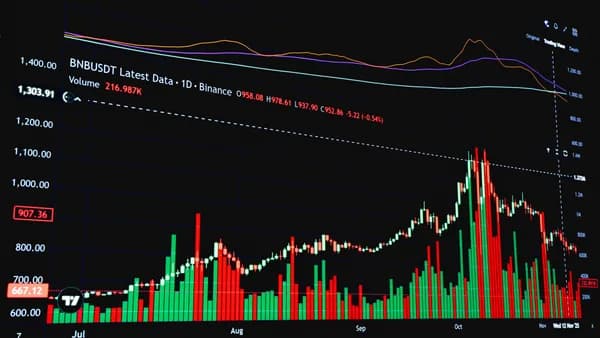
For traders comparing cex vs dex fees, the real question is not “Which platform has the lowest posted fee?” It is “Which venue gives me the lowest all-in cost after trading fees, spread, slippage, gas, withdrawals, and execution risk?” In 2026, centralized exchanges and decentralized exchanges can both be cheap—or expensive—depending on trade size, network, token liquidity, and order type.
XOOMAR Intelligence
Analyst Take
Centralized exchanges such as Binance, Coinbase, Kraken, and OKX typically offer faster matching, fiat access, and deeper order books for major assets. Decentralized exchanges such as Uniswap, Jupiter, Raydium, PancakeSwap, Curve, and dYdX offer wallet-based trading, broader token access, and self-custody—but introduce gas fees, smart-contract risk, and on-chain execution costs.
What Counts as a Trading Fee in Crypto
A crypto trading fee is more than the line item shown on a confirmation screen. The sources consistently show that the true cost of trading depends on explicit fees plus execution frictions.
For a practical cex vs dex fees comparison, traders should include:
| Cost Component | CEX | DEX |
|---|---|---|
| Trading fee | Platform maker/taker fee | Swap or protocol fee |
| Spread | Difference between bid and ask in the order book | Effective price difference across pools or routes |
| Slippage | Can occur on market orders or thin books | Common on swaps, especially low-liquidity pools |
| Price impact | Rises with order size and limited depth | Rises when a trade moves an AMM pool price |
| Gas fee | Usually not part of internal trade execution | Paid to the blockchain network |
| Withdrawal fee | Often charged when moving assets off-platform | Usually not applicable in the same way, but wallet transactions require gas |
| MEV / ordering cost | Less direct for internal matching | Possible on-chain ordering drift, especially for marketable orders |
| Funding / liquidation costs | Relevant for perps and leverage | Also relevant for DEX perps, with oracle and liquidation design differences |
Key insight: Posted fee tables are only a starting point. For active traders, spread, price impact, slippage, and transaction ordering can matter more than the advertised trading fee.
The difference is especially important for strategies that target small edges. ContentWave notes that if a strategy targets a 10–30 bps per-trade edge, venue frictions of 15–60 bps can erase that edge.
A basis point, or bps, equals one-hundredth of one percent. So 10 bps = 0.10%.
Centralized Exchange Fees Explained
Centralized exchanges, or CEXs, are companies that custody user funds, match orders through internal systems, and often provide fiat on-ramps. DEXTools describes CEXs as platforms where users deposit funds, trade crypto, and withdraw, with the exchange holding funds in its wallets.
Typical CEX Trading Fee Ranges
The source data gives several fee ranges depending on platform type and product:
| Source Context | CEX Fee Range |
|---|---|
| Spot trading comparison from DEXTools | 0.02%–0.1% |
| General CEX trading comparison from CryptoTakeProfit | 0.1%–0.6% typical |
| Perpetual futures retail taker fees from ContentWave | 4–6 bps per side |
| Perpetual futures high-tier maker fees from ContentWave | Rebated or near 0–3 bps negative at high VIP tiers |
These ranges are not identical because they describe different markets, platforms, and trader tiers. A high-volume derivatives trader may face a different fee schedule than a casual spot buyer using a retail interface.
Maker vs Taker Fees
CEXs commonly separate fees into maker and taker categories:
- Maker orders: Add liquidity to the order book, usually by placing limit orders that do not immediately execute.
- Taker orders: Remove liquidity, usually by placing marketable orders that execute immediately.
ContentWave reports that for CEX perps, retail taker fees commonly sit around 4–6 bps per side, while maker fees can be rebated or near 0–3 bps negative at high VIP tiers.
That matters because a round trip involves both entry and exit. A taker paying 5 bps per side pays 10 bps before considering spread or impact.
CEX Spreads and Market Depth
CEXs often have deep liquidity on major assets. DEXTools lists “deep liquidity for large trades” as a CEX advantage, and CryptoTakeProfit notes that CEXs offer deep order books and tight spreads.
However, ContentWave adds an important qualification: top-of-book spreads on BTC and ETH remain tight on major CEXs, but depth at those prices can be thin for tickets above $50,000. Price impact can rise nonlinearly with size.
Practical warning: A tight displayed spread does not guarantee cheap execution for a large market order. Traders should verify actual fill size and depth, not only the top-of-book quote.
Why Some Retail CEX Fees Feel High
The Reddit discussion in the source data reflects a common retail complaint: one user reported paying a little more than $20 in fees on a crypto-to-fiat trade on Coinbase. Other participants pointed out that some CEXs may charge through either explicit fees or spreads.
This anecdote does not establish a universal Coinbase fee schedule, but it highlights a real trader concern: fiat conversion, retail interfaces, spreads, and withdrawal costs can make the total cost feel much higher than the headline trading fee.
Decentralized Exchange Fees Explained
Decentralized exchanges, or DEXs, let users trade directly from their wallets through smart contracts. DEXTools describes DEXs as peer-to-peer token swap protocols where no company holds user funds. Many DEXs use automated market makers, where liquidity providers deposit token pairs into pools.
Typical DEX Fee Ranges
The source data gives several DEX fee ranges:
| Source Context | DEX Fee Range |
|---|---|
| DEXTools spot comparison | 0.3% + gas fees |
| CryptoTakeProfit general DEX comparison | 0.05%–0.3% + gas fees |
| ContentWave DEX perps protocol fees | 0–3 bps per side, plus relayer/interface/settlement costs |
The most important difference from CEXs is that DEX costs are layered. A DEX swap may include:
- Swap Fee: Paid to liquidity providers or the protocol.
- Gas Fee: Paid to the blockchain network.
- Route Cost: A swap may route through one or more pools.
- Slippage: The actual execution price may differ from the quoted price.
- MEV / Ordering Drift: On-chain orders can be affected by transaction ordering.
- Interface or Relayer Fee: Relevant for some DEX perps and intent-based systems.
DEX Fees Depend Heavily on the Chain
CryptoTakeProfit reports that on layer-2 networks and alternative chains such as Solana or Arbitrum, DEX gas fees have dropped to fractions of a cent, making them cost-competitive with or cheaper than major CEXs in some cases.
DEXTools adds that on Solana, total DEX costs can be very competitive because gas is under $0.01.
By contrast, CryptoTakeProfit notes that on Ethereum mainnet during peak congestion, a single swap can still cost $5 to $20 in gas. That can make CEXs cheaper for smaller trades.
| Network / Venue Context | Cost Detail From Sources |
|---|---|
| Solana DEX trading | Gas can be under $0.01 |
| Layer-2 / alternative-chain DEXs | Gas can be fractions of a cent |
| Ethereum mainnet during peak congestion | A single swap can cost $5–$20 in gas |
| Modern L2 DEX perps | Gas often around 1 bp equivalent for small tickets, but can spike |
Gas Fees, Slippage, and Price Impact
Gas, slippage, and price impact are where many DEX trades become more expensive than expected. They also explain why a DEX with a low protocol fee can still be costly.
Gas Fees
Gas is the network fee paid to execute an on-chain transaction. It is not paid to the DEX in the same way a CEX trading fee is paid to an exchange. It goes to the blockchain’s transaction processing system.
Gas matters most when the trade is small. A $5–$20 gas cost on Ethereum mainnet can be a large percentage of a small swap, while the same gas amount is much less meaningful on a large trade.
On low-cost chains or layer-2 networks, gas may be small enough that the DEX becomes competitive. The source data specifically highlights Solana, where gas can be under $0.01, and layer-2 networks where fees can fall to fractions of a cent.
Slippage
Slippage is the difference between the expected trade price and the actual execution price. DEXTools defines DEX slippage as a difference caused by low liquidity, noting that large trades in small pools can experience significant slippage.
Slippage is not exclusive to DEXs. CEX market orders can also slip if the order book is thin. But DEX swaps make slippage especially visible because traders usually set a slippage tolerance before confirming a transaction.
Price Impact
Price impact is the amount your own order moves the market. ContentWave identifies spread plus impact as the dominant execution tax in many cases.
For large trades:
- CEXs: Impact rises when an order sweeps multiple order book levels.
- DEXs: Impact rises when the trade moves the AMM pool price.
- Perps: Impact can combine with funding, liquidation design, and oracle behavior.
ContentWave suggests that if sweeping levels pushes costs above 20–30 bps, traders should consider slicing orders or choosing a different venue.
MEV and Transaction Ordering
MEV and transaction ordering are DEX-specific concerns, especially for on-chain marketable orders. ContentWave says MEV exposure is lower on many L2 perp flows thanks to private relays and intent-based posting, but it is not eliminated.
It recommends measuring submit-to-inclusion drift. If marketable DEX orders regularly show more than 8–10 bps of adverse drift, traders should consider private relays or avoid marketable entry.
Execution checklist: For DEX trades, compare the quoted price, expected slippage, gas cost, and final execution price. For DEX perps, also track submit-to-inclusion drift over a rolling 30–90 day window.
Deposit and Withdrawal Costs on CEXs
CEXs are often cheaper for internal matching, but deposits and withdrawals add another layer to the cost equation.
CEXs typically support fiat on-ramps through bank, card, or wire methods. DEXTools and CryptoTakeProfit both identify fiat access as a major CEX advantage. DEXs, by contrast, generally require users to already hold crypto or use a separate fiat bridge.
Withdrawal Fees Can Change the Trade-Off
The Reddit source includes trader complaints about CEX withdrawal fees. One participant recalled ERC-20 token withdrawal fees being raised to around $20 during a period of high Ethereum fees, and another cited a 2.5 LINK withdrawal fee from Crypto.com for LINK.
These are anecdotal reports from users, not universal fee schedules. Still, they show why traders should include withdrawal fees when comparing costs.
| Cost Type | Why It Matters |
|---|---|
| Deposit Cost | Fiat access may be convenient, but costs can vary by method and platform |
| Trading Fee | The visible fee charged on buy/sell execution |
| Spread | Retail conversion screens may include wider effective spreads |
| Withdrawal Fee | Moving assets off a CEX can add a fixed or network-based cost |
| Network Fee | Withdrawals to self-custody may reflect blockchain congestion or platform policy |
Trader takeaway: A CEX can look cheap on trading fees but become more expensive if the withdrawal cost is large relative to the trade size.
This is especially relevant for users who buy on a CEX and then move funds to a wallet for DEX trading. That workflow may involve a fiat purchase, a CEX trading fee or spread, a withdrawal fee, and then DEX gas and swap fees.
When DEX Trading Can Be Cheaper
DEX trading can be cheaper when the network is inexpensive, liquidity is deep, and the trader avoids unnecessary execution costs.
1. Low-Gas Networks and Layer-2s
The clearest case is low-cost chains. Source data notes that Solana gas can be under $0.01, while layer-2 and alternative-chain DEX gas can be fractions of a cent.
In those environments, DEX costs can compete with or beat CEX costs, especially when the swap fee is low and the pool is liquid.
2. Mid-Sized Tickets on Efficient DEX Liquidity
ContentWave reports that DEXs on L2s can show narrower effective spreads in mid-sized tickets when makers are incentivized by pools and concentrated liquidity primitives. This does not mean DEXs are always cheaper, but it means they can be competitive in specific market conditions.
3. Access to Tokens Not Listed on CEXs
DEXTools and CryptoTakeProfit both note that DEXs provide access to tokens before they reach centralized exchanges. If a token is not listed on a CEX, the DEX may be the only practical venue.
In that situation, “cheaper” is not only about fee percentage. It is about access. A CEX cannot be cheaper for a token it does not list.
4. DEX Perps With Low Protocol Fees and Better Routing
For perps, ContentWave reports DEX protocol fees often list around 0–3 bps per side, but traders must add relayer, interface, gas, and ordering costs.
Its illustrative $10,000 BTC round-trip example shows:
| Venue | Explicit / Protocol Cost | Other Execution Costs | Estimated Total |
|---|---|---|---|
| CEX marketable round trip | 10 bps taker fees | 12–18 bps spread + impact | 22–28 bps |
| DEX L2 with intent layers | 4 bps protocol + relayer | 18–24 bps spread + impact, 2–6 bps MEV / ordering | 24–34 bps |
The example shows the CEX slightly cheaper in that scenario, but ContentWave emphasizes that the winner flips with order type, ticket size, and access to private-relay execution.
When CEX Trading Can Be Cheaper
CEX trading can be cheaper when the asset is highly liquid, the order book is deep, and the trader avoids high retail spreads or withdrawal costs.
1. Large Trades in Major Assets
DEXTools lists deep liquidity for large trades as a CEX advantage. CryptoTakeProfit also notes that CEXs offer deep order books and tight spreads.
For major assets such as BTC, ETH, and stablecoins, CEXs often remain practical because liquidity is concentrated and matching is instant. ContentWave notes that top CEXs still concentrate most notional on majors.
2. Small Trades During High Ethereum Gas
When Ethereum mainnet gas is high, a DEX swap costing $5–$20 in gas can make small trades uneconomical. In that case, a CEX fee based on a percentage may be cheaper, especially if the trader does not immediately withdraw.
3. Traders Who Need Fiat Entry or Exit
DEXs generally do not provide direct fiat trading. DEXTools states that DEXs only handle crypto-to-crypto swaps; users need to first buy crypto on a CEX or fiat on-ramp service, transfer to a wallet, and then trade on the DEX.
If a trader’s goal is to move between fiat and crypto, a CEX may reduce operational complexity, even if not always the lowest-cost path.
4. High-Volume Traders With Better Fee Tiers
ContentWave notes that CEX maker fees can be rebated or near 0–3 bps negative at high VIP tiers. That creates a meaningful advantage for high-volume traders who can post liquidity rather than cross the spread.
For active traders doing 50–200 round trips per month, ContentWave says every basis point adds up. Fee tiers, order type, and execution discipline become central to profitability.
Fee Comparison by Trader Type
There is no universal winner in the cex vs dex fees debate. The better venue depends on trader profile, asset type, order size, and execution needs.
| Trader Type | Likely Cost Drivers | CEX Fee Considerations | DEX Fee Considerations | Practical Fit |
|---|---|---|---|---|
| Beginner buying crypto with fiat | Fiat conversion, spread, ease of use | CEXs support bank, card, and wire access | DEXs usually require existing crypto | CEX often simpler |
| Small spot trader | Fixed gas costs, retail spreads | Percentage fees may be manageable | Ethereum gas can make small swaps costly | CEX or low-gas DEX |
| DeFi token hunter | Token access, pool depth, slippage | CEX may not list new tokens | DEXs list permissionlessly but require slippage control | DEX often necessary |
| Large BTC/ETH trader | Market depth, price impact | CEXs often have deeper liquidity on majors | DEX impact can rise for very large trades | CEX often competitive |
| Perps scalper | Taker fees, spread, impact, funding | CEX taker fees commonly 4–6 bps per side | DEX protocol fees may be lower, but add relayer/gas/MEV | Measure venue-by-venue |
| Privacy-focused user | KYC, custody, wallet control | CEXs usually require KYC | DEXs usually use wallet connection | DEX aligns better |
| Self-custody user | Withdrawal costs, wallet gas | CEX requires custody and withdrawal | DEX trades directly from wallet | DEX reduces custody handoff |
A Simple Cost Card for Traders
ContentWave recommends building an all-in cost card for each market and order size. A practical version looks like this:
| Metric | What to Track | Thresholds Mentioned in Source Data |
|---|---|---|
| Explicit fees | Maker/taker or swap/protocol fee | CEX perps taker 4–6 bps, DEX perps 0–3 bps + add-ons |
| Spread crossed | Difference between quote and execution | If majors exceed 10–15 bps, optimize execution |
| Impact at size | Cost caused by your own order | If above 20–30 bps, slice or change venue |
| MEV / ordering drift | DEX submit price vs inclusion price | If above 8–10 bps, use relays or avoid marketable orders |
| Round-trip cost | Entry + exit all-in | BTC/ETH perps often targeted around 20–50 bps by active traders |
How to Reduce Crypto Trading Costs
Reducing costs is less about finding one perfect exchange and more about matching the trade to the right venue.
1. Measure All-In Cost, Not Just Fees
Track the difference between your signal price and final fill price. ContentWave calls rolling 30-day realized implementation shortfall one of the most useful metrics because it captures fees, spread, impact, and ordering costs together.
Action step: Keep a simple spreadsheet with expected price, final execution price, trading fee, gas, withdrawal cost, and total bps cost.
2. Use Limit Orders When Possible
For CEXs, limit orders can avoid crossing the spread and may qualify for maker fees depending on the venue’s rules. For DEX perps, ContentWave recommends posted liquidity when latency and urgency allow because it can reduce MEV and adverse selection.
Action step: Avoid market orders when the trade is not urgent.
3. Check Price Impact Before Confirming DEX Swaps
DEXTools warns that large trades in small pools can experience significant slippage. Always review price impact before signing a swap.
Action step: If price impact is high, reduce trade size, split the order, or look for a deeper route.
4. Avoid Small Ethereum Mainnet Swaps During Congestion
CryptoTakeProfit notes that Ethereum mainnet swaps can cost $5–$20 in gas during peak congestion. That can overwhelm small trades.
Action step: For small swaps, compare CEX execution against lower-cost DEX networks or layer-2 options mentioned in the source data, such as Solana or Arbitrum.
5. Include Withdrawal Fees Before Choosing a CEX
A low trading fee does not guarantee a low total cost if the withdrawal fee is high. The Reddit discussion includes user complaints about withdrawal costs such as around $20 for ERC-20 withdrawals during high-fee periods and 2.5 LINK for LINK withdrawal from Crypto.com.
Action step: Check the withdrawal fee before buying, especially if your plan is to move funds immediately to self-custody.
6. Use Both CEXs and DEXs Strategically
Multiple sources converge on a hybrid approach. DEXTools says many experienced crypto users use CEXs for fiat entry/exit, large-volume trading, and futures, while using DEXs for new tokens, privacy, self-custody, and DeFi integration.
CryptoTakeProfit similarly concludes that CEXs remain strong for fiat on-ramps, liquidity, and beginner accessibility, while DEXs offer self-custody, privacy, and DeFi access.
Best practical approach: Do not treat CEX vs DEX as a permanent identity choice. Treat each venue as a tool with different cost, custody, liquidity, and execution trade-offs.
Bottom Line
The cex vs dex fees comparison has no single winner. CEXs often offer lower explicit trading fees, faster execution, fiat access, and deeper liquidity for major assets. Source data shows CEX spot fees ranging from 0.02%–0.1% in one comparison and 0.1%–0.6% typical in another, while CEX perps taker fees commonly sit around 4–6 bps per side.
DEXs can be cheaper when gas is low, liquidity is deep, and execution is well-routed. DEX fees commonly include 0.05%–0.3% swap fees or 0.3% + gas in spot comparisons, while DEX perps may list protocol fees around 0–3 bps per side plus relayer, gas, and ordering costs. On Solana, gas can be under $0.01; on Ethereum mainnet during congestion, a swap can cost $5–$20.
For traders, the best answer is to compare all-in cost: trading fee, spread, slippage, gas, withdrawal fees, price impact, and execution drift. The cheaper venue is the one that leaves more of your edge after the full trade lifecycle—not the one with the lowest headline fee.
FAQ
Are DEX fees higher than CEX fees?
Often, but not always. DEXTools reports CEX fees around 0.02%–0.1% and DEX fees usually around 0.3% + gas fees. CryptoTakeProfit gives a broader comparison: CEX fees are typically 0.1%–0.6%, while DEX fees are usually 0.05%–0.3% + gas.
DEXs can become cost-competitive on low-fee networks such as Solana, where gas can be under $0.01, or on layer-2 networks where gas can be fractions of a cent.
Why can a CEX trade cost more than the advertised fee?
Because the advertised fee may not include spread, withdrawal cost, or retail conversion markup. The Reddit source includes a user reporting a little more than $20 in fees on a Coinbase crypto-to-fiat trade, while other users discussed CEX withdrawal costs and spreads.
The exact cost depends on platform, trade size, asset, and withdrawal method.
What makes DEX trading expensive?
DEX trading can become expensive because of gas, slippage, price impact, and transaction ordering. Ethereum mainnet gas during congestion can cost $5–$20 for a single swap, according to CryptoTakeProfit. Low-liquidity pools can also cause significant slippage.
For DEX perps, traders may also need to consider relayer fees, settlement gas, MEV, oracle behavior, and liquidation mechanics.
Are CEXs cheaper for large trades?
Often for major assets, but not always. DEXTools and CryptoTakeProfit identify deep liquidity and tight spreads as CEX advantages, especially for large-volume trading. ContentWave adds that top CEXs still concentrate most notional on major assets.
However, even on CEXs, price impact can rise for tickets above $50,000 if top-of-book depth is thin. Large traders should measure actual implementation shortfall.
When can a DEX be cheaper than a CEX?
A DEX can be cheaper when gas is low, the liquidity pool is deep, the route is efficient, and the trade avoids excessive slippage. Source data highlights Solana and layer-2 networks as environments where DEX gas costs can be very low.
DEXs can also be the only practical venue for new tokens that are not yet listed on CEXs.
What is the best way to compare CEX vs DEX costs?
Use an all-in cost card. Track explicit trading fees, spread, slippage, price impact, gas, withdrawal fees, and execution drift. ContentWave recommends using rolling 30-day realized implementation shortfall because it captures the actual cost of trading across venues.
Sources & References
Content sourced and verified on June 18, 2026
- 1DEX vs CEX: Complete Guide to Decentralized vs Centralized Exchanges (2026) | DEXTools News
https://www.dextools.io/tutorials/dex-vs-cex-decentralized-centralized-exchanges-guide-2026
- 2Mostly rant + discussion flair: Could we take a moment to talk about CeX (and Dex) trading fees?
https://www.reddit.com/r/CryptoCurrency/comments/172xyqd/mostly_rant_discussion_flair_could_we_take_a/
- 3CEX vs DEX perps March 2026: fees & execution | ContentWave
https://contentwave.net/article/cex-vs-dex-perps-march-2026-updated-costs-execution-and-when-to-use-each
- 4CEX vs DEX: Which Crypto Exchange Is Better in 2026? Pros, Cons, and Hidden Risks - Bitcoin Foundation
https://bitcoinfoundation.org/news/opinion/cex-vs-dex-which-crypto-exchange-is-better-in-2026-pros-cons-and-hidden-risks/
- 5CEX vs DEX 2026: Custody, Fees, Privacy & Liquidity Compared
https://www.cryptotakeprofit.com/cex-vs-dex-centralized-vs-decentralized-exchanges-2026/
- 6CEX vs DEX - Crypto Exchange Fees Comparison - tastycrypto
https://www.tastycrypto.com/blog/cex-vs-dex/

Written by
XOOMAR
Data desk
XOOMAR is a capital markets software and data company. Every brief on this site starts from a dataset the company collects itself from primary sources (CFTC, SEC EDGAR, FINRA, the Federal Reserve, exchange APIs) and names the numbers it is built on, with a link to the data page so you can check them. Briefs are reviewed before they go out and corrected in place when the data is revised.