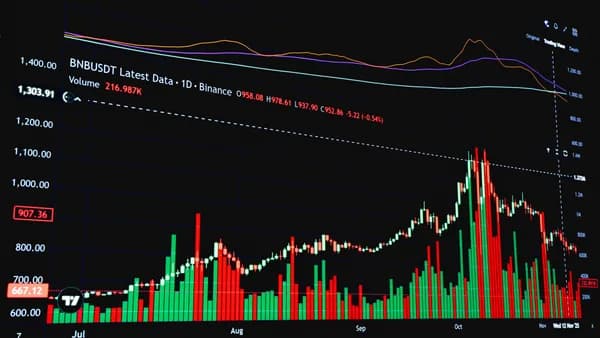
Finding CFD brokers negative balance protection matters because leveraged CFD trading can move faster than a trader’s margin account can absorb. Negative balance protection, or NBP, is designed to stop a retail trader’s account from falling below zero—but it does not stop the trader from losing the full deposit.
XOOMAR Intelligence
Analyst Take
This guide explains what to compare when assessing CFD platforms that offer this safeguard: regulation, leverage, margin close-out rules, asset coverage, risk tools, fees, and account terms. The goal is not to name a single “best” broker, but to help you evaluate brokers using the protections and limitations documented in the source data.
1. What Negative Balance Protection Means in CFD Trading
Negative balance protection is an account safeguard that ensures a retail trader cannot lose more than the funds deposited in the trading account.
In CFD trading, losses can exceed the account balance during extreme volatility, market gaps, fast-moving news events, or low-liquidity periods. Without NBP, the broker could potentially demand repayment of the shortfall. With NBP, the broker resets the account to zero instead of leaving the client with a debt.
Key point: Negative balance protection limits liability beyond the deposited funds. It does not prevent losses within the account, guarantee profits, or eliminate CFD trading risk.
A simplified example from the research data illustrates the difference:
| Scenario | Deposit | Market Loss | Result |
|---|---|---|---|
| Without negative balance protection | $2,000 | $5,000 | Trader could owe an additional $3,000 |
| With negative balance protection | $2,000 | $5,000 | Loss is capped at $2,000 and account resets to zero |
Another example uses a $1,000 deposit. If leveraged losses exceed the account balance, NBP means the account is adjusted to $0 and the trader does not owe the broker beyond the original deposit.
For anyone comparing CFD brokers negative balance protection, the first question is simple: does the protection apply automatically to your specific account type, jurisdiction, and product?
2. Why It Matters for Leveraged Traders
CFDs are leveraged products. That means a trader can open positions with a notional value larger than the cash deposited in the account. Leverage can magnify gains, but it also magnifies losses.
The research data highlights several market conditions where NBP becomes especially relevant:
- Fast market moves: Currency pairs can move sharply during central bank announcements or major economic releases.
- Price gaps: Stocks or other instruments can reopen at a very different price from the previous close.
- Slippage: Stop-loss orders may execute at a worse price than expected when markets move too quickly.
- Low liquidity: In thin markets, positions may not close at the intended level.
Why stop losses are not enough
Stop-loss orders are important, but the sources repeatedly stress that they are not foolproof. In a gap or flash crash, the market can move past the stop level before the order is filled.
For example, one source describes a CFD position on a major U.S. stock that closed around $485 and reopened near $445 after disappointing guidance. The gap skipped the stop loss entirely. In that situation, NBP prevented the account from remaining negative.
That is why NBP is best viewed as a final backstop, not a primary trading strategy.
Critical warning: With negative balance protection, you can still lose 100% of your deposited funds. The protection only addresses losses beyond the account balance.
Retail traders benefit most
The source data identifies retail traders as the primary beneficiaries of negative balance protection. Retail clients may have less experience with leverage, margin calls, and slippage than professional market participants.
Professional clients, by contrast, usually do not receive the same protections under regulatory rules. Some professional or corporate accounts may receive higher leverage but lose retail safeguards, including NBP.
3. How Regulation Affects Client Protection
Regulation is one of the most important factors when comparing CFD brokers with negative balance protection. The research data consistently shows that NBP availability depends heavily on the broker’s regulatory entity and the trader’s account classification.
FCA and ESMA rules
The source data states that the Financial Conduct Authority (FCA) in the UK requires regulated brokers to provide negative balance protection for retail CFD clients. It also states that the European Securities and Markets Authority (ESMA) requires EU brokers to provide NBP to retail clients.
These rules are part of a broader retail client protection framework that also includes leverage restrictions and risk warnings.
| Regulator / Region | Negative Balance Protection Status in Source Data | Important Caveat |
|---|---|---|
| FCA / UK | Required for retail CFD clients | Applies to retail accounts, not necessarily professional accounts |
| ESMA / EU | Required for retail CFD clients | Applies in applicable EU-regulated jurisdictions |
| ASIC / Australia | Sources identify some ASIC-regulated brokers offering NBP, but one source says ASIC does not mandate it | Verify the exact legal entity and client agreement |
| FMA / New Zealand | One source states NBP is not currently mandated | Check broker terms directly |
| Offshore entities | May not provide NBP | Confirm in the client agreement and risk disclosure |
The key takeaway is that the broker’s brand name alone is not enough. Large brokers may operate under multiple legal entities, and protections can differ by jurisdiction.
Retail vs. professional account status
The research data is clear that NBP is generally tied to retail account status. If a trader elects to become a professional client, they may gain access to higher leverage but lose protections.
| Account Type | Negative Balance Protection | Leverage / Protection Trade-Off |
|---|---|---|
| Retail account | Commonly available or required under FCA/ESMA rules | Lower leverage, stronger safeguards |
| Professional account | Usually not available under retail protection rules | Higher leverage may be available, but safeguards may be reduced |
Before choosing a broker, confirm whether NBP applies to your account type, products, and jurisdiction.
4. CFD Broker Features to Compare Beyond Protection
Negative balance protection is important, but it should not be the only factor in broker selection. The source data recommends comparing regulation, execution quality, platform tools, asset range, funding policies, withdrawals, and support.
For commercial searchers evaluating CFD brokers negative balance protection, the practical question is: which platform combines NBP with suitable trading conditions for your strategy?
Brokers mentioned in the source data
The research data identifies several brokers that offer negative balance protection in at least some account types or jurisdictions, including IC Markets, RoboForex, eToro, XTB, XM, AvaTrade, and Plus500.
The table below includes only details specifically provided in the source material.
| Broker | Negative Balance Protection | Regulation / Oversight Mentioned | Platforms / Tools Mentioned | Assets / Features Mentioned |
|---|---|---|---|---|
| IC Markets | Mentioned as offering NBP | FSA mentioned | MT4, MT5, cTrader, TradingView | Average execution speed of 40ms; processes over $29 billion in daily trading volume |
| RoboForex | Mentioned as offering NBP | Not detailed in provided source excerpt | MT4, MT5, cTrader; automated trading and Expert Advisor scripting | Spreads from 0.0 pips; leverage up to 1:2000 |
| eToro | NBP for retail clients | FCA, CySEC, ASIC mentioned | Social trading and copy trading features | Over 30 million users; diverse asset selection |
| XTB | NBP for retail traders | FCA, CySEC, KNF mentioned | xStation, advanced charting, mobile trading; one source also mentions MetaTrader 4 | Over 2,100 financial instruments; forex, commodities, indices, CFDs; real stocks and CFDs mentioned |
| XM | Mentioned as offering NBP | ASIC, CySEC, IFSC mentioned; one source also mentions FCA in relation to XM | MT4, MT5 | Forex, stocks, commodities, cryptocurrencies |
| AvaTrade | Mentioned as offering NBP for retail traders | EU, Australia, Japan mentioned | Not specified in provided data | Forex and CFD context |
| Plus500 | Includes NBP for retail accounts | FCA, CySEC, ASIC mentioned | Not specified in provided data | Forex and CFD context |
What to compare after confirming NBP
Use NBP as a minimum safeguard, then compare:
- Regulation: Which legal entity will hold your account?
- Account type: Retail or professional?
- Platform: Does it support your preferred tools, such as MT4, MT5, cTrader, TradingView, xStation, or social trading?
- Execution: Are execution speed or liquidity details disclosed?
- Assets: Does the broker offer the CFD markets you actually trade?
- Withdrawals: Are funding and withdrawal policies clear?
- Support: Is customer service accessible and reliable?
- Risk controls: Are stop losses, alerts, and margin warnings available?
5. Leverage Limits and Margin Close-Out Rules
Leverage is central to CFD trading risk. Negative balance protection helps after an account has been pushed below zero, but leverage determines how quickly that can happen.
The source data includes examples of high leverage, such as 100:1 leverage in an educational scenario and up to 1:2000 leverage for RoboForex. It also mentions 1:200 maximum leverage in an XTB data point.
| Broker / Example | Leverage Detail in Source Data | Why It Matters |
|---|---|---|
| Educational CFD example | 100:1 leverage | A small deposit can control a much larger position |
| RoboForex | Up to 1:2000 | Very high leverage can magnify losses quickly |
| XTB | Max leverage 1:200 in one source table | Leverage availability may depend on account, instrument, and jurisdiction |
Margin close-out and forced liquidation
The research explains that when losses exceed available funds, brokers may automatically close positions. With NBP, the account is reset to zero if losses exceed the balance.
However, margin close-out is not guaranteed to happen at the exact expected price. In volatile markets, slippage or gaps can cause losses beyond the available margin before the system can close positions.
Important distinction: Margin close-out attempts to limit account losses. Negative balance protection addresses the remaining deficit if the account still goes below zero.
What to ask about leverage
Before opening an account, ask:
- Retail limits: What leverage applies to retail clients in your jurisdiction?
- Professional terms: Do professional accounts lose NBP?
- Instrument differences: Are leverage limits different for forex, indices, commodities, shares, or crypto CFDs?
- Close-out policy: At what margin level does the broker close positions?
- Gap handling: What happens if the market opens beyond your stop-loss level?
The sources do not provide complete margin close-out percentages for each broker, so traders should verify this directly in the broker’s client agreement.
6. Asset Coverage: Forex, Indices, Commodities, and Shares
A broker’s asset coverage matters because different CFD markets behave differently. Forex, indices, commodities, shares, and cryptocurrencies can all experience volatility, gaps, or low-liquidity periods.
The source data confirms several asset categories across named brokers.
| Broker | Asset Coverage Mentioned in Source Data |
|---|---|
| XTB | Over 2,100 financial instruments, including forex, commodities, indices, and CFDs; real stocks and CFDs also mentioned |
| XM | Forex, stocks, commodities, and cryptocurrencies |
| eToro | Diverse asset selection; stock, forex, and CFD context mentioned |
| AvaTrade | Stocks, forex, and CFDs context mentioned |
| Plus500 | Forex and CFD context mentioned |
| IC Markets | CFD and trading platform context; specific asset list not detailed in provided excerpt |
| RoboForex | CFD and trading platform context; specific asset list not detailed in provided excerpt |
Why asset type changes risk
Different markets create different NBP scenarios:
- Forex: Currency pairs can move sharply during economic data or central bank announcements.
- Indices: Index CFDs can react quickly to macroeconomic risk and market-wide selloffs.
- Commodities: Gold and other commodities can spike or drop quickly during risk events.
- Shares: Single-stock CFDs can gap after earnings, guidance updates, or corporate news.
- Cryptocurrencies: Crypto CFDs can be volatile, and sharp sell-offs are specifically mentioned in the research context.
When comparing CFD brokers negative balance protection, do not only ask whether the broker offers NBP. Ask whether the instruments you trade are covered under the same account protection terms.
7. Platform Risk Tools: Stop Losses, Alerts, and Margin Warnings
Negative balance protection is a backstop. Day-to-day risk management still depends on platform tools and trader discipline.
The source data specifically recommends using stop-loss orders, avoiding over-leverage, and monitoring margin levels to reduce the chance of forced liquidation.
Core risk tools to compare
| Risk Tool | Purpose | Limitation |
|---|---|---|
| Stop-loss orders | Aim to close a position at a predefined loss level | May be skipped or filled worse during gaps or fast markets |
| Take-profit orders | Aim to lock in gains at a predefined level | Execution depends on market conditions |
| Margin monitoring | Helps traders track available equity and liquidation risk | Does not prevent losses by itself |
| Alerts | Can notify traders of price or account changes | Sources mention risk monitoring generally, but broker-specific alert details are not provided |
| Negative balance protection | Prevents account debt beyond deposit | Does not prevent the loss of the full deposit |
Platform examples from the source data
- IC Markets: Supports MT4, MT5, cTrader, and TradingView.
- RoboForex: Supports MT4, MT5, and cTrader, with automated trading and Expert Advisor scripting.
- XTB: Offers the xStation platform with advanced charting, rapid execution, and mobile trading; one source also mentions MetaTrader 4.
- eToro: Offers social trading and copy trading features.
- XM: Offers MT4 and MT5.
These platform differences matter because execution style, charting, automation, and mobile access can influence how traders manage risk.
Best-practice reminder from the source data: Use stop losses, avoid extreme leverage, and monitor margin levels—even when your broker offers NBP.
8. Fees That Can Affect CFD Trading Costs
Fees affect CFD trading outcomes because costs reduce available margin and can influence how quickly an account approaches a margin close-out level. The source data includes some spread and funding-related details, but it does not provide a full fee schedule for every broker.
Because of that, traders should treat the following as comparison starting points, not a complete cost ranking.
| Broker | Fee / Cost Detail Mentioned in Source Data |
|---|---|
| RoboForex | Spreads starting at 0.0 pips |
| XTB | Minimum spread of 0.5 pips in one source table; low spreads also mentioned |
| IC Markets | Tight spreads mentioned, but no exact spread figure provided in the excerpt |
| eToro | No specific spread or commission data provided in the source excerpt |
| XM | No specific spread or commission data provided in the source excerpt |
| AvaTrade | No specific spread or commission data provided in the source excerpt |
| Plus500 | No specific spread or commission data provided in the source excerpt |
Fee categories to verify directly
The research data recommends reviewing funding and withdrawal policies, including minimum deposit and withdrawal limits where applicable. It does not provide full pricing tables, so verify the following directly with the broker:
- Spreads: The difference between bid and ask prices.
- Commissions: Any trade commission, if applicable.
- Overnight financing: CFD positions may incur holding costs, but broker-specific rates are not provided in the source data.
- Deposit methods: Bank transfers, credit cards, and other methods are mentioned generally.
- Withdrawal rules: Minimum withdrawal limits and processing policies can vary.
- Account type costs: Fees may differ by retail, professional, or platform account type.
For commercial comparison, do not choose a broker based only on NBP. Compare the total trading environment: protection, spreads, execution, funding, withdrawal reliability, and regulation.
9. Questions to Ask Before Choosing a CFD Broker
When comparing CFD brokers negative balance protection, use the following due-diligence checklist.
Account protection questions
Does negative balance protection apply to retail clients?
Confirm that NBP is included for your account type.Does NBP apply automatically?
Some sources describe NBP as automatic for retail accounts at regulated brokers, but you should verify this in the client agreement.What happens if my balance goes below zero?
With NBP, the source data says the broker resets the account to $0 and the trader does not owe the shortfall.Does protection apply to professional accounts?
The research data indicates professional accounts usually do not receive NBP.Are all CFD instruments covered?
Confirm whether forex, indices, commodities, shares, and crypto CFDs are treated the same.
Regulation questions
Which legal entity will hold my account?
A broker may operate different entities in different jurisdictions.Is the entity regulated by the FCA, CySEC, ESMA-aligned authority, ASIC, FSA, KNF, IFSC, or another regulator mentioned in the broker documents?
The source data emphasizes that regulation affects NBP availability.Are client funds segregated?
The research recommends choosing brokers with strong regulatory oversight, including rules that reduce the risk of client fund mishandling.
Trading condition questions
What leverage applies to my account and instruments?
High leverage, such as the 1:2000 figure cited for RoboForex, can materially increase risk.What platforms are available?
Compare MT4, MT5, cTrader, TradingView, xStation, and social trading tools where relevant.What execution data is disclosed?
IC Markets is cited with an average execution speed of 40ms and over $29 billion in daily trading volume.What are the spreads and costs?
RoboForex is cited with spreads from 0.0 pips and XTB with a 0.5 pips minimum spread in one source table, but full cost verification is still required.How easy are deposits and withdrawals?
The source data recommends checking minimum deposit and withdrawal limits, funding methods, and withdrawal speed.
Broker comparison snapshot
| Comparison Factor | Why It Matters |
|---|---|
| NBP availability | Determines whether losses can exceed the deposit |
| Regulatory entity | Determines which protections apply |
| Retail vs. professional status | Professional classification may remove NBP |
| Leverage limits | Higher leverage increases the speed and scale of losses |
| Margin close-out policy | Determines when positions may be liquidated |
| Asset coverage | Different markets have different volatility and gap risks |
| Platform tools | Affects stop-loss use, charting, automation, and monitoring |
| Fees and spreads | Trading costs affect account equity and margin |
| Withdrawals | Important for fund access and operational reliability |
| Customer support | Important when account or margin issues arise |
10. Bottom Line: Is Negative Balance Protection Enough?
Negative balance protection is necessary, but it is not enough on its own. It is a valuable safeguard because it can prevent a retail CFD trader from owing money beyond the deposited balance. But it does not protect against losing the full deposit.
For traders comparing CFD brokers negative balance protection, the strongest approach is to treat NBP as one layer in a broader risk framework.
Practical takeaways
- Use NBP as a baseline: Prefer brokers that clearly provide negative balance protection for retail CFD accounts.
- Check regulation carefully: FCA and ESMA rules are specifically cited as requiring NBP for retail CFD clients.
- Verify the legal entity: Protections may differ depending on where your account is opened.
- Avoid assuming professional accounts are safer: Professional status may remove retail safeguards.
- Compare leverage: High leverage can make NBP more relevant, but also increases the chance of losing the full deposit.
- Use risk tools: Stop losses, take-profit orders, margin monitoring, and alerts remain important.
- Review costs and withdrawals: Spreads, funding rules, and withdrawal policies affect the overall trading experience.
- Read the client agreement: NBP should be confirmed in the broker’s terms, risk disclosure, or client agreement.
Final assessment: Negative balance protection is a safety net, not a trading edge. The better comparison is not “Which broker has NBP?” but “Which regulated retail CFD account combines NBP with appropriate leverage, clear margin rules, reliable platforms, transparent costs, and strong operational safeguards?”
FAQ
1. What is negative balance protection in CFD trading?
Negative balance protection means a trader’s account balance cannot fall below zero. If leveraged CFD losses exceed the deposited funds, the broker resets the account to $0 instead of requiring the trader to repay the shortfall.
2. Do all CFD brokers offer negative balance protection?
No. Availability depends on the broker, regulator, jurisdiction, and account type. The source data states that FCA- and ESMA-regulated brokers must provide NBP for retail CFD clients, while some other jurisdictions or offshore entities may not require it.
3. Does negative balance protection mean CFD trading is safe?
No. NBP does not prevent losses, guarantee profits, or remove volatility, slippage, or gap risk. It only prevents losses from becoming a debt beyond the account balance. Traders can still lose their entire deposit.
4. Do professional traders get negative balance protection?
Usually not. The research data indicates that NBP is mainly a retail client safeguard. Traders who opt into professional accounts may receive higher leverage but lose protections such as NBP.
5. Which brokers are mentioned as offering negative balance protection?
The source data mentions IC Markets, RoboForex, eToro, XTB, XM, AvaTrade, and Plus500 as brokers offering NBP in at least some contexts. Traders should verify the exact account entity, client agreement, and regulatory terms before opening an account.
6. What should I compare besides negative balance protection?
Compare regulation, account classification, leverage, margin close-out rules, supported platforms, tradable assets, spreads, funding and withdrawal policies, customer support, and risk tools such as stop losses and margin monitoring. Negative balance protection is important, but it should be assessed as part of the full broker package.
Sources & References
Content sourced and verified on June 17, 2026
- 1Negative Balance Protection In CFD Trading Explained
https://sifx.com/negative-balance-protection-in-cfd/
- 215 Best Negative Balance Protection Brokers & trading Platforms for 2026
https://comparebrokers.co/compare/negative-balance-protection-brokers/
- 3What is negative balance protection and which brokers actually offer it? | TopForex.Trade
https://topforex.trade/academy/negative-balance-protection-guide
- 4Negative Balance Protection: Complete Guide for CFDs
https://www.ebc.com/forex/negative-balance-protection-complete-guide-for-cfds
- 5Negative Balance Protection: What Is It & How Does It Work? - Vantage |
https://www.vantagemarkets.com/academy/negative-balance-protection/
- 6Negative Balance Protection - What It Is and Why It Matters
https://leverage.trading/negative-balance-protection/

Written by
XOOMAR
Data desk
XOOMAR is a capital markets software and data company. Every brief on this site starts from a dataset the company collects itself from primary sources (CFTC, SEC EDGAR, FINRA, the Federal Reserve, exchange APIs) and names the numbers it is built on, with a link to the data page so you can check them. Briefs are reviewed before they go out and corrected in place when the data is revised.