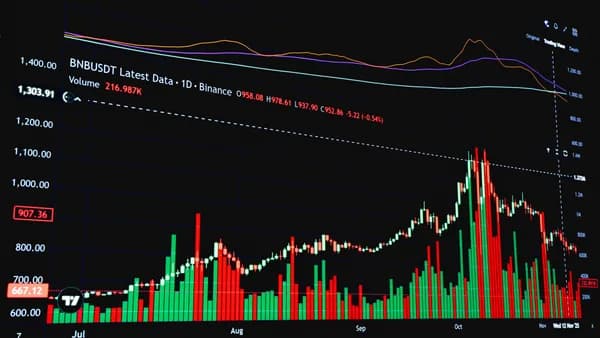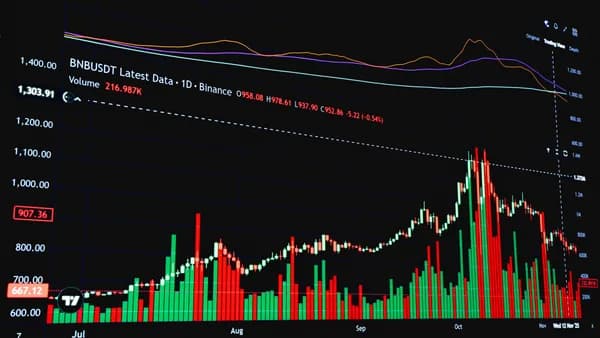
Copy trading can make execution feel simple, but copy trading risk controls decide whether a follower has meaningful protection when a copied trader changes behavior, increases leverage, hits a drawdown, or trades into poor execution conditions. The research is consistent on one point: copying a trader does not transfer risk ownership away from your account.
XOOMAR Intelligence
Analyst Take
The practical question is not just “Which trader has the best return?” It is “What limits, filters, stop rules, transparency metrics, and monitoring tools exist before that trader’s decisions reach my capital?” This guide breaks down the risk-management features investors should compare before using any copy trading platform.
1. Why Risk Controls Matter More Than Past Returns
Most copy trading profiles highlight returns, win rates, monthly gains, or total performance. Those numbers are useful, but they are incomplete unless you know how much risk was taken to produce them.
In copy trading, you are not managing individual entries and exits. Someone else decides when to enter, when to close, how large to trade, and whether to hold through news, weekends, or volatility. Your risk management shifts from trade-level control to allocation-level control.
Copy trading can make execution faster, but it can also multiply mistakes if allocation, limits, and account boundaries are not controlled.
The sources repeatedly make the same distinction: a manual trader controls position size, stop-loss placement, entry timing, and exit timing. A copy trader controls the person being copied, the amount allocated, the copy ratio, the loss threshold, and the decision to pause or stop copying.
Past returns do not show hidden risk
A trader may show attractive returns while hiding fragility in several ways:
| Profile Signal | Why It Can Be Misleading |
|---|---|
| High monthly returns | May come from high leverage, oversized positions, or concentrated bets |
| High win rate | May hide large open losses if losing trades are not closed |
| Smooth closed-trade history | May exclude unrealized losses in open positions |
| Short track record | May not include enough market regimes to evaluate durability |
| Multiple copied traders | May still be concentrated if they trade the same symbol or session |
One source gives a clear comparison: a trader showing 40% annual returns with a 60% maximum drawdown is far riskier than one showing 20% returns with a 12% maximum drawdown. The return number alone does not reveal the recovery burden.
Drawdown math makes the point sharper:
| Drawdown | Gain Required to Recover | Time to Recover at 2%/Month |
|---|---|---|
| 10% | 11.1% | ~6 months |
| 20% | 25.0% | ~12 months |
| 30% | 42.9% | ~18 months |
| 40% | 66.7% | ~26 months |
| 50% | 100.0% | ~36 months |
A 40% loss requires a 66.7% gain just to break even. A 50% drawdown requires a 100% gain. That is why copy trading risk controls matter more than chasing the highest-ranked trader.
2. Copy Allocation Limits and Position Sizing Tools
Allocation is the first and most powerful risk lever in copy trading. It determines how much of your account is exposed to a copied trader’s decisions.
A key principle from the research: do not size copied trades from headline account size alone. Size them from your drawdown buffer, your portfolio exposure, and your ability to survive a bad scenario.
Allocation amount
If you have a $10,000 trading account, you do not need to allocate all of it to one trader. One source gives a simple example: allocating $2,000 to a trader means that even if that trader experiences a 50% drawdown, the loss equals 10% of your total capital.
That is very different from allocating the full account and absorbing the full drawdown.
| Total Account | Allocation to Trader | Trader Drawdown | Loss on Total Account |
|---|---|---|---|
| $10,000 | $10,000 | 50% | 50% |
| $10,000 | $2,000 | 50% | 10% |
Provider caps
The research recommends setting a maximum capital share assigned to one signal source. One allocation framework suggests that, for most people, no single signal provider should receive more than 5% of total investment capital.
Example from the source:
| Total Investment Capital | Maximum Allocation to One Provider at 5% |
|---|---|
| $20,000 | $1,000 |
If that provider loses 50%, the total portfolio impact is 2.5%. That is still painful, but survivable.
Another framework separates total capital into categories:
| Category | Suggested Allocation | Purpose |
|---|---|---|
| Long-term investments | 60–70% | Core wealth building |
| Copy trading allocation | 15–25% | Active market exposure |
| Cash reserve | 10–20% | Opportunities and emergencies |
Within the copy trading allocation, the same source suggests spreading exposure across 3–5 traders, with no single trader exceeding 30–40% of the copy trading budget.
Copy multiplier or ratio
Many platforms allow followers to adjust how aggressively they mirror a trader’s positions. A 1:1 ratio copies trades exactly relative to the allocation. A 0.5x multiplier takes half the position size relative to the allocation.
This is important when a trader appears profitable but too volatile for your tolerance. Reducing the copy multiplier can lower account volatility without requiring you to abandon the trader immediately.
Symbol, session, and contract caps
The research also emphasizes controls beyond simple capital allocation:
- Contract Caps: Limit the maximum contracts or lots copied into your account.
- Symbol Filters: Restrict which instruments are eligible for copying.
- Session Caps: Limit exposure during a particular trading window.
- Provider Caps: Prevent one trader from dominating portfolio risk.
- Correlation Caps: Restrict overlapping exposures across traders.
Copying multiple traders does not automatically diversify risk. If all of them trade the same index, forex pair, or session, the account may be taking one crowded bet through several channels.
A platform with strong copy trading risk controls should help you see exposure by trader, symbol, direction, session, and aggregate margin usage.
3. Maximum Drawdown Filters Explained
Maximum drawdown is one of the most important trader-selection metrics in copy trading. It measures the worst peak-to-trough decline in a trader’s account or strategy history.
A trader with high returns and extreme drawdown may be less attractive than a trader with lower returns and steadier risk-adjusted performance.
Why maximum drawdown matters
Maximum drawdown shows how much pain a follower might need to tolerate. It also helps you decide where to set a copy stop-loss or allocation limit.
One source recommends setting copy stop-loss levels based on a trader’s historical maximum drawdown plus a buffer:
| Trader Historical Max Drawdown | Example Copy Stop-Loss Level |
|---|---|
| 15% | 25% |
| 25% | 35% |
| Above 35% | Reconsider copying |
| Any trader | Avoid setting above 40% |
The buffer matters because historical drawdown is backward-looking. A trader whose worst past drawdown was 15% could experience a 20% drawdown in the future. Setting the stop too tight may remove you during a normal drawdown; setting it too loose may leave you exposed to unrecoverable damage.
Drawdown filters should include open risk
A major warning from the research is that closed-trade performance can hide current exposure. Some traders close winners while leaving losing trades open indefinitely. The closed history can look strong while unrealized losses damage equity.
When evaluating drawdown, review:
- Realized Drawdown: Losses from closed trades.
- Unrealized Drawdown: Losses from open positions.
- Equity Curve: Account value including open trades.
- Balance Curve: Account value based only on closed trades.
- Peak-to-Trough Decline: The full decline from highest equity to lowest equity.
If a platform only highlights closed-trade results, it may not give enough information to assess true risk.
Drawdown across market conditions
The research also recommends reviewing drawdown behavior across volatility expansions and low-liquidity windows. A trader may perform well in calm markets but behave very differently during sharp volatility, widening spreads, or thin liquidity.
A stronger profile should show consistency across different conditions, not just one favorable market phase.
4. Stop-Copy and Pause-Copy Features
Stop-copy and pause-copy tools are essential because they give followers a way to cut off a copied strategy when risk exceeds predefined limits.
At the time of writing, the source data specifically mentions eToro Copy Stop-Loss (CSL). On eToro, CSL stops copying automatically and closes positions at market price when the copied portfolio drops below the set threshold. The cited source states that the default CSL is 40%.
A 40% loss requires a 67% gain just to break even. That is why many risk frameworks treat the default threshold as too loose for conservative copy trading.
Stop-copy versus pause-copy
These features are related but not identical.
| Feature | What It Does | Risk Use Case |
|---|---|---|
| Stop-Copy | Ends the copy relationship and may close copied positions depending on platform rules | Use when loss thresholds, strategy drift, or red flags invalidate the original reason for copying |
| Pause-Copy | Temporarily stops new copied trades while existing exposure may remain | Use when reviewing abnormal activity, volatility spikes, or execution problems |
| Kill Switch | Immediately shuts down copied activity based on predefined rules | Use when account-level limits are breached |
| Drawdown Trigger | Pauses or reduces allocation after a loss threshold | Use to prevent one trader from creating account-level damage |
The Bucko source frames Bucko Copy Trader and related review tools as user-configured automation with guardrails, audit trails, caps, and a kill switch. The important point is not that automation removes responsibility; it is that automation should route only user-authorized actions within defined limits.
Stop-copy timing matters
Copy stop-loss tools usually operate at the copied portfolio level, not at the individual trade level. If a trader has multiple open positions that are each down moderately, the platform-level stop may not trigger until the aggregate loss reaches the threshold.
This is why investors should monitor open exposure, not just closed profit and loss.
Platform and execution risks
The source data identifies several copy-specific risks that stop-copy tools may not fully eliminate:
- Slippage Risk: Copied trades may fill at different prices than the provider’s trade.
- Latency Risk: Delay between provider execution and follower execution can change results.
- Gap Risk: Weekend or event-driven gaps can move through intended stop levels.
- Platform Risk: Technical issues can prevent trades from replicating correctly.
- Routing Differences: Different accounts may receive different fills.
The source notes that eToro and Pelican Exchange use server-side replication, which may reduce delay, while third-party bridges such as ZuluTrade and Signal Start can have more significant delays. That does not make one model risk-free; it simply highlights why execution method belongs in due diligence.
5. Trader Transparency Metrics to Review
Strong copy trading risk controls are only useful if you can evaluate the trader clearly. Transparency should cover returns, risk, behavior, execution, and reporting quality.
Core trader metrics
The research identifies several metrics that followers should review before copying:
| Metric | Why It Matters |
|---|---|
| Maximum Drawdown | Shows the worst historical decline and helps set stop-copy thresholds |
| Average Trade Duration | Indicates whether the trader scalps, day trades, or swing trades |
| Number of Trades | Larger samples are more reliable than short histories |
| Sharpe Ratio | Measures return per unit of volatility |
| Sortino Ratio | Focuses on downside volatility rather than all volatility |
| Monthly Return Consistency | Shows whether performance is stable or dependent on timing |
| Open P&L | Reveals unrealized losses that may not appear in closed-trade stats |
| Symbol Exposure | Shows concentration in specific markets |
| Session Exposure | Identifies timing dependency |
| Leverage and Margin Usage | Reveals how aggressively the trader uses capital |
One source advises serious caution when a trader has fewer than 100 trades, because the sample may be too small to draw firm conclusions. It also states that a trader with 500 trades over 18 months provides a more meaningful history than one with 30 trades over three months.
Risk-adjusted ratios
The source data gives clear interpretation ranges for the Sharpe ratio:
| Sharpe Ratio | Interpretation from Source Data |
|---|---|
| Above 2.0 | Excellent |
| Above 1.0 | Generally considered good |
| Below 0.5 | Returns may not justify the volatility |
The Sortino ratio is similar but focuses only on downside volatility. A trader with a high Sortino and moderate Sharpe may have volatility that comes more from upside moves than downside losses.
Process transparency
The ForexRoasted source emphasizes that provider quality determines many downstream risk outcomes. Because copy trading centralizes decision flow in an external provider, due diligence should focus on process quality, not just performance.
Review whether the trader or platform provides:
- Rule Transparency: Entry criteria, stop logic, and position sizing model.
- Drawdown Behavior: How the trader reacts during losses.
- Trade Frequency Stability: Whether activity is consistent or erratic.
- Regime Adaptation: Whether behavior changes across market environments.
- Risk Concentration: Exposure by symbol, session, and correlated instruments.
- Reporting Cadence: Update delays, metric completeness, and revision history.
- Execution Footprint: Spread profile, slippage behavior, and stop discipline.
Third-party verification can improve confidence. The source mentions SteadyFlowFX as an example of a transparent copy trading service with published risk metrics and Myfxbook verification. The general lesson is to prefer independently verified performance over self-reported profile claims where available.
6. How Platform Fees Can Increase Risk
The provided source data does not include specific fee schedules or pricing tiers for copy trading platforms. However, it does identify several cost and execution factors that can increase effective risk: spreads, slippage, commissions, routing differences, and cost changes over time.
Fees matter because copy trading performance is not only the provider’s return. It is the provider’s return after execution quality, platform costs, spread differences, slippage, and any applicable charges.
Fee and execution drag
| Cost or Execution Factor | Risk Impact |
|---|---|
| Spread Variation | Wider spreads can reduce profitability, especially for short-duration trades |
| Slippage | Followers may enter or exit at worse prices than the provider |
| Latency | Delays can change risk-reward, especially for scalping strategies |
| Partial Fills | Copied accounts may not match provider execution exactly |
| Routing Differences | Different account infrastructure can produce different results |
| Commissions or Platform Costs | Any recurring cost reduces net performance |
The research specifically warns that in fast futures or forex markets, even a few ticks or pips can change the risk-reward profile. This matters most for scalps with small targets, where execution differences can turn a profitable provider result into a weaker follower result.
Why short-duration strategies are more sensitive
Average trade duration is not just a style label. It also affects fee sensitivity.
| Strategy Type | Execution Sensitivity |
|---|---|
| Scalping | Highly sensitive to spread, latency, slippage, and fill mismatch |
| Day Trading | Moderately sensitive, depending on target size and trade frequency |
| Swing Trading | Less sensitive to small fill differences, but more exposed to overnight and weekend risk |
| Position Trading | Less affected by small execution differences, but exposed to longer market cycles |
A platform with strong copy trading risk controls should make it possible to review fill quality and execution drift, not just copied returns.
7. Red Flags in Trader Performance Profiles
The strongest platform controls cannot fully compensate for a fragile trader profile. Before following anyone, review behavioral red flags.
Common copy trading red flags
| Red Flag | Why It Matters |
|---|---|
| Very high returns with very low drawdown | May indicate hidden risk or open losses |
| Martingale patterns | Doubling or tripling after losses can fail catastrophically |
| No stop losses | Large losses may be deferred rather than controlled |
| Very short track record | Strategy may not be tested across enough conditions |
| Unrealized losses hidden in open positions | Closed-trade history may look better than true equity |
| Grid trading without hard limits | Trending markets can create large adverse exposure |
| Sudden strategy changes | Past performance may no longer describe current behavior |
| Sudden leverage expansion | May signal loss-chasing or risk drift |
| Narrative changes without disclosure | Makes process evaluation unreliable |
The sources are especially clear about martingale and grid behavior. Martingale systems can show smooth results for long periods because losses are delayed by increasing position size. But if the market continues against the position, the strategy can fail suddenly and severely.
Grid trading can work in ranging markets, but without hard risk limits, a strong trend can cause positions to accumulate against the move.
Strategy drift
Strategy drift occurs when a trader gradually or suddenly changes behavior. Examples from the research include:
- Frequency Shift: Moving from a few trades per week to many trades per day.
- Instrument Shift: Switching from major forex pairs to gold, crypto, exotic crosses, or other markets.
- Timeframe Shift: Moving from scalping to swing trading or vice versa.
- Risk Shift: Increasing leverage or position size after a drawdown.
This matters because your original evaluation was based on one behavior pattern. If the trader changes process, historical metrics become less relevant.
Correlated trader risk
Copying several traders can still produce concentrated risk if they trade the same market in the same direction. For example, if Trader A is long EUR/USD and Trader B is also long EUR/USD, you have doubled exposure to the same movement even though you are following two different people.
The research recommends grouping exposure by:
- Symbol
- Session
- Direction
- Strategy type
- Execution venue
- Provider overlap
- Margin usage
Diversification is only meaningful when risks are not all driven by the same event.
8. Checklist for Evaluating a Copy Trading Platform
Use this checklist before allocating capital to any copy trading platform or trader profile. The goal is to evaluate both the platform’s controls and the trader’s behavior.
Platform risk-control checklist
| Control Area | What to Look For |
|---|---|
| Allocation Limits | Ability to cap capital assigned to each trader |
| Copy Ratio Tools | Ability to reduce position size using multipliers such as 0.5x |
| Provider Caps | Maximum exposure per signal provider |
| Drawdown Triggers | Ability to pause, reduce, or stop copying after predefined loss thresholds |
| Copy Stop-Loss | Portfolio-level stop-copy feature, such as eToro’s CSL |
| Pause-Copy | Ability to stop new trades without necessarily ending all exposure |
| Kill Switch | Emergency shutdown for copied activity |
| Symbol Filters | Ability to restrict copied instruments |
| Session Exposure Caps | Ability to limit timing concentration |
| Correlation Monitoring | Visibility into overlapping exposure across traders |
| Margin Monitoring | Dashboard or calculation support for used margin versus equity |
| Audit Trail | Record of copied trades, changes, and control triggers |
| Fill Quality Review | Ability to compare execution and slippage |
| Manual Override | Ability to log in and close positions if needed |
Trader due-diligence checklist
| Trader Metric | Stronger Profile |
|---|---|
| Maximum Drawdown | Moderate and consistent with your risk tolerance |
| Open P&L Visibility | Includes unrealized gains and losses |
| Number of Trades | Prefer larger samples; be cautious below 100 trades |
| Track Record Length | Long enough to observe different market conditions |
| Sharpe Ratio | Above 1.0 is generally considered good in the source data |
| Sortino Ratio | Strong downside-risk profile |
| Monthly Consistency | Narrower spread between best and worst months |
| Trade Duration | Matches your tolerance for scalping, intraday, or overnight risk |
| Position Sizing | Stable and not doubling after losses |
| Stop Discipline | Uses defined exits rather than holding losers indefinitely |
| Strategy Consistency | No unexplained shifts in instruments, frequency, or leverage |
| Reporting Quality | Complete, timely, and preferably independently verified |
Rebalance and review process
The research recommends deterministic rebalance rules rather than emotional reactions to recent profit and loss.
A practical review process should include:
- Weekly Review: Check provider drift, correlation rise, and cost changes.
- Threshold-Based Actions: Pause, reduce, or stop based on predefined levels.
- Reason Codes: Document every allocation change and why it was made.
- Exposure Grouping: Review by symbol, session, direction, and provider.
- Execution Review: Track slippage, spread changes, and fill quality.
- Open-Risk Review: Compare closed P&L with unrealized P&L.
Stable allocation rules reduce reactionary reallocation during short streaks and support consistent risk governance.
9. Safer Ways to Start With Copy Trading
There is no risk-free way to copy trade. But the source data supports several safer starting practices.
1. Start with allocation limits, not trader rankings
Do not begin by asking which trader has the highest return. Start by deciding how much total portfolio risk you are willing to expose.
A conservative framework from the research suggests:
- Total Copy Trading Allocation: 15–25% of total investment capital.
- Per Provider Cap: No more than 5% of total investment capital.
- Number of Traders: Diversify across 3–5 traders.
- Within Copy Budget: Avoid letting one trader exceed 30–40% of the copy trading allocation.
These are not guarantees, but they reduce the chance that one trader can dominate your outcome.
2. Use smaller copy ratios first
If a platform supports copy multipliers, consider starting below full exposure. A 0.5x multiplier can reduce volatility while you observe real execution, slippage, and trader behavior.
This is especially relevant when copying aggressive traders or short-duration strategies.
3. Diversify by strategy, asset, and session
Effective diversification is not simply copying more people. The source data recommends diversifying across:
| Diversification Type | Example |
|---|---|
| Strategy | Mix swing traders, day traders, and trend followers |
| Asset | Avoid copying only traders focused on the same forex pair or index |
| Session | Spread activity across different trading windows |
| Direction Bias | Combine trend-following and mean-reversion approaches |
| Risk Profile | Allocate more to conservative traders and less to higher-risk traders |
One example portfolio from the source assigns the heaviest allocation to the most conservative trader and smaller allocations to higher-risk traders:
| Trader | Allocation | Strategy | Instruments | Risk Profile |
|---|---|---|---|---|
| Trader A | 35% | Conservative swing | Major forex pairs | Low, max DD < 15% |
| Trader B | 25% | Multi-asset trend | Forex + indices | Moderate, max DD < 20% |
| Trader C | 20% | Day trading | Forex + gold | Moderate, max DD < 20% |
| Trader D | 20% | Mean-reversion | Forex + crypto | Higher, max DD < 25% |
4. Monitor margin usage
Leverage can be replicated proportionally in copy trading. If a trader uses 10:1 effective leverage, the copied positions may reflect that effective leverage in your account.
The research recommends checking margin utilization daily when copying multiple traders. If used margin exceeds 30% of equity, the source characterizes that as significant risk.
The calculation is:
Margin Utilization = Total Margin Used / Total Equity
If your platform does not show this clearly, calculate it manually from account data.
5. Review copied results separately from provider results
Copied results can differ from provider results because of:
- Latency
- Spread variation
- Partial fills
- Account size constraints
- Platform routing differences
- Slippage
- Minimum lot sizes and rounding
This is why an audit trail matters. You need to know whether underperformance comes from the trader’s signal quality or from execution drift in your copied account.
Bottom Line
Strong copy trading risk controls are not optional. They are the main defense against dependency risk, hidden drawdowns, strategy drift, leverage concentration, slippage, and correlated exposure.
The most important controls to compare are allocation caps, provider limits, copy ratios, drawdown filters, stop-copy settings, pause-copy tools, symbol filters, correlation monitoring, margin visibility, audit trails, and execution-quality reporting. Past returns can help you screen traders, but they should never replace risk review.
A safer approach is to start small, diversify across genuinely different traders, cap each provider, monitor open exposure, and define stop-copy rules before losses occur. Copy trading may automate execution, but risk ownership stays with the account holder.
FAQ: Copy Trading Risk Controls
What are copy trading risk controls?
Copy trading risk controls are platform or user-defined settings that limit how much copied trading activity can affect your account. The research identifies allocation limits, provider caps, contract caps, symbol filters, daily loss limits, drawdown triggers, copy stop-loss tools, kill switches, correlation monitoring, and audit trails as important controls.
Does copying multiple traders reduce risk?
Not automatically. Copying multiple traders only reduces risk if their strategies, instruments, sessions, and directional exposure are meaningfully different. If several traders are long the same forex pair or trade the same index during the same session, the account may still hold one concentrated bet.
What is the most important metric before copying a trader?
Maximum drawdown is one of the most important metrics because it shows the worst historical decline. However, it should be reviewed alongside open P&L, trade count, trade duration, Sharpe ratio, Sortino ratio, monthly consistency, leverage, and strategy stability.
What is a copy stop-loss?
A copy stop-loss is a portfolio-level stop that ends copying when losses reach a predefined threshold. At the time of writing, the source data specifically mentions eToro Copy Stop-Loss, with a default threshold of 40%. Some risk frameworks prefer setting thresholds based on historical drawdown plus a buffer, while avoiding excessively deep loss limits.
Why can my copied results differ from the trader’s results?
Copied results can differ because of latency, spread variation, slippage, partial fills, account size constraints, minimum lot sizes, rounding, and platform routing differences. These differences matter most for short-duration strategies such as scalping.
What are the biggest red flags in copy trading profiles?
Major red flags include very high returns with very low drawdown, martingale position sizing, no stop losses, large unrealized losses, short track records, grid trading without hard limits, sudden leverage expansion, and unexplained changes in strategy, trade frequency, or instruments.
Sources & References
Content sourced and verified on June 16, 2026
- 1Copy Trading Risk Management: What Traders Must Control
https://www.bucko.ai/learn/copy-trading-risk-management
- 2Copy Trading Risk Model: Signal Due Diligence and Allocation Rules
https://forexroasted.com/guides/copy-trading-risk-model
- 3Copy Trading Risk Management: A Special Case — ForexRiskTools
https://forexrisktools.com/guides/copy-trading-risk-management
- 4Risk Management in Copy Trading: Complete Guide 2026
https://copytrading.forex/learn/risk-management-copy-trading
- 5Copy Trading Risk Management: How to Reduce Losses And Protect Your Capital
https://www.tradingcup.com/learn/copy-trading-risk-management-reduce-losses
- 6Copy Trading Risk Management: Stay Safe & Profitable
https://bestcopytrading.com/strategies/copy-trading-risk-management/

Written by
XOOMAR
Data desk
XOOMAR is a capital markets software and data company. Every brief on this site starts from a dataset the company collects itself from primary sources (CFTC, SEC EDGAR, FINRA, the Federal Reserve, exchange APIs) and names the numbers it is built on, with a link to the data page so you can check them. Briefs are reviewed before they go out and corrected in place when the data is revised.