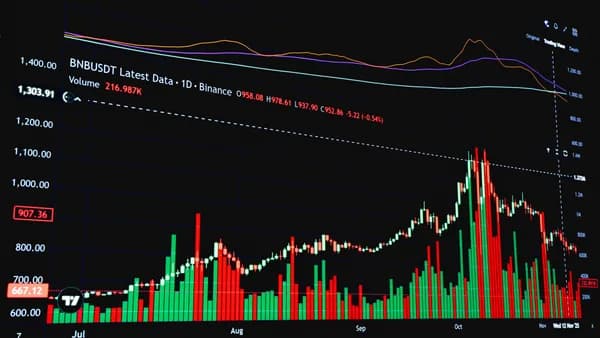
Choosing advanced order trading platforms is not just about finding more buttons than “buy” and “sell.” For active traders, the real question is whether a platform supports the workflow around trade planning: chart-based entries, DOM execution, alerts, automation, replay, broker connectivity, and risk controls before capital is committed.
XOOMAR Intelligence
Analyst Take
The research data available for this comparison is strongest on advanced trading workstations, order-flow platforms, automation tools, and execution workflows. It is thinner on platform-by-platform confirmation of specific retail order types such as bracket orders and OCO orders, so this guide clearly separates verified capabilities from items traders should confirm directly with a broker or platform before going live.
What Are Advanced Order Types in Stock Trading?
Advanced order types are trade instructions that go beyond a simple market order or limit order. They are designed to help traders predefine entries, exits, risk limits, and conditional actions before or during a trade.
Common advanced order concepts include:
- Bracket Order: A trade setup that typically pairs an entry with predefined profit-taking and loss-limiting exits.
- OCO Order: “One-cancels-the-other,” where execution of one order cancels the paired alternative order.
- Trailing Stop: A stop order that adjusts as the market moves in the trader’s favor.
- Stop Limit: A stop trigger that sends a limit order rather than a market order.
- Conditional Order: An instruction that activates only when defined market or account conditions are met.
- Automation Rule: A scripted, algorithmic, or platform-based rule that can generate alerts, backtests, or order actions depending on platform and broker support.
In commercial platform comparisons, these order types matter because the same strategy can feel very different depending on the interface. A trader using a DOM, chart trader panel, or automation engine may need faster order staging than a trader placing occasional swing trades from a browser chart.
The key distinction is not simply whether a platform has “advanced orders,” but whether those orders fit your execution workflow: chart-based, DOM-based, mobile, automated, broker-routed, or replay-tested.
The source data shows several broad categories of advanced trading platforms:
| Platform Category | Verified Examples from Source Data | Best-Fit Workflow Based on Sources |
|---|---|---|
| Order-flow / DOM platforms | Trading Technologies, ATAS, deepcharts | Depth of market, footprint-style analysis, order flow, volume tools |
| Charting and alert platforms | TradingView | Browser and mobile charting, alerts, Pine Script strategies |
| Broker terminals | MetaTrader 5, MetaTrader 4 | Broker-connected terminals, MQL automation, strategy backtesting |
| Execution-focused platforms | cTrader, NinjaTrader, Sierra Chart | Advanced execution tools, automation, backtesting, order management |
| Algorithmic platforms | QuantConnect, AlgoTrader | Strategy research, backtesting, systematic execution workflows |
The most important buying question is whether your platform is primarily an analysis tool, an execution workstation, a broker-connected terminal, or an automation environment.
Platforms That Support Bracket Orders and OCO Orders
Bracket orders and OCO orders are often central to active trading because they allow traders to plan exits before or immediately after entering a position. However, at the time of writing, the provided source data does not explicitly verify bracket-order or OCO-order support for each named platform.
What the data does verify is which platforms support advanced execution, broker connectivity, DOM workflows, alerts, automation, and advanced order management—features that are commonly adjacent to bracket/OCO workflows but should not be assumed to be identical.
Verified Advanced Order Workflow Signals
| Platform | Verified Capabilities from Source Data | Bracket / OCO Status in Provided Data |
|---|---|---|
| Trading Technologies | Order flow tools, depth of market workflows, footprint-style analysis, broker-connected trading; ranked 9.0/10 overall by Worldmetrics | Not explicitly verified in source data |
| ATAS | Direct account management via broker/exchange API; trading from chart, DOM, or Chart Trader panel; alerts and exit strategies | Not explicitly verified in source data |
| MetaTrader 5 | Cross-platform trading terminals, algorithmic trading via MQL, broker connectivity for advanced order types | Advanced order types verified generally; bracket/OCO not specifically verified |
| MetaTrader 4 | Charting, strategy backtesting, automated trading with MQL through broker feeds | Not explicitly verified in source data |
| cTrader | Institutional-style platform with advanced order execution tools and automated trading using cAlgo | Not explicitly verified in source data |
| NinjaTrader | Futures and options trading platform with strategy backtesting and automation through a brokerage integration workflow | Not explicitly verified in source data |
| Sierra Chart | High-performance charting and trading system with data feeds, custom indicators, and advanced order management | Advanced order management verified; bracket/OCO not specifically verified |
| TradingView | Web and mobile charting, strategy tools, alerts, Pine Script backtesting; order entry is broker-dependent | Broker-dependent; bracket/OCO not verified in source data |
| Interactive Brokers IBKR Mobile | Mobile platform for experienced traders needing advanced order types and access to stocks, options, futures, currencies, bonds, funds, and more across more than 170 markets worldwide | Advanced order types verified generally; bracket/OCO not specifically verified |
What This Means for Buyers
If your main requirement is bracket/OCO order handling, do not rely on broad phrases such as “advanced order types” or “advanced execution tools” alone. Use them as a shortlist signal, then verify the exact order ticket behavior with the platform or broker.
A practical due-diligence checklist:
- Order Pairing: Confirm whether the platform can link a profit target and stop-loss order.
- Cancellation Logic: Confirm whether one exit cancels the other automatically.
- Broker Dependency: Ask whether the order logic resides on the broker/server side or only in the local platform.
- Asset Support: Confirm whether the order type works for stocks, options, futures, forex, crypto, or only certain markets.
- Mobile Support: Verify whether advanced orders can be entered, modified, and canceled from mobile.
- Replay/Paper Testing: Test the workflow before live trading if the platform provides replay, backtesting, or simulation tools.
A platform can be excellent for order-flow analysis and still require separate verification for specific order-ticket behavior such as bracket orders, OCO cancellation logic, and broker-side persistence.
Trailing Stops, Stop Limits, and Conditional Orders Compared
Trailing stops, stop limits, and conditional orders all help traders control execution logic, but they solve different problems. The research data does not provide a platform-by-platform matrix for each of these specific order types, so the safest comparison is to map them to the verified platform capabilities that support advanced decision-making.
Order Type Concepts and Platform Fit
| Order Type | What Traders Use It For | Platform Capabilities to Look For |
|---|---|---|
| Trailing Stop | Adjusting risk as a position moves favorably | Advanced order tickets, broker support, automation rules, alerts |
| Stop Limit | Defining both trigger and minimum/maximum acceptable execution price | Advanced order types, reliable execution interface, broker routing |
| Conditional Order | Activating trades based on price, indicator, or other conditions | Alerts, scripting, automation, strategy backtesting |
| Exit Strategy | Predefining risk and reward after entry | Chart trader, DOM, order management, broker/exchange API |
| Automated Strategy | Turning rules into repeatable signals or execution workflows | MQL, Pine Script, cAlgo, backtesting, API support |
Platforms With Verified Automation or Conditional-Style Tooling
The source data identifies several tools with automation, scripting, backtesting, or API support:
| Platform | Verified Automation / Conditional Workflow Data |
|---|---|
| TradingView | Pine Script enables automated strategy backtesting and custom indicator development; alerts and drawing tools support monitoring across watchlists |
| MetaTrader 5 | Supports algorithmic trading via MQL and broker connectivity for advanced order types |
| MetaTrader 4 | Provides strategy backtesting and automated trading with MQL through broker feeds |
| cTrader | Supports automated trading using cAlgo |
| NinjaTrader | Includes strategy backtesting and automation with a brokerage integration workflow |
| MultiCharts | Enables strategy development, backtesting, and automated trade execution |
| QuantConnect | Cloud algorithmic trading research and backtesting environment using historical and live brokerage datasets |
| AlgoTrader | Combines strategy execution, backtesting, and market connectivity for systematic trading |
| ATAS | Provides a powerful API for customized solutions and automation; supports alerts and exit strategies |
| deepcharts | Provides replay, trade copier, DOM trading, on-chart trading, and auto-tracker features |
For traders comparing advanced order trading platforms, this matters because conditional workflows can be implemented in different ways. In one platform, the condition may be an alert only. In another, it may be a backtested strategy. In a broker-connected terminal, it may become a live order action depending on broker support.
Chart-First vs Execution-First Workflows
TradingView is described in ZipDo’s advanced trading software comparison as a chart-first workflow combining market data, technical analysis, and community-driven ideas. It supports browser-based charting, multiple timeframes, built-in indicators, custom Pine Script, alerts, and strategy tester integration.
However, the same source notes an important limitation: order entry is broker-dependent and not a full trading workstation replacement.
By contrast, Trading Technologies is positioned by Worldmetrics as an execution-oriented order-flow platform for active futures order-flow traders, with depth-of-market workflows, footprint-style analysis, and broker-connected trading.
That distinction is critical:
- Chart-first platforms are often better for research, alerts, and technical strategy development.
- Execution-first platforms are often better for DOM interaction, order staging, and active trade management.
- Automation platforms are better for systematic rules, backtesting, and repeatable strategy logic.
Risk Management Features Active Traders Should Look For
Risk management in advanced trading software is not just about stop-loss orders. It includes how clearly a platform shows market depth, how quickly a trader can adjust exits, whether the workflow supports alerts, whether past decisions can be reviewed, and whether strategies can be tested before live use.
Core Risk Management Features Confirmed in Source Data
| Feature | Why It Matters | Platforms with Verified Source Data |
|---|---|---|
| Alerts | Helps monitor predefined conditions before action is needed | TradingView, ATAS |
| Exit Strategies | Supports predefined trade management workflows | ATAS |
| Strategy Backtesting | Tests rules against historical data before live use | TradingView, MetaTrader 4, NinjaTrader, MultiCharts, QuantConnect, AlgoTrader |
| Market Replay | Allows traders to replay historical market behavior | ATAS, deepcharts |
| Journal and Statistics | Helps analyze performance and refine strategy | ATAS |
| DOM Trading | Provides depth-of-market context for active execution | Trading Technologies, ATAS, deepcharts |
| Order Flow / Footprint Tools | Helps visualize buying/selling pressure and liquidity | Trading Technologies, ATAS, deepcharts, Kiyotaka |
| API / Automation | Allows customized workflows and systematic tools | ATAS, MetaTrader 5, MetaTrader 4, cTrader, QuantConnect, AlgoTrader |
Order Flow as a Risk Context Tool
ATAS emphasizes order flow and volume analysis as a way to see beyond traditional charts. Its source data lists 25+ connections to global stock, futures, and cryptocurrency exchanges, 70+ volume analysis tools, 240+ indicators, and 400+ cluster variations for footprint-style charting.
ATAS also describes a Smart DOM for market depth and liquidity visualization, Smart Tape for Time & Sales analysis, and trading account management through chart, DOM, or Chart Trader panels.
deepcharts similarly focuses on order-flow and liquidity visualization. Its source data lists 80+ indicators, 5 deep studies, 10+ templates, and a 0.15 s refresh rate, alongside Deep Prints, Deep Trades, Volume, DOM, Deep Replay, Execution, on-chart trading, DOM trading, trade copier, replay, and auto-tracker.
Kiyotaka, based on the available search snippet, describes a proprietary high-performance charting engine capable of rendering millions of data points with zero lag, combining order flow, order-book heatmaps, and layers of aggregated market data in a unified view. Because this is available only from a snippet in the provided data, buyers should verify details directly before making a decision.
Order-flow tools do not remove trading risk. They add market context—such as liquidity, depth, volume clusters, and aggressive trade activity—that may help experienced traders make more informed decisions.
Risk Warnings Matter
The deepcharts source includes a clear risk disclaimer: tools for futures, currency, and options involve substantial risk and are not appropriate for everyone, and only risk capital should be used for trading. That warning is relevant across all advanced trading workflows, especially when leverage, automation, or fast order entry is involved.
Desktop vs Mobile Support for Advanced Orders
Desktop and mobile platforms solve different problems. Desktop workstations typically provide more screen space for DOMs, charts, footprint views, replay, and multi-panel analysis. Mobile platforms are useful for monitoring and trade management, but the research data provides fewer specifics on advanced order functionality by mobile device.
Verified Desktop, Web, and Mobile Signals
| Platform | Desktop / Web / Mobile Details from Source Data |
|---|---|
| TradingView | Web and mobile charting plus strategy tools; browser-based charting with alerts and Pine Script |
| MetaTrader 5 | Cross-platform trading terminals with algorithmic trading via MQL |
| MetaTrader 4 | Widely supported trading terminal with charting, strategy backtesting, and automated trading |
| Interactive Brokers IBKR Mobile | Mobile trading platform for experienced traders needing advanced order types and access to stocks, options, futures, currencies, bonds, funds, and more across 170+ markets worldwide |
| ATAS | Trading interface supports management from chart, DOM, or Chart Trader panel; source emphasizes professional order-flow workspace |
| deepcharts | Web branding appears as deepcharts.app; source lists on-chart trading, DOM trading, replay, trade copier, and execution features |
Mobile Strengths and Limits
From the provided source data, TradingView has the clearest web-and-mobile charting positioning. It is useful for traders who want alerts, charts, watchlists, and scripted research across devices.
IBKR Mobile is specifically described as a mobile platform for experienced traders needing advanced order types and access to multiple asset classes across more than 170 markets worldwide. That makes it one of the strongest mobile-specific entries in the available data.
However, the source data does not provide a full breakdown of which advanced order types are available on mobile versus desktop for each platform. For bracket orders, OCO orders, trailing stops, or conditional orders, traders should test the exact mobile ticket before relying on it during live trading.
Desktop Strengths
Desktop-style or workstation-style tools appear stronger in the source data for DOM, footprint, order-flow, and automation workflows:
- Trading Technologies: Depth of market, footprint-style analysis, broker-connected trading.
- ATAS: Chart, DOM, Chart Trader panel, Smart DOM, Smart Tape, market replay, API, journal and statistics.
- deepcharts: DOM trading, on-chart trading, Deep Replay, trade copier, execution tools.
- NinjaTrader: Strategy backtesting and automation with brokerage integration.
- Sierra Chart: High-performance charting, data feeds, custom indicators, advanced order management.
For active traders, the practical split is straightforward: use mobile for monitoring only if it supports your exact order-management needs, and use desktop/workstation tools when your workflow depends on DOM, multi-chart context, replay, or rapid order adjustment.
Paper Trading Advanced Orders Before Using Real Money
Before using real capital, advanced order workflows should be tested in a simulation, replay, backtesting, or research environment whenever available. The source data does not provide a single standardized “paper trading” feature matrix, but it does verify several ways traders can practice and test.
Verified Testing and Replay Tools
| Platform | Verified Practice / Testing Capability |
|---|---|
| ATAS | Market Replay described as a “time machine” to backtest strategies and analyze historical volume and order flow distribution |
| deepcharts | Provides Replay and Deep Replay features |
| TradingView | Pine Script backtesting and strategy tester integration |
| MetaTrader 4 | Strategy backtesting and automated trading with MQL |
| NinjaTrader | Strategy backtesting and automation |
| MultiCharts | Strategy development, backtesting, and automated trade execution |
| QuantConnect | Cloud algorithmic research and backtesting using historical and live brokerage datasets |
| AlgoTrader | Strategy execution, backtesting, and market connectivity |
What to Test Before Going Live
When evaluating advanced order trading platforms, test the entire trade lifecycle, not just whether an order can be placed.
Use a repeatable checklist:
- Entry Setup: Can you stage the entry from the chart, DOM, mobile ticket, or automated rule?
- Exit Logic: Can you define stop-loss and target behavior before or immediately after entry?
- Cancellation Behavior: If using OCO-style logic, does canceling or filling one order reliably affect the other?
- Modification Speed: Can stops and targets be adjusted quickly from the interface you actually use?
- Data Behavior: Does the strategy depend on real-time order flow, delayed data, or historical replay?
- Automation Boundaries: Does the platform execute live orders, generate alerts, or only backtest signals?
- Broker Integration: Does your connected broker support the same order behavior as the platform interface?
Replay vs Backtesting
Replay and backtesting are related but not identical.
| Testing Method | Best For | Source Examples |
|---|---|---|
| Market Replay | Practicing discretionary execution, reviewing order flow, studying historical market behavior | ATAS, deepcharts |
| Strategy Backtesting | Testing coded rules, indicators, or automated strategies against historical data | TradingView, MetaTrader 4, NinjaTrader, MultiCharts, QuantConnect, AlgoTrader |
| API / Automation Testing | Building custom rules or integrating external logic | ATAS, MetaTrader 5, cTrader, QuantConnect, AlgoTrader |
ATAS’s Market Replay is specifically positioned as a way to backtest strategies and analyze volume and order-flow distribution using historical market data. That makes it relevant for traders who want to practice advanced order placement in the context of order flow rather than only static chart candles.
Limitations, Data Delays, and Execution Considerations
Advanced platforms can add significant capability, but they also introduce complexity. The source data highlights several limitations and considerations that matter before choosing a platform.
Broker Dependency
TradingView is a strong example. ZipDo identifies it as the top advanced trading software pick with 9.2/10 overall, 9.2/10 features, 9.0/10 ease of use, and 9.5/10 value. It also highlights Pine Script backtesting, custom indicators, alerts, and drawing tools.
But the same source lists a key limitation: order entry is broker-dependent and not a full trading workstation replacement.
That means a trader may love TradingView for research and alerts but still need to verify broker-side execution, supported order types, and live trade management.
Data Quality and Backtest Assumptions
ZipDo also notes that TradingView backtest realism depends on data quality and model constraints. This warning applies broadly to advanced trading software: backtests are only as reliable as the assumptions, data, and execution model behind them.
Connectivity and Market Coverage
ATAS states that it connects to 25+ global stock, futures, and cryptocurrency exchanges. Interactive Brokers’ platform snippet states access to stocks, options, futures, currencies, bonds, funds, and more across more than 170 markets worldwide.
These numbers are useful, but traders still need to confirm:
- Exchange Access: Whether their specific market is supported.
- Real-Time Data: Whether live data requires a separate subscription or exchange permission.
- Broker Routing: Whether orders route through the intended broker or exchange.
- Asset Class Rules: Whether advanced orders work consistently across stocks, options, futures, forex, crypto, or funds.
Execution vs Analysis
Some platforms are primarily analysis environments. Others are execution workstations.
| Platform | Strongest Verified Role | Key Limitation or Consideration from Source Data |
|---|---|---|
| TradingView | Charting, alerts, Pine Script backtesting, web/mobile research | Order entry is broker-dependent; not a full trading workstation replacement |
| ATAS | Order flow, volume analysis, DOM, chart trader, replay, API | Source emphasizes professional tools; exact bracket/OCO support not verified |
| deepcharts | Order-flow visuals, DOM trading, replay, on-chart trading | Futures, currency, and options risk disclaimer; exact order-type matrix not provided |
| Trading Technologies | Execution-focused order flow, DOM, footprint-style workflows | Source comparison does not provide detailed order-type list |
| MetaTrader 5 | Cross-platform terminal, MQL automation, broker connectivity for advanced order types | Specific advanced order behavior may depend on broker implementation |
| NinjaTrader | Futures/options platform, backtesting, automation, brokerage workflow | Exact order-type details not listed in provided source data |
| Sierra Chart | High-performance charting and advanced order management | Specific order-type list not provided in source data |
The more advanced the workflow, the more important it is to test the full chain: platform interface, data feed, broker connection, order routing, cancellation logic, and mobile fallback.
How to Choose a Platform Based on Your Order Workflow
The best platform is not the one with the longest feature list. It is the one that matches how you actually make decisions and manage orders.
For commercial buyers comparing advanced trading software, start with workflow, then narrow by platform.
1. If You Trade from DOM and Order Flow
Prioritize platforms with verified depth-of-market, footprint, liquidity, and order-flow tools.
Strong candidates from the source data include:
Trading Technologies
Worldmetrics ranks Trading Technologies as its best pick for active futures order-flow traders needing execution-focused chart and DOM workflows. It lists depth-of-market workflows, footprint-style analysis, and broker-connected trading, with 9.0/10 overall, 9.2/10 features, 7.8/10 ease of use, and 7.6/10 value.ATAS
ATAS provides professional order-flow and volume analysis tools, including 70+ volume analysis tools, 240+ indicators, 400+ cluster variations, Smart DOM, Smart Tape, Market Replay, API, alerts, exit strategies, and chart/DOM/Chart Trader execution workflows.deepcharts
deepcharts provides order-flow analysis, Deep Prints, Deep Trades, Volume, DOM, Deep Replay, Execution, on-chart trading, DOM trading, trade copier, replay, auto-tracker, 80+ indicators, 5 deep studies, 10+ templates, and a 0.15 s refresh rate.
2. If You Need Charting, Alerts, and Research
Prioritize platforms with strong charting, scripting, alerts, and watchlist workflows.
TradingView is the clearest fit in the provided data. ZipDo ranks it as the top advanced trading software pick and describes it as web and mobile charting plus strategy tools, with browser-based charting, multiple timeframes, extensive built-in indicators, custom Pine Script, alerts, drawing tools, and strategy tester integration.
The trade-off is important: order entry is broker-dependent and not positioned as a full trading workstation replacement.
3. If You Need Broker-Terminal Automation
Prioritize platforms with broker connectivity and algorithmic scripting.
| Platform | Verified Automation Data |
|---|---|
| MetaTrader 5 | Algorithmic trading via MQL and broker connectivity for advanced order types |
| MetaTrader 4 | Automated trading with MQL through broker feeds and strategy backtesting |
| cTrader | Advanced order execution tools and automated trading using cAlgo |
| NinjaTrader | Strategy backtesting and automation with brokerage integration |
This category is especially relevant if your workflow depends on coded strategies, broker-connected terminals, or repeatable rules rather than manual chart reading.
4. If You Need Systematic Research and Backtesting
For algorithmic and systematic traders, the source data identifies:
- QuantConnect: Cloud algorithmic trading research and backtesting environment using historical and live brokerage datasets.
- AlgoTrader: Algorithmic trading platform combining strategy execution, backtesting, and market connectivity.
- MultiCharts: Strategy development, backtesting, and automated trade execution.
- Amibroker: Portfolio scanning, strategy backtesting, and automated trading workflows for market data.
These may be better suited to strategy research than discretionary DOM trading.
5. If You Need Mobile Advanced Orders
Based on the provided data, IBKR Mobile has the strongest mobile-specific advanced-order positioning. The source snippet describes it as a mobile platform for experienced traders needing advanced order types, powerful trading tools, and access to multiple asset classes across more than 170 markets worldwide.
TradingView also has verified web and mobile charting, but the source data cautions that order entry is broker-dependent.
Quick Buyer Matching Table
| Your Primary Workflow | Platforms to Research First Based on Source Data | Why |
|---|---|---|
| DOM / order-flow execution | Trading Technologies, ATAS, deepcharts | DOM, footprint-style tools, order-flow analysis, execution workflows |
| Charting and alerts | TradingView | Web/mobile charting, Pine Script, alerts, strategy tester |
| Broker-terminal automation | MetaTrader 5, MetaTrader 4, cTrader, NinjaTrader | MQL, cAlgo, backtesting, broker connectivity, automation |
| Advanced order management | Sierra Chart, ATAS, Trading Technologies | Advanced order management or execution-focused workflows verified |
| Cloud/systematic research | QuantConnect, AlgoTrader, MultiCharts | Backtesting, strategy execution, live/historical datasets |
| Mobile advanced order access | IBKR Mobile, TradingView | IBKR Mobile advanced order types; TradingView web/mobile charting |
Bottom Line
The best advanced order trading platforms depend on whether your workflow is execution-first, chart-first, automation-first, or mobile-first. The source data supports a clear distinction: Trading Technologies, ATAS, and deepcharts are strongest in order-flow, DOM, volume, and execution-style workflows, while TradingView is strongest as a charting, alerting, scripting, and research platform with broker-dependent order entry.
For broker-terminal automation, MetaTrader 5, MetaTrader 4, cTrader, and NinjaTrader are supported by the research data for algorithmic trading, backtesting, or advanced execution workflows. For mobile access to advanced order types, the available source data specifically highlights IBKR Mobile and its access to more than 170 markets worldwide.
The most important caveat: the provided research does not explicitly verify bracket orders and OCO orders platform by platform. If those are non-negotiable, confirm exact support directly with the platform and broker, then test the full workflow in replay, paper trading, backtesting, or simulation before using real money.
FAQ
What are advanced order trading platforms?
Advanced order trading platforms are trading systems that go beyond basic buy and sell order entry. Based on the source data, they may include DOM trading, order-flow analysis, advanced order management, automation, scripting, alerts, backtesting, broker connectivity, replay, and chart-based execution tools.
Which platforms are strongest for order-flow and DOM trading?
The research data highlights Trading Technologies, ATAS, and deepcharts for order-flow or DOM-style workflows. Trading Technologies is described as having depth-of-market workflows, footprint-style analysis, and broker-connected trading. ATAS offers Smart DOM, Smart Tape, chart/DOM/Chart Trader trading, 70+ volume tools, and 240+ indicators. deepcharts lists DOM trading, Deep Replay, Execution, and a 0.15 s refresh rate.
Does TradingView support advanced orders?
The source data describes TradingView as a web and mobile charting platform with strategy tools, alerts, Pine Script, backtesting, and broker-connected order entry. However, it also states that order entry is broker-dependent and that TradingView is not a full trading workstation replacement.
Which platform is best for automation and backtesting?
The source data identifies several automation and backtesting options. MetaTrader 5 supports algorithmic trading via MQL, MetaTrader 4 supports MQL automation and strategy backtesting, cTrader supports automated trading using cAlgo, NinjaTrader includes strategy backtesting and automation, and QuantConnect provides cloud algorithmic research and backtesting using historical and live brokerage datasets.
Are bracket orders and OCO orders verified for every platform listed?
No. At the time of writing, the provided source data does not explicitly verify bracket-order or OCO-order support for each named platform. It verifies related capabilities such as advanced order types, advanced execution tools, broker connectivity, advanced order management, alerts, exit strategies, and automation. Traders should confirm exact bracket/OCO behavior with the platform and broker.
Should active traders test advanced orders before using real money?
Yes. The source data supports multiple testing methods, including ATAS Market Replay, deepcharts Replay / Deep Replay, TradingView Pine Script backtesting, MetaTrader 4 strategy backtesting, NinjaTrader backtesting, MultiCharts backtesting, and QuantConnect cloud research and backtesting. Testing is especially important for conditional logic, exit strategies, broker routing, and cancellation behavior.
Sources & References
Content sourced and verified on June 17, 2026
- 1Order Flow & Volume Analysis Software for Professional Traders
https://atas.net/
- 2Top 9 Best Order Flow Trading Software – 2026 Buyer's Guide
https://worldmetrics.org/best/order-flow-trading-software/
- 3Top 10 Best Advanced Trading Software | 2026 Expert Picks
https://zipdo.co/best/advanced-trading-software/
- 4deepcharts™ - Orderflow Trading Software For Advanced Volume Analysis
https://www.deepcharts.com/
- 5Kiyotaka - Advanced Trading Platform | Kiyotaka
https://kiyotaka.ai/
- 6Top Order Flow Trading Software for Futures & Options
https://www.quantvps.com/blog/order-flow-trading-software

Written by
XOOMAR
Data desk
XOOMAR is a capital markets software and data company. Every brief on this site starts from a dataset the company collects itself from primary sources (CFTC, SEC EDGAR, FINRA, the Federal Reserve, exchange APIs) and names the numbers it is built on, with a link to the data page so you can check them. Briefs are reviewed before they go out and corrected in place when the data is revised.