Choosing the right framework to manage your team's work is more critical than ever. In 2026, the debate isn't just about methodology; it's about the core intelligence guiding your workflow. Should you trust an AI vs human led project management software platform to autonomously plan and optimize, or rely on the nuanced control of a human-configured tool? This comprehensive guide cuts through the hype, using real-world data and analysis to compare these two distinct philosophies. We'll examine their inherent strengths, spotlight leading contenders, and provide a clear framework to determine which approach, or strategic blend, will drive your team's success.
The State of Play: Two Philosophies for Managing Work in 2026
The landscape of project management is undergoing a fundamental transformation. What began as digital checklists has evolved into a strategic crossroads. On one path, we see the rise of next-generation AI-native platforms that promise autonomous operation. These tools, powered by machine learning, aim to predict timelines, balance workloads dynamically, and convert meeting discussions into actionable tasks with minimal human intervention. Research indicates this represents a major shift from reactive to proactive, even prescriptive, management.
On the other path, established human-led platforms like Asana or ClickUp endure, prized for their flexibility and the precise control they offer managers. These tools are designed to be configured by human intuition, supporting iterative Agile frameworks like Scrum and Kanban, or more linear traditional methods like Waterfall. They excel in environments where context, culture, and creative problem-solving are paramount.
The core question is no longer which tool has more features, but which intelligence, artificial or human, should be in the driver's seat for planning, allocation, and adaptation.
Defining the Contenders: What Makes Software "AI-Led" vs. "Human-Led"?
Understanding the distinction is crucial for making an informed choice. The difference lies in their core operational model and where primary decision-making authority resides.
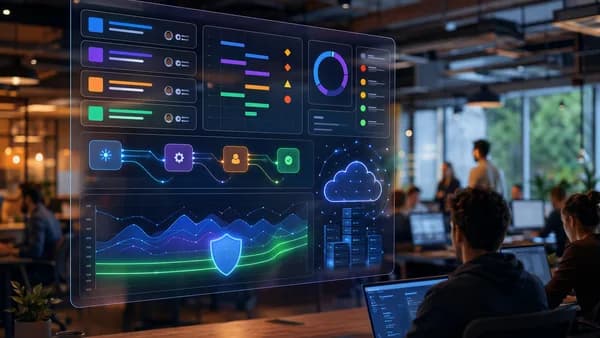
AI-Led Project Management Software is defined by its use of artificial intelligence and machine learning to automate core planning functions and make predictive recommendations. As analyzed in industry reports, these tools are built on autonomous planning engines that handle predictive scheduling, resource matching, and continuous monitoring. Their workflow is dynamic and data-driven, often initiated by a natural language prompt from a human.
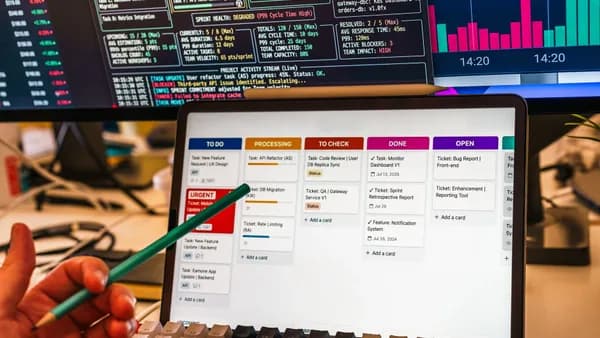
Human-Led Project Management Software is characterized by its configuration-first approach. The platform provides a structured canvas, like boards, lists, or Gantt charts, but the human project manager manually defines the workflow, sets dependencies, allocates resources, and interprets status updates. These tools enhance human oversight and collaboration but do not autonomously generate plans or redistribute work.
The table below summarizes the key operational differences based on the source data:
| Operational Aspect | AI-Led Software | Human-Led Software |
|---|---|---|
| Planning | Dynamic, data-driven, with real-time adjustments. Generates plans from prompts. | Fixed upfront or iteratively configured by the manager (e.g., Waterfall or Agile setup). |
| Decision-Making | Leverages predictive analytics for proactive suggestions (e.g., flagging delays). | Relies on manual human judgment, which can sometimes be delayed. |
| Resource Allocation | Automated optimization using real-time data and workload balancing algorithms. | Static assignments based on human estimates and manual adjustments. |
| Risk Management | Continuous forecasting and early detection via data analysis. | Pre-identified risks with manually created contingency plans. |
| Primary Advantage | Speed, consistency, and comprehensive data analysis. | Deep contextual understanding, political navigation, and creative flexibility. |
The future belongs not to project managers who are replaced by AI, but to those who use AI to deliver better work in less time., Analysis from PathHub AI (2026).
Spotlight on an AI-Led Platform: How Next-Generation Tools Operate
Platforms like Runn, Forecast.ai, or integrated AI suites such as the Asana AI Suite and Microsoft Viva Projects represent the AI-led frontier. Their power comes from a technical architecture designed for autonomy.
According to a 2026 technical analysis, at the heart of these tools are several key components:
- Predictive Scheduling Models: Trained on historical project data, these models can forecast task durations with reported accuracy rates approaching 95%, adjusting estimates in real-time as new data comes in.
- Resource Matching Algorithms: Using machine learning techniques, the system automatically matches tasks to team members based on skill proficiency, availability, and past performance.
- Autonomous Replanning Loops: AI agents continuously monitor project KPIs and can recalibrate timelines autonomously when deviations exceed set thresholds, notifying humans only when essential approval is needed.
- Meeting-to-Task Integration: Natural Language Processing (NLP) parses meeting transcripts to identify action items, deadlines, and owners, then automatically creates and assigns tasks.
A real-world use case from a solo founder illustrates the practical benefit. By using Notion's AI add-on (priced at $10 per member per month) to automate a content launch workflow, they configured a system where AI would automatically suggest the next step and assignee when a task status changed. This provided "predictive power," such as flagging that image creation was falling behind an accompanying blog post before the delay became critical.
Where AI-Led Tools Excel (Based on Data):
- Speed: Generating a detailed project plan in minutes versus the 2-5 days a human might need.
- Compliance & Stakeholder Analysis: Automatically identifying relevant regulations and systematically uncovering stakeholders a human might miss.
- Consistency & Monitoring: Delivering uniform quality and 24/7 monitoring of risks and compliance changes.
Spotlight on a Human-Led Platform: The Enduring Flexibility of ClickUp or Asana
Human-led platforms remain the bedrock for countless teams because they empower managerial expertise and adapt to any process. Tools like ClickUp, Asana (in its core configuration), and Trello succeed by providing a highly flexible structure that teams can mold.
These platforms excel at facilitating the core principles of Agile and other human-centric methodologies:
- Visual Workflow Management: Using Kanban boards to limit work-in-progress and provide a clear "big picture."
- Iterative Frameworks: Supporting Scrum with sprint planning, backlogs, and roles like Scrum Master.
- Customization: Allowing teams to build custom fields, statuses, and dependencies that reflect their unique process, not a prescribed AI model.
The strength here is human nuance. As research confirms, "AI does not know the corporate culture or informal power structures." An experienced PM using a tool like Asana knows how to configure the plan to involve a key stakeholder early, preventing political delays. These platforms are built for environments where the plan must serve creativity, stakeholder relationships, and complex organizational context.
Where Human-Led Tools Excel (Based on Data):
- Context & Culture: Incorporating deep domain knowledge and navigating informal power structures.
- Political Navigation: Managing the human elements and interests that often determine project success or failure.
- Creative Problem-Solving: Improvising and brainstorming novel solutions when projects hit unforeseen dead ends.
- Trust Building: Facilitating the personal stakeholder engagement and team motivation that algorithms cannot replicate.
Critical Comparison: Resource Allocation & Predictive Scheduling
This is perhaps the clearest battleground between the two approaches, with stark differences in methodology and outcome.
AI-Led Approach: This is a core strength. Platforms use constraint-based optimization and reinforcement learning to treat resource allocation as a continuous, dynamic puzzle. They analyze real-time workload indicators, skill matrices, and even "burnout risk scores" inferred from communication patterns to autonomously rebalance assignments. The goal is to maximize throughput and minimize idle time without overburdening any individual. For predictive scheduling, AI models digest historical performance data to forecast timelines and proactively flag potential delays with "confidence scores."
Human-Led Approach: Allocation is a manual, albeit informed, process. A manager assigns tasks based on estimates of availability and skill. While effective, this static view can lead to bottlenecks if someone is over-committed or a task takes longer than expected. Predictive scheduling relies on the manager's experience and manual tracking in Gantt charts. The human excels at adjusting for qualitative factors, like knowing "Developer A" is faster but needs oversight, while "Developer B" is more autonomous, but may lack the comprehensive data view to optimize at scale.
Enterprises across finance, healthcare, and manufacturing report average productivity gains of 20 to 30% within the first six months of AI-driven adoption, largely from optimized resource allocation and reduced schedule overruns.
Critical Comparison: Communication, Stakeholder Updates & Nuance
Managing information flow and expectations is where the human touch faces off against algorithmic efficiency.
AI-Led Approach: AI tools excel at automating routine communication. They can draft concise status reports for stakeholders, send personalized task reminders, and generate meeting summaries. This streamlines administrative overhead significantly. However, the source data highlights a key limitation: "Stakeholders trust people, not algorithms." AI may systematically identify all stakeholders but cannot personally convince, negotiate, or read the room during a tense meeting.
Human-Led Approach: Communication is the project manager's primary tool for building trust and alignment. A human can tailor the message, gauge reactions, address concerns with empathy, and politically navigate sensitive feedback. While platforms facilitate this communication through comment threads and @-mentions, the nuance, timing, and emotional intelligence are purely human. As one analysis puts it, managing the "politics & culture" of a project relies on human intuition and experience that is "not representable" to an AI.
Critical Comparison: Adaptability to Unplanned Changes & Creative Projects
How does each philosophy handle the inevitable curveballs and projects where the path isn't clear?
AI-Led Approach: AI tools have high adaptability to iterative changes within a defined framework. They can dynamically adjust schedules and reallocate resources when a task is delayed or a scope change is logged. However, their adaptability is bounded by their training data and algorithms. They "can optimise, but not improvise." Faced with a truly novel problem or a creative project that lacks historical precedents, AI may struggle to suggest viable paths forward.
Human-Led Approach: This is the domain of human strength. Humans excel at creative problem-solving and navigating the unknown. When a project hits a dead end, a human project manager can brainstorm, pivot strategy, and rally the team around a new direction. The flexibility of platforms like ClickUp allows the plan to be radically reconfigured on the fly to match this new creative vision. The human-led model assumes change and is built to be reconfigured by human insight.
Hybrid Models: Software That Successfully Balances AI and Human Input
The most compelling path forward, as strongly advocated across the source material, is a hybrid approach that leverages the best of both worlds. This isn't necessarily a single product, but often a strategic use of AI features within human-configured platforms.
The Hybrid Workflow Model:
- AI for the First Draft: The project manager enters a natural language description. The AI generates a complete plan with tasks, dependencies, and a timeline in 5-10 minutes.
- Human for Refinement: The manager enriches this draft with domain knowledge, adds political and cultural risks, and adjusts for team specifics. This refinement takes 2-4 hours, far less than building from scratch.
- AI for Continuous Monitoring: The AI automatically tracks compliance, watches for risk indicators, and monitors stakeholder-related activities.
- Human for Strategic Steering: The manager makes final decisions, manages key stakeholder relationships, leads the team, and provides creative direction.
Modern platforms are increasingly embracing this model. Notion's AI add-on brings automation to a highly customizable human-led database. Asana's AI suite integrates predictive features into its core task management. The goal is to use AI as a "collaborative partner" that handles the repetitive, data-intensive work, freeing the human project manager to focus on leadership, strategy, and nuance.
Decision Framework: 5 Questions to Determine Your Team's Best Fit
Use these questions, grounded in the research data, to guide your choice.
- What is your project's primary nature? Is it repetitive, data-rich, and process-driven (e.g., software devops, compliance reporting)? An AI-led tool can optimize it. Is it novel, creative, or highly dependent on client/stakeholder relationships (e.g., a marketing campaign, an R&D initiative)? A human-led platform offers necessary flexibility.
- What is your team's biggest pain point? Is it the slow, manual creation of plans and reports? An AI-led tool can deliver 80-95% time savings here. Is it miscommunication, low stakeholder buy-in, or demotivation? The trust-building and nuanced communication of human-led management is critical.
- How mature and standardized are your processes? Highly mature processes with ample historical data are perfect fuel for AI-led prediction and automation. If processes are still evolving or unique per project, a human-led tool you can configure as you go is safer.
- What is your tolerance for AI oversight? Are you comfortable with AI making assignment suggestions and auto-updating plans, knowing you must review for context? If yes, explore AI-led or hybrid tools. If you need absolute control and clear audit trails of human decisions, a human-led tool is better.
- What is your budget vs. personnel cost? AI-led tools often have pro plans starting around €15-20 per month per user, a fraction of the personnel cost saved. If you already have a skilled PM and need a tool to amplify their work, the investment in a robust human-led platform's collaboration features is justified.
The Bottom Line
The 2026 showdown between AI and human-led project management software reveals a landscape of collaboration, not replacement. AI-led tools deliver unmatched speed, consistency, and data-driven optimization for planning, scheduling, and risk detection. Human-led platforms provide the essential flexibility, contextual intelligence, and leadership required for creative work, political navigation, and building trust.
The most successful teams will not choose one over the other but will strategically integrate them. The future belongs to project managers who use AI to automate the administrative grind, generating plans in minutes, monitoring compliance, and flagging risks, thereby freeing themselves to focus on the uniquely human work of steering strategy, inspiring teams, and navigating complex stakeholder landscapes to drive project success.
FAQ
Does AI replace the project manager? No. According to 2026 analyses, AI replaces repetitive, time-intensive tasks like initial planning, compliance checks, and continuous risk monitoring. Strategic steering, stakeholder management, political navigation, and creative leadership remain firmly in the human domain.
How reliable are AI-generated project plans? Research indicates AI-generated plans provide a solid, comprehensive foundation that is correct in 80-90% of cases. They are comparable to an architectural draft and must be refined by the project manager with specific domain knowledge, organizational context, and an understanding of political risks.
What does AI-based project planning cost? At the time of writing, many tools offer free entry tiers. Pro plans for specialized AI project planning tools can start as low as €15-20 per month. Integrated AI features in broader platforms, like the Notion AI add-on, cost around $10 per member per month. This is typically significantly less than the value of the working time saved.
Can AI plan both Agile and traditional (Waterfall) projects? Yes. Modern AI tools are designed to support methodology-independent planning. They can generate plans for classic sequential (Waterfall) projects as well as support Agile frameworks by helping with sprint planning, backlog prioritization, and velocity forecasting. The hybrid approach works across methodologies.