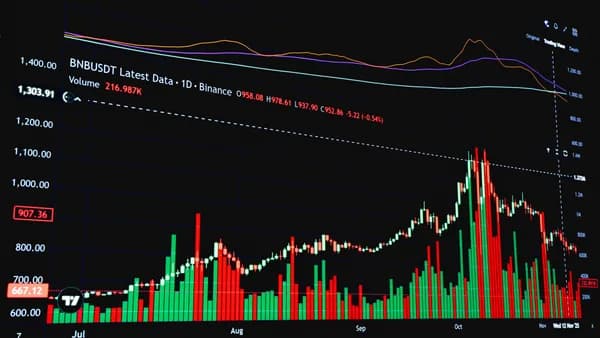
The copy trading vs algorithmic trading decision is not just about convenience. It is a choice between outsourcing decisions to another trader and automating a rules-based process you design, test, and monitor.
XOOMAR Intelligence
Analyst Take
Both models can reduce manual trading, but they create very different risks. Copy trading depends on a signal provider’s future behavior; algorithmic trading depends on strategy rules, data quality, execution, and system controls.
1. Copy Trading and Algorithmic Trading Defined
Copy trading is a form of social trading where your account automatically mirrors the trades of another trader, often called a signal provider. If the provider allocates 5% of their portfolio to Apple shares, your account may automatically allocate 5% of your own copied capital to the same trade, depending on platform settings and execution conditions.
Algorithmic trading, or algo-trading, uses computer programs to execute trades based on predefined rules. These rules may include entry conditions, stop-loss levels, position sizing, and exit triggers.
Key distinction: Copy trading sells access to another trader’s behavior. Algorithmic trading sells, or enables, a repeatable decision process.
That distinction matters because the two models expose you to different sources of risk:
| Automation Model | What It Follows | Main Dependency | Main Appeal | Main Risk |
|---|---|---|---|---|
| Copy trading | Another trader’s buy and sell decisions | Signal provider behavior, discipline, and risk appetite | No coding required | Opaque decision-making and dependency on another person |
| Algorithmic trading | Rules, models, or systems | Strategy design, data, execution, and controls | More control and transparency | Technical complexity, overfitting, and system failure |
The phrase copy trading vs algorithmic trading is often searched by traders who want automation but are unsure how much control they should keep. The right answer depends heavily on skill level, risk tolerance, and how much transparency you need before committing capital.
2. How Copy Trading Platforms Work
Copy trading platforms let users browse and follow signal providers. According to the source data, platforms such as eToro, ZuluTrade, and Darwinex allow users to evaluate providers using metrics such as historical return, drawdown, risk score, and number of followers.
Once you allocate funds to a signal provider, trades are copied automatically and proportionally. If the provider opens or closes a position, your account mirrors the action.
Typical copy trading workflow
- Browse providers: Review historical return, drawdown, risk score, and follower count.
- Choose allocation: Decide how much of your capital to assign.
- Copy trades automatically: The platform replicates trades in proportion to your account size.
- Monitor performance: Track net returns, fees, drawdowns, and slippage.
- Adjust or stop copying: Reallocate capital if the provider’s behavior or results change.
What makes copy trading attractive
Copy trading is accessible because it does not require coding or strategy development. A beginner can start by choosing providers rather than building a model from scratch.
The source data notes that copy trading can also allow diversification across multiple signal providers. That can reduce reliance on a single trader, although it does not eliminate the underlying risks of copied behavior.
What makes copy trading risky
Copy trading depends on an external trader’s future actions. Historical performance may not explain how that trader will behave under pressure, after losses, or with more assets following them.
Important copy trading risks include:
- Behavioral risk: A previously disciplined provider may start over-leveraging after a losing streak.
- Opacity: You may see summary statistics and open positions, but not the full reasoning behind each trade.
- Slippage: Your execution price may differ from the provider’s execution price.
- Fees: Platform costs may include spreads, performance fees, or account fees.
- Past performance risk: Historical results are not a reliable guarantee of future returns.
Critical warning: In copy trading, you are not just copying trades. You are copying another trader’s future discipline, psychology, and risk appetite.
3. How Algorithmic Trading Tools Work
Algorithmic trading tools automate trades using predefined rules. For retail traders in 2026, the source data identifies three common approaches:
- Trading robots or Expert Advisors on MetaTrader 4/5
- Python scripts using broker REST APIs such as Interactive Brokers, Alpaca, or DEGIRO
- No-code platforms such as 3Commas or Capitalise.ai
Unlike copy trading, algorithmic trading is not primarily about following another person. It is about turning a trading idea into a system.
Typical algorithmic trading workflow
- Define rules: Specify entry, exit, stop-loss, and position-sizing logic.
- Backtest the strategy: Test against historical data before live trading.
- Deploy the system: Run through a broker API, trading platform, or no-code tool.
- Monitor live execution: Watch slippage, errors, drawdowns, and rule adherence.
- Refine governance: Review performance reporting, model assumptions, and operational controls.
What makes algo-trading attractive
Algorithmic trading offers more control and transparency than copy trading. You define what the strategy does, when it trades, and how much it risks.
An algorithmic strategy can also be documented, tested, monitored, and constrained. That does not make it automatically safer, but it does make the decision process more inspectable.
What makes algo-trading risky
Algorithmic trading has its own failure modes. The source data highlights overfitting, look-ahead bias, curve fitting, data problems, execution issues, and structural disadvantages for retail traders.
Key algorithmic trading risks include:
- Overfitting: A strategy may look excellent on historical data but fail in live markets.
- Look-ahead bias: Backtests can accidentally use information that would not have been available at the time.
- Execution risk: Live fills may differ from simulated fills.
- Data risk: Poor-quality or incomplete data can distort results.
- Technical complexity: Building and maintaining systems requires knowledge.
- Retail constraints: Individual traders may face higher latency, smaller order sizes, and limited access to alternative data compared with institutions.
Algorithmic trading can remove some emotional decision-making, but it does not remove the need for oversight.
4. Key Differences in Control, Transparency, and Skill Required
The most important comparison in copy trading vs algorithmic trading is control. Copy trading gives you control over who to follow and how much to allocate. Algorithmic trading gives you control over the rules themselves.
| Factor | Copy Trading | Algorithmic Trading |
|---|---|---|
| Decision source | Signal provider | Rules, models, or systems |
| Control level | Choose provider and allocation | Define entries, exits, stop-losses, position sizing, and exits |
| Transparency | Often limited to statistics and open positions | Strategy logic can be documented and tested |
| Skill required | Low technical barrier | Requires technical, statistical, or platform knowledge |
| Main weakness | Reliance on provider behavior | Risk of flawed design or overfitting |
| Monitoring need | Provider behavior, drawdown, fees, slippage | Model assumptions, execution, data, and controls |
Control
With copy trading, you are not controlling each trade. You are choosing a person or strategy provider to follow.
With algorithmic trading, you can set specific parameters such as stop-loss rules, position size, and exit triggers. This makes it better suited to traders who want to define risk before execution.
Transparency
Copy trading platforms may show performance summaries, drawdowns, risk scores, follower counts, and open positions. However, the underlying decision-making process is often opaque.
Algorithmic trading is more inspectable because the rules can be written down, tested, reviewed, and constrained. That transparency can help traders understand why a position was opened or closed.
Skill required
Copy trading has a lower barrier to entry because no coding is required. Algorithmic trading requires more technical knowledge, especially if using Python scripts, broker APIs, or custom backtesting frameworks.
No-code platforms can reduce the technical barrier, but they do not eliminate the need to understand strategy logic and risk controls.
5. Risk Management: Drawdowns, Leverage, and Strategy Drift
Both copy trading and algorithmic trading can produce severe drawdowns. A drawdown is a temporary decline in an account from a previous peak.
The source data emphasizes that no strategy wins all the time. Markets move in cycles, performance ebbs and flows, and losses are part of trading.
Drawdowns in copy trading
In copy trading, drawdowns are linked to the signal provider’s behavior. A provider may change position sizing, increase leverage, deviate from their usual approach, or react emotionally after losses.
This creates a risk sometimes described as strategy drift: the trader you started copying may not behave the same way later.
Drawdowns in algorithmic trading
In algorithmic trading, drawdowns are tied to strategy parameters and market conditions. Because rules can be documented and tested, drawdowns can be stress-tested in advance.
However, a backtest does not guarantee live performance. A strategy can fail if assumptions break, market conditions change, or the system was overfit to historical data.
Leverage and revenge trading
The source data on drawdowns highlights a key psychological risk: after losses, traders may try to recover quickly by increasing position size, taking weaker setups, or moving stops. This is often called revenge trading.
Copy trading users are exposed to the possibility that a signal provider behaves this way. Algorithmic traders are exposed if they manually override systems or modify rules impulsively.
Risk management principle: Set a maximum drawdown you can tolerate before entering a trade or series of trades. If that limit is reached, the plan should determine the action—not hope that the trade will reverse.
Practical risk controls to compare
| Risk Control | Why It Matters | Copy Trading Application | Algorithmic Trading Application |
|---|---|---|---|
| Maximum drawdown limit | Helps protect capital during losing periods | Stop copying or reduce allocation when limits are breached | Pause or reduce strategy exposure |
| Position sizing | Prevents one trade from dominating results | Review provider sizing behavior | Code sizing rules directly |
| Leverage monitoring | Limits amplified losses | Watch for provider over-leveraging | Set leverage or exposure constraints |
| Performance review | Separates temporary drawdown from process failure | Compare provider behavior against prior pattern | Compare live results against tested expectations |
| Emotional discipline | Prevents impulsive recovery attempts | Avoid chasing recent top performers | Avoid changing rules mid-drawdown without review |
6. Costs to Compare: Spreads, Subscriptions, Performance Fees, and Data
Cost structures differ significantly between copy trading and algorithmic trading. The source data identifies spreads, performance fees, and account fees as common copy trading costs. It also notes that algorithmic trading costs are often tied to brokerage commissions, data, platforms, and tools.
Copy trading costs
Copy trading platforms may earn through:
- Spreads: A markup between buy and sell prices.
- Performance fees: The source data states these are typically 20–30% of profits.
- Account fees: Platform-level charges may apply.
- Slippage: Not always shown as a direct fee, but it can reduce net returns.
The source data gives an example: if a signal provider returns 15%, but the platform charges a 20% performance fee, a spread markup, and an account fee, the actual net return might be 8–10%.
That is why net-of-fees performance matters more than headline returns.
Algorithmic trading costs
Algorithmic trading may involve:
- Brokerage commissions: Direct trading costs.
- Platform costs: Depending on the tool used.
- Data costs: Historical and live data may affect testing and execution.
- Infrastructure costs: Hosting, monitoring, or API usage may apply, depending on setup.
The source data notes that brokerage commissions have fallen dramatically in recent years, but it does not provide universal pricing. Traders should check actual broker and platform terms at the time of writing.
Performance measurement: TWRR and benchmarks
The source data emphasizes that the time-weighted rate of return, or TWRR, is the industry-standard way to evaluate investment managers because it removes distortion caused by cash flows in and out of the account.
It also states that automated strategies should be measured net of fees and compared with relevant benchmarks. For example:
- Mixed equity strategy: Compare with a global equity index.
- Sector-specific algo: Compare with the appropriate sector ETF.
- General comparison: The source data mentions comparing strategy value against a simple S&P 500 ETF costing 0.07% per year.
DonkyCapital is cited in the source data as a tool that can import transactions from broker CSVs and APIs, calculate real TWRR including fees and cash flows, and compare performance against configurable benchmarks.
| Cost or Measurement Item | Copy Trading | Algorithmic Trading |
|---|---|---|
| Spreads | Common platform revenue source | Depends on broker and market |
| Performance fees | Typically 20–30% of profits according to source data | Not inherent unless using a paid service |
| Brokerage commissions | May apply depending on platform | Direct cost component |
| Data costs | Usually less visible to user | May be important for testing and live systems |
| Slippage | Can occur between provider execution and your execution | Can occur between model signal and live fill |
| Fair performance metric | Net-of-fees TWRR | Net-of-fees TWRR |
7. Best Use Cases for Beginner, Intermediate, and Advanced Traders
The best automation model depends on skill level, desired control, and risk tolerance. There is no universal winner in copy trading vs algorithmic trading.
Beginner traders
Copy trading may appeal to beginners because it requires no coding and has a lower barrier to entry. The source data states that some copy trading platforms allow users to start with €200–500, and eToro requires a €200 minimum for copy trading.
However, the same source notes that very small accounts may suffer disproportionately from minimum lot size constraints, spread costs, and performance fees. It describes €2,000–5,000 as a more realistic starting amount for meaningful diversification across multiple signal providers.
For beginners with no coding experience, the source data also cautions that a passive index fund strategy often outperforms both copy trading and algo-trading.
Intermediate traders
Intermediate traders may be better positioned to compare both models. They can use copy trading selectively while learning how to evaluate performance, drawdowns, fees, and provider behavior.
They may also explore no-code algo tools such as 3Commas or Capitalise.ai, or platform-based automation using MetaTrader 4/5 Expert Advisors.
The key for intermediate traders is measurement. Without TWRR, net-of-fees analysis, and benchmarking, it is difficult to know whether automation is genuinely adding value.
Advanced traders
Advanced traders who understand coding, backtesting, and risk controls may prefer algorithmic trading. They can define exact rules, test assumptions, and build monitoring processes.
Advanced users may use broker APIs from platforms such as Interactive Brokers, Alpaca, or DEGIRO, or develop Python-based systems.
Still, advanced does not mean risk-free. Overfitting, live execution gaps, and model drift remain serious concerns.
| Trader Type | Better Starting Fit | Why | Main Caution |
|---|---|---|---|
| Beginner | Copy trading may be easier | No coding required | Provider behavior is opaque and future performance uncertain |
| Intermediate | Either model, with measurement | Can compare costs, drawdowns, and performance | Must track net returns and benchmarks |
| Advanced | Algorithmic trading may fit better | More control, testing, and rule design | Overfitting and execution risk remain |
8. Questions to Ask Before Choosing an Automation Tool
Before choosing any automation model, ask questions that expose control, transparency, cost, and risk.
Questions for copy trading platforms
- Provider disclosure: What historical return, drawdown, risk score, and follower data are available?
- Behavioral consistency: Has the provider changed leverage, asset mix, or position sizing?
- Fee structure: Are there spreads, performance fees, or account fees?
- Slippage: How closely do copied trades match the provider’s execution?
- Diversification: Can you allocate across multiple signal providers?
- Regulation: Does the platform hold the relevant authorization where you live?
Questions for algorithmic trading tools
- Rule clarity: Can you explain exactly when the strategy enters and exits?
- Backtest quality: Does the test avoid look-ahead bias and curve fitting?
- Risk limits: Are stop-loss, position sizing, and maximum drawdown controls defined?
- Execution monitoring: Can you track slippage and failed orders?
- Data reliability: Is the historical and live data suitable for the strategy?
- Governance: Is there performance reporting and operational transparency?
Questions for both models
- Net performance: What is the return after all fees and costs?
- Benchmark: What index or strategy is the fair comparison?
- Drawdown tolerance: What loss level would cause you to reduce or stop?
- Tax treatment: How are gains taxed in your country of residence?
- Exit plan: What conditions would make you stop using the tool?
Featured-snippet answer: Choose copy trading if you want lower technical complexity and are comfortable evaluating signal providers. Choose algorithmic trading if you want more control, can handle technical requirements, and are prepared to test, monitor, and govern a rules-based strategy.
9. When Copy Trading May Be Better Than Algo Trading
Copy trading may be the better fit when the trader prioritizes simplicity over control.
It can be useful for someone who wants automated execution but does not have the technical skills to build or test a strategy. The ability to browse providers by return, drawdown, risk score, and follower count can make the selection process more accessible.
Copy trading may fit if:
- You cannot code: Copy trading does not require programming knowledge.
- You want fast setup: You can allocate capital to providers without building a model.
- You want provider diversification: Some platforms allow allocation across multiple signal providers.
- You accept limited transparency: You are comfortable seeing summarized statistics rather than full strategy logic.
- You prefer external decision-making: You want to follow another trader instead of designing your own rules.
But copy trading is not passive safety
Copy trading can feel easy, but the user still carries risk. Returns depend on the signal provider’s future decisions, platform execution, and fees.
A trader who performs well historically may behave differently under stress, with more followers, or after a losing streak. This is why provider monitoring matters.
Copy trading may be better than algo trading for a beginner who wants automation without coding, but it is not a substitute for risk management.
10. When Algorithmic Trading Tools May Be the Better Fit
Algorithmic trading may be the better fit when the trader values control, transparency, and repeatability.
If you want to define rules for entries, exits, stop-losses, and position sizing, algo-trading provides more direct control than copy trading. It also allows backtesting before live deployment.
Algorithmic trading may fit if:
- You want full rule control: You define the decision process.
- You need transparency: You can inspect why trades occur.
- You can test before trading live: Strategies can be backtested against historical data.
- You can monitor systems: You are prepared to track execution, data, and drawdowns.
- You understand technical risk: You can recognize overfitting, look-ahead bias, and model assumptions.
But algorithmic trading is not automatically safer
The source data is clear: a documented and tested strategy is more inspectable, but not automatically safer. Risk comes from assumptions, data, execution, and controls.
Retail algorithmic traders also face disadvantages versus institutional traders, including higher latency, smaller order sizes, and limited access to alternative data.
The strongest case for algorithmic trading is not that it guarantees better returns. It is that the decision process can be defined, tested, monitored, and constrained.
Bottom Line
The copy trading vs algorithmic trading choice comes down to what kind of risk you are willing to accept.
Copy trading is easier to start and requires no coding, but it exposes you to another trader’s behavior, psychology, leverage decisions, and future discipline. Algorithmic trading offers more control and transparency, but it requires technical skill and careful attention to overfitting, data, execution, and model governance.
For beginners, copy trading may be more accessible, though the source data cautions that passive index investing can often be a better baseline comparison. For systematic and technically capable traders, algorithmic trading may offer better long-term control and cost efficiency—provided the strategy is tested, monitored, and measured net of fees.
In both cases, performance should be evaluated using TWRR, net of all costs, and compared against a relevant benchmark. Automation does not remove risk; it changes where the risk comes from.
FAQ
Is copy trading better than algorithmic trading for beginners?
Copy trading has a lower barrier to entry because it requires no coding. Beginners can browse signal providers and allocate capital without building a strategy.
However, copy trading transfers decision-making to a provider whose future performance is uncertain. The source data also notes that for beginners with no coding experience, a passive index fund strategy often outperforms both copy trading and algo-trading.
What is the minimum capital needed for copy trading?
The source data states that many copy trading platforms allow users to start with €200–500, and eToro requires a €200 minimum for copy trading.
However, very small accounts can be affected more heavily by minimum lot size constraints, spread costs, and performance fees. The source data describes €2,000–5,000 as a more realistic starting amount for meaningful diversification across multiple signal providers.
Is algorithmic trading legal for retail traders?
According to the source data, retail investors generally do not need regulatory authorization to run their own algorithm on their own account. It is treated as a method of placing orders.
Providing algo-trading as a service to others, or running certain high-frequency trading activities, may require authorization from the relevant regulator.
How should I measure copy trading or algo-trading performance?
The source data identifies time-weighted rate of return, or TWRR, as the fair way to measure automated strategy performance because it removes distortions from deposits and withdrawals.
Returns should also be measured net of fees and compared with a relevant benchmark, such as a global equity index for a mixed equity strategy or a sector ETF for a sector-specific strategy.
Are copy trading and algorithmic trading regulated?
In Europe, fully automated copy trading may fall under the MiFID II framework when the investor authorizes trades to be executed without case-by-case approval. The source data notes that platforms such as eToro operate under a CySEC license and that ZuluTrade is regulated in Greece.
For algorithmic trading, personal use generally does not require authorization, but offering it as a service or conducting certain high-frequency activities may require regulatory approval.
Which is safer: copy trading or algorithmic trading?
Neither model is automatically safer. Copy trading risk comes from the signal provider’s behavior, risk appetite, discipline, and fees. Algorithmic trading risk comes from strategy design, data quality, execution, assumptions, and controls.
The safer choice depends on whether you are better equipped to evaluate a person’s trading behavior or to design and monitor a rules-based system.
Sources & References
Content sourced and verified on June 17, 2026
- 1Copy Trading vs Algorithmic Trading | Differences and Risks
https://www.algorithmictradingplatform.com/blogs/copy-trading-vs-algorithmic-trading/
- 2Copy Trading vs Algo-Trading: Which Strategy Wins?
https://www.donkycapital.com/en/guides/copy-trading-vs-algo-trading-guide
- 3Copy Trading vs Algorithmic Trading: Which Is Better for You?
https://numkts.trading/the-psychology-of-losing-streaks-how-professional-traders-survive-drawdowns-without-revenge-trading/
- 4Copy Trading vs Algorithmic Trading: A Beginners Guide
https://www.tradingcup.com/learn/copy-trading-vs-algorithmic-trading-beginners-guide
- 5Key Differences: Algo Trading Bot vs. Copy Trading - nurp.com
https://nurp.com/wisdom/trading-bot-vs-copy-trading-understanding-the-key-differences/
- 6Algorithmic Trading & Copy Trading: Why These Two Strategies Of ...
https://sg.finance.yahoo.com/news/algorithmic-trading-copy-trading-why-040045148.html

Written by
XOOMAR
Data desk
XOOMAR is a capital markets software and data company. Every brief on this site starts from a dataset the company collects itself from primary sources (CFTC, SEC EDGAR, FINRA, the Federal Reserve, exchange APIs) and names the numbers it is built on, with a link to the data page so you can check them. Briefs are reviewed before they go out and corrected in place when the data is revised.