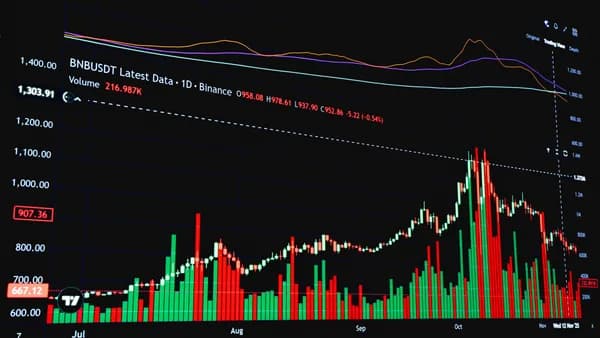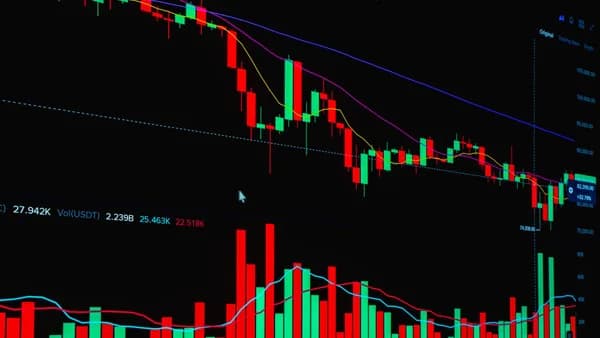
Choosing the best crypto exchanges for limit orders comes down to more than whether a platform has a “Limit” button. Active traders need predictable fills, deep liquidity, advanced order controls, and a fee model that does not punish patient maker-style execution.
XOOMAR Intelligence
Analyst Take
Below is a research-grounded roundup of centralized and decentralized platforms mentioned in the source data, with a focus on limit orders, liquidity, order types, execution workflow, and fees where the sources provide specific details. Where exact maker-taker fee schedules are not provided in the research, this guide avoids inventing numbers and explains what traders should verify at the time of writing.
What Makes a Crypto Exchange Good for Limit Orders
A crypto exchange is good for limit orders when it helps traders control price without sacrificing too much execution quality. A limit order tells the venue to buy or sell only at a specified price or better. That gives the trader price control, but it does not guarantee execution.
A market order says “get me in now.” A limit order says “get me in only if price reaches my level.”
That trade-off is central. According to the research, limit orders are most useful when traders want to plan entries at support or retracement zones, scale into positions, place take-profit levels in advance, or reduce emotional decision-making during volatile sessions.
A strong limit-order exchange typically combines:
- Deep Liquidity: Major pairs should have enough depth to reduce partial fills, wide spreads, and sudden “air gaps.”
- Tight Spreads: Narrow bid-ask spreads improve execution quality, especially for traders placing orders close to the current market.
- Fast Matching: Active traders need reliable order matching during volatility spikes.
- Advanced Order Controls: Useful controls include stop-limit, OCO, post-only, reduce-only, and attached TP/SL.
- Chart-to-Order Workflow: Traders benefit when they can plan, place, edit, and cancel orders without jumping between tools.
- Risk Controls: Features like reduce-only and OCO help prevent accidental position flips or unmanaged open orders.
Limit orders are not automatically “safer” than market orders. They reduce the chance of paying a bad price, but they increase the chance of missing the trade.
| Order Type | Main Priority | Fill Certainty | Price Control | Best Used For |
|---|---|---|---|---|
| Market order | Speed | High | Low | Urgent execution |
| Limit order | Price | Lower | High | Planned entries and exits |
| Stop-market | Triggered execution | High after trigger | Low | Stop losses where exit matters most |
| Stop-limit | Trigger plus price control | Lower | High | Controlled exits or breakout entries |
| OCO | Conditional trade management | One side fills | Depends on legs | Take-profit and stop-loss together |
For active traders, the best platform is usually the one that makes disciplined execution easier: define the level, set the order, attach risk controls, and manage the trade from one clear interface.
Key Features to Compare: Maker Fees, Liquidity, and Execution Quality
When comparing crypto exchanges for limit orders, focus on the features that directly affect whether your order fills cleanly and cost-effectively.
Maker Fees and Post-Only Controls
Limit orders often act as maker orders when they add liquidity to the book instead of immediately matching against existing orders. The research notes that limit orders are “usually maker fee” orders, while market orders are “usually taker fee” orders.
However, not every limit order becomes a maker order. If your limit price crosses the spread and immediately executes, it can behave like a taker order.
That is why post-only is important. Post-only ensures your limit order adds liquidity rather than taking it. This can help traders avoid accidental market-like fills and maintain more predictable fee behavior.
| Feature | Why It Matters for Limit Orders |
|---|---|
| Post-Only | Helps ensure the order adds liquidity rather than taking it |
| Maker/Taker Fee Schedule | Determines whether patient limit-order execution is cheaper than aggressive execution |
| Fee Discounts or Tiers | Can matter for high-volume traders, though exact rates must be verified on each exchange |
| Platform Fees | Relevant on DEX aggregators such as 1inch and Matcha where source data gives specific fee details |
The sources provide specific fee information for some decentralized platforms:
| Platform | Fee Detail Confirmed in Source Data |
|---|---|
| 1inch | Limit order protocol charges no fees |
| Matcha | Charges no platform fees for trades |
| Matcha via 0x / DEX liquidity | Users may pay Ethereum gas fees and a 0x protocol fee if 0x liquidity is sourced |
| Uniswap pools via Matcha example | Many Uniswap pools charge 0.3% per trade |
For centralized exchanges such as Bybit, Bitget, and MEXC, the research discusses suitability for limit orders and charting workflows, but it does not provide exact maker-taker fee schedules. Active traders should verify current maker and taker fees directly on each platform before funding an account.
Liquidity and Spread Quality
Limit orders depend heavily on market depth. In thin markets, a limit order may not fill, may partially fill, or may sit at a level that price only touches briefly.
The research repeatedly warns that thin liquidity can create:
- Partial Fills: Only part of the order matches.
- Wide Spreads: Your chosen level may be less realistic than it appears.
- Skipped Levels: Fast moves can jump over orders or trigger stop-limit orders that fail to execute.
- Bad Market-Order Fills: If you switch to a market order in a thin book, slippage can be significant.
For strategies that depend on precision, favor liquid pairs. The research specifically notes that highly liquid markets with tight spreads, such as major pairs like BTC and ETH, are generally better suited to urgent execution than thin markets.
Execution Quality and Trading Interface
Execution quality is not only about the matching engine. The trading interface matters because it affects how quickly traders can place, edit, or cancel orders.
Useful workflow features include:
- Order Book / Ladder: Helps traders see depth near their target level.
- Clear Position Panel: Important for derivatives and reduce-only exits.
- Hotkeys Where Available: Helpful for fast order changes.
- Alerts and Watchlists: Useful for breakout setups, range trades, and retests.
- Chart-to-Order Integration: Lets traders convert analysis into orders quickly.
The best limit-order platform is not necessarily the one with the most features. It is the one that helps you execute your strategy without operational mistakes.
Best Overall Exchanges for Limit Order Trading
The source data separates platforms into two broad groups: centralized exchanges with trading-focused workflows and decentralized exchanges with on-chain limit order support. The best choice depends on whether you prioritize speed, custody model, market breadth, or advanced order types.
Overall Comparison of Mentioned Platforms
| Platform | Type | Best Fit Based on Source Data | Limit Order Support | Notable Details |
|---|---|---|---|---|
| Bybit | Centralized exchange | Trading-first UI and fast execution workflows | Mentioned for limit-order trading | Streamlined interface for placing, editing, and canceling orders quickly |
| Bitget | Centralized exchange | Balanced active-trading experience | Mentioned for limit-order trading | Broad features for daily trading routines |
| MEXC | Centralized exchange | Broad altcoin access and scanning opportunities | Mentioned for limit-order trading | Useful for traders targeting smaller-cap moves |
| 1inch | DEX aggregator | Multi-chain DEX limit orders and conditional orders | Yes | No-fee limit order protocol, dynamic pricing, conditional orders |
| Uniswap | DEX / AMM | Popular on-chain swapping with integrated limit orders | Yes | Limit option available in app interface |
| Jupiter | Solana DEX aggregator | Solana swaps, limit orders, DCA | Yes | Uses Solana’s high-performance, low-latency network |
| dYdX | Decentralized derivatives exchange | Leverage, margin, perpetuals, advanced orders | Yes | Supports Good Til Time, Immediate Or Cancel, stop, and take-profit order types |
| Matcha | DEX aggregator | Ethereum ecosystem aggregation | Yes | Taps more than 130 liquidity sources; no platform fees |
| CrowdSwap | Cross-chain DEX | Cross-chain limit orders | Yes | Built-in limit orders across supported chains |
1. Bybit — Best for Trading-First Workflows
The research identifies Bybit as a practical fit for traders who prioritize a trading-focused interface and fast execution workflows. A streamlined UI matters for limit orders because active traders often need to place, edit, and cancel orders quickly during volatility.
Bybit is framed as a strong starting point for traders who want a smooth order workflow. The source does not provide exact maker-taker fees, available order types, or liquidity statistics, so those should be verified directly on the exchange at the time of writing.
Best for:
- Active Traders: Traders who value a fast, trading-first interface.
- Volatility Management: Traders who need to adjust orders quickly.
- Chart-Based Execution: Traders who want a smoother workflow from level planning to order placement.
2. Bitget — Best All-Around Active Trading Option
The source data positions Bitget as a balanced option for active traders who want strong execution with convenient tools that support daily trading routines.
This makes Bitget relevant for traders who do not want to specialize only in scalping or altcoin scanning. Instead, it may suit traders looking for a broader trading environment. As with Bybit, exact maker-taker fees and detailed order-type availability are not provided in the research and should be checked before trading.
Best for:
- Daily Active Traders: Traders who want a broad, practical workflow.
- Balanced Usage: Traders who want more than a narrow execution tool.
- Routine-Based Trading: Traders who rely on watchlists, alerts, and repeatable setups.
3. MEXC — Best for Altcoin Limit-Order Setups
The research highlights MEXC for traders who want access to a wide variety of altcoins and scanning opportunities. This matters because some limit-order strategies focus on smaller-cap moves, volatility rotations, or less crowded markets.
The trade-off is that smaller-cap markets often carry more liquidity risk. The source data warns that in thin markets, traders may face partial fills, wide spreads, or sudden price jumps.
Best for:
- Altcoin Traders: Traders looking for broader token coverage.
- Volatility Rotations: Traders scanning for smaller-cap setups.
- Patient Limit Orders: Traders willing to wait for price rather than chase.
If your strategy depends on precision, broad listings are not enough. Always check spread, depth, and recent trading behavior before placing a limit order on a smaller-cap pair.
4. 1inch — Best DEX Aggregator for Flexible Limit Orders
1inch is a decentralized exchange aggregator that sources liquidity from multiple DEXes to find efficient token swap routes. It is best known on Ethereum but also supports chains such as BNB Chain, Polygon, and Avalanche.
Its limit order protocol is especially notable because the source states that it charges no fees, supports dynamic pricing, and allows conditional orders. The research also says 1inch supports order types such as stop losses and trailing stops.
Traders can access limit orders in the 1inch DApp by selecting the “Limit” tab next to the default “Swap” option. Expiration periods can be as short as 1 minute or as long as 3 years.
Best for:
- DEX Users: Traders who prefer decentralized execution.
- Conditional Orders: Traders who want stop loss or trailing stop functionality on a DEX.
- Multi-Chain Trading: Users active across Ethereum, BNB Chain, Polygon, and Avalanche.
5. Jupiter — Best Solana-Based DEX Aggregator for Limit Orders
Jupiter is a token swap aggregator on the Solana blockchain. The source says Jupiter uses Solana’s high-performance and low-latency network to handle a large volume of transactions with minimal fees.
Its key features include swaps at the best available price, limit orders at desired prices, and automated investing through Dollar Cost Averaging (DCA). The research notes that Jupiter offers a user experience closer to centralized exchanges while avoiding the counterparty risks associated with centralized platforms.
Best for:
- Solana Traders: Users focused on Solana ecosystem tokens.
- DEX Limit Orders: Traders who want CEX-like workflow on-chain.
- DCA Users: Traders combining limit orders with automated investing.
Best Low-Fee Exchanges for Maker Orders
Low-fee limit-order trading requires careful interpretation. The research provides clear fee details for several DEX platforms, but it does not provide full centralized maker-taker schedules for Bybit, Bitget, MEXC, Binance, Kraken, or Gemini.
For that reason, the most evidence-backed low-fee discussion is around platforms where the source data gives specific fee information.
Low-Fee Platforms Mentioned in the Research
| Platform | Why It Stands Out for Fees | Important Caveat |
|---|---|---|
| 1inch | Limit order protocol charges no fees | Network and execution conditions still matter |
| Matcha | Charges no platform fees | Users may pay Ethereum gas and 0x protocol fees if applicable |
| Jupiter | Source describes Solana as low-latency with minimal fees | Exact trading fee schedule is not provided |
| Uniswap | Integrated limit orders available | Many Uniswap pools charge 0.3% per trade, according to Matcha example |
| Centralized exchanges | Limit orders are usually maker-fee orders | Exact maker/taker rates must be verified on the platform |
1inch for No-Fee DEX Limit Order Protocol
For DEX traders, 1inch has one of the clearest fee advantages in the source data: its limit order protocol charges no fees. It also supports dynamic pricing and conditional orders, which gives active traders more flexibility than a basic swap interface.
This does not mean trading is always costless. Traders still need to consider network conditions, liquidity route quality, and token-specific risks.
Matcha for No Platform Fees and Aggregated Liquidity
Matcha taps into more than 130 liquidity sources and charges no platform fees for trades. The actual cost depends on the route. Users may pay Ethereum gas fees and a 0x protocol fee if liquidity from 0x is used.
The source also notes that many Uniswap pools charge 0.3% for every trade. Since Matcha may source liquidity from different DEXes, final costs depend on where liquidity comes from.
Maker Orders on Centralized Exchanges
On centralized exchanges, limit orders are typically associated with maker fees when they add liquidity. The key tool here is post-only, which prevents a limit order from accidentally executing as a taker order.
Because the source data does not provide exact maker-taker rates for Bybit, Bitget, or MEXC, traders should compare current fee pages directly before choosing a venue. This is especially important for high-frequency traders, market makers, and scalpers, where small fee differences can materially affect results.
Best Platforms for Advanced Order Types
Advanced order types matter because basic limit and market orders do not cover every trading scenario. Traders may need stop-loss automation, take-profit brackets, trailing exits, or safeguards against accidental position flips.
Advanced Order-Type Comparison
| Platform | Advanced Order Features Confirmed in Source Data | Best For |
|---|---|---|
| dYdX | Limit orders with Good Til Time and Immediate Or Cancel; stop limit, stop market, take profit limit, take profit market | Derivatives and leverage traders |
| 1inch | Conditional orders, stop losses, trailing stops, dynamic pricing | DEX traders needing flexible conditions |
| Jupiter | Limit orders and DCA | Solana traders combining execution and automation |
| Matcha | Limit orders with custom expiration periods; MEV protection; instant gas-free swaps | Ethereum ecosystem DEX users |
| CrowdSwap | Built-in cross-chain limit orders | Cross-chain DeFi traders |
| Bybit / Bitget / MEXC | Mentioned as practical platforms for limit orders and charting workflows | CEX traders; exact order controls should be verified |
dYdX — Strongest Source-Backed Advanced Order Set
dYdX is one of the clearest fits for advanced order types in the research. It focuses on leverage trading and gives users access to perpetual contracts, margin trading, and spot trading.
The platform supports:
- Limit Orders: Including Good Til Time and Immediate Or Cancel options.
- Stop Limit Orders: Triggered orders with price control.
- Stop Market Orders: Triggered orders prioritizing execution.
- Take Profit Limit Orders: Profit-taking with a specified price.
- Take Profit Market Orders: Profit-taking that prioritizes execution after trigger.
- Market Orders: Immediate execution.
The newest version operates on dYdX Chain, a custom-built layer 1 blockchain in the Cosmos ecosystem. The source notes that users can get started with Ethereum-compatible wallets such as MetaMask.
1inch — Best DEX for Conditional Limit Orders
1inch stands out because its limit order protocol supports conditional orders, including stop losses and trailing stops. That is more advanced than a simple “buy at this price” or “sell at this price” DEX interface.
Expiration flexibility is also a practical advantage. Traders can set an order to expire in as little as 1 minute or as long as 3 years, which supports both short-term and long-term strategies.
Matcha — Strong Ethereum Ecosystem Aggregator
Matcha supports limit orders with custom expiration periods and pulls from more than 130 liquidity sources. It also offers advanced features such as MEV protection and instant gas-free swaps.
For Ethereum ecosystem traders, Matcha’s aggregation model can be useful because the final trade route may draw from different liquidity sources. The trade-off is that actual costs depend on which DEXes provide liquidity.
Advanced Order Types Traders Should Understand
| Order Type | What It Does | Key Risk |
|---|---|---|
| Stop-Market | Becomes a market order after trigger | Can fill worse than trigger during fast moves |
| Stop-Limit | Becomes a limit order after trigger | May fail to fill during a crash |
| Trailing Stop | Moves with favorable price action | Can trigger too early if trail is too tight |
| OCO | One order cancels the other | Availability varies by platform |
| Reduce-Only | Prevents an exit from opening the opposite position | Must be used correctly |
| Iceberg | Hides full order size by showing smaller portions | Availability varies and is not confirmed for all platforms |
The research warns that many traders misuse stop-limit orders. In a fast crash, a stop-limit may not fill if price gaps beyond the limit level. If exiting is more important than price, a stop-market order may be more appropriate.
Spot vs Futures Limit Orders: What Traders Should Know
Spot and futures limit orders use similar price-control logic, but the risks and order controls differ.
Spot Limit Orders
In spot trading, a limit order is generally used to buy or sell the underlying crypto asset at a specified price or better. Traders use spot limit orders for:
- Accumulation: Buying at predefined support or retracement zones.
- Profit Taking: Selling at target levels.
- Scaling: Entering or exiting in smaller pieces.
- Slippage Control: Avoiding poor fills in volatile or thin markets.
On DEXes such as Uniswap, 1inch, Jupiter, Matcha, and CrowdSwap, limit order availability depends on the protocol and interface. The source notes that limit orders are not universally supported across DeFi, though support is becoming more common.
Futures and Perpetual Limit Orders
Futures and perpetual trading introduce additional risks, especially around leverage and liquidation. The research highlights dYdX as a decentralized exchange focused on leverage trading, margin, perpetual contracts, and limit orders.
For derivatives traders, advanced controls become more important:
- Reduce-Only: Helps prevent accidentally flipping from long to short, or short to long.
- TP/SL Attachments: Lets traders define risk and reward at entry.
- Good Til Time: Controls how long the order remains active.
- Immediate Or Cancel: Attempts immediate execution and cancels any unfilled portion.
- Stop Market / Stop Limit: Used for exits and breakout entries.
| Feature | Spot Trading | Futures / Perpetual Trading |
|---|---|---|
| Asset exposure | Own or sell the asset | Trade contract exposure |
| Leverage risk | Not inherent | Often present |
| Reduce-only importance | Useful but less central | Very important |
| Liquidation risk | Not typical in simple spot | Must be understood |
| TP/SL workflow | Helpful | Critical for risk control |
The source data’s risk checklist also warns traders to understand liquidation and margin rules before using derivatives. That is especially important because a well-placed limit order does not protect a leveraged trader from liquidation if risk is unmanaged.
Risks of Using Limit Orders on Low-Liquidity Pairs
Limit orders work best when the market has enough depth to support your size. On low-liquidity pairs, the order book can be misleading.
Common Low-Liquidity Problems
- Partial Fills: The market touches your price but does not provide enough volume.
- Wide Spreads: The distance between bid and ask can make your level inefficient.
- Price Gaps: Fast moves can skip levels or trigger stop-limit orders that do not fill.
- False Confidence: A clean-looking limit order ticket can hide weak market structure.
- Slippage on Exit: If you later need to exit urgently with a market order, the fill may be poor.
The research emphasizes that limit orders are only as good as the logic behind them. Better traders choose levels based on structure, liquidity, support and resistance, or planned scaling rules.
The order type is not the edge. The quality of the level selection is.
Why Smaller-Cap Altcoin Traders Need Extra Caution
Platforms with broad listings, such as MEXC according to the source data, can appeal to traders looking for smaller-cap volatility. But broader market access also means traders may encounter pairs with thinner order books.
Before placing a limit order on a low-liquidity pair, check:
- Spread: Is the bid-ask gap unusually wide?
- Depth: Is there enough resting liquidity near your level?
- Recent Volume: Has the pair traded consistently?
- Volatility: Does price regularly jump through levels?
- Order Size: Is your order small relative to available depth?
Stop-Limit Risk in Fast Markets
A stop-limit order gives price control after a trigger, but it does not guarantee exit. If price moves too quickly beyond the limit price, the order can remain unfilled.
The research frames the stop-loss decision this way:
| Concern | More Suitable Order Type |
|---|---|
| Fear of a bad fill | Stop-limit |
| Fear of not exiting | Stop-market |
For many protective stops, the source suggests that a bad fill may be preferable to no exit during a crash. Traders should choose based on whether price control or execution certainty matters more.
How to Choose the Right Exchange for Your Trading Style
There is no single best exchange for every limit-order trader. The right choice depends on your strategy, preferred markets, custody preference, and risk controls.
Match the Platform to Your Strategy
| Trading Style | Better Fit Based on Source Data | Why |
|---|---|---|
| Fast active trading | Bybit | Trading-first interface and fast order workflow |
| Balanced active trading | Bitget | Broad features for daily trading routines |
| Altcoin scanning | MEXC | Wide variety of altcoins and scanning opportunities |
| DEX limit orders | 1inch | No-fee limit order protocol and conditional orders |
| Solana DeFi trading | Jupiter | Solana aggregator with limit orders and DCA |
| Advanced derivatives | dYdX | Perpetuals, margin, leverage, and advanced order types |
| Ethereum DEX aggregation | Matcha | More than 130 liquidity sources and custom expirations |
| Cross-chain DeFi | CrowdSwap | Cross-chain limit orders and automated execution |
Use a Practical Selection Checklist
Before choosing among crypto exchanges for limit orders, compare the following:
Liquidity First
- Choose markets with enough depth for your order size.
- Avoid assuming that a listed pair is liquid.
Order Controls
- Look for post-only if maker execution matters.
- Use reduce-only for exits where available.
- Prefer OCO or attached TP/SL when managing both target and risk.
Fee Model
- Verify current maker and taker fees directly.
- For DEXes, account for gas, protocol fees, and pool fees.
- Remember that Matcha has no platform fees, while 1inch’s limit order protocol charges no fees according to the sources.
Charting Workflow
- Look for multiple timeframes, drawing tools, indicators, alerts, and clear price levels.
- A strong chart-to-order workflow reduces errors.
Security and Operational Risk
- Enable 2FA and anti-phishing protections.
- Use a unique password and password manager.
- Whitelist withdrawal addresses if available.
- Limit API permissions if using bots.
- Keep long-term holdings in cold storage and maintain only a trading float on exchanges.
Account and Withdrawal Limits
- High-volume traders should check account limits.
- The source data notes, for example, that Binance users with basic verification have a withdrawal limit of about 0.06 BTC, while completing KYC can raise the daily withdrawal limit to 100 BTC.
- Kraken Intermediate users have unlimited deposits, with withdrawals limited to $500,000 per day and $15 million per month, while Pro users have unlimited monthly withdrawals and daily withdrawals exceeding $10 million.
- Gemini U.S. customers using ACH bank transfers have a daily withdrawal limit of $100,000, while purchases using PayPal or debit cards have a daily limit of $1,000.
Account limits are not the same as limit orders, but they matter for active traders who need to fund, trade, and withdraw reliably.
A Simple Limit-Order Workflow
Use this structure to reduce emotional trading:
Identify the Setup
- Mark support and resistance.
- Decide whether the market is trending or ranging.
- Choose the scenario: pullback, breakout, or range fade.
Define the Trade
- Entry: Your limit price.
- Invalidation: The level that proves the idea wrong.
- Target: Where you plan to reduce or exit.
Place the Order
- Use limit orders for planned entries.
- Use stop or stop-limit for triggers.
- Attach TP/SL or use OCO where available.
- Use reduce-only for exits when trading derivatives.
Manage the Position
- Take partial profits at logical levels.
- Move stops only when structure confirms.
- Exit if the trade thesis breaks.
Bottom Line
The best crypto exchanges for limit orders are the ones that combine price control with reliable execution, strong liquidity, and practical order-management tools. Based on the source data, Bybit fits traders who prioritize a trading-first workflow, Bitget suits active traders looking for a balanced experience, and MEXC is relevant for altcoin-focused traders who need broad market access.
For decentralized trading, 1inch stands out for its no-fee limit order protocol, dynamic pricing, conditional orders, and flexible expirations. dYdX has the strongest source-backed advanced order set for derivatives traders, while Jupiter, Matcha, Uniswap, and CrowdSwap provide different forms of DEX limit-order access.
The most important takeaway: limit orders improve price control, not execution certainty. Always compare liquidity, spreads, fees, order controls, and withdrawal/account limits before choosing a platform.
FAQ
What are the best crypto exchanges for limit orders?
Based on the research, active traders commonly shortlist Bybit, Bitget, and MEXC for centralized limit-order trading workflows. For decentralized limit orders, the source data highlights 1inch, Uniswap, Jupiter, dYdX, Matcha, and CrowdSwap.
Do limit orders always fill?
No. A limit order only executes at your specified price or better. If the market never reaches your price, or if there is not enough liquidity at that level, the order may remain unfilled or only partially fill.
Are limit orders cheaper than market orders?
Limit orders are usually associated with maker fees when they add liquidity, while market orders are usually taker orders. However, exact fee schedules vary by platform. The source data confirms that 1inch charges no fees for its limit order protocol and Matcha charges no platform fees, but centralized exchange maker-taker rates should be verified directly.
What is the biggest risk of using limit orders?
The biggest risk is assuming that price control means guaranteed execution. It does not. In thin or fast-moving markets, limit orders can miss fills, partially fill, or fail to execute when price moves away quickly.
Which DEX has advanced limit order functionality?
1inch supports limit orders with dynamic pricing, conditional orders, stop losses, trailing stops, and expirations from 1 minute to 3 years. dYdX also supports advanced order types including Good Til Time, Immediate Or Cancel, stop limit, stop market, take profit limit, and take profit market orders.
Should I use stop-limit or stop-market orders?
Use stop-limit when price control matters more than guaranteed exit. Use stop-market when exiting is more important than the final fill price. The research warns that stop-limit orders can fail to fill during fast crashes if price gaps past the limit level.
Sources & References
Content sourced and verified on June 18, 2026
- 1DEX With Limit Orders: Top 6 Decentralized Exchanges with Limit Order Functionality – Crypto News Radar
https://cryptonewsradar.com/dex-with-limit-orders-top-6-decentralized-exchanges-with-limit-order-functionality/
- 2Best Crypto Exchange for Limit Orders & Advanced Charting (2026 Guide)
https://cryptoprofitcalc.com/best-crypto-exchange-for-limit-orders-advanced-charting-2026-guide/
- 3What Is a Limit Order in Crypto? Complete Beginner Guide (2026) | DEXTools News
https://www.dextools.io/tutorials/what-is-a-limit-order-in-crypto-guide-2026
- 4Which Crypto Exchanges Give the Most Spending Limit?
https://www.debutinfotech.com/blog/which-crypto-exchanges-give-the-most-spending-limit
- 5Crypto Order Types: The Ultimate Guide to Market, Limit, Stop & Advanced Orders
https://thrive.fi/blog/trading/crypto-order-types-guide
- 6DEX With Limit Orders: Top 6 Decentralized Exchanges with Limit Order ...
https://coincodex.com/article/43794/dex-with-limit-orders/

Written by
XOOMAR
Data desk
XOOMAR is a capital markets software and data company. Every brief on this site starts from a dataset the company collects itself from primary sources (CFTC, SEC EDGAR, FINRA, the Federal Reserve, exchange APIs) and names the numbers it is built on, with a link to the data page so you can check them. Briefs are reviewed before they go out and corrected in place when the data is revised.