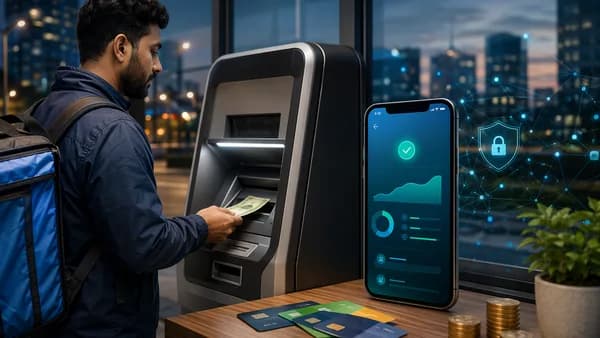
If you’re comparing digital banks with virtual cards, the safest choice depends on what you’re trying to protect: everyday online purchases, free trials, recurring subscriptions, international spending, or business ad payments. Virtual cards can reduce exposure by letting you spend online without relying on the same physical card number everywhere.
The best options in the source data include consumer-focused fintech accounts such as Chime, Wise, Revolut, Current, and Skrill, plus business-oriented virtual card platforms such as ZilBank, e.PN, MyBrocard, and Yescard. Below is a practical roundup grounded in the available research, with clear trade-offs for safer online spending.
1. What Virtual Cards Are and Why Digital Banks Offer Them
A virtual card is a digital payment card you can use online, in apps, and sometimes through mobile wallets without waiting for a physical card to arrive. According to GOBankingRates, virtual cards allow payments online or in person without a physical debit card, which means new account holders may be able to start spending before their plastic card arrives.
For online shoppers, the appeal is simple: you avoid typing the same physical card details into every merchant, subscription platform, or trial offer. For businesses, virtual cards can make it easier to separate ad spend, vendor payments, and team budgets.
Virtual cards are most useful when they add control: instant issuance, spending limits, cancellation, disposable numbers, merchant restrictions, or real-time alerts.
The source data covers three main card types:
| Card Type | How It Works | Examples From Source Data | Best Fit |
|---|---|---|---|
| Virtual debit card | Typically draws from a checking or account balance | Chime, Wise, Revolut, Current, ZilBank | Everyday online spending, digital wallets, account-linked payments |
| Virtual prepaid card | Requires funds to be loaded before spending | Skrill, Revolut, e.PN, some business card platforms | Budget control, no overdraft risk, campaign or project spending |
| Virtual credit card | Uses a credit line rather than account balance | Mentioned in search data, but not covered in detail by the provided sources | Buyers who want credit-card protections or rewards should compare separately |
Digital banks and fintech platforms offer virtual cards because they match app-based banking behavior. Fintech Review describes leading virtual banks as digital-first platforms that use mobile apps, real-time APIs, and automation rather than physical branches.
For safer spending, the key is not just whether a provider offers a virtual card. It is whether the card comes with controls that match your risk: limits, disposable numbers, instant cancellation, notifications, and funding flexibility.
2. Best Digital Banks With Instant Virtual Card Access
The strongest consumer-focused options in the source data are Chime, Wise, Revolut, Current, and Skrill. For business banking, ZilBank stands out because the source specifically notes customizable virtual debit cards, cancellation, and no limit on virtual cards per account.
Here is how the main digital banks with virtual cards compare based on the available research.
| Provider | Virtual Card Availability | Card Type | Direct Deposit Required? | Notable Source-Confirmed Features | Best For |
|---|---|---|---|---|---|
| Chime | Permanent | Debit | No | No monthly fees, no minimum balance requirements, no foreign transaction fees, Chime Visa Debit Card, physical card mailed | Low-balance users who do not need a physical branch |
| ZilBank | Permanent | Debit | Yes | Customizable virtual debit cards, cards can be canceled any time, no limit on virtual cards per account | Small businesses |
| Skrill | Temporary | Prepaid | No | First virtual card is free, accessible after account approval, must load funds first, transactions decline if insufficient funds | Users who want payments without a bank account |
| Wise | Permanent | Debit | No | Holds more than 50 currencies, can spend online or through a digital wallet before physical card arrives after ordering it | International travelers and multi-currency users |
| Revolut | Permanent | Debit and prepaid | Not clearly specified in source data | Instant virtual card after opening an account, disposable virtual cards, currency exchange in 28 currencies | Multi-currency users and people who want disposable cards |
| Current | Permanent | Debit, prepaid | No | Instant virtual card available as soon as account is opened, also offers credit-building features | Users who want fast virtual card access |
1. Chime: Best for no-fee everyday debit spending
Chime is a financial technology company, not a bank; its banking services and debit card are provided by partner banks identified in the source data. For shoppers, the draw is that Chime’s checking account comes with a Chime Visa Debit Card that can be used anywhere Visa debit cards are accepted.
The source data highlights no monthly fees, no minimum balance requirements, and no foreign transaction fees. It also notes that cash withdrawal and third-party fees may apply to Chime checking accounts.
Best use case: everyday online purchases where you want a virtual debit card connected to a low-friction checking account.
2. Wise: Best for international online spending
Wise is especially relevant for people buying from international merchants or traveling. The source data says its virtual debit card can hold more than 50 currencies at once.
There is one important setup detail: to get a Wise virtual card, you have to order a physical card. However, the source notes that you can start spending online or through a digital wallet before the physical card arrives.
Best use case: international shopping, travel bookings, and payments where holding multiple currencies matters.
3. Revolut: Best overall virtual-card flexibility
Revolut appears in multiple source datasets as a broad digital banking platform. GOBankingRates identifies it as best for disposable virtual cards, while Fintech Review highlights features such as multi-currency accounts, real-time exchange, built-in budgeting and analytics, investing options, and global cards.
The source data says Revolut supports free money transfers and currency exchanges in 28 currencies and offers instant virtual card access after opening an account. It also offers disposable virtual cards for one-time payments.
Best use case: shoppers who want multi-currency tools plus disposable virtual cards.
4. Current: Best for hassle-free instant access
Current is described as an online bank offering an online checking account with an instant virtual card available as soon as you open an account. The source also mentions additional features, including ways to build credit.
Fintech Review also groups Current with Varo as U.S.-based virtual banks offering early paycheck access, integrated budgeting tools, youth accounts, and financial education features.
Best use case: users who want quick access to a virtual card and a straightforward app-based account.
5. Skrill: Best prepaid option without a bank account
Skrill is different from a standard bank account. The source data describes it as a prepaid card option rather than a debit card tied directly to a checking account.
Your first virtual card is 100% free and becomes accessible once your account is approved. Since it is prepaid, you must load funds before spending. If you do not have enough funds, the transaction is declined rather than overdrawing the account.
Best use case: users who want a virtual prepaid card without opening a traditional bank account.
3. Best Options for Disposable or Single-Use Card Numbers
For true disposable virtual cards, the clearest source-confirmed choice is Revolut. GOBankingRates specifically states that Revolut offers disposable virtual cards that can be used for one-time payments.
That makes Revolut a strong fit for situations where you do not want a merchant to retain a reusable card number, such as:
- Trial signups: Use a disposable card for a one-time authorization where appropriate.
- Unfamiliar merchants: Reduce exposure when shopping from a site you have not used before.
- Travel purchases: Add an extra layer between your main account and online travel vendors.
- Security-sensitive purchases: Avoid reusing the same card number across many sites.
A disposable card is most useful for one-time payments. It may not be ideal for subscriptions that need the same card number to renew every month.
The source data also includes business platforms that support multiple or unlimited virtual cards, but not all are described as disposable or single-use. The distinction matters.
| Provider | Disposable or Single-Use Confirmed? | Related Controls Mentioned in Source Data | Best Fit |
|---|---|---|---|
| Revolut | Yes | Disposable virtual cards for one-time payments | Consumer security and one-off online purchases |
| ZilBank | Not stated as disposable | Customizable cards, cancel any time, no limit on virtual cards | Small-business vendor separation |
| Yescard | Not stated as disposable | Unlimited virtual cards, unified balance, flexible spending limits | Media buying teams and ad accounts |
| e.PN | Not stated as disposable | Multiple BINs, 3DS-enabled cards, Visa and Mastercard options | Advertising payments and subscriptions |
| MyBrocard | Not stated as disposable | First card in five minutes, 20+ BINs, Visa and Mastercard options | Digital marketers and service subscriptions |
For shoppers specifically seeking disposable card numbers, Revolut is the most clearly documented option in the provided research. For businesses that simply need many separate virtual cards, ZilBank and Yescard may be more relevant, but they should not be treated as confirmed single-use card providers based on the source data.
4. Best Digital Banks for Subscription Management
Subscription management is where virtual cards become especially useful. Instead of putting your main physical card on every streaming service, SaaS tool, delivery app, or trial, you can use different virtual cards to isolate charges.
The source data does not provide a full consumer subscription-cancellation comparison across banks. However, it does identify several tools relevant to managing recurring online payments.
Best subscription-friendly options from the source data
| Provider | Subscription-Relevant Features | Why It Helps |
|---|---|---|
| Revolut | Disposable cards, budgeting and analytics, multi-currency accounts | Useful for separating trial purchases and tracking spending patterns |
| Chime | No monthly fees, no minimum balance, debit card accepted anywhere Visa debit is accepted | Simple for recurring payments if you want a no-monthly-fee account |
| Current | Instant virtual card access, integrated budgeting tools noted in virtual bank research | Useful for app-based spending oversight |
| Wise | More than 50 currencies, digital wallet spending before physical card arrives | Strong for international subscriptions billed in different currencies |
| e.PN | Handles online payments and subscriptions, 3DS-enabled cards | Business and marketing subscription payments |
| MyBrocard | Supports general online purchases and service subscriptions | Business subscriptions and digital services |
| Yescard | Unlimited virtual cards, unified balance, flexible limits, detailed financial reports | Teams managing multiple paid tools or ad accounts |
Consumer subscriptions: prioritize visibility and card control
For personal subscriptions, look for:
- Separate cards: Use different virtual cards for different services when the provider supports it.
- Budgeting tools: Revolut is source-confirmed to include built-in budgeting and analytics.
- Instant card access: Chime, Revolut, Wise, Current, and Skrill all offer quick virtual card access in different ways.
- Low account costs: Chime’s source-confirmed no monthly fees and no minimum balance can matter if the account is mainly for online spending.
Business subscriptions: prioritize limits and reporting
For teams paying for ad platforms, SaaS tools, and marketing services, the business-focused providers in the source data offer more granular controls.
Yescard is built for media buyers and affiliate marketers. The source data says it offers unlimited virtual card issuance, a unified balance, flexible spending limits, and detailed financial reports.
MyBrocard is designed for digital marketers, teams, and individuals handling ad spend, online purchases, and service subscriptions. It supports 20+ trusted BINs and can issue a first virtual card in five minutes.
e.PN supports ad spend on Google Ads, Facebook, and TikTok, as well as everyday online payments and subscriptions. It also supports 3DS authentication and both Visa and Mastercard networks.
5. Security Features to Compare: Freezing, Limits, Merchant Locks, and Alerts
When comparing digital banks with virtual cards, security features matter more than the card image in the app. The strongest providers combine virtual card numbers with controls that reduce damage if a merchant, subscription, or payment flow becomes risky.
The provided source data confirms some security controls by provider, while other controls are described as evaluation criteria rather than product-specific features. Here is what is actually supported by the research.
| Security Feature | Confirmed Examples From Source Data | Why It Matters |
|---|---|---|
| Instant cancellation | ZilBank virtual debit cards can be canceled any time | Useful if a merchant is compromised or a card is no longer needed |
| Disposable card numbers | Revolut offers disposable virtual cards for one-time payments | Limits reuse of card details after a transaction |
| Spending limits | Yescard has flexible and customizable spending limit settings | Helps teams and individuals prevent overspending |
| Real-time notifications | N26 includes real-time transaction notifications | Helps detect suspicious spending quickly |
| 3DS authentication | e.PN cards support 3DS authentication | Adds an authentication layer for eligible online payments |
| Two-factor authentication and fraud detection | Listed as evaluation criteria for virtual card providers | Important to check before opening an account |
| Merchant restrictions | Mentioned as a key evaluation criterion, but not tied to a specific provider in the source data | Useful if available, but verify directly with the provider |
Freezing and cancellation
The source data specifically confirms that ZilBank cards can be canceled at any time. It does not provide a detailed freeze/unfreeze comparison for every consumer digital bank listed.
Because of that, users should verify whether their preferred provider supports:
- Freeze card: Temporarily block transactions.
- Unfreeze card: Restore use without issuing a new card.
- Cancel card: Permanently disable the card number.
- Replace card: Generate a new virtual card number.
Spending limits
Spending controls are especially important for subscriptions and business use. Yescard is the clearest example in the source data, with flexible and customizable spending limit settings.
For businesses, this can reduce the risk of runaway ad spend or unexpected SaaS renewals. For consumers, the source data is thinner, so it is worth checking whether a bank lets you set per-card or category-level limits before opening an account.
Alerts and transaction visibility
N26 is source-confirmed to offer real-time transaction notifications. Fintech Review also identifies AI-powered financial insights and alerts, real-time fraud detection, and biometric security as areas where leading virtual banks are investing.
That does not mean every provider in this roundup offers the same alerts. At the time of writing, users should check the app’s notification controls directly.
6. Fees, ATM Access, and Funding Speed Considerations
A virtual card can be convenient, but the account behind it still matters. Before choosing among digital banks with virtual cards, compare account fees, funding methods, and whether you need ATM access.
Fees and account costs
| Provider | Fees or Cost Details Confirmed in Source Data | Notes |
|---|---|---|
| Chime | No monthly fees, no minimum balance requirements, no foreign transaction fees; cash withdrawal and third-party fees may apply | Strong low-cost everyday account profile based on source data |
| Skrill | First virtual card is 100% free | Prepaid; must load funds before use |
| e.PN | Starting commission 6.7% for new users, tiered down to 3% as spending increases | Business/ad-spend focused |
| MyBrocard | Commission fees apply for top-ups | Exact commission amount not provided in source data |
| Volet.com | Free and instant transfers between users | Not available for U.S. citizens or residents; card availability varies by region |
| Revolut | Source mentions free money transfers and currency exchanges in 28 currencies | Full account pricing not detailed in provided data |
Do not choose a virtual card only because it is instant. The account’s fee structure, funding methods, and withdrawal costs can matter more over time.
ATM access
The provided source data does not offer a full ATM network comparison. It only states that Chime cash withdrawal and third-party fees may apply.
If ATM withdrawals matter to you, verify directly whether the provider offers:
- ATM network access
- Out-of-network ATM fees
- Cash withdrawal limits
- International ATM fees
- Cash deposit options
For online-only spending, ATM access may not be critical. For a primary checking account, it is much more important.
Funding speed and top-up methods
Funding speed varies significantly by provider.
| Provider | Funding or Access Detail From Source Data |
|---|---|
| Current | Instant virtual card available as soon as account is opened |
| Revolut | Instant virtual card available after opening an account |
| Wise | Requires ordering a physical card, but online and digital wallet spending can begin before it arrives |
| Skrill | First virtual card accessible after account approval; must load funds before spending |
| MyBrocard | First virtual card can be issued in five minutes |
| e.PN | Register, fund account with crypto, and issue first prepaid card instantly |
| Volet.com | Free and instant transfers between users |
| Yescard | Uses a unified balance so teams do not have to fund each card separately |
Business-oriented card platforms tend to offer more varied top-up methods. For example, e.PN supports crypto funding through DV.net, including Bitcoin, Bitcoincash, Ethereum, BNB Smart Chain, Polygon, Litecoin, and Tron, plus processors such as Capitalist, Nihaopay, WebMoney, Payeer, Perfect Money, PayPal, Alipay, and Payoneer.
MyBrocard supports top-ups by Wire, USDT, or Capitalist. Yescard primarily works with USD and USDT top-ups, according to the source data.
7. Virtual Debit Cards vs Virtual Credit Cards
Most of the strongest source data for this roundup focuses on virtual debit and prepaid cards, not virtual credit cards. That matters because the funding model changes how you manage risk.
| Feature | Virtual Debit Card | Virtual Prepaid Card | Virtual Credit Card |
|---|---|---|---|
| Funding source | Account balance, such as checking | Preloaded balance | Credit line |
| Examples in source data | Chime, Wise, Revolut, Current, ZilBank | Skrill, e.PN, some Revolut use cases | Mentioned in search data, but not detailed |
| Overspending risk | Depends on account rules | Lower; Skrill declines transactions if funds are insufficient | Depends on credit limit and repayment behavior |
| Best for | Everyday online spending | Budget-contained spending | Users who specifically want credit features should compare separately |
GOBankingRates notes that prepaid cards withdraw from a pre-set fund instead of directly from your account. In the Skrill example, there is no overdraft fee for overspending because the transaction is declined if there are not enough funds.
That can be useful for safer online shopping because it limits exposure to the amount loaded. However, prepaid cards may be less convenient if you want all spending to flow directly from a checking account.
Virtual credit cards can also be useful for online security, but the provided source data does not contain enough detail to compare specific virtual credit card products, pricing, rewards, or protections. If you want credit-based virtual cards, compare those separately against your needs for credit limits, fees, interest, and cardholder protections.
8. How to Choose the Right Digital Bank for Online Spending
There is no one-size-fits-all account for virtual cards. The additional search data specifically notes that no single account and virtual debit card suits everybody, even though Chime, Revolut, and Wise often appear as strong general options.
Use this decision framework to narrow your shortlist.
1. Choose by spending pattern first
| If You Need… | Consider… | Why |
|---|---|---|
| A low-friction everyday account | Chime | No monthly fees, no minimum balance, no foreign transaction fees |
| International spending | Wise or Revolut | Wise supports more than 50 currencies; Revolut supports currency exchange in 28 currencies |
| Disposable card numbers | Revolut | Source-confirmed disposable virtual cards for one-time payments |
| Prepaid spending without a bank account | Skrill | First virtual card free; prepaid funding model |
| Small-business virtual debit cards | ZilBank | Customizable cards, cancellation, no limit on virtual cards |
| Marketing and ad spend | e.PN, MyBrocard, or Yescard | Built for ad platforms, subscriptions, teams, and spending controls |
2. Check whether the virtual card is permanent, temporary, or disposable
A permanent virtual card is better for ongoing subscriptions. A disposable card is better for one-time purchases. A temporary card can be useful during onboarding but may not be ideal for long-term payments.
3. Match the funding model to your risk tolerance
- Debit: Convenient, but connected to your account balance.
- Prepaid: Better for hard spending caps, but requires top-ups.
- Business virtual cards: Useful for team controls, ad spend, and reporting.
4. Verify mobile wallet support
GOBankingRates notes that virtual debit cards can work with Apple Pay or Google Pay if the bank has the relevant partnership. Because support varies, check directly before relying on a provider for in-person mobile wallet purchases.
5. Compare controls before comparing branding
Look for:
- Disposable cards
- Instant card cancellation
- Spending limits
- Real-time alerts
- 2FA
- 3DS authentication
- Merchant restrictions
- Budgeting analytics
- Detailed reports for teams
Some of these are confirmed for specific providers in the source data, while others are evaluation criteria. Always verify the exact controls in the app before opening or funding an account.
6. Shop for the bank, not just the card
GOBankingRates makes an important point: you should not pick a bank only because it offers an instant virtual debit card. Many banks provide some way to pay before a physical card arrives, and physical cards can often be added to a digital wallet.
The better approach is to choose the account that fits your broader financial needs: fees, budgeting tools, international support, account access, security features, and funding methods.
Bottom Line
The best digital banks with virtual cards depend on your use case. Chime is a strong fit for simple low-fee debit spending, Wise is best suited to multi-currency users, Revolut is the clearest choice for disposable virtual cards, Current offers fast virtual card access, and Skrill works for prepaid spending without a traditional bank account.
For businesses, ZilBank stands out for customizable virtual debit cards and unlimited cards per account, while e.PN, MyBrocard, and Yescard are more specialized for ad spend, subscriptions, team payments, and virtual card operations.
For safer online spending, prioritize controls over convenience alone. Disposable numbers, cancellation, spending limits, real-time alerts, and clear fees matter more than simply getting a card instantly.
FAQ
Are virtual debit cards safe to use online?
According to GOBankingRates, virtual debit cards should have the same protections as physical debit cards. For added safety, compare controls such as disposable card numbers, cancellation, spending limits, 2FA, transaction alerts, and 3DS authentication where available.
Which digital bank has disposable virtual cards?
Based on the provided source data, Revolut is the clearest consumer option with disposable virtual cards. GOBankingRates states that Revolut offers disposable virtual cards that can be used for one-time payments.
Can I get a virtual card without a bank account?
Yes. Skrill is identified in the source data as a prepaid virtual card option for people who want to make payments without a bank account. It requires you to load funds before spending, and transactions are declined if the balance is insufficient.
Which virtual card is best for international spending?
Wise and Revolut are the strongest international options in the source data. Wise can hold more than 50 currencies, while Revolut offers currency exchange in 28 currencies and supports multi-currency account features.
Are virtual cards free?
Some are free, but not all. Skrill offers a first virtual card that is 100% free, and Chime has no monthly fees or minimum balance requirements according to the source data. Business platforms may charge commissions or top-up fees; for example, e.PN starts at 6.7% commission for new users and can drop to 3% with higher spending.
Can I use a virtual debit card with Apple Pay or Google Pay?
Yes, if the bank or fintech provider supports the relevant wallet partnership. The source data notes that virtual debit cards can be used with Apple Pay or Google Pay when the bank has a partnership with Apple or Google, so confirm support before signing up.