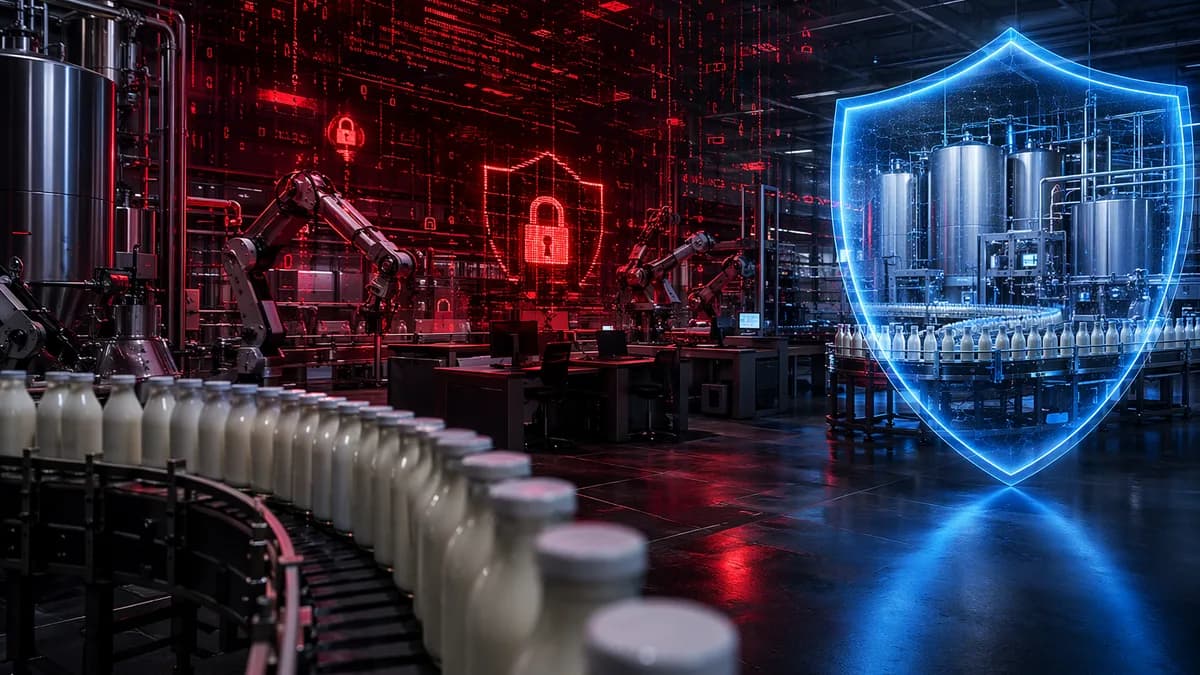
How long can Fairlife production sit idle before a Fairlife ransomware attack stops being a cyber incident and starts looking like an operating problem for Coca-Cola?
XOOMAR Intelligence
Analyst Take
That is the question raised by Coca-Cola’s recent 8-K filing with the US Securities and Exchange Commission, after the company confirmed unauthorized access to part of Fairlife’s systems, including production-related systems, according to TechRadar Pro. The company said US Fairlife production operations are temporarily suspended, while Canada production operations are not currently impacted.
“Product quality and safety have not been impacted. However, as a result of the incident, production operations at fairlife in the United States are temporarily suspended. fairlife’s Canada production operations are not currently impacted,” Coca-Cola said.
The sharper read: this is no longer a back-office security cleanup. Coca-Cola has pushed the Fairlife cyberattack into investor view because a ransomware event touched systems close enough to production to halt US operations at a dairy business it owns.
For a shorter incident brief, see XOOMAR’s Fairlife Ransomware Attack Freezes US Dairy Production.
Why did a cyberattack at Fairlife become an SEC filing instead of a quiet IT repair?
Because the affected systems weren’t only corporate email or administrative tooling. Coca-Cola said Fairlife identified unauthorized access by a third party to “a portion of its systems, including its production-related systems,” in connection with a ransomware event.
That phrasing matters. It doesn’t tell us which systems were encrypted, whether plant equipment was directly affected, or whether data was stolen. It does tell us Coca-Cola saw enough operational risk to suspend production in the United States.
The company said it activated incident response and business continuity protocols, brought in third-party cybersecurity experts, and notified relevant authorities. That is the standard crisis stack for a serious intrusion, but the production halt is the part investors will care about.
Here is the clean split between disclosed fact and open question:
| Area | Coca-Cola has disclosed | Still not disclosed |
|---|---|---|
| Affected business | Fairlife, Coca-Cola’s dairy company | Which specific US facilities or systems |
| Incident type | Ransomware event | Attacker identity |
| Operations | US production temporarily suspended | Restart timeline |
| Canada | Not currently impacted | Whether monitoring found attempted spread |
| Product safety | Not impacted | Full technical scope |
| Financial impact | Not yet determined | Cost, insurance recovery, lost output |
That last line is the pressure point. Coca-Cola said it has “not yet determined whether the incident is reasonably likely to materially affect the company.” The filing itself invites the market to ask how long “temporarily” lasts.
How can ransomware stop dairy production if product quality wasn’t affected?
Coca-Cola’s statement separates two risks: product integrity and operational continuity.
The company says product quality and safety were not impacted. That is the consumer-facing reassurance. The operational problem is different. If production-related systems are affected or can’t be trusted, a food manufacturer may stop lines while it investigates, even if there is no public evidence that physical equipment or finished goods were compromised.
That is XOOMAR analysis, not a disclosed technical finding. Coca-Cola has not described which systems were hit. But the company’s decision to suspend US production shows the attack reached a zone where continuing normal operations carried enough risk to pause.
Fairlife is not a generic software asset inside Coca-Cola. It is a dairy operation, and dairy production has less room for ambiguity than many packaged categories because timing, storage, and process controls matter. Coca-Cola has not said whether any of those areas were affected. The broader point is simpler: when ransomware touches production-related systems, management has to prove the environment is clean before production can safely resume.
SecurityWeek reported that Coca-Cola has not shared details on how the incident occurred, who was behind it, or whether it received extortion demands, and said it had not seen any known ransomware groups claim responsibility for the incident. That attribution gap matters because ransomware groups often reappear under new names, a pattern we covered in Ransomware Groups Slip the Net With Serial Rebrands.
How expensive can a stalled Fairlife line get for Coca-Cola?
Joseph Perry, Cybersecurity Researcher and Advanced Services Lead at Arcova, gave the clearest financial framing in comments shared with TechRadar Pro.
“Fairlife is not a minor business buried inside Coca-Cola’s portfolio. Coca-Cola generated nearly $48 billion in net revenue last year and made a $6.1 billion contingent payment tied to its acquisition of fairlife, which provides important context for the value of the operation now sitting idle,” Perry said.
That doesn’t mean the Fairlife ransomware attack is already material. Coca-Cola has explicitly not made that determination. But Perry’s point is that the clock matters.
“With production suspended across fairlife’s US facilities, every hour can compound the financial impact through lost output, delayed shipments, recovery costs, inventory exposure and potential disruption for retailers. Coca-Cola has not yet quantified the loss, but the longer production remains offline, the more quickly a cyber incident becomes a material business event.”
The cost stack is likely broader than any ransom demand, if one exists. Coca-Cola has not said whether attackers demanded payment. Even without that detail, the disclosed response already implies investigation expense, outside advisors, cybersecurity experts, restoration work, and internal disruption.
The market question is not only whether Coca-Cola can restart Fairlife production. It is whether the restart comes fast enough to keep the incident from spilling into reported financial effects.
Which stakeholders now have different problems from the same ransomware event?
Coca-Cola’s immediate problem is control. It needs to restore affected systems, validate the production environment, limit financial exposure, and communicate enough to satisfy investors without publishing a roadmap for attackers.
Retailers face a different issue if the suspension drags on: product availability. Coca-Cola has not announced shortages or delivery disruptions beyond the production halt. Still, Perry specifically cited delayed shipments and potential disruption for retailers as ways the impact could compound.
Consumers are being told the most important thing first: product quality and safety have not been impacted. That statement is doing a lot of work. In food and beverage incidents, trust can fray quickly if operational facts arrive slowly.
Regulators and law enforcement are already in the loop, according to Coca-Cola. The company said relevant authorities were notified, and its investigation and assessment remain ongoing.
The Fairlife ransomware attack also gives other manufacturers a blunt reminder: if production-related systems are connected enough to stop output, cyber resilience is part of operating quality. Not a side program. Not a quarterly audit item. A factory uptime issue.
What evidence will show whether this stays contained or becomes a material business event?
The next test is not whether Coca-Cola can say the right things. It already has: product safety unaffected, Canada not currently impacted, experts engaged, authorities notified, restoration underway.
The test is evidence.
Watch for four signals:
- Restart timing: A fast production restart would support Coca-Cola’s position that the incident can be contained.
- Scope updates: Any expansion beyond Fairlife US operations would weaken that view.
- Financial disclosure: A quantified impact, or language moving closer to materiality, would change the investor read.
- Attribution or extortion details: Confirmation of a ransomware group or demand would sharpen the risk profile, though Coca-Cola has not disclosed either.
XOOMAR’s read: the Fairlife ransomware attack is a resilience test for Coca-Cola’s premium dairy bet. The company does not need perfect defenses to protect the brand. It needs clean recovery, disciplined disclosure, and proof that production can come back without compromising safety. If those pieces arrive quickly, this remains a contained operational disruption. If updates stay thin while production remains offline, the market will start filling in the blanks itself.
Impact Analysis
- The ransomware incident has moved beyond IT disruption into operational downtime for a Coca-Cola-owned dairy business.
- Coca-Cola’s SEC filing signals the company sees the event as material enough for investor disclosure.
- The shutdown highlights how cyberattacks on production-related systems can directly affect supply chains and product availability.
Fairlife Production Impact by Region
| Region | Production Status | Impact |
|---|---|---|
| United States | Temporarily suspended | Production-related systems were affected by unauthorized access tied to a ransomware event |
| Canada | Not currently impacted | Production operations continue unaffected, according to Coca-Cola |
Primary Sources & Disclosures

Written by
XOOMAR Insights Team
Research and Editorial Desk
The XOOMAR Insights Team pairs automated research with human editorial judgment. We track hundreds of sources across technology, fintech, trading, SaaS, and cybersecurity, cross-check the facts, and explain what happened, why it matters, and what to watch next. We do not just rewrite headlines. Every article is fact-checked and scored for reliability before it goes live, and we link back to the original sources so you can verify anything yourself.