
The LastPass data breach raises a sharper question than whether vaults were stolen: how much trust should customers place in third-party SaaS integrations that can open a path into CRM data without touching the core product?
CybersecurityJune 23, 2026· 6 min read· By XOOMAR Insights Team
Stolen Klue Tokens Turn LastPass Data Breach Into CRM Alarm
Updated on June 23, 2026
XOOMAR Intelligence
Analyst Take
58/ 100
4 sources analyzedLow confidenceTrend10Freshness99Source Trust88Factual Grounding92Signal Cluster20
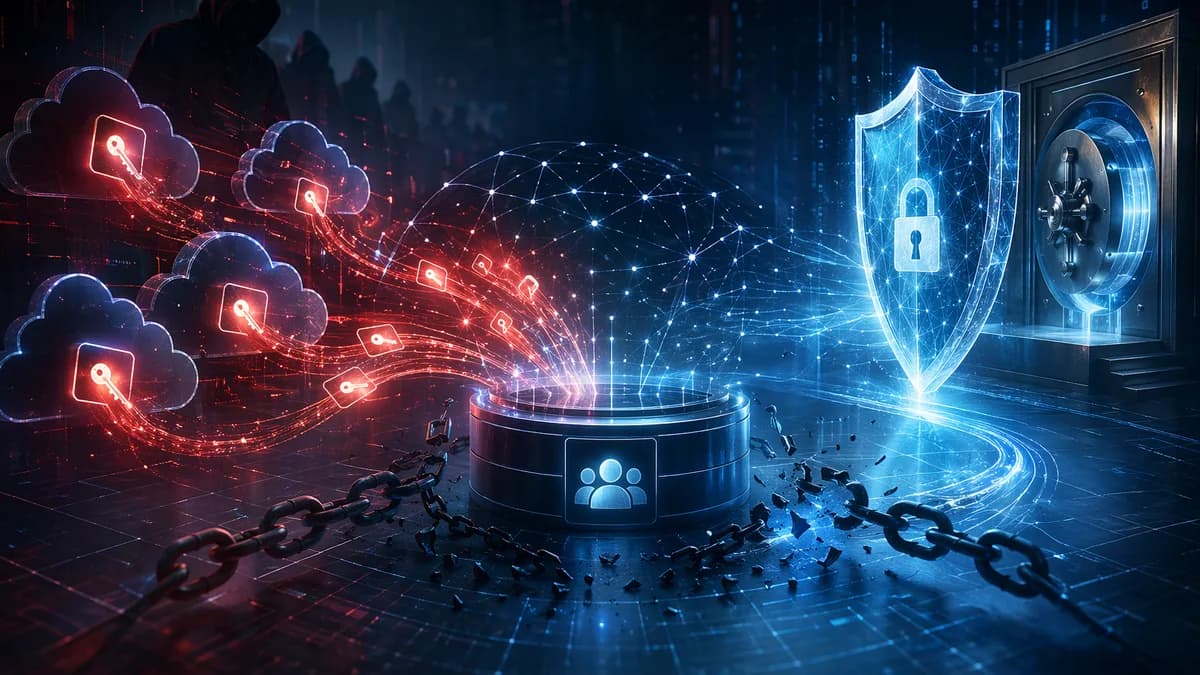
LastPass confirmed attackers accessed customer data in its Salesforce environment after stealing OAuth tokens from Klue, a third-party market intelligence platform used by its go-to-market teams, according to BleepingComputer. The company said its products, services, infrastructure, and customer vaults were not affected.
“The threat actor then used these credentials to access LastPass customer data within our Salesforce environment.”
That sentence is the center of the incident. The attacker did not need to break into LastPass vault infrastructure, based on the company’s disclosure. They used tokens held by Klue to reach connected Salesforce data.
How did the LastPass data breach run through Klue OAuth tokens?
LastPass said it learned on June 12th about an incident at Klue, which integrates with its Salesforce and Gong systems. Klue is a market intelligence platform used by LastPass go-to-market teams.
The company said an unauthorized actor obtained OAuth tokens Klue held for many customers, including LastPass. Those tokens were then used to access customer data inside LastPass’s Salesforce environment.
“We immediately launched an investigation and learned that, as part of this incident, an unauthorized actor was able to obtain OAuth tokens Klue held for many of its customers, including LastPass.”
OAuth tokens matter here because they can grant access to connected cloud services without requiring a new password login. In this case, the route was not LastPass’s password management product. It was a business application integration tied to Salesforce.
LastPass said there is no evidence the attacker accessed Gong-related data, which BleepingComputer notes typically includes customer calls and emails. That narrows the known exposure, but it does not make the Salesforce access harmless.
The company listed the data that may have been exposed as:
- Customer names
- Phone numbers
- Email addresses
- Physical addresses
- Support case information
- Sales/CRM-related data
That mix can be useful for targeted phishing. A criminal with support history and contact details can craft outreach that looks more credible than a generic password-reset scam.
Why does Salesforce exposure put LastPass customers on alert if vaults stayed secure?
LastPass said the scope was limited to systems integrated with Klue’s application. It also said customer vaults remain secure.
That distinction matters. This LastPass data breach is not, based on the company’s current statement, a breach of encrypted password vault contents. It is a breach of customer and CRM data reachable through a third-party integration.
Still, CRM data carries operational risk. Names, emails, phone numbers, addresses, support cases, and sales-related records can help attackers impersonate vendors, support teams, or account managers.
LastPass warned customers to be cautious with unsolicited communications by phone or email, especially requests for sensitive details. The company also reminded users not to share their master password.
“Please remember that no one at LastPass will ever ask for your master password.”
The warning is direct because the likely follow-on risk is social engineering. If attackers know a customer has interacted with support, they can make a fake support message feel timely. If they know the right business contact, they can aim at the right inbox.
For readers tracking how attackers turn exposed records into pressure campaigns, XOOMAR’s broader cybersecurity coverage includes Texas Data Breach Hands Hackers 3 Million ID Records and 630GB Claim Rocks Tata Electronics Data Breach Review. Those cases are separate from LastPass, but they show why exposed business or identity data often becomes more dangerous after the first breach notice.
Who claimed the Klue attack, and how far did it spread?
The Klue supply chain attack was claimed by the Icarus extortion group, according to BleepingComputer. The group allegedly compromised Klue’s infrastructure and stole OAuth tokens that connected customers’ Salesforce environments.
BleepingComputer reported that Icarus gained access to Klue’s infrastructure using compromised legacy credentials for an integration service. That access gave the hackers a path to OAuth tokens connected to several third-party services.
The incident affected multiple organizations, including:
| Affected organizations named in source | System exposure described |
|---|---|
| LastPass | Salesforce customer data accessed |
| Recorded Future | Listed as impacted |
| Tanium | Listed as impacted |
| Jamf | Listed as impacted |
| Sprout Social | Listed as impacted |
| Gong | Listed as impacted |
| Insurity | Listed as impacted |
BleepingComputer said the threat actor exfiltrated Customer Relationship Management (CRM) data and launched an extortion campaign.
XOOMAR analysis: the Klue incident shows the weak point was not necessarily the most sensitive system. It was the connective tissue between business apps. OAuth tokens are supposed to reduce friction between platforms, but when held by a compromised supplier, they can become a ready-made access path into customer environments.
What has LastPass done since the Klue token theft?
LastPass said it has discontinued employee access to Klue and rotated the exposed API/OAuth tokens. It also said it launched an investigation, worked with contacts at Klue and Salesforce, and notified law enforcement.
The company said its TIME team, short for Threat Intelligence, Mitigation, and Escalation, is sharing information with the larger security community to help disrupt the campaign and support defenders.
LastPass also published indicators of compromise in its own advisory, including the following email sender domains:
- baccarat.com[.]au
- robinskitchen.com[.]au
- house.com[.]au
Customers should treat communications from those domains as suspicious in this context. LastPass said official communication should come through trusted support channels.
The company’s response answers part of the access question. Tokens were rotated. Klue access was cut. Law enforcement was notified.
But several material details are not yet public.
Which questions will decide how damaging this breach becomes?
The next phase of the LastPass data breach is about precision. Customers need to know whose records were accessed, which fields were actually copied, when the unauthorized access began, and when it ended.
LastPass has said what may have been exposed. It has not provided a count of affected customers in the supplied material. It also has not said whether every listed data type was accessed for every affected customer.
Decision-makers should watch for:
- Direct notifications: Whether LastPass sends customer-specific breach notices with exposed field details.
- Forensic updates: Whether Salesforce activity logs show the full query scope and exfiltration path.
- Token review: Whether related integrations beyond Klue require permission tightening.
- Extortion signals: Whether Icarus publishes or markets data tied to LastPass.
- Customer targeting: Whether phishing attempts reference support cases, sales contacts, or account details.
For now, the practical move is simple: verify any LastPass-related outreach through official channels, distrust unexpected support requests, and never provide a master password by email, phone, or chat.
The lasting test for LastPass is not only whether vaults stayed secure. It is whether the company can give customers a narrow, evidence-backed account of what Salesforce data was touched, and whether its third-party app controls can stop the same token-abuse route from being used again.
Impact Analysis
- The incident shows how third-party SaaS integrations can expose sensitive customer data even when core systems remain untouched.
- Stolen OAuth tokens can bypass traditional password-based defenses by granting direct access to connected cloud services.
- Customers may need to scrutinize vendor integrations with CRM and sales platforms as closely as primary security products.
Scope of the LastPass Klue Supply Chain Incident
| Area | Status | Details |
|---|---|---|
| Salesforce customer data | Affected | Attackers used stolen Klue OAuth tokens to access LastPass customer data in Salesforce. |
| LastPass products and services | Not affected | LastPass said its products and services were not impacted. |
| LastPass infrastructure | Not affected | The company said its infrastructure was not impacted. |
| Customer vaults | Not affected | LastPass said customer vaults were not affected. |
Sources

Written by
XOOMAR Insights Team
Research and Editorial Desk
The XOOMAR Insights Team pairs automated research with human editorial judgment. We track hundreds of sources across technology, fintech, trading, SaaS, and cybersecurity, cross-check the facts, and explain what happened, why it matters, and what to watch next. We do not just rewrite headlines. Every article is fact-checked and scored for reliability before it goes live, and we link back to the original sources so you can verify anything yourself.
Explore More Topics
Related Articles
 Cybersecurity
Worst Breaches of 2026 Put Millions in Hackers' Hands
The year's worst breaches exposed students, cloud keys, devices, and Social Security data, turning stolen records into real-world disruption.
Jul 11, 20268 min
 Cybersecurity
Customer Records Stolen in Lidl Data Breach Across Europe
Lidl says attackers stole online shop customer data via an outside IT provider, but passwords and payment details were spared.
Jul 13, 20266 min
 Cybersecurity
Poisoned NPM Update Hijacks 500M Weekly Downloads
Attackers hijacked a developer's GitHub account, then used it to push malicious updates to popular NPM packages, exploiting automated pipelines and signed prove
Aug 9, 20266 min
 Cybersecurity
CareCloud Data Breach Exposes 345,000 Patient Files
Hackers accessed a CareCloud EHR data store for six days, exposing medical records tied to at least 345,000 people.
Aug 2, 20266 min
 Cybersecurity
Nearly 5 Million Brace for Origin Energy Data Breach
Origin Energy says customer data was compromised, putting nearly 5 million customers on alert as investigators size up the breach.
Jul 23, 20266 min
 Fintech
Erebor Quadruples Deposits In 100 Days For $8B Valuation
Startup-focused Erebor Bank has quadrupled deposits in three months and is now raising $1.5 billion at an $8 billion valuation, a giant bet on its post-SVB nich
Aug 10, 20265 min
 Trading
Stocks Ignore Record Job Losses as Fed Pledge Trumps Payrolls
The Dow Jones Industrial Average showed no fear after July's shocking job losses, as investors bet weak labor data will keep the Federal Reserve from raising ra
Aug 10, 20266 min
 Fintech
DOJ Charges 455 Providers for $6.5B in Healthcare Fraud
The Department of Justice has replaced traditional fraud investigations with AI-driven analytics, charging 455 defendants in a $6.5 billion scheme and forcing p
Aug 10, 20267 min
 Fintech
Poland Launch Tests Paysafe's Legacy Card Pivot
Paysafe's launch in Poland is a strategic test of whether it can upgrade its existing prepaid card users into full digital wallet customers, following a wave of
Aug 10, 20266 min
 Technology
Microsoft's PC Tax Hike Ignites Sticker Shock on New Windows
Microsoft is implementing a 7-10% price hike for Windows 11 licenses to PC makers, a significant increase that will add further cost pressure to new computers a
Aug 10, 20267 min
Don't miss the signal
Get our weekly roundup of the stories that matter across tech, fintech, and trading. No noise, just signal.
Free forever. No spam. Unsubscribe anytime.