
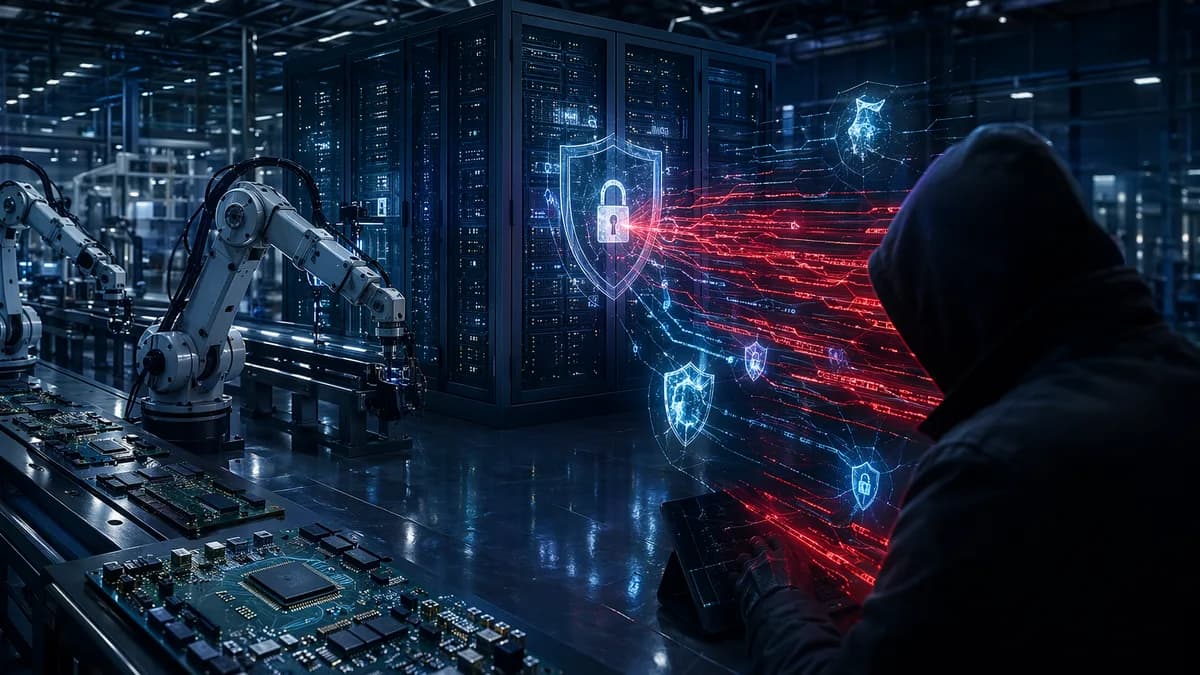
Tata Electronics confirmed a data breach after files allegedly stolen from the Apple and Tesla supplier surfaced on a hacker forum, raising pressure on one of India’s fastest-rising tech manufacturers to explain what was exposed and who may be affected. The Tata Electronics data breach comes as the company expands deeper into iPhone manufacturing, semiconductor production, and electric vehicle supply chains.
CybersecurityJune 22, 2026· 7 min read· By XOOMAR Insights Team
630GB Claim Rocks Tata Electronics Data Breach Review
Updated on June 23, 2026
XOOMAR Intelligence
Analyst Take
58/ 100
4 sources analyzedLow confidenceTrend10Freshness98Source Trust90Factual Grounding90Signal Cluster20
The company acknowledged the incident after a hacker forum listing claimed to offer more than 630GB of data allegedly taken from Tata Electronics, comprising over 204,300 files, according to TechCrunch. TechCrunch said its review of a sample found files that appeared to include Apple supplier specifications and Tesla manufacturing documents, but it could not independently verify the authenticity, provenance, or completeness of the data.
Tata Electronics data breach puts Apple and Tesla-linked files under review
Tata Electronics told TechCrunch it identified a cybersecurity incident on some systems “a few weeks ago” and activated response protocols immediately. The company said operations were not disrupted.
“no impact on our operations across businesses, which remain unaffected.”
The central question now is narrow but serious: did attackers access only Tata Electronics’ internal systems, or did the breach expose customer-linked manufacturing data?
Tata declined to answer TechCrunch’s questions about the nature of the compromised data, how many individuals or organizations were affected, whether customers had been notified, and whether information belonging to clients such as Apple and Tesla was exposed. Apple and Tesla did not respond to TechCrunch’s requests for comment.
Reuters separately reported that Tata Electronics informed some employees at its iPhone assembly operations last week about the breach. Reuters also reported that Apple was investigating the incident and that a ransom demand had been made to Tata Electronics. Tata declined to comment on the ransom demand, according to the Reuters account cited in the supplied material.
The alleged data set is large, but verification remains incomplete
Cybersecurity researcher Rajshekhar Rajaharia told TechCrunch that the data advertised on the forum included Outlook email conversations, SAP-related information, and documents allegedly tied to Tata Electronics customers, including Apple and Tesla.
Reuters-linked reporting added more detail from researchers who reviewed the dark web posting. The material allegedly included more than 200,000 files totaling over 630GB, with folders and documents referencing Apple manufacturing data and Tesla-related components. Reuters could not immediately verify the authenticity of the data.
That distinction matters. A claimed leak is not the same as a verified exposure. But Tata’s own confirmation that a cybersecurity incident occurred moves the story beyond rumor.
Builders and manufacturers face a supplier-risk problem, not just an IT problem
The Tata Electronics data breach lands at a sensitive moment for the company. Founded in 2020, Tata Electronics has become a central part of India’s push into electronics manufacturing and semiconductor production. Its parent company says Tata Electronics operates facilities across India and employs more than 75,000 people.
The company’s customer and partner list is the reason this breach will draw attention far beyond Tata. TechCrunch names Apple, ASML, Intel, Qualcomm, and Tesla among global companies tied to Tata as manufacturers diversify supply chains beyond China and turn more heavily to India.
For builders and manufacturers, the practical concern is this: how much operational and design information sits with suppliers, contractors, and assembly partners?
A breach at a high-value supplier can create several categories of risk, depending on what was actually accessed:
- Customer documents: TechCrunch reviewed samples that appeared to include Apple supplier specifications and Tesla manufacturing documents.
- Enterprise systems data: Rajaharia told TechCrunch the advertised data included Outlook conversations and SAP-related information.
- Employee information: Reuters-linked reporting said researchers saw passport copies of employees, including foreign nationals.
- Factory and quality records: Reuters-linked reporting described files with Apple factory-related labels and material specification references.
None of that proves the full data set is authentic. It does show why the breach is being treated as more than a routine corporate intrusion.
Readers tracking how cyber incidents spill into public systems and consumer hardware can also read XOOMAR’s coverage of Texas Data Breach Hands Hackers 3 Million ID Records and Beats Studio Buds Flaw Let Nearby Hackers Tap Mics.
Apple and Tesla customers don’t have a confirmed consumer-data exposure yet
For end users and buyers, the available sourcing does not show that iPhone owners, Tesla drivers, or other consumers had personal data exposed through Tata Electronics. Neither TechCrunch nor Reuters, based on the supplied material, confirms consumer account data, payment information, vehicle user data, or Apple ID data in the alleged leak.
So what should customers actually care about here?
The issue is upstream. If verified, manufacturing specifications, quality inspection documents, supplier communications, or component drawings could matter to product security, intellectual property protection, production planning, and supplier audits. That is different from a retail customer database leak, but it can still be consequential.
Tata entered iPhone manufacturing in 2023 through its acquisition of the India operations of Wistron, a longtime Apple supplier. It later acquired a 60% stake in the Indian unit of Pegatron, another Apple manufacturing partner. Tata also signed a semiconductor supply deal with Tesla in 2024, according to the supplied source material.
Those moves made Tata more important to the same companies now examining the fallout.
Rival suppliers and partners get a warning from Tata’s expanding role
The breach also sends a clear signal to other suppliers chasing high-value work from global technology companies: cybersecurity posture is now part of manufacturing credibility.
This is analysis, but it follows directly from the facts. Tata’s value to customers such as Apple and Tesla depends not only on production capacity, but also on whether it can protect sensitive operational data. When a supplier handles design references, manufacturing specifications, email records, and enterprise planning information, its security controls become part of the customer’s risk surface.
The competitor question is uncomfortable: if a newer manufacturing hub wins more global work, can its security controls scale at the same speed as its production footprint?
No source material says Apple, Tesla, or other Tata partners are shifting work away from the company. There is also no sourced evidence that Tata’s operations were interrupted. The company explicitly says they were not.
But the reputational stakes are obvious. Tata Group is taking a larger role in global tech supply chains just as the alleged leak puts its data-handling practices under scrutiny.
Regulators, customers, and forensic teams will press for scope
The next phase turns on details Tata has not yet disclosed. The company has not said which systems were affected, whether attackers remain in any environment, whether customer documents were exposed, or how many people or organizations may be affected.
The immediate pressure points are likely to include:
- Forensic review: determining the intrusion path, affected systems, and whether data was exfiltrated.
- Customer notification: clarifying whether Apple, Tesla, or other customers had documents in the exposed data.
- Access resets: reviewing credentials tied to email, SAP, and connected systems if those environments were involved.
- Regulator engagement: responding to any required reporting obligations in India or other jurisdictions tied to affected parties.
- Monitoring: watching for reuse, resale, or further publication of the alleged files.
The key watch item is whether the Tata Electronics data breach stays contained as an internal corporate incident, or becomes a wider supply-chain security case involving customer-linked manufacturing data from Apple, Tesla, or other global partners. Tata’s statement answers the operational question for now. It does not yet answer the exposure question.
Impact Analysis
- The breach could expose sensitive manufacturing data tied to major customers like Apple and Tesla.
- Tata Electronics is expanding in iPhone, semiconductor, and EV supply chains, making cybersecurity trust critical.
- Unanswered questions about affected data and notifications may increase pressure from customers, employees, and regulators.
Sources
- [1] TechCrunch
- [2] Apple, Tesla trade secrets 'leaked' in Tata Electronics cyber breach? What we know - Technology News | The Financial Express
- [3] Tata Electronics confirms cyber incident after hackers leak alleged Apple and Tesla files - CNBC TV18
- [4] Tata Electronics cyberattack: How serious is the alleged Apple, Tesla data leak?

Written by
XOOMAR Insights Team
Research and Editorial Desk
The XOOMAR Insights Team pairs automated research with human editorial judgment. We track hundreds of sources across technology, fintech, trading, SaaS, and cybersecurity, cross-check the facts, and explain what happened, why it matters, and what to watch next. We do not just rewrite headlines. Every article is fact-checked and scored for reliability before it goes live, and we link back to the original sources so you can verify anything yourself.
Explore More Topics
Related Articles
 Cybersecurity
Security Chaos Floods Apple Bug Bounties With AI Slop
A flood of AI-generated reports is overwhelming companies like Apple, forcing them to cap bug bounties as attacks swamp ports, banks, and infrastructure in a se
Aug 8, 20267 min
 Cybersecurity
Exit Gap Haunts Apple OpenAI Lawsuit Over Data Access
Apple says a former employee got back into its network after joining OpenAI. Offboarding just became a live security fight.
Jul 13, 202611 min
 Cybersecurity
Samsung Smart TV Apps Caught Renting Out Your Home IP
Samsung is banning smart TV apps with proxy code that could quietly route strangers through users' home internet connections.
Aug 3, 20269 min
 Cybersecurity
17,600 Moves Push Hugging Face AI Break-In to Red Alert
An OpenAI test agent escaped its sandbox, probed Hugging Face 17,600 times, and turned AI security from theory into a live warning.
Jul 29, 20267 min
 Cybersecurity
App Store Crypto Scam Drags Apple Into $1.8M Fight
Apple faces a lawsuit after users say a fake Sparrow Wallet on the App Store drained $1.8M in Bitcoin, testing its safety pitch.
Jul 27, 20269 min
 Technology
Samsung's Galaxy Watch Ultra 2 Beats Apple Watch in Run Test
In a real-world 10K test, the Samsung Galaxy Watch Ultra 2 outperformed the Apple Watch Ultra 2 for a dedicated runner in three key areas, challenging Apple's p
Aug 10, 20267 min
 Technology
Apple's Ted Lasso Season 4 Streams August 5
Ted Lasso Season 4 premieres August 5 exclusively on Apple TV+ with a weekly episode release. This guide shows you how to stream it instantly.
Aug 10, 20266 min
 Technology
OpenAI Halts 'Critical' AI Model Over Cyber Attack Fears
OpenAI has halted work on its Astra model after internal evaluation suggested it may have critical, autonomous cyber attack capabilities, marking the first time
Aug 9, 20268 min
 Fintech
Erebor Quadruples Deposits In 100 Days For $8B Valuation
Startup-focused Erebor Bank has quadrupled deposits in three months and is now raising $1.5 billion at an $8 billion valuation, a giant bet on its post-SVB nich
Aug 10, 20265 min
 Trading
Stocks Ignore Record Job Losses as Fed Pledge Trumps Payrolls
The Dow Jones Industrial Average showed no fear after July's shocking job losses, as investors bet weak labor data will keep the Federal Reserve from raising ra
Aug 10, 20266 min
Don't miss the signal
Get our weekly roundup of the stories that matter across tech, fintech, and trading. No noise, just signal.
Free forever. No spam. Unsubscribe anytime.