
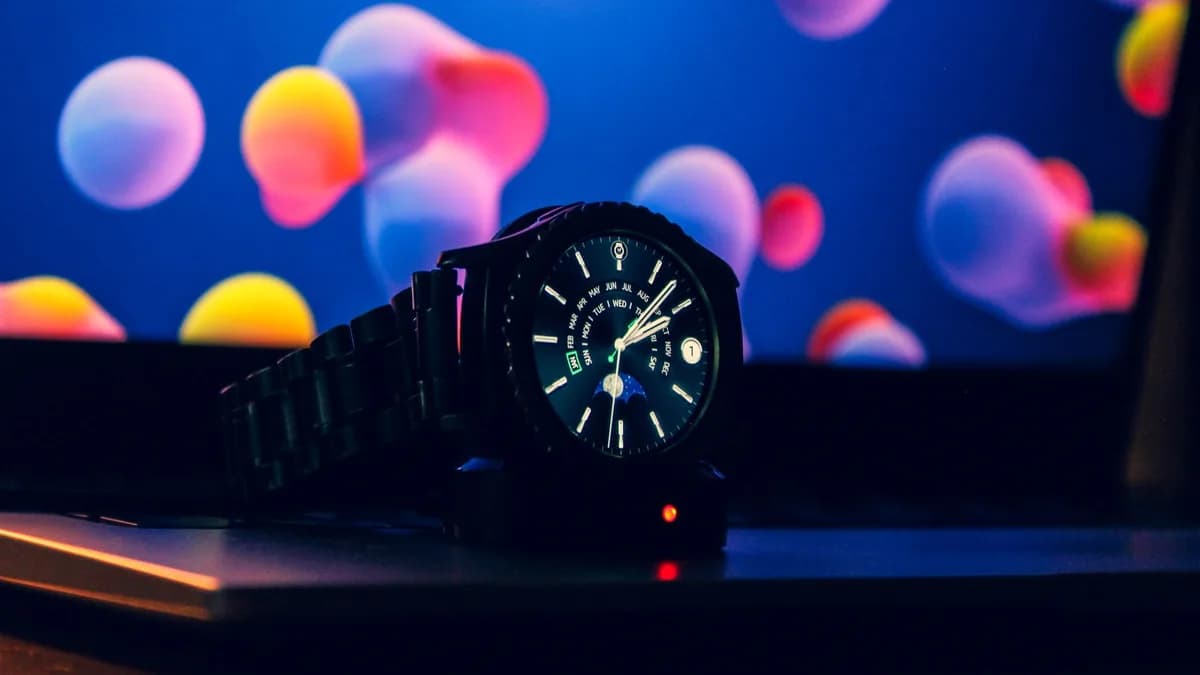
The Galaxy Watch Ultra 2 just beat the Apple Watch Ultra 2. Not in a spec sheet duel, but on the wrist of a runner who has relied on Apple for years. According to a side-by-side 10K test by Tom's Guide, Samsung's flagship outperformed Apple's in three critical, tangible ways during actual use. This isn't incremental. It's a direct challenge on what has been Apple's uncontested home turf: the premium, athlete-focused smartwatch experience.
TechnologyAugust 10, 2026· 7 min read· By XOOMAR Insights Team
Samsung's Galaxy Watch Ultra 2 Beats Apple Watch in Run Test
Updated on August 10, 2026
XOOMAR Intelligence
Analyst Take
72/ 100
3 sources analyzedMedium confidenceTrend10Freshness100Source Trust84Factual Grounding96Signal Cluster20
Samsung's Surprising Sidelong Leap: Beating Apple on Its Home Turf
For years, the high-end smartwatch narrative has been about ecosystem lock-in versus raw specs. Apple's seamless integration created a comfort zone so strong that hardware comparisons often felt academic. You bought the watch for your phone. This test shatters that premise. A dedicated Apple Watch user strapped on the Galaxy Watch Ultra 2 for a 10K run and found Samsung didn't just match Apple, it delivered a fundamentally better user experience in key areas where it counts mid-stride.
The three core advantages weren't minor spec bumps. They were direct improvements to the act of running: a screen you can actually see in any light, haptic alerts you can't miss, and a strap that stays comfortable when you're drenched in sweat. This is a performance review for athletes, not gadget collectors. It proves competition has moved past compatibility charts into the realm of raw, on-wrist utility. As we've seen in other segments like foldables, Samsung's strategy often involves overwhelming with hardware prowess, as detailed in our analysis of the Samsung Z Fold Ultra Confusion Masks Foldable Niche. With the Watch Ultra 2, that strategy has found a clear target.
The Numbers Don't Lie: A Side-by-Side GPS and Battery Breakdown
The data from the run shows two watches tracking the same body, with revealing discrepancies.
| Metric | Samsung Galaxy Watch Ultra 2 | Apple Watch Ultra 2 |
|---|---|---|
| Duration | 50:14 | 52:54 |
| Distance | 10.05 km | 10.15 km |
| Avg Pace | 04'59" per km | 05'13" per km |
| Avg Heart Rate | 135 bpm | 135 bpm |
The difference in duration and pace is attributed to the Galaxy Watch's auto-pause feature kicking in during calisthenics breaks, while the Apple Watch ran continuously. More telling is the near-perfect lock on average heart rate (135 bpm), a strong indicator of sensor parity. Where Samsung pulls ahead is in presentation and performance.
The Screen: Samsung's 5,000-nit peak brightness display objectively "outshone" Apple's 3,000-nit screen. For a runner, this translates to glance-ability without squinting or angling the wrist, a non-negotiable advantage in variable light.
The Haptics: The reviewer felt the Galaxy Watch's vibration alerts "plenty more" than the Apple Watch's, a crucial feature for kilometer splits without looking down.
Battery & Comfort: While a single run doesn't drain either, the bundled Marine Band strap was a standout. It stayed snug and breathable, while the Apple Watch's Trail Loop was "drenched in sweat." Comfort over miles is a data point that doesn't appear in a spreadsheet but directly impacts whether you want to wear the device at all.
The Runner, The Techie, and The Value Analyst: Three Views on the Win
To understand why this head-to-head result matters, you need to view it from three angles.
The Runner's Perspective is pure utility. Which device provides critical information with the least friction? The Galaxy Watch wins on immediate visibility (brightness), unambiguous feedback (stronger haptics), and all-day comfort (the strap). The Quick Button matched Apple's Action Button for starting workouts. The one loss? The Digital Crown. For scrolling with gloves or numb fingers, Apple's physical dial is "nowhere near as easy or as satisfying" as Samsung's Touch Bezel.
The Techie/Ecosystem Perspective confronts the walled garden. The Galaxy Watch Ultra 2 is a better running watch if you can use it. For iPhone loyalists, this creates cognitive dissonance. The hardware is superior for this specific use case, but switching platforms is costly. For Android users or agnostic athletes, the decision just got simple.
The Value Analyst Perspective sees market maturation. At launch, the Galaxy Watch Ultra 2 was priced at $699 to the Apple Watch Ultra 2's $799. Samsung isn't competing on price alone; it's competing on premium performance at a lower cost. This signals a shift from ecosystem-driven pricing power to feature-for-feature competition. It echoes a pattern we see elsewhere, where Apple uses strategic discounts to retain users, similar to tactics in the Apple Traps Creative Pros With $260 Mac Studio Discount.
The Ultra Niche: How Fitness Tech Converged on This 10K
This test is the culmination point of a decade-long trend. We moved from basic pedometers to dedicated GPS running watches from Garmin and Polar, and then to smartwatch hybrids. The "Ultra" category represents the final merger: a full-featured lifestyle smartwatch that is also a legitimate, serious sports tool.
Apple and Samsung took different historical paths to this point. Apple built outward from a health ecosystem and seamless integration. Samsung charged forward with display technology and sensor specs. In this 10K, those paths collided. Samsung's hardware-focused approach, brighter screens, stronger motors, more comfortable materials, directly addressed the acute needs of the athlete in motion. Apple's holistic strength was neutralized by the simplicity of the test: run and report.
The result is a new benchmark. The best smartwatch for running is no longer assumed to be the one that pairs with your phone. It's the one that performs best on your wrist when you're pushing pace.
What Samsung's Edge Means for the Rest of the Running Pack
The implications ripple outward.
For everyday runners, the advantages are meaningful but come with a caveat. The blinding brightness and robust haptics are welcome for anyone, but they're critical for those who run in bright sunlight or rely on split alerts. For a casual jogger, Apple's "good enough" performance and deep ecosystem might still prevail.
For the wearable industry, this is a signal flare. Android-based watches, long seen as followers, can now credibly lead in specific performance metrics. It forces a re-evaluation of what "best" means, decoupling it from platform and attaching it to proven utility.
For accessory makers, the focus pivots to active use. Samsung's Marine Band design, with its airflow channel and reduced weight, shows innovation in band comfort that third-party manufacturers will need to match or exceed for the serious fitness crowd.
A One-Generation Lead or a New Race Strategy?
The critical question is sustainability. Was this a one-generation hardware bump from Samsung, or a new baseline?
Apple's likely response will be scrutinized. The pressure is now on the rumored Apple Watch Ultra 4 to reclaim the crown. Expect a focus on reclaiming the brightness lead, enhancing haptic feedback, and perhaps innovating in band technology. Apple rarely lets a hardware deficit stand for long.
Samsung's challenge is to maintain this lead. It must ensure this wasn't a flashy one-off but a commitment to owning the athletic performance segment. Continuous refinement in sensor accuracy, GPS reliability, and athlete-focused software will be key.
The next battleground may be AI-driven form analysis and real-time coaching, moving beyond tracking to active guidance.
The big picture is clear: the consumer wins. When the battle shifts from marketing claims about ecosystems to verifiable, on-wrist results during a 10K run, innovation gets real. Samsung just proved it can not only run with Apple but, in several important ways, outrun it. The race for your wrist just got a lot more interesting.
Why It Matters
- This challenges Apple's long-standing dominance in premium athlete-focused smartwatches, forcing competition based on real-world utility instead of ecosystem lock-in.
- Runners and athletes now have a genuine hardware alternative that prioritizes performance features like visibility, haptics, and comfort over brand integration.
- Samsung's move shifts the high-end smartwatch battle from spec sheets to tangible user experience, potentially reshaping market loyalty in the fitness segment.
Galaxy Watch Ultra 2 vs Apple Watch Ultra 2 — 10K Run Test
| Feature | Galaxy Watch Ultra 2 | Apple Watch Ultra 2 |
|---|---|---|
| Screen visibility in any light | Better | Worse |
| Haptic alerts during run | Unmissable | Less noticeable |
| Strap comfort when sweaty | Stays comfortable | Less comfortable |
| User experience for runners | Fundamentally better | Reliant on ecosystem |
Sources

Written by
XOOMAR Insights Team
Research and Editorial Desk
The XOOMAR Insights Team pairs automated research with human editorial judgment. We track hundreds of sources across technology, fintech, trading, SaaS, and cybersecurity, cross-check the facts, and explain what happened, why it matters, and what to watch next. We do not just rewrite headlines. Every article is fact-checked and scored for reliability before it goes live, and we link back to the original sources so you can verify anything yourself.
Explore More Topics
Related Articles
 Technology
Samsung Z Fold Ultra Confusion Masks Foldable Niche
Samsung's new Galaxy Z Fold 8 Ultra uses the 'Ultra' badge not for breakthrough innovation, but to defend its current foldable user base with polished specs ahe
Aug 8, 20266 min
 Technology
Samsung's $200 Zoom Gamble Leaves Camera Test Undecided
The Galaxy Z Fold 8 Ultra's telephoto lens offers superior zoom, but tests find its advantage inconsistent and often not decisive enough to justify a $200 price
Aug 5, 20269 min
 Technology
OpenAI Calls Apple Lawsuit 'Rotten to Its Core'
OpenAI has moved to dismiss Apple's trade secrets lawsuit, framing it as a baseless and reactive attempt to smear a competitor. The filing accuses Apple of tryi
Aug 8, 20266 min
 Technology
OpenAI Exposes How Apple's Security Failed to Protect Secrets
OpenAI is trying to get Apple's trade secrets lawsuit dismissed by arguing Apple's own security failures, including letting ex-employees keep iCloud access, mea
Aug 9, 20266 min
 Technology
Apple's App Store Ban Favors X Over Telegram
Apple abruptly banned Telegram over one CSAM post but hasn’t penalized X for a systemic AI scandal, exposing a power calculus in App Store enforcement far from
Aug 7, 20268 min
 Trading
Bitcoin Climbs Above $65K Despite Senate Regulatory Stall
Bitcoin's price held above $65,000 despite the U.S. Senate delaying a key vote on crypto regulations, showing the market had already priced in the delay and is
Aug 10, 20265 min
 Fintech
Western Union Dollar Stablecoin Card Launches Via Visa
Western Union and Rain have launched a Visa debit card that instantly converts volatile local currencies into a dollar-backed stablecoin, aiming to protect spen
Aug 10, 20268 min
 Technology
Spotify Converts AI Music Chaos Into Licensed Gold Rush
Spotify's licensed AI remix tool now has major backing from Merlin, converting the AI music flood into a direct revenue stream for thousands of independent arti
Aug 10, 20265 min
 Fintech
Wells Fargo Joins Race to Turn Deposits Into Crypto Rival
Wells Fargo will launch tokenized deposits for corporate clients in 2026, joining JPMorgan and Citi in a foundational race to rebuild Wall Street's settlement p
Aug 10, 20268 min
 Trading
Loonie Defies Rally as Scotiabank Spots Overvalued US Dollar
Scotiabank's analysis says the Canadian dollar's stubborn standstill is a bullish signal, with economic fundamentals showing steady improvement and USD/CAD pric
Aug 10, 20265 min
Don't miss the signal
Get our weekly roundup of the stories that matter across tech, fintech, and trading. No noise, just signal.
Free forever. No spam. Unsubscribe anytime.