
Apple just raised the trade in value of a Mac Studio by $260, a single move that reorients the entire purpose of its upgrade program. According to The Verge, this is the largest increase across a broad update that also boosted offers for iPhones, iPads, Macs, Apple Watches, and, critically, added several new Android phones. This isn't a minor refresh. It's a targeted recalibration of Apple's acquisition funnel, and the math reveals who the company is now hunting.
TechnologyAugust 8, 2026· 7 min read· By XOOMAR Insights Team
Apple Traps Creative Pros With $260 Mac Studio Discount
Updated on August 8, 2026
XOOMAR Intelligence
Analyst Take
69/ 100
4 sources analyzedMedium confidenceTrend10Freshness96Source Trust88Factual Grounding95Signal Cluster20
The Mac Studio's $260 Bump Is a Play for PC Loyalists
The specific devices receiving the biggest increases tell a clear story. Beyond the Mac Studio, the MacBook Pro trade in value jumped from $690 to $855, a $165 increase, and the Mac Pro rose by $150 to $2,195. These aren't casual user upgrades. They are the tools of creative professionals, engineers, and developers, a user base often anchored in high end Windows ecosystems due to software compatibility or sheer cost of switching.
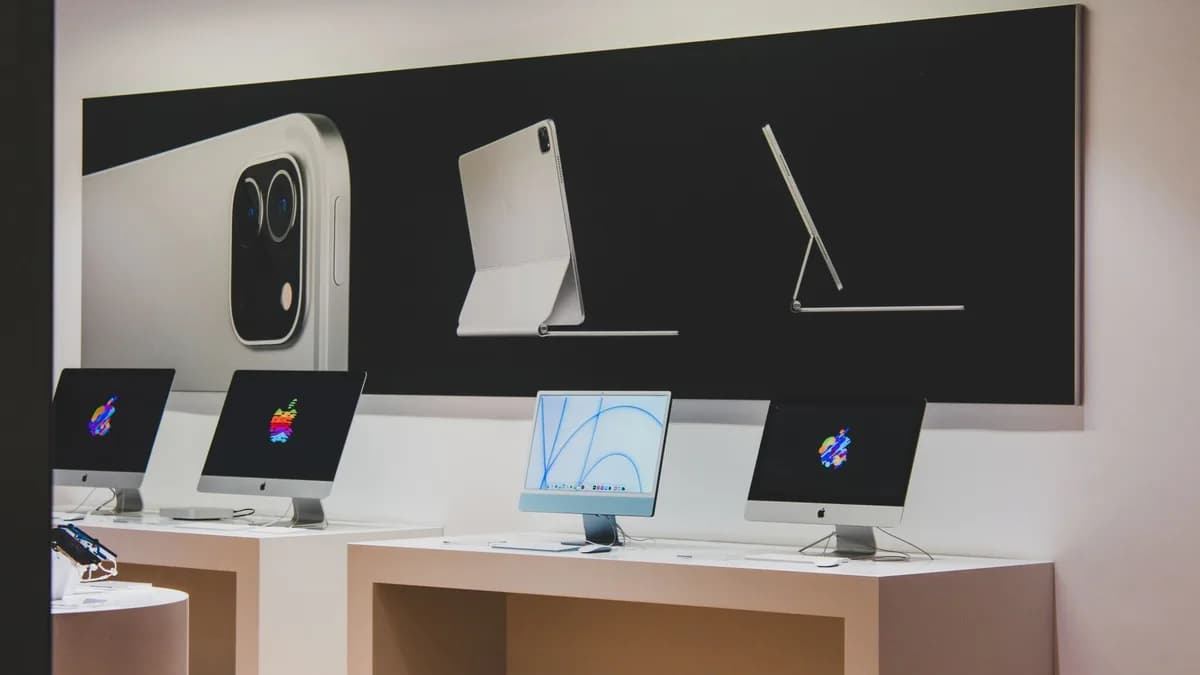
The Mac Studio, positioned as a powerhouse for video editors, 3D artists, and music producers, is Apple's direct answer to the compact workstation. A $260 higher trade in offer acts as a direct subsidy to reduce the final cost of switching to Apple Silicon. It's a calculated move to lure users at their most vulnerable point: the upgrade cycle. When a Windows power user's machine ages, the decision matrix now includes a more generous exit option from Apple, making the financial leap less daunting.
Android Credits Target Two Specific User Profiles
For years, Apple's trade in program was a loyalty loop for its own users. The latest expansion turns it into a recruitment tool. Apple is now offering credit for a new slate of Android devices, but the selection is narrow and telling:
- Samsung Galaxy S21 Ultra 5G ($95)
- Google Pixel 9 Pro XL ($315)
- Google Pixel 9 Pro ($305)
- Google Pixel 9 ($210)
- OnePlus 13 ($250)
- OnePlus 13R ($165)
The pattern is clear. Apple is targeting the high end of Google's lineup (the Pixel 9 Pro XL at $315) and recent OnePlus flagships, while also offering a token amount for an older Samsung ultra premium model. This is not a blanket invitation. It's a precision offer aimed at Android users who have already demonstrated a willingness to spend significant money on their mobile device and who may be feeling the limitations of the Android ecosystem or hardware cycles.
Conversely, Apple lowered credit for slightly older flagship Androids like the Samsung Galaxy S22 Ultra 5G (down $5 to $125) and the Google Pixel 8 Pro (down $10 to $155). The message: we want the very latest, or we'll take your old phone for parts. This program expansion, as we observed with Google Pixel 11's upcoming AI focused event, coincides with a period of intense competition in the high end smartphone space, where customer loyalty is most valuable.
Every Trade In Feeds Apple's Refurbished Machine
This analysis isn't complete without following the money trail past the initial sale. Every device traded in, especially high value Macs and nearly new Android flagships, becomes feedstock for Apple's Certified Refurbished store. This is a high margin segment Apple completely controls.
Increasing the trade in value on a Mac Studio does two things. First, it makes a new purchase more attractive. Second, and perhaps more importantly, it guarantees Apple a steady supply of recent, high end Macs to refurbish and resell under its own brand, at a premium, with a full warranty. This move actively drains the best inventory away from the independent secondary market and into Apple's vertically integrated loop. The company isn't just selling you a new Mac, it's ensuring it can also be the sole retailer of the Mac you're giving up.
XOOMAR Interpretation The source material reports the facts of the increase but does not speculate on Apple's internal supply chain. However, the economics are self evident. Higher trade in credits are a customer acquisition cost. For Apple, acquiring a used Mac Studio is not an expense, it's an investment in a refurbished unit it can sell for thousands of dollars. The same logic applies to a $315 Pixel 9 Pro XL, which can be resold or harvested for parts. The trade in program's true profitability is on the back end.
Who Actually Wins When Apple Pays More?
The ripple effects of this move create clear winners and ambiguous losers.
The Creative Pro Considering a Switch: Wins. The financial barrier to adopting an Apple Silicon Mac, especially for compute intensive work, just got lower. The effective discount is real.
The High End Android User: Wins, conditionally. If you own a recent Pixel 9 Pro or OnePlus 13 and have considered iOS, Apple just handed you a significant check to ease the transition. It monetizes your hesitation.
The Independent Resale Market: Likely loses. Gazelle, Swappa, and local repair shops won't compete with Apple's direct offer for a pristine Mac Studio or a two week old Pixel. Apple's increased credits will siphon the best condition devices out of the open market before they ever get listed. This further consolidates Apple's control over the lifecycle of its products, and even the products of its competitors.
The Environment: Unclear. Proper recycling is a win. However, if the primary effect is merely to accelerate upgrade cycles for functional devices, the net impact could be negative. The source material provides no data on Apple's recycling rates for these traded in items, leaving this a critical open question.
From Ecosystem Lock to Competitive Weapon
Apple's trade in evolution is stark. It began as a simple tool to keep users within the iPhone upgrade cycle. Accepting Android devices was a later, almost reluctant addition. Today's adjustments signal a new phase: active, targeted conquest.
The $260 Mac Studio increase is a dagger aimed at the professional PC market. The $315 Pixel 9 Pro XL credit is a bounty offered for defection from a key rival. This follows a pattern of Apple using financial levers to shape behavior, similar to the contentious dynamics seen in Apple's App Store enforcement.
The timing is also practical. These increases landed in August 2026. This isn't the traditional post September launch spike. It suggests Apple is experimenting with smoothing out demand, pulling upgrades forward, and capturing customers before they might be swayed by competing fall product launches from Google, Samsung, or PC manufacturers.
Your Next Upgrade Decision Just Got More Complex
For the informed buyer, this changes the calculus.
If you're a professional using a aging high end PC, your research should now include checking Apple's trade in value for your current machine. It's no longer abstract, it's a line item in the total cost of switching.
If you're an Android user with a recent flagship, your path to iPhone now has an official, hassle free price tag attached. Compare Apple's $315 for your Pixel 9 Pro XL to what you could net on the open market after fees and shipping.
Most importantly, this move signals that the resale value of your high end tech is increasingly set by a single entity: the original manufacturer. As Apple proves this model can simultaneously drive new sales and control the refurbished market, expect every other major player to follow. The independent market for recent, premium gadgets is facing a powerful, well funded competitor that also makes the products.
The Bottom Line
- Apple is directly targeting high-end Windows PC users by making platform switching financially easier during their upgrade cycle.
- The company is expanding from a loyalty program into an acquisition tool by specifically targeting newer premium Android devices from Samsung and Google.
- This strategic shift could accelerate Apple's market share growth among creative professionals and developers previously anchored in competing ecosystems.
Apple Trade-in Value Changes
| Device | Old Value | New Value | Increase |
|---|---|---|---|
| Mac Studio | Not specified | Not specified | $260 |
| MacBook Pro | $690 | $855 | $165 |
| Mac Pro | $2,045 | $2,195 | $150 |
| Samsung Galaxy S21 Ultra 5G | N/A | $95 | N/A |
| Google Pixel 9 Pro XL | N/A | $315 | N/A |
| Google Pixel 9 Pro | N/A | $305 | N/A |
Sources

Written by
XOOMAR Insights Team
Research and Editorial Desk
The XOOMAR Insights Team pairs automated research with human editorial judgment. We track hundreds of sources across technology, fintech, trading, SaaS, and cybersecurity, cross-check the facts, and explain what happened, why it matters, and what to watch next. We do not just rewrite headlines. Every article is fact-checked and scored for reliability before it goes live, and we link back to the original sources so you can verify anything yourself.
Explore More Topics
Related Articles
 Technology
Android Flaw Shares User Location 60M Times, Data Goes to FBI
A core Android flaw has allowed third-party ad code inside ordinary apps to secretly share users' precise location data millions of times, feeding data brokers
Aug 4, 20266 min
 Technology
OpenAI Calls Apple Lawsuit 'Rotten to Its Core'
OpenAI has moved to dismiss Apple's trade secrets lawsuit, framing it as a baseless and reactive attempt to smear a competitor. The filing accuses Apple of tryi
Aug 8, 20266 min
 Technology
Apple Must Let iPhones Paste to Windows PCs in EU
Europe's regulators are forcing Apple to break a key ecosystem lock, requiring it to let iPhone users copy text and paste it directly onto Windows PCs by 2027.
Aug 4, 20267 min
 Technology
Don't Trash Your Intel Mac Yet: 6 Fresh Lives After Support Dies
Apple is ending macOS support for Intel Macs, but you can still get years of use by repurposing it as a dedicated media server, a home file vault, or a secure b
Aug 4, 20266 min
 Technology
Apple Accuses 11 Ex-Employees of Taking Secrets to OpenAI
Apple’s court filing reveals at least 11 former employees may have taken confidential product information to OpenAI, escalating a targeted legal attack on its A
Aug 4, 20266 min
 Cybersecurity
Security Chaos Floods Apple Bug Bounties With AI Slop
A flood of AI-generated reports is overwhelming companies like Apple, forcing them to cap bug bounties as attacks swamp ports, banks, and infrastructure in a se
Aug 8, 20267 min
 Technology
Emergency Backup Fails, Stranding Thousands in UK
A major power cut and a failed backup generator at the Manchester Rail Operating Centre forced a total suspension of train services across northwest England, st
Aug 8, 20265 min
 Global Trends
BC Wildfire Burns Towns, Traps Thousands as Lake Evacuates
A fast-moving wildfire in British Columbia’s Okanagan region forced more than 20,000 people to evacuate overnight, destroyed homes, and trapped residents as the
Aug 8, 20269 min
 Cybersecurity
Coldcard Hack Voids $100 Million Self-Custody Promise
A flaw in Coldcard hardware wallets let attackers drain over $100 million, proving that even air-gapped devices can betray users and forcing a brutal risk reass
Aug 8, 20266 min
 Global Trends
Saudi Arabia Hedges US Security in Mutual Defense Pact
Saudi Arabia signed a new defense pact with Turkey and Pakistan, a strategic hedge that reveals Riyadh's fading faith in unconditional US protection.
Aug 8, 20265 min
Don't miss the signal
Get our weekly roundup of the stories that matter across tech, fintech, and trading. No noise, just signal.
Free forever. No spam. Unsubscribe anytime.