
British Columbia declared a state of emergency Saturday as a fast-moving wildfire destroyed homes, trapped residents and forced more than 20,000 people to flee communities along Okanagan Lake in western Canada, according to reports from Independent World and the Associated Press. This is not an isolated blaze but a symptom of a province, and a nation, where fire seasons are no longer seasonal.

Global TrendsAugust 8, 2026· 9 min read· By XOOMAR Insights Team
BC Wildfire Burns Towns, Traps Thousands as Lake Evacuates
Updated on August 8, 2026
XOOMAR Intelligence
Analyst Take
71/ 100
4 sources analyzedLow confidenceTrend30Freshness96Source Trust82Factual Grounding82Signal Cluster60
The Bald Range wildfire was first reported on Friday evening. Within hours, it grew to about 50 square kilometers (19 square miles), overwhelming the small community of Faulder and covering the roughly 15 kilometers (9 miles) to Summerland at what officials called "extraordinary speed." For the 12,000 residents of Summerland and the 8,000 people in and around Peachland, the order to leave came overnight, transforming a Friday night into a chaotic, smoke-choked exodus.
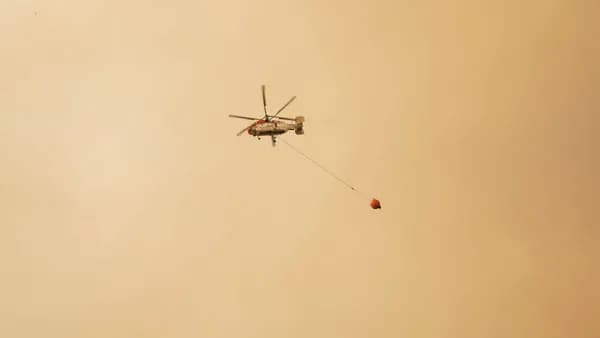
Premier David Eby confirmed that some residents became trapped and required rescue by firefighting helicopters. Search-and-rescue teams continue to comb areas behind fire lines. The immediate human cost is still being tallied. Officials have yet to determine how many homes were destroyed.
“I know many families are facing an unimaginable day today,” Eby said. “People have lost their homes. And many people have been displaced. Others are waiting for news about loved ones.”
This single fire is part of a larger inferno. Over 100 wildfires are currently burning across British Columbia, with nearly half of them classified as out of control. They are fueled by what Cliff Chapman, director of wildfire operations for the BC Wildfire Service, called "explosive" conditions: hot, windy weather and a prolonged drought.
The Overnight Transformation of a Province
The speed of this event defines it. The fire did not creep. It raced. Erick Thompson, an emergency official with the Regional District of Okanagan-Similkameen, called it one of the “quickest-moving, fastest-growing” wildfires the region had experienced. The velocity was so great that Thompson, while coordinating the response, had to abandon his emergency operations center to evacuate his own family.
“I had to leave the EOC to come and get my family to leave this area. We’re heading south,” he said in a video posted early Saturday from his vehicle as traffic backed up around him.
This footage captures the core reality: when a fire moves this fast, official plans and personal readiness collide with raw, immediate danger. Residents like homeowners Kerry Gold and Mike Elsinga fled around 12:30 a.m. after watching flames spread beyond nearby mountains. They had bags packed and a carrier ready for their cat, a small semblance of preparedness against a vast threat.
“It’s scary. It’s moving fast,” Gold said. Her husband added, “You want to stay here and protect your home, but you also don’t want to get caught in it.”
Videos posted on social media showed the nightmare: multiple homes burning as residents fled along roads with flames on both sides. The declaration of a provincial state of emergency is the formal admission that local resources are overwhelmed. It grants the government powers to restrict travel and commandeer accommodations for evacuees. It is a political signal that the crisis has exceeded any routine response.
The Logistics of Displacing a Small City
The immediate challenge is existential: where do 20,000 people go? The evacuation of Summerland alone is equivalent to relocating an entire town in a matter of hours. The logistics are monstrous.
- Shelter: The provincial emergency powers aim to secure accommodations, but this likely means using arenas, community centers, and hotels across a wide region, straining the capacity of neighboring, non-evacuated towns.
- Support: This isn't just about a roof. It involves providing food, water, medical care, and medications for thousands. It means handling pets, livestock, and the fragile documentation of lives left behind.
- Strain: The social and economic ripple is instantaneous. Schools close. Businesses shut. Emergency services from neighboring jurisdictions are stretched thin. The cost of housing and supporting evacuees begins accruing the moment the order is given, a bill that will run into the tens of millions before the fire is even contained.
The human cost is deeper than logistics. It's the trauma of the unknown. For the evacuees, there is a suspended state of grief and anxiety. They wait for official word on whether their home is standing. They rely on fragments of social media video, each clip a potential heartbreak. This collective displacement fractures community bonds, even if temporarily, and inflicts a psychological burden that will linger long after the smoke clears.
This disaster intersects with other economic pressures. A sudden influx of displaced residents can strain local housing markets, a factor in regions already experiencing tight supply. For context on how Canada's broader economy is performing amidst other challenges, see our analysis of Canada’s Job Boom Defies Rate Cut Bets.
From Seasonal Threat to Permanent Emergency
The source material includes a critical, understated line of context: "Canada has endured increasingly destructive wildfire seasons in recent years." This event is not an anomaly. It is a data point on a sharply rising curve.
- The Trend: British Columbia experiences roughly 1,600 wildfires per year, on average. The trend, however, is toward greater intensity, faster spread, and more direct impacts on populated areas. The Bald Range fire is a textbook example.
- The Conditions: The "explosive" fire behavior described by officials is a product of a dangerous recipe: a prolonged drought that desiccates vegetation, creating vast fuel reserves; hot temperatures that precondition that fuel to burn; and windy conditions that provide the oxygen and momentum for runaway growth.
- The Paradox: British Columbia is defined by its immense natural beauty and resource wealth, a landscape that draws residents and tourists alike. Yet this very wilderness, when combined with communities built at its edge (the wildland-urban interface), creates a profound vulnerability. The province's wealth is increasingly threatened by the volatility of its environment.
The declaration of a state of emergency must be viewed not as a one-time event, but as a rehearsal for a new normal. As these seasons grow longer and more intense, the province's emergency management apparatus faces the prospect of being in a near-permanent state of activation during summer and fall months. This challenges budgets, personnel, and public patience.
Furthermore, the cross-border implications are real. The source notes wildfires have "repeatedly sent smoke across large parts of Canada and the United States," affecting air quality for millions and even sparking international tensions over tariffs in the past. A local fire is no longer a local problem.
This pattern of escalating climate-driven disruption is a global phenomenon, manifesting in diverse ways. For a look at how another region is adapting its social policies to economic and environmental stress, consider the report on Kano State Marries 1,500 Couples in Welfare Strategy.
The Inevitable Reckoning: Insurance, Planning, and Retreat
The aftermath of this fire will trigger a series of cold, hard calculations that extend far beyond the fire line.
The Insurance Reality The insurance industry operates on models of predictable risk. The escalating frequency and severity of wildfires in B.C. are shattering those models.
- Immediate Payouts: The still-uncounteds home losses from the Bald Range fire will represent a major claims event for insurers operating in the region.
- Long-Term Recalibration: This event will be plugged into actuarial models, almost certainly leading to rising premiums for property owners across the Okanagan and similar high-risk zones. Some may find insurance difficult to obtain at any price.
- Policy Redefinition: The industry will intensify scrutiny of "act of god" clauses and may push for stricter, legally enforced building codes (fire-resistant materials, mandated defensible space) as a precondition for coverage.
The Community Calculus For municipalities and the provincial government, the question becomes one of adaptation and, in some cases, retreat.
- Land-Use Planning: Will there be a moratorium on new construction in the most vulnerable wildland-urban interface areas? Will existing communities be required to enact costly fire mitigation bylaws?
- The "Defensible Space" Mandate: This event will accelerate the push for legally mandated fireproofing. The concept of creating a buffer zone around properties may move from a recommended best practice to a requirement, with significant cost implications for homeowners.
- Managed Retreat: In the most extreme cases, the discussion will turn to whether it is fiscally and morally responsible to repeatedly rebuild in areas that have proven to be catastrophic fire corridors. Who pays for that cycle? This is a politically explosive but increasingly unavoidable conversation.
The National Political Imperative For Canadian federal politics, wildfires are transforming climate adaptation from an abstract policy debate into a visceral, voter-driven imperative. When tens of thousands of citizens are displaced annually, when insurance markets falter, and when iconic landscapes burn, the issue moves from the environment ministry to the center of economic and security policy. Funding for firefighting, community resilience, and disaster recovery will become a permanent and growing line item in federal budgets.
XOOMAR Interpretation: The Bald Range wildfire is a marker. It demonstrates that the primary threat is no longer just the size of a fire, but its speed. When a fire can travel 15 kilometers overnight, it fundamentally changes the equation for evacuation planning and community safety. The old model of staged alerts and orderly departure is obsolete against such a threat.
The watch point now is the province's recovery and response in the coming weeks. How quickly can evacuees return and receive clarity on their losses? What will be the official count of destroyed structures? The answers will set the tone for the harder conversations to come about risk, responsibility, and resilience in an era where the emergency season never really ends.
Why It Matters
- 20,000 residents were forced to evacuate overnight, creating a sudden humanitarian crisis.
- The fire grew explosively to 50 square kilometers, demonstrating the dangerous speed of modern wildfires under extreme conditions.
- This single blaze is part of a larger pattern, with over 100 wildfires burning in British Columbia, nearly half uncontrolled.
Sources

Written by
XOOMAR Insights Team
Research and Editorial Desk
The XOOMAR Insights Team pairs automated research with human editorial judgment. We track hundreds of sources across technology, fintech, trading, SaaS, and cybersecurity, cross-check the facts, and explain what happened, why it matters, and what to watch next. We do not just rewrite headlines. Every article is fact-checked and scored for reliability before it goes live, and we link back to the original sources so you can verify anything yourself.
Explore More Topics
Related Articles
 Global Trends
Wind-Stoked Inferno Forces 20,000 to Flee in Chaos
The Bald Range wildfire in British Columbia exploded in size in under 24 hours, forcing over 20,000 people to flee amid catastrophic winds and tinder-dry forest
Aug 8, 20265 min
 Global Trends
Chainsaw Ignites California Wildfire, Kills Dog Breeder
A man was arrested after authorities said his chainsaw sparked a catastrophic Sierra Nevada wildfire that killed a dog breeder and burned over 15 square miles.
Aug 7, 20264 min
 Global Trends
Fuego Volcano Springs to Life, Forcing 659 from Homes
Guatemala's Fuego volcano erupted violently, forcing the evacuation of 659 people from eight villages and suspending life in its shadow for over 23 hours.
Aug 4, 20267 min
 Global Trends
Canada Ignores UN Plea to Protect Sikh Activist Being Hunted
UN human rights experts have publicly urged Canada to protect a Sikh activist on its soil, citing documented death threats and accusing the government of failin
Aug 4, 20268 min
 Global Trends
Second US Consulate Toronto Shooting Rattles Downtown
Gunfire near the US consulate in Toronto marks the second incident in four months, with no injuries and no suspect named.
Aug 3, 20266 min
 Future Fiction
Fallen Helicopter Crew Trapped by Own Wildfire Spread
A firefighting helicopter crash has left its two-person crew stranded in a remote, burning area of central Utah, as the wreckage itself sparked a new fire block
Aug 8, 20264 min
 Technology
Emergency Backup Fails, Stranding Thousands in UK
A major power cut and a failed backup generator at the Manchester Rail Operating Centre forced a total suspension of train services across northwest England, st
Aug 8, 20265 min
 Technology
Apple Traps Creative Pros With $260 Mac Studio Discount
Apple raised Mac Studio trade-in values by $260 and added Android devices to its program, a direct subsidy to poach creative professionals during their upgrade
Aug 8, 20267 min
 Cybersecurity
Coldcard Hack Voids $100 Million Self-Custody Promise
A flaw in Coldcard hardware wallets let attackers drain over $100 million, proving that even air-gapped devices can betray users and forcing a brutal risk reass
Aug 8, 20266 min
 Global Trends
Saudi Arabia Hedges US Security in Mutual Defense Pact
Saudi Arabia signed a new defense pact with Turkey and Pakistan, a strategic hedge that reveals Riyadh's fading faith in unconditional US protection.
Aug 8, 20265 min
Don't miss the signal
Get our weekly roundup of the stories that matter across tech, fintech, and trading. No noise, just signal.
Free forever. No spam. Unsubscribe anytime.