
A United Nations human rights panel has formally urged Canada to protect a Sikh activist on its own soil from "credible and imminent threats" they link directly to "foreign intimidation." The call is a rare and diplomatic flashpoint for Ottawa, forcing a public reckoning between its pledge to protect citizens and its deep economic ties with New Delhi.
Global TrendsAugust 4, 2026· 8 min read· By XOOMAR Insights Team
Canada Ignores UN Plea to Protect Sikh Activist Being Hunted
Updated on August 4, 2026
XOOMAR Intelligence
Analyst Take
72/ 100
4 sources analyzedMedium confidenceTrend20Freshness90Source Trust90Factual Grounding92Signal Cluster40
The intervention by five UN special rapporteurs centers on Moninder Singh, a 44-year-old Canadian national and an activist. Since 2022, Singh says he has received four separate "duty to warn" notices from Canadian law enforcement, each advising him of specific threats to his life. The UN experts' letter, dated June 3, 2026, and made public in early August, states these threats appear to be "part of a broader pattern of transnational repression by Indian authorities against Sikh activists in different countries, including Canada." You can read the original report from Guardian World.
This isn't just a request for extra police patrols. It's a direct, documented challenge from international rights monitors who believe a member state, Canada, is failing to adequately shield a citizen from the hostile actions of another member state, India. The letter wasn't sent in a vacuum. It was also copied to the Indian government, making it as much a diplomatic censure as a plea for protection.
When a 'Duty to Warn' Notice Isn't Enough
The core mechanism at play is Canada's "duty to warn" protocol, a legal and ethical obligation for police or intelligence services to inform individuals of a credible threat. For Moninder Singh, this has happened four times in as many years. Each notice is an official recognition that a plot exists, and that he is the target.
"We also urge the authorities to accelerate the investigations into these allegations, hold perpetrators accountable, ensure adequate remedy to victims and take all steps to prevent reoccurrence," the UN rapporteurs wrote.
Yet the experts expressed concern that since February, the Canadian authorities "have taken no known further protective and monitoring measures to ensure their safety." This gap between warning and action forms the heart of the UN's critique. A "duty to warn" is reactive. The UN experts are demanding proactive "feasible measures," which could include anything from 24-hour close protection and secure housing to electronic counter-surveillance.
Who are the rapporteurs? They are independent experts appointed by the UN Human Rights Council to investigate and report on specific themes or country situations. They do not speak for the UN Secretariat, but their public letters carry significant moral weight and can trigger formal inquiries. Their involvement here signals they view this case as a template for a wider, more dangerous trend.
Transnational Repression: From Rhetoric to Real Bullets
The UN letter uses a specific, legally charged term: transnational repression. This describes a government's use of intimidation, harassment, or violence to silence dissent among diaspora communities beyond its own borders. For Sikh activists in Canada, the United Kingdom, and elsewhere, the concept moved from theory to horrifying reality with the June 2023 killing of Hardeep Singh Nijjar.
Nijjar, a friend of Moninder Singh, was shot dead outside the gurdwara he led in Surrey, British Columbia. Months later, Prime Minister Justin Trudeau stood in Parliament and stated there were "credible allegations" of a link between agents of the Government of India and the murder. This shattered diplomatic norms and led to tit-for-tat expulsions of diplomats in 2024. While relations have thawed under current Prime Minister Mark Carney, who visited India in March 2026 to sign trade deals, the intelligence assessment underpinning Trudeau's claim has not been publicly retracted.
The allegation against India is that it employs organized crime groups or intelligence assets to carry out operations on foreign soil. This moves beyond diplomatic pressure or visa denials into the realm of covert action. The pattern, as articulated by activists and now referenced by the UN, suggests a strategy of targeting high-profile proponents of Khalistan, a proposed independent Sikh homeland. The Khalistan movement is banned in India and viewed by New Delhi as a violent secessionist threat.
Who Is Moninder Singh, and Why Is He a Target?
Moninder Singh positions himself squarely in the lineage of Hardeep Singh Nijjar. He is a Canadian citizen who advocates for Khalistan, part of what the source material frankly calls a "fringe group." In early 2026, he traveled to the UN in Geneva to plead his case against what he terms transnational repression.
His connection to Nijjar: They were friends and fellow activists within the same cause. After Nijjar's death, Singh became a frequent media spokesperson, visibly stepping into a leadership vacuum. He told the AFP news agency the UN letter is "a stark reminder of how far the Indian state is willing to go to silence Sikh voices advocating for self-determination."
The threats: The four warnings he received from Canadian authorities are not general advisories. They are specific intelligence products indicating credible plots. For a private citizen to receive one such notice is alarming. Four suggests a persistent, high-priority threat environment where multiple hostile actors or plans have been identified over time. It paints a picture of a man living a life of calculated risk, knowing his phone calls, movements, and associations are likely under scrutiny from both Canadian protective services and, he alleges, foreign intelligence.
Canada's Unenviable Calculus: Citizen Safety vs. Statecraft
This case forces Canada into an almost impossible position. Its intelligence and police services, notably the Royal Canadian Mounted Police (RCMP) and the Canadian Security Intelligence Service (CSIS), have the mandate and tools to protect individuals. These can include:
- Physical protection details
- Secure safe houses
- Technical surveillance counter-measures
- Disruption of suspected hostile operations
However, these measures are resource-intensive, often invasive, and rarely permanent. They are designed for short-term, high-risk scenarios, not for a multi-year campaign against a state-level adversary. This operational reality bumps against a hard political truth: Canada is deeply invested in rebuilding its economic and strategic relationship with India.
Since taking office, Prime Minister Carney has prioritized mending fences with New Delhi, culminating in his March 2026 trade mission. Publicly refocusing on trade while a prominent activist alleges an ongoing state-backed threat creates a stark dissonance. The UN experts are essentially asking: has the diplomatic détente come at the cost of downplaying or deprioritizing protective actions? Their letter implies that warnings alone, without robust follow-through, constitute a failing grade for a wealthy, rule-of-law democracy. This tension has echoes in other global security debates, such as the recent concerns over public safety and diplomatic premises highlighted in the incidents around the Second US Consulate Toronto Shooting Rattles Downtown.
The UN's Verdict Is a Spotlight, Not a Shield
The special rapporteurs cannot send peacekeepers to guard Moninder Singh's home. Their power lies in exposure and shaming. By publishing their letter, they accomplish several things:
- Internationalize the issue: They lift it from a bilateral Canada-India spat to a matter of global human rights principle, specifically the right to life and freedom from persecution.
- Create a public record: They establish a formal UN document alleging a pattern of "foreign intimidation and reprisals" by India, which becomes a reference point for future legal or diplomatic actions.
- Force a public response: Canada and India are now compelled to respond officially to the UN, detailing what steps they have taken or will take. Silence is a damaging answer.
What happens next? The immediate onus is on the Canadian government. It must now craft a formal reply to the rapporteurs, justifying its current protective measures or announcing new ones. Diplomatically, it must navigate this without torpedoing the Carney government's rebuilt ties with India. For India, the choice is to either ignore the allegations, issue a forceful denial, or, less likely, engage with the UN process.
For Moninder Singh and other Sikh activists, the letter is a tool but not a solution. It validates their long-standing claims and increases the political cost for any government seen as ignoring them. Yet, the ultimate responsibility for his physical safety remains with the Canadian state. The UN has held up a mirror; now the world watches to see if Canada sees a defender of free speech in need of help, or a diplomatic inconvenience in a delicate geopolitical balancing act. How Ottawa responds will resonate far beyond this one case, setting a precedent for how liberal democracies confront the murky, dangerous world of transnational repression. This delicate dance between security and diplomacy will remain a key theme in global affairs, much like the complex interplay between economic policy and market stability seen in discussions around GDP Surprise Knocks Bank of Canada Rate Cut Bets Back.
Impact Analysis
- International human rights bodies are formally documenting that a Canadian citizen is facing insufficient protection from credible transnational threats, challenging Canada's domestic sovereignty and rule of law.
- This public confrontation by UN experts directly pressures Canada to reconcile its foreign policy with India, a major strategic and economic partner, against its duty to protect citizens.
- The case sets a precedent for how democratic nations respond to alleged 'transnational repression' and the effectiveness of international human rights mechanisms in protecting diaspora activists.
Sources

Written by
XOOMAR Insights Team
Research and Editorial Desk
The XOOMAR Insights Team pairs automated research with human editorial judgment. We track hundreds of sources across technology, fintech, trading, SaaS, and cybersecurity, cross-check the facts, and explain what happened, why it matters, and what to watch next. We do not just rewrite headlines. Every article is fact-checked and scored for reliability before it goes live, and we link back to the original sources so you can verify anything yourself.
Explore More Topics
Related Articles
 Global Trends
Trump Tariffs Twist Court Loss into Checkout Tax Fight
Trump recast his tariffs after a court loss. Democrats see an opening, calling them a sales tax on squeezed Americans.
Jul 25, 20269 min
 Global Trends
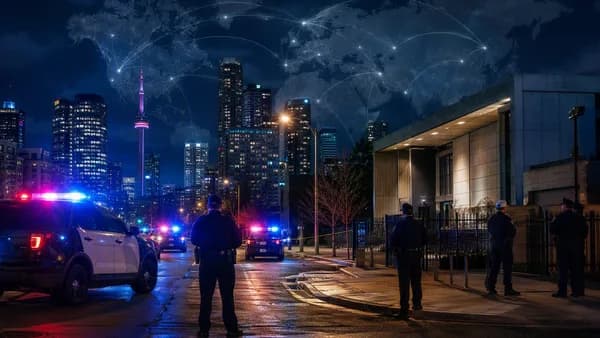
Second US Consulate Toronto Shooting Rattles Downtown
Gunfire near the US consulate in Toronto marks the second incident in four months, with no injuries and no suspect named.
Aug 3, 20266 min
 Global Trends
900 Canada Wildfires Send Smoke Across the Atlantic
More than 900 Canada wildfires have burned 3m hectares, spreading smoke abroad as other weather extremes intensify.
Jul 25, 20266 min
 Global Trends
Tariff Detours Crush the US Manufacturing Jobs Pitch
Tariffs haven't sparked a US factory jobs boom. Chinese inputs are taking longer routes, with higher costs and more automation.
Jul 27, 20268 min
 Global Trends
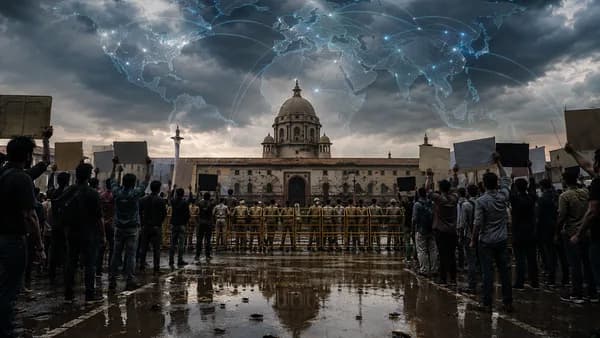
Cockroach Protests Crack Modi’s BJP Fortress in Delhi
Cockroach protests forced a minister out and exposed fresh weakness in Modi’s BJP after years of dominance.
Jul 27, 20268 min
 Cybersecurity
Attackers Hijack Email AI for CEO Fraud Heists
New research simulates how attackers hijack a compromised user's sanctioned email AI assistant to run reconnaissance, hide alerts, and craft executive impersona
Aug 4, 20265 min
 Technology
Don't Trash Your Intel Mac Yet: 6 Fresh Lives After Support Dies
Apple is ending macOS support for Intel Macs, but you can still get years of use by repurposing it as a dedicated media server, a home file vault, or a secure b
Aug 4, 20266 min
 Technology
Apple Accuses 11 Ex-Employees of Taking Secrets to OpenAI
Apple’s court filing reveals at least 11 former employees may have taken confidential product information to OpenAI, escalating a targeted legal attack on its A
Aug 4, 20266 min
 Cybersecurity
FBI Agent Stole $1M in Crypto from Monitored Nation State
An FBI agent used his access to steal $1 million in cryptocurrency from wallets his own national security unit was monitoring, leading to his arrest and a major
Aug 4, 202610 min
 Future Fiction
Cyclist Dies After Riding 5,200km For Charity At 82
An 82-year-old man completed a 5,200km cross-country bike ride for charity, celebrated with loved ones, and died peacefully the next day, closing a purposeful f
Aug 4, 20267 min
Don't miss the signal
Get our weekly roundup of the stories that matter across tech, fintech, and trading. No noise, just signal.
Free forever. No spam. Unsubscribe anytime.