A year and a half after Altana CEO Evan Smith first warned that Trump’s tariff waves were reshaping global trade, his read of the data is blunt: tariffs manufacturing jobs US policy has not produced the factory hiring revival it promised.
XOOMAR Intelligence
Analyst Take
Smith, whose company maps supply chains for governments, importers, and eight of the world’s 10 biggest logistics providers, told Decoder that Chinese inputs are still flowing into US-bound goods, just through more complicated routes, according to The Verge. That matters because the tariff strategy was sold as a shortcut to domestic manufacturing strength. The emerging result looks different: rerouting, higher compliance costs, and more automation.
“On a net basis, the answer is no,” Smith said when asked whether the US is creating a wave of manufacturing jobs.
The hard question now is not whether tariffs can disrupt trade. They can. The question is what policymakers are buying with that disruption if the jobs don’t follow.
After Liberation Day tariffs, imports shifted while manufacturing jobs kept falling
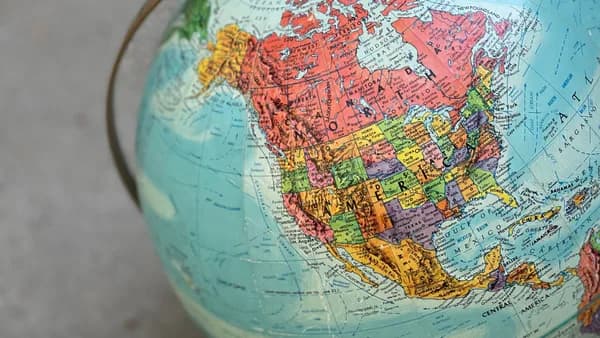
Smith’s most important claim is that the US has not meaningfully reduced its dependence on China as a manufacturing source. He said Altana sees a “proportionate decrease in Chinese exports to the United States” alongside a “proportionate increase in US imports from third-party countries like Vietnam, Mexico, Canada, and Malaysia.”
The catch is in the inputs. Altana’s platform can see where goods feeding those third-country exports originate. Smith’s answer: China.
That means the tariff wall may be changing the label and route more than the dependency. Goods can move through another country, undergo some level of transformation, then continue to the same US end market “at a higher cost,” as Smith put it.
The manufacturing data point cuts the same way. Smith said the Purchasing Managers Index (PMI), which he described as an index of US manufacturing output, fell after the tariffs. In the last five or six months, he said it moved above the neutral threshold of 50 percent and has been increasing.
But output is not jobs.
Smith’s explanation is straightforward: US factories can produce more without hiring many workers because industrial automation absorbs much of the expansion. That is the gap at the center of the tariffs manufacturing jobs US story. The policy can tilt incentives toward domestic production, but the next factory is unlikely to look like the old assembly line.
XOOMAR analysis: this is the weakness in the political sales pitch. Tariffs may support strategic capacity in certain sectors, but they don’t mechanically recreate broad-based factory employment. Higher input costs hit US manufacturers first. Customs complexity adds another layer. Consumers may still face higher prices when routes adapt but costs rise, a theme that also runs through our coverage of the tariff checkout tax fight.
Since early 2025, China dependency has been relabeled through Mexico, Vietnam, and Malaysia
The distinction between final assembly and real supply chain independence is now the whole game.
A product can leave Mexico or Vietnam while still depending on Chinese parts, tooling, minerals, subassemblies, or upstream processing. That is why Smith kept returning to supply chain traceability. If policy aims to reshape the network, governments need to know not just where a shipment cleared customs, but the full path of the good.
Smith connected this directly to the renegotiation of the United States-Mexico-Canada Agreement (USMCA). He said traceability is becoming the “linchpin” of the US framework.
He also pointed to the end of the de minimis exemption for low-value imports in September, where goods below $800 had avoided duties and customs declarations. Smith described how containers could enter Mexico or Canada, then be drop-shipped one by one across the US border to consumers. He said Europe and the UK have also ended their de minimis exemptions.
This is the tariff loop: raise barriers, watch trade find side doors, close the side doors, then add software to manage the new complexity.
XOOMAR analysis: reshoring is slower than slogans because it requires more than price pressure. It requires supplier depth, capital equipment, skilled labor, reliable energy, and durable demand. Smith’s drone example shows the point. He said Chinese suppliers control roughly 90 percent of the relevant value chain components for autonomous systems, so a US drone startup may assemble domestically while still depending on foreign components.
From ancient levies to AI Product Passports at the border
Smith’s customs history was unusually useful because it explains why trade enforcement is moving from shipment checks to product identity.
He described an old model where officials could inspect individual goods, levy them, and let them through. Container shipping broke that model. Random inspections and officer intuition followed. After 9/11, customs systems moved toward risk-based targeting.
Smith’s critique is that those systems are still too crude. He cited one major government customs system with a 0.5 percent targeting hit rate and gave a vivid example: after cocaine was once found in frozen squid, shipments of frozen squid kept getting searched. The result after that first hit, he said, was zero.
Altana’s answer is the Product Passport: a continuously monitored identity record for goods and their production paths. Smith said it can show compliance attributes, national security dimensions, safety dimensions, and tariff dimensions in one place.
| Model | How it works | Weakness Smith highlights |
|---|---|---|
| Random inspection | Select shipments at ports | Misses most network-level risk |
| Rules-based targeting | Search based on fixed triggers | Can chase stale patterns |
| Product Passport | Monitor known goods and provenance continuously | Requires deep public-private data trust |
The trade-off is obvious. Trusted goods could move faster. But the system also makes firms, customs agencies, and software platforms more dependent on shared models of product identity.
In 2026, tariff complexity becomes an AI workflow problem
Altana just acquired Cervo AI, a platform Smith said helps solve customs brokerage complexity. That fits the moment. More tariffs mean more declarations, more classification questions, more messy documents, and more opportunities for agentic AI, meaning systems that can execute multistep workflows using rules and tools, to handle repeatable trade tasks.
Smith said agents can manage standard operating procedures (SOPs) for customers, including strange document formats, mixed Chinese and English text, and edge cases that would break earlier systems.
But he also pushed back on AI hype. Prototyping is easier. Mission-critical deployment is still hard, especially with customers that need 99.999 percent uptime. That matters for customs agencies and logistics providers moving goods where failures can stop shipments.
Stakeholders see different realities:
- Governments: Tariffs and traceability create enforcement power and negotiating leverage.
- Logistics providers: Complexity creates demand for customs automation.
- Manufacturers: Input cost shocks hurt, but targeted bans, grants, procurement, and defense spending can create domestic markets.
- Workers: Strategic manufacturing does not guarantee mass hiring.
- Consumers: Rerouted trade can keep goods moving, but at higher cost.
Legal uncertainty adds another drag. Smith discussed tariff rebates and new legal mechanisms, including Section 338 in the Canada dispute. That tracks the broader court fight we covered in our analysis of Trump tariff legal challenges, though Smith’s focus was operational: companies need systems that can calculate duties under changing rules and handle rebates when policy shifts.
The next decision point is provenance, not just tariff rates
Smith’s broader thesis is that trade policy is becoming a standing instrument of geopolitical power. He pointed to the US, China, and Europe all adding enforcement tools, export licensing, customs authority, or trade barriers.
For business leaders, the practical takeaway is clear: first-tier supplier visibility is no longer enough. Governments increasingly care about the full value chain.
For investors, the simple reshoring narrative is too thin. The larger opportunity may sit in compliance infrastructure, traceability systems, industrial automation, defense procurement, and critical minerals resilience. Smith also tied trade risk to chokepoints such as the Strait of Hormuz and China-linked critical minerals, where economic pressure can become a military problem.
XOOMAR analysis: the evidence that would confirm Smith’s thesis is not another tariff announcement. It is wider adoption of product passports, stricter provenance rules in USMCA-style agreements, more automated customs workflows, and manufacturing output rising without a matching jobs boom.
The evidence that would weaken it is just as clear: sustained net growth in US manufacturing jobs tied directly to tariff-protected production, plus measurable reductions in Chinese inputs across multi-tier supply chains. Until then, tariffs alone look less like a factory jobs machine and more like the trigger for a new trade regime built around provenance, automation, software enforcement, and strategic stockpiles.
Impact Analysis
- Tariffs may be raising costs without delivering the promised factory job gains.
- US dependence on Chinese inputs appears to be shifting routes rather than disappearing.
- Policymakers face harder questions about whether trade disruption is producing meaningful economic benefits.
Tariff Goals vs. Reported Outcomes
| Tariff Strategy Goal | Reported Outcome |
|---|---|
| Bring manufacturing jobs back to the US | Altana CEO Evan Smith says the answer is “no” on a net basis. |
| Reduce reliance on Chinese manufacturing | Chinese inputs are still flowing into US-bound goods through third-party countries. |
| Strengthen domestic supply chains | Trade routes have become more complex, with higher compliance costs and more automation. |
Primary Sources & Disclosures

Written by
XOOMAR Insights Team
Research and Editorial Desk
The XOOMAR Insights Team pairs automated research with human editorial judgment. We track hundreds of sources across technology, fintech, trading, SaaS, and cybersecurity, cross-check the facts, and explain what happened, why it matters, and what to watch next. We do not just rewrite headlines. Every article is fact-checked and scored for reliability before it goes live, and we link back to the original sources so you can verify anything yourself.