
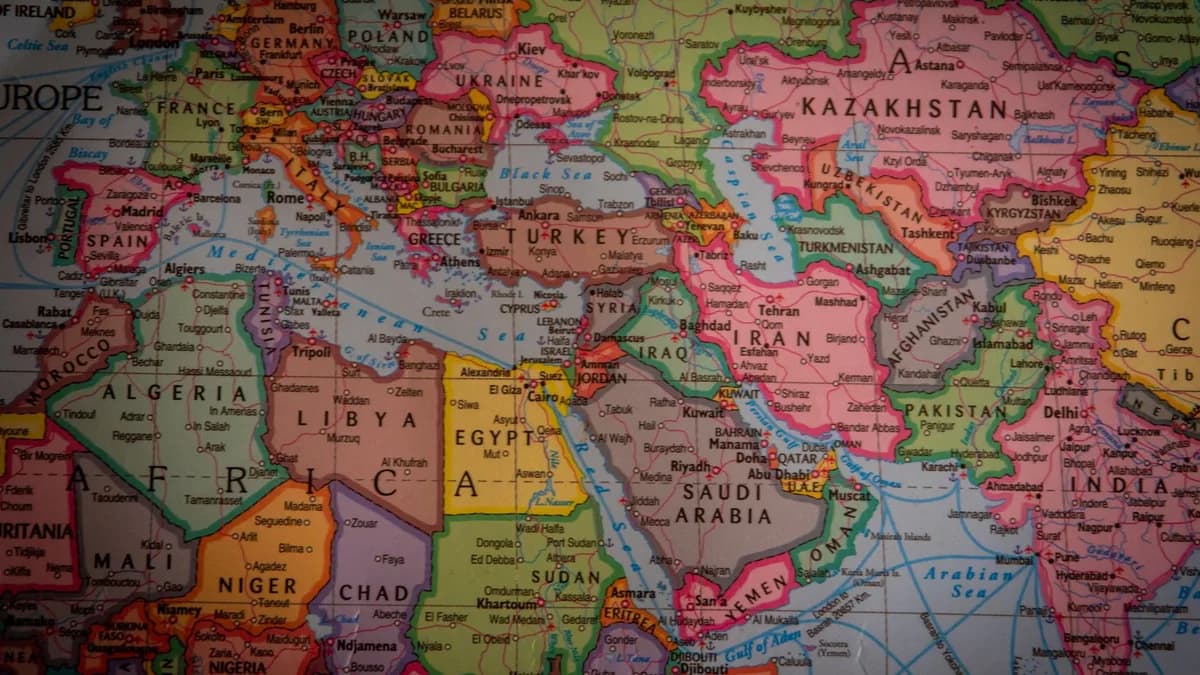
Saudi Arabia, Pakistan, and Turkey have just signed a joint defense pact, a move according to Al Jazeera that is really about Riyadh's desire to diversify its security portfolio beyond Washington. The Mecca Agreement, announced on August 8, 2026, pledges collective defense. But the immediate question isn't what it promises. It's whether a pact between three allies with three different military doctrines and three distinct sets of enemies can ever be more than a symbolic handshake.
Global TrendsAugust 8, 2026· 5 min read· By XOOMAR Insights Team
Saudi Arabia Hedges US Security in Mutual Defense Pact
Updated on August 8, 2026
XOOMAR Intelligence
Analyst Take
67/ 100
4 sources analyzedLow confidenceTrend10Freshness99Source Trust85Factual Grounding89Signal Cluster60
Why Would Saudi Arabia Risk Irking Its American Protector?
The pact arrives amid renewed regional turmoil. Yemen’s Saudi-backed government has launched fresh military operations against the Iran-aligned Houthis. Iran and the U.S. remain locked in unresolved negotiations.
For Saudi Arabia, this isn't about replacing the United States. It's about risk management. The agreement is a direct signal that Riyadh perceives the U.S. security umbrella as less reliable than it once was, or at least wants options should political winds in Washington shift. Diversifying partnerships with Ankara and Islamabad is a strategic hedge. As Mideast Powers Forge Pact Echoing NATO Mutual Defense outlines, the core principle is mutual aid in case of attack. But for Saudi leadership, the unspoken benefit is the political leverage gained by demonstrating it has other powerful friends.
What Can Turkey and Pakistan Offer That The Pentagon Can't?
On paper, the two nations bring unique, non-American assets to Saudi Arabia's table.
Turkey provides a formidable and self-sufficient military-industrial complex, including its renowned Bayraktar TB2 drones. Crucially, it offers NATO-compatible operational experience without the political strings often attached to Washington. Pakistan contributes a massive, combat-seasoned army with deep historical ties to the Gulf monarchies. Its strategic location and military heft offer a different kind of deterrence.
The appeal isn't just military. Cooperation with these regional powers comes with fewer public disputes over governance or values, streamlining coordination. This is a purely realpolitik alliance, focused on capability and geopolitical alignment over shared democratic principles.
Can A Politically Useful Pact Become A Militarily Functional One?
This is where the Mecca Agreement faces its steepest climb. Announcing a collective defense mechanism is one thing. Building the plumbing to make it work is another.
"For defense agreements to become effective alliances, they typically require legal mechanisms, joint command structures, intelligence coordination, and logistical infrastructure," notes an analysis from WANA News Agency. "The details released so far about the Mecca Agreement do not indicate that such structures have been clearly established."
Analysts point to a critical missing piece: a permanent, integrated command body akin to NATO's structure. Without it, any crisis response depends on last-minute political haggling between Riyadh, Ankara, and Islamabad.
Operational Hurdles
- Divergent Priorities: Saudi Arabia is focused on the Gulf and Yemen. Pakistan's main security concern is India. Turkey's attention is on Syria and the Eastern Mediterranean. Creating a unified military agenda is a monumental task.
- Precedent of Failure: Saudi Arabia's past coalition-building efforts, like the 2015 "Islamic Military Counter Terrorism Coalition," failed to evolve into operational structures. The "Operation Decisive Storm" coalition in Yemen saw only a few members bear real military burdens.
What Are The Unspoken Rifts The Alliance Must Overcome?
Beyond bureaucracy, historical and strategic tensions simmer beneath the surface.
The Turkey-Pakistan link is the pact's strongest, given existing close defense ties. The real test is the Saudi-Turkish relationship, long strained by rivalries over the Muslim Brotherhood and the Qatar blockade. Security necessity may be forcing a diplomatic reset, but trust is built over decades, not just signed in a ceremony.
Pakistan walks its own tightrope. It must balance this new commitment to Saudi Arabia with maintaining its delicate diplomatic relationship with Iran. Furthermore, Pakistan's chronic economic instability could limit its ability to project power or fund joint initiatives far from its borders. These internal tensions could paralyze the alliance when decisive action is needed.
Is The Real Goal Deterrence, Or Simply Sending A Message?
The ultimate success of the Mecca Agreement may not be measured in joint troops deployed, but in perceptions shifted.
If the three nations can establish even basic pillars like regular combined exercises, intelligence fusion centers, and defense production deals, it will mark a significant step toward regional strategic autonomy. It would present a more cohesive front to Iran, though the pact's official line is that it is "not directed against any specific country."
The most powerful outcome may be diplomatic. A functioning trilateral bloc tells Washington that traditional allies are building their own options. It makes U.S. influence negotiable. As Saudi Arabia has learned, relying on a single, distant superpower carries its own risks. This pact is a lesson in managing that dependency, a lesson other nations monitor closely when navigating their own great-power relationships, much like the recent Mexico Pays Betssy Chávez Asylum Tab, Restores Peru Ties.
Watch for the next 12 months. The key indicator won't be more speeches, but silent progress: the establishment of a joint planning cell, the scheduling of a multi-domain military exercise, or a co-production deal for drones or missiles. If those details remain absent, the Mecca Agreement will join a long list of ambitious regional pacts that floundered on the hard rocks of implementation. If they materialize, the Middle East's security map begins to redraw itself.
Impact Analysis
- The agreement signals a significant shift in Middle East security alliances, potentially reducing U.S. influence in the region.
- It introduces strategic military partnerships that could affect conflicts in Yemen and negotiations with Iran.
- The pact diversifies Saudi security dependencies, increasing geopolitical leverage and regional instability risks.
Sources

Written by
XOOMAR Insights Team
Research and Editorial Desk
The XOOMAR Insights Team pairs automated research with human editorial judgment. We track hundreds of sources across technology, fintech, trading, SaaS, and cybersecurity, cross-check the facts, and explain what happened, why it matters, and what to watch next. We do not just rewrite headlines. Every article is fact-checked and scored for reliability before it goes live, and we link back to the original sources so you can verify anything yourself.
Explore More Topics
Related Articles
 Global Trends
Mideast Powers Forge Pact Echoing NATO Mutual Defense
Saudi Arabia, Turkey, and Pakistan signed a pact vowing mutual defense like Article 5 of NATO, forming a Sunni bloc with a nuclear deterrent during a war with I
Aug 7, 20265 min
 Global Trends
Avalanche Kills Nirmal Purja and 10 on Broad Peak Climb
Nirmal Purja and 10 others died in a Broad Peak avalanche, ending a guided expedition on one of the Karakoram's deadliest climbs.
Aug 1, 20266 min
 Global Trends
Avalanche Leaves Nirmal Purja Team Missing on Broad Peak
Nirmal Purja and nine climbers are feared missing after a Broad Peak avalanche, with rescuers racing weather for a helicopter attempt.
Jul 31, 20265 min
 Global Trends
Hunter Biden Details President's Painful Metastatic Cancer
In a raw interview, Hunter Biden details how President Joe Biden's metastasized prostate cancer is causing severe pain, reframing the public debate on his healt
Aug 8, 20269 min
 Global Trends
Trump Bets Courts Will End Birth Tourism, Citizenship
A second Trump executive order targeting birthright citizenship sets up a direct challenge to the 14th Amendment, reframing US citizenship from a right of place
Aug 7, 20266 min
 Technology
Amazon's Gas Plant Permits 33 Million Tons of CO2
Amazon's planned Texas data center, powered by a dedicated natural gas plant, has a permit to emit 33 million tons of CO2 annually, potentially making it the la
Aug 8, 20267 min
 Trading
US Tariff Panic Drains Worldwide Copper Stockpiles
Soaring copper prices are being driven by traders stockpiling metal in the US ahead of expected tariffs, not a true supply crunch, creating a precarious market
Aug 8, 20267 min
 Fintech
Bitcoin's Clarity Act Surge Is a Political Mirage
OKX's Haider Rafique argues optimism around the Clarity Act is already priced into bitcoin, leaving only downside risk if the politically stalled bill fails.
Aug 8, 20266 min
 Technology
Apple Traps Creative Pros With $260 Mac Studio Discount
Apple raised Mac Studio trade-in values by $260 and added Android devices to its program, a direct subsidy to poach creative professionals during their upgrade
Aug 8, 20267 min
 Cybersecurity
Coldcard Hack Voids $100 Million Self-Custody Promise
A flaw in Coldcard hardware wallets let attackers drain over $100 million, proving that even air-gapped devices can betray users and forcing a brutal risk reass
Aug 8, 20266 min
Don't miss the signal
Get our weekly roundup of the stories that matter across tech, fintech, and trading. No noise, just signal.
Free forever. No spam. Unsubscribe anytime.