
On Monday morning, a mountain that serves as a constant, deadly neighbor to hundreds of thousands of Guatemalans issued its latest violent reminder. The Fuego volcano, described in reports as Central America’s most active volcano, erupted, sending lava down its slopes and plumes of ash nearly four miles into the sky according to Guardian World. By Tuesday, Guatemala's disaster management agency, CONRED, had evacuated 659 people from eight villages, with the eruption continuing for 23 hours straight. This event is not an anomaly. It's the latest line in a grim script read from the same pages every few years. The systems and traumas activated now, from bureaucracies to individual fears, reveal what it means to live under the permanent hazard of volcanic fury.
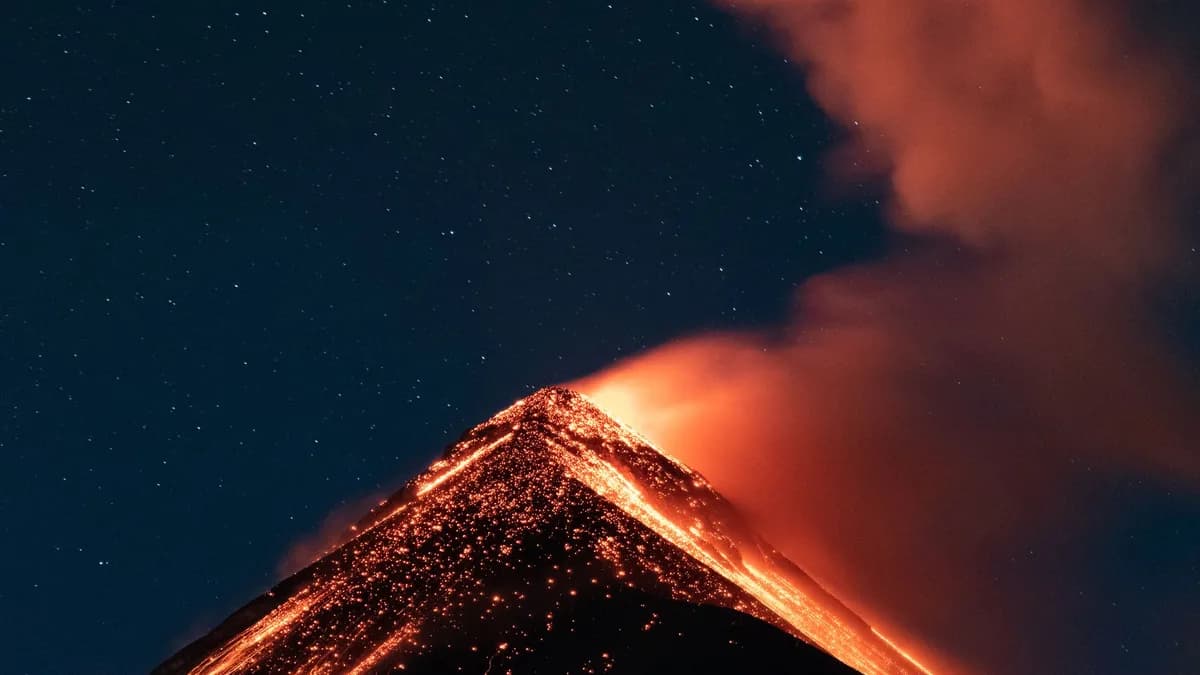
Fuego Volcano Springs to Life, Forcing 659 from Homes
XOOMAR Intelligence
Analyst Take
An Orange Alert Is a Bureaucratic Earthquake
The official response to Fuego's activity is calibrated by a color-coded ladder of risk. Sources vary on the precise level, with one citing the "second-most severe alert" (typically orange) and another referencing a full "red alert." Regardless, the declaration triggers a specific, pre-planned cascade of actions. It is not a declaration of catastrophe, but a command to mobilize.
When the alert goes up, data points are instantly translated into emergency protocols. The measured ash plume of six kilometers (3.73 miles) dictates aviation warnings, though Guatemala's main international airport reported no impact. The modeling of hot volcanic debris flows determines which communities are prioritized for evacuation. In this case, CONRED first moved residents from El Porvenir and Las Lajitas villages, with Firefighters reporting at least 350 residents transported. The road encircling the mountain range, National Route 14, was closed. The Education Ministry suspended in-person classes in two municipalities.
“If an evacuation is ordered or conditions pose a risk to your life, follow the principle of self-evacuation,” CONRED spokesperson Valeria Urizar urged in a social media video.
This bureaucratic machinery exists for one reason: to prevent a repeat of June 2018.
The 2018 Catastrophe Is the Shadow Behind Every Siren
Any analysis of Guatemala's Fuego volcano response is incomplete without the ghost of the 2018 eruption looming over it. That event killed 215 people and left a similar number missing when pyroclastic flows and lava destroyed the village of San Miguel Los Lotes. It was a foundational trauma that reshaped protocols and seared a visceral fear into the collective memory of the region.
The current evacuations are conducted under that long shadow. When resident Alejandro Garcia, 68, described "terrifying scenes of lava tumbling down the mountainside," and said villagers "left of their own accord out of fear," that fear is not abstract. It is inherited. It is the memory of 2018 that likely drives higher compliance with evacuation orders today. The displacement is a wearying cycle, with authorities evacuating more than 500 people last year and around 1,200 in 2023.
The Core Tension: A highly sophisticated monitoring system, which tracked this eruption's 23-hour straight activity, operates in a landscape of deep-seated vulnerability. Technology can warn, but it cannot erase the economic and social ties that bind people to dangerous ground.
The Rational Calculus of Fleeing Home
Evacuation statistics are clean. The decision to leave is messy. The hundreds of people in shelters, like the community hall in San Juan Alotenango with its makeshift beds, represent a collision of risk management and harsh reality.
For officials, the calculation is pure: move people from identified hazard zones. For residents, the equation includes variables officials cannot control.
- Livestock and Harvests: For subsistence farmers, fleeing means abandoning animals and crops at peak value.
- Property and Security: The fear of looting in a suddenly empty home is a powerful deterrent.
- Shelter Life: As evacuee Lidia Ortiz, 40, told AFP, “If there were any chance of moving to a different house, it would be better, because you’re always afraid since the volcano doesn’t give any warning.” This underscores the profound stress of indefinite shelter living.
As in previous evacuations, CONRED's call for voluntary movement to shelters reveals the friction between official orders and personal circumstance. The agency must enforce safety while simultaneously managing the crowded, under-resourced reality of the shelters they create. This event, like the ones we covered in Fuego Volcano Roars to Life, Forces Mass Evacuations, highlights how disaster response is logistical, but disaster survival is deeply human.
When Ash Is an Economic, Not Just a Physical, Fallout
The immediate danger is lava and superheated gas. The lasting impact is economic. Eruptions trigger a secondary tsunami that can drown livelihoods long after the skies clear.
The Direct Hit: Ashfall is not just a nuisance. A fine, abrasive layer can smother and ruin high-value export crops like coffee, a cornerstone of Guatemala's economy. The longer it settles, the more it poisons soil and destroys harvests, devastating families for seasons. The Collateral Damage: The closure of National Route 14 is not just a traffic problem. It is a tourniquet on commerce, cutting off the south coast from the colonial tourist hub of Antigua Guatemala, a UNESCO World Heritage site. Adventure tourism, volcano tours, and local markets seize up. No tourists means no income for countless guides, drivers, and vendors. The Fiscal Drain: Every quetzal spent by the state on emergency response—transporting evacuees, staffing shelters, clearing roads—is a quetzal diverted from other critical needs like healthcare, education, or infrastructure. For many households and for the national budget, the financial aftermath will be more debilitating and longer-lasting than the eruption itself.
Permanent Hazard, Permanent Adaptation
Guatemala's relationship with Fuego presents a brutal case study in long-term adaptation to an unchangeable geological threat. Resilience here isn't about defeating the volcano. It's about surviving its cycles.
What Adaptation Looks Like:
- Institutional Memory: Each eruption refines protocols. The 2018 tragedy led to improved monitoring and evacuation planning, evidenced by the structured, if tense, response this week.
- Community Resilience: As resident Sonia Vasquez said, “We’ve already gotten used to having the volcano constantly active, but this time it was really too much.” This "getting used to it" is a form of psychological adaptation, a hardened acceptance of the peril.
- Economic Diversification: On an individual level, families may slowly diversify income sources beyond farming or tourism to survive periodic disruptions.
The Limits of Adaptation: However, this resilience has a breaking point. You cannot insure a subsistence farm against a pyroclastic flow. Poverty pins people to hazardous land. As we see in other regions facing recurring natural disasters, like the communities hit by the Japan Earthquake at Kumamoto Mall, the cycle of rebuild-recover-repeat can only be sustained so many times before a fundamental, perhaps permanent, demographic shift occurs.
The Inevitable Next Cycle Begins Now
The scientific prediction for the Fuego volcano is unequivocal: it will erupt again. The question is not if, but when, and how Guatemala's systems and society will respond next time.
What to Watch:
- Shelter to Home: The timeline for evacuees' return will be the first test. Will it be days, weeks, or months? A prolonged displacement could catalyze permanent relocation discussions.
- Infrastructure Investment: Will this event spur genuine investment in more resilient infrastructure, better zoning, and enhanced early-warning systems? Or will complacency return until the next major crisis?
- Technological Reliance: Monitoring will increasingly lean on AI and satellite data to provide hyper-local warnings. The effectiveness of communicating these precise risks to at-risk communities will be critical.
- Community Endurance: How many more cycles of evacuation and return can these slopes sustain? Each event chips away at the social and economic fabric. The 2026 eruption is not the end of a story. It is the latest, forceful paragraph in a narrative with no final chapter.
Why It Matters
- Volcanic eruptions like this cause immediate, large-scale displacement, forcing hundreds from their homes.
- Regular major eruptions from Fuego define a persistent, deadly threat to the safety and stability of entire communities in Guatemala.
- The event tests and reveals the effectiveness of national disaster response systems, which are critical for saving lives.
Sources

Written by
XOOMAR Insights Team
Research and Editorial Desk
The XOOMAR Insights Team pairs automated research with human editorial judgment. We track hundreds of sources across technology, fintech, trading, SaaS, and cybersecurity, cross-check the facts, and explain what happened, why it matters, and what to watch next. We do not just rewrite headlines. Every article is fact-checked and scored for reliability before it goes live, and we link back to the original sources so you can verify anything yourself.
Explore More Topics
Related Articles
 Global Trends
Fuego Volcano Roars to Life, Forces Mass Evacuations
Guatemala's Fuego volcano erupted with its most intense force in over a year, prompting an orange alert and the evacuation of hundreds from vulnerable communiti
 Global Trends
France Wildfires Drive 250,000 From Homes Near Bordeaux
France wildfires have displaced 250,000 people and pushed within 15 km of Bordeaux as crews battle wind-fed flames.
 Technology
Nvidia Swaps AI Debate for a Security Voting Bloc
Nvidia and over 120 companies launched the Open Secure AI Alliance and produced their first security proposals within a week, moving aggressively from theory to
 Fintech
Wells Fargo Deploys Tokenized Deposits to Fight Stablecoin Invasion
Wells Fargo is launching tokenized deposits to keep corporate clients' money on its own ledger, a direct counterattack against the competitive threat of stablec
 Fintech
Caterpillar Smashes Records on AI's Power and Dirt Bill
Caterpillar posted a record $20.5 billion quarter, powered by surging sales of generators and construction gear for energy-hungry AI data centers, revealing the
 Fintech
Thredd Fuels Pliant's Invasion of US Corporate Card Market
Thredd is powering European fintech Pliant's US launch, weaponizing embedded finance to replace legacy corporate cards with a software platform that automates r
 Fintech
Circle Plunges 20% as Visa Backs Rival Stablecoin
When Visa, Mastercard, and Coinbase backed the rival Open USD stablecoin, Circle's stock tumbled 20%. The plunge signals a critical shift where network partners
 Fintech
FDIC Gives Banks a New Tool to Fight Enforcement Actions
The FDIC has activated an independent Office of Supervisory Appeals, creating a formal path for banks to dispute exam findings and avoid enforcement actions wit
 Technology
TechCrunch Disrupt Drops Final $100 Ticket Flash Sale
TechCrunch has launched an unannounced final $100 discount on all passes for Disrupt 2026, a last promotional push before ticket prices rise in two weeks.
 Future Fiction
FTC Deploys Privacy-Billing Missile on Telehealth Giant
Regulators are merging deceptive billing and privacy violations into a single, crippling offense, targeting the entire customer journey from ad click to data sh
Don't miss the signal
Get our weekly roundup of the stories that matter across tech, fintech, and trading. No noise, just signal.
Free forever. No spam. Unsubscribe anytime.