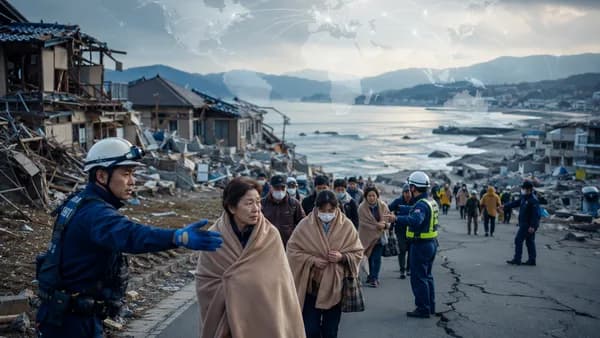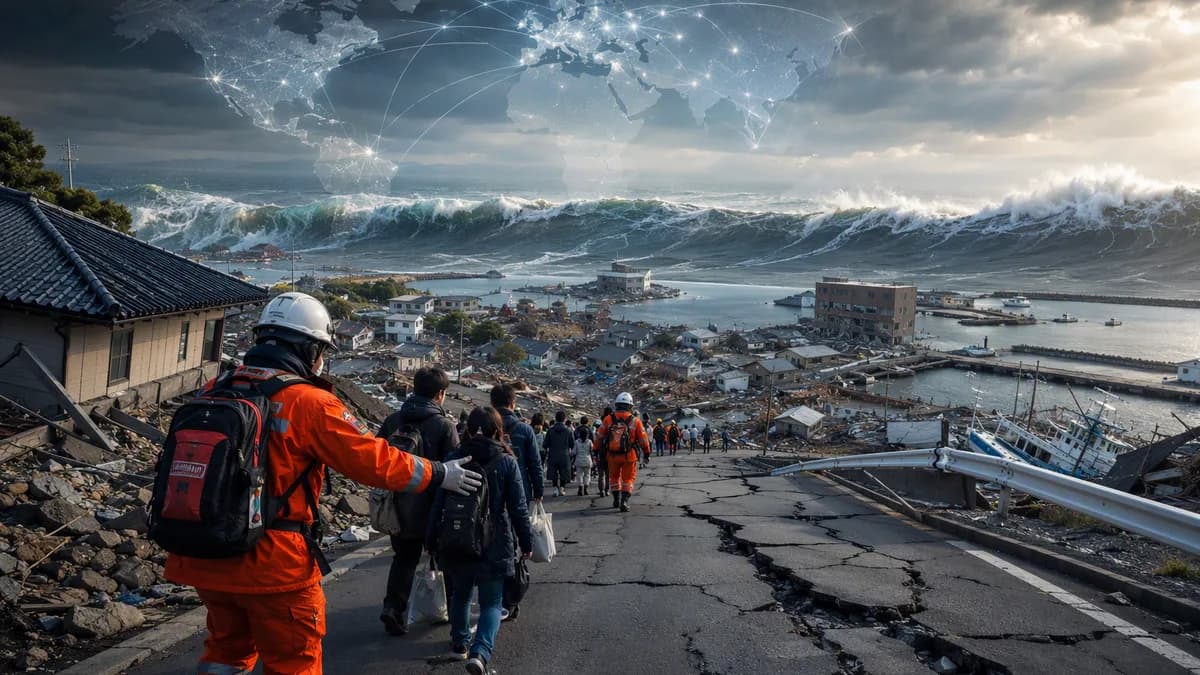
A tsunami alert was the first emergency headline, but the deeper danger from the Japan earthquake is now inland: damaged buildings, possible trapped people, disrupted roads and a widening rescue operation in Kumamoto Prefecture, after a large earthquake struck the region and prompted tsunami warnings, according to NBC World.
XOOMAR Intelligence
Analyst Take
The 6.8-magnitude earthquake struck southern Japan on Tuesday, leaving 13 people dead, Japanese Prime Minister Sanae Takaichi said Wednesday morning local time, according to ABC News.
Japan earthquake alert faded at sea, but the inland damage did not
Early earthquake reports often move fast, then change. This one did. The U.S. Geological Survey initially reported the quake at a preliminary 7.1 magnitude before later measuring it at 6.8 magnitude. Japanese authorities also reported strong shaking in the affected region as emergency agencies began assessing damage.
The quake hit southern Japan on Tuesday, with Kumamoto Prefecture emerging as a major focus of the response. Officials moved from the first wave of tsunami alerts into damage checks, rescue work and public safety warnings as reports from the region continued to develop.
The first public safety assumption after a coastal Japan earthquake is often tsunami risk. In this case, the tsunami advisory was issued within minutes for the Ariake and Yatsushiro seas, then later lifted, NHK reported. The emergency did not end there.
Buildings were reported damaged. Roads and transport links required checks. Rescue teams pushed into affected sites after dark.
“The government will spare no effort in emergency disaster response measures, with the highest priority placed on saving lives and rescue operations led by local police and fire departments,” Takaichi’s office said in a statement.
Reports from the region also pointed to concern around a shopping mall, where authorities were working to determine whether people remained trapped and how badly the structure had been affected. Details on casualties and missing people at individual sites remained fluid as police, firefighters and local officials continued their checks.
That makes the mall one of the pressure points in the disaster response, though confirmed details were still developing. XOOMAR has been tracking that rescue focus in Mall Floor Caves In as Japan Earthquake Kills 13 People, alongside the wider casualty picture in 13 Dead as Japan Earthquake Traps Survivors in Rubble.
Tsunami alerts moved people fast, then rescue crews shifted inland
The tsunami advisory covered coastal areas near the Ariake Sea and Yatsushiro Sea. Officials urged people in affected areas to avoid shorelines, stay away from the ocean and remain clear until authorities gave the all-clear.
That caution matters even after an advisory is lifted. Tsunami behavior can be uneven, and authorities typically keep people away from coastal zones until monitoring confirms the threat has passed. In this case, NHK later reported the warning had been lifted, but the broader quake danger remained active.
The contrast was sharp:
- Before the all-clear: Coastal residents faced tsunami advisories and warnings to stay away from the shore.
- After the advisory was lifted: Emergency attention shifted to damaged buildings, possible trapped people, road checks and disrupted transport.
- Still unresolved: The number of people trapped or missing, the condition of damaged sites and the risk from strong follow-up quakes.
Japan’s emergency systems moved quickly because the quake was shallow and intense. Takaichi’s office warned that “strong tremors, earthquakes of similar intensity may continue to occur over approximately the next week.”
That warning now sits over the entire response. Damaged structures can fail later. Roads already weakened by the first quake can become harder to use after another jolt. Rescue crews working inside unstable buildings face a narrower margin for error.
Officials were also checking industrial sites and other large facilities in the affected area. Early reports indicated damage assessments were underway, but confirmed details about injuries, missing workers or the scale of any structural failures remained limited.
Authorities continued gathering information on possible casualties and damage as communication with some affected areas remained difficult.
Kyushu’s roads, trains and nuclear plants enter the damage-check phase
The next phase of the Japan earthquake response is less visible than the first wave of alerts, but it may decide how quickly rescue and recovery can move.
Transportation networks across Kyushu entered a damage-check phase as officials assessed roads, rail lines and other routes used by emergency crews. Some disruption was reported, but the full condition of key corridors was still being evaluated.
That matters because emergency response depends on movement. If roads, rail lines and airport operations remain disrupted, rescue teams, medical crews and supplies take longer to reach the worst-hit areas. XOOMAR’s earlier report, 13 Dead as Japan Earthquake Rattles Kyushu's Lifelines, tracks that infrastructure strain more closely.
Officials also began checking critical energy facilities, including nuclear power sites in the broader region. No immediate emergency at those facilities was confirmed in the supplied reports, but post-quake inspections remained part of the wider safety response.
Cultural sites and older structures were also being watched closely because strong shaking can damage walls, roofs and foundations even when the first visible impact appears limited. Authorities urged caution around damaged or unstable buildings as aftershock risk remained elevated.
The next breaks may come from aftershocks, not the first quake
The official death toll, missing-person count and infrastructure damage figures can still change quickly. Hospitals, local governments, fire departments and police are still assessing sites across Kumamoto and nearby areas.
The biggest near-term risk is a second strong shock hitting weakened buildings and roads. Takaichi’s office explicitly warned that similar-intensity earthquakes could continue for about a week. That turns every damaged structure into a live hazard.
For people in the affected region, the practical guidance is blunt: monitor official alerts, keep phones charged, avoid damaged buildings, stay away from shorelines unless officials say it is safe and don’t circulate unverified claims. For rescue crews, the next few hours will test whether access routes, communications and power networks hold under aftershocks.
Impact Analysis
- The lifted tsunami advisory does not mean the emergency is over for affected inland communities.
- Rescue teams are prioritizing damaged buildings and possible trapped residents in Kumamoto Prefecture.
- Changing magnitude estimates show how early disaster information can evolve as agencies assess the event.
Japan Earthquake: Initial Concern vs. Ongoing Risk
| Issue | Status |
|---|---|
| Tsunami threat | Advisory issued for the Ariake and Yatsushiro seas, then later lifted |
| Inland damage | Damaged buildings, disrupted roads and rescue operations continued in Kumamoto Prefecture |
| Casualties | 13 people were reported dead |
Japan Earthquake Magnitude Revision
Primary Sources & Disclosures

Written by
XOOMAR
Data desk
XOOMAR is a capital markets software and data company. Every brief on this site starts from a dataset the company collects itself from primary sources (CFTC, SEC EDGAR, FINRA, the Federal Reserve, exchange APIs) and names the numbers it is built on, with a link to the data page so you can check them. Briefs are reviewed before they go out and corrected in place when the data is revised.