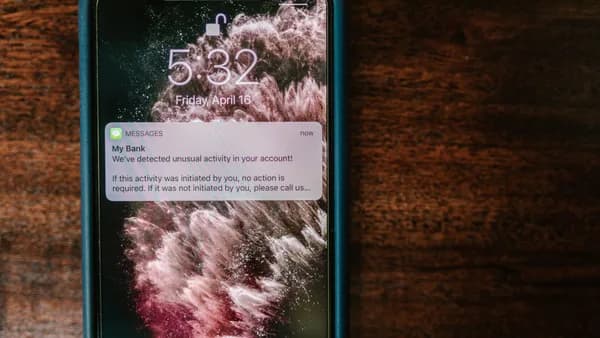
Scams and fraud are costing Americans more than $150 billion annually, and the Scam Prevention Initiative backed by JPMorganChase, Amazon and other major companies is best read as a response to a failure in digital trust, not a feel-good corporate campaign.
XOOMAR Intelligence
Analyst Take
The Aspen Institute Financial Security Program launched the effort to reduce the “scale and severity” of scams affecting Americans, according to PYMNTS. Aspen’s related national strategy work frames scams and fraud as a national security threat that costs Americans more than $150 billion annually, fuels organized crime and erodes trust in communications and finance, according to the Aspen Institute.
That framing matters. A scam rarely stays inside one company’s walls. The first contact might happen on a platform, the impersonation might use a trusted brand, the payment might move through a bank or app, and the loss may land on a household with no clear recovery path. Aspen’s bet is that the problem can’t be solved one alert banner at a time.
The Scam Prevention Initiative is aimed at the gaps between banks, platforms and consumers
The Scam Prevention Initiative says it will focus on four areas: better measurement, shared priorities, information-sharing and practical prevention tools. That’s a broad mandate, but the first item may be the most important.
Bad scam data creates bad incentives. If one company sees the fake account, another sees the payment, and a third receives the complaint, no single actor has a clean view of the attack. The result is fragmented response, uneven reporting and consumer confusion.
Aspen FSP plans to establish a Leadership Group on Scam Prevention and run issue-specific forums. Those forums are expected to bring together technical experts, law enforcement officials, consumer advocates, policymakers and industry practitioners.
“Fraud and scams are a shared threat, and they require a shared response,” Kate Griffin, director of the Scam Prevention Initiative at Aspen FSP, said in the release.
That quote is the thesis. The scam economy scales through handoffs. Prevention has to do the same, but faster.
Aspen’s participant list shows why scam prevention has moved beyond bank fraud teams
The Leadership Group includes a wide mix of companies and organizations: AARP, American Bankers Association, Amazon, Apple, Block, Capital One, Citizens Financial Group, Gen, Google, JPMorganChase, Match Group, Microsoft, PayPal, Target, Walmart and Zelle.
That list is the real news. It spans banking, payments, e-commerce, consumer advocacy, technology and retail. Aspen is not treating scams as a single-industry defect.
| XOOMAR classification | Participants named by Aspen |
|---|---|
| Banks and banking groups | JPMorganChase, Capital One, Citizens Financial Group, American Bankers Association |
| Payments and financial apps | PayPal, Zelle, Block |
| Technology platforms | Amazon, Apple, Google, Microsoft, Gen |
| Retail and commerce | Target, Walmart, Amazon |
| Consumer and social channels | AARP, Match Group |
XOOMAR analysis: this mix suggests Aspen is targeting the seams where scam activity often becomes hard to assign. The source does not say what data these participants will share, whether any liability model is being discussed, or how progress will be reported. Those omissions matter.
A neutral convener could help. Banks and platforms may hesitate to expose weaknesses or share sensitive signals directly with rivals. A forum led by Aspen FSP gives the effort a less proprietary shape, at least on paper.
The missing scam data problem is now the central fight
The FTC said in April that social media scams generated $2.1 billion in losses last year, an eightfold increase since 2020. PYMNTS Intelligence also found that 4 in 10 households have fallen victim to digital scams in the past five years.
Those numbers are severe, but they also show the measurement problem. One figure captures social media scam losses. Another captures household experience across digital scams. Aspen’s initiative is trying to make this scattered evidence base more usable.
The PYMNTS Intelligence report adds another split: most individual consumer scams produce losses averaging hundreds of dollars, while investment and Social Security scams create losses measured in thousands of dollars. That distinction should shape prevention priorities. A low-dollar scam at high frequency is a different operating problem from a lower-frequency scam that drains a retirement account.
“For financial institutions, combatting scams isn’t just about maintaining the security of their customers’ accounts — it’s also pivotal to building trust and lasting relationships,” the PYMNTS Intelligence report said.
XOOMAR analysis: if Aspen can help create shared definitions and reporting discipline, that may be more valuable than another consumer awareness push. Without consistent categories, companies can claim progress while measuring different things.
JPMorganChase and Amazon bring credibility, but also hard questions
JPMorganChase said in May that it is supporting an Aspen FSP program working with Propel to pilot real-time transaction blocking to prevent electronic benefit transfer theft. That is a concrete prevention experiment, not just a pledge.
Ravi Govindaraju, head of product, trust and security at JPMorganChase, said the bank is joining the initiative to support an “ecosystem-wide approach” that brings public, private and nonprofit organizations together around practical solutions that help people prevent scams and keep their finances secure.
Amazon’s role is different. Abigail Bishop, head of scam prevention at Amazon, said the company is focused on ensuring scammers cannot exploit Amazon’s brand to target customers, including by “holding bad actors accountable” and educating customers on safety.
The shared incentive is trust. Banks need customers to believe their money movement tools are safe. Amazon needs customers to trust its brand and support channels. Neither wants scam losses to become a hidden tax on digital commerce.
For adjacent XOOMAR coverage of how financial institutions are competing around customer relationships, see UBS Banking Power Play Targets Wealthy Americans' Cash. For fintech operating pressure around technology investment, see AI Splits Winners From Losers in Starling Bank Job Cuts.
The liability fight is still outside the press release
Aspen’s announcement does not settle the hardest question: who pays when a consumer is manipulated into approving a scam payment?
Banks will want better data and shared responsibility. Platforms will want to stop impersonation and abuse without becoming universal guarantors. Consumer advocates will press for stronger protection and less victim blaming. Regulators will want measurable progress, not just working groups.
Privacy is the other tension. Better prevention may require more sharing of signals about suspicious accounts, transactions, identities or patterns of behavior. The source material does not specify how Aspen plans to balance information-sharing with privacy and civil liberties concerns.
That is where the initiative could either become meaningful or stall. Everyone can agree scams are bad. Agreement gets harder when prevention requires data access, operational costs, customer friction or reimbursement rules.
The first real test is whether Aspen can turn coordination into measurable results
If the Scam Prevention Initiative succeeds, consumers may eventually see more consistent warnings, clearer reporting paths and fewer mixed messages between banks, platforms and retailers. Fintechs and payment companies may face pressure to adopt shared scam definitions and show how they’re reducing harm.
There will be trade-offs. Stronger prevention can mean more false positives, delayed payments, frozen accounts and extra verification for legitimate users. Aspen’s challenge is to make those costs visible rather than pretending coordination is free.
The watch item is measurement. If Aspen’s Leadership Group produces credible cross-industry metrics, shared taxonomies and practical pilots, the initiative could move beyond awareness messaging. If it stays at the level of general commitments, the scam economy will keep exploiting the same gaps.
The scam problem won’t shrink because households get smarter one by one. It shrinks only if the organizations that see different parts of the attack chain connect their signals before the money moves.
Impact Analysis
- Scams are draining Americans of more than $150 billion annually and are now being framed as a national security threat.
- The initiative targets coordination gaps between platforms, banks, payment systems and consumers that scammers exploit.
- Backers like JPMorganChase and Amazon signal that major private-sector players see fraud prevention as a shared infrastructure problem.
Estimated Annual Cost of Scams and Fraud to Americans
Primary Sources & Disclosures

Written by
XOOMAR Insights Team
Research and Editorial Desk
The XOOMAR Insights Team pairs automated research with human editorial judgment. We track hundreds of sources across technology, fintech, trading, SaaS, and cybersecurity, cross-check the facts, and explain what happened, why it matters, and what to watch next. We do not just rewrite headlines. Every article is fact-checked and scored for reliability before it goes live, and we link back to the original sources so you can verify anything yourself.