What boundary disappears when Netflix can legally summon an AI Gene Wilder voice for a new Willy Wonka reality show?
XOOMAR Intelligence
Analyst Take
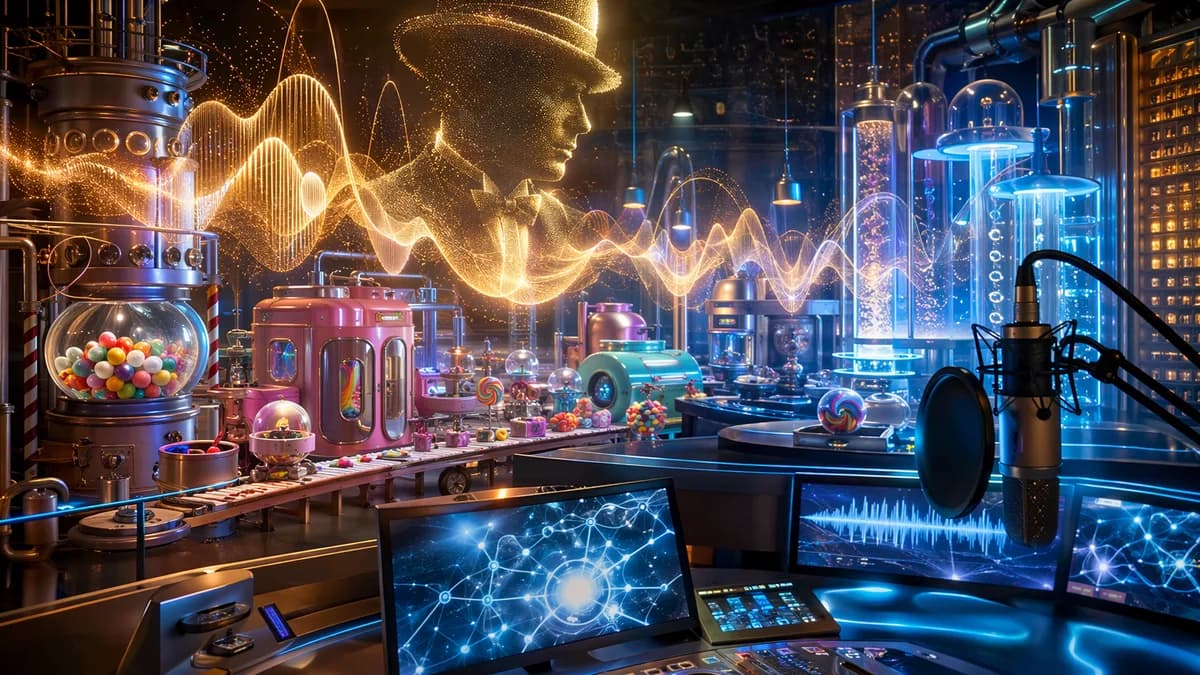
That is the real question behind Wonka's The Golden Ticket, which premieres on September 23rd and uses an AI-generated voice modeled on Wilder, according to The Verge. My answer is blunt: Netflix may have cleared the rights hurdle, but the choice still feels creatively hollow. It turns a beloved performance into licensed ventriloquism.
Does family consent make the AI Gene Wilder voice artistically legitimate?
Consent matters. Netflix reportedly worked with ElevenLabs and received permission from Wilder's family, with Deadline reporting that the AI audio company was involved after work tied to recreating the voices of Michael Caine and Stan Lee. That is not a minor detail. It separates this from theft, bootlegging, or some backroom synthetic stunt.
But legal permission does not automatically create artistic legitimacy.
Gene Wilder died in 2016. He cannot decide whether a reality competition built around Wonka's world fits the spirit of his performance. His estate can approve use. It can negotiate terms. It can bless the project publicly. What it cannot do is turn a machine-generated imitation into a new Wilder performance.
Karen B. Wilder, speaking for the estate, defended the project in warm terms:
“More than five decades after Gene brought Willy Wonka to life, people of all ages and backgrounds around the world continue to find joy, laughter and inspiration in his performance.”
That statement deserves respect. So does the discomfort around it.
Audiences don't bond with a voice as an abstract property. They bond with timing, hesitation, mischief, restraint, and all the human choices that made Wilder's Wonka strange rather than merely whimsical. An AI Gene Wilder voice can imitate the surface. It cannot make those choices.
The sharper question is not whether Netflix was allowed to do this. It is whether a company with Netflix's resources should have wanted to.
Why does a Willy Wonka reality show make the voice choice feel colder?
Wonka's The Golden Ticket follows Netflix's earlier Squid Game reality show in converting a fictional nightmare into a real competition format. The Verge framed both as part of a trend of turning fictional torture scenarios into competitions. That line lands because the Wonka story was never just candy, wallpaper, and chocolate rivers.
Willy Wonka is a story about temptation, performance, punishment, and power. Children enter a factory, face tests, and suffer consequences. The sweetness always had acid in it.
Netflix's teaser shows real sets, not the kind of low-rent AI fakery that made the 2024 Glasgow Willy Wonka-inspired event infamous online. That matters because the problem here is not that Netflix skimped on production design. The problem is conceptual appetite.
NBC News reported that the show will feature 12 contestants competing inside Wonka's Chocolate Factory for a grand prize. The AI-generated voice says:
“A whole new generation of real-life Golden Ticket holders will compete for a life-changing prize or say a most unfortunate goodbye.”
That line is doing a lot of work. It wraps a modern reality competition machine in the emotional texture of Wilder's 1971 performance. The synthetic voice softens the premise. It tells viewers: remember the magic, don't think too hard about the extraction.
For readers tracking Netflix's broader programming churn, this sits beside the company's constant fight for attention, the same pressure visible in our look at Netflix July 2026 Dump Hides 6 Picks Worth Clicking. The difference here is that nostalgia is not just marketing. It is being simulated.
Is ElevenLabs making synthetic celebrity voices feel routine?
ElevenLabs is becoming central to this debate because the Wilder voice is not an isolated curiosity. The supplied reporting says the company has been tied to productions recreating Michael Caine and Stan Lee, while NBC News also described an ElevenLabs marketplace where companies can request licenses for AI reproductions of recognizable voices.
That is the part entertainment executives should treat carefully. A one-off homage can become a workflow. A trailer experiment can become a production habit.
Here is the emerging split:
| Use case | What supporters can argue | What critics should ask |
|---|---|---|
| Estate-approved AI voice | Permission was granted and the estate supports it | Did the artist personally accept this future use? |
| Nostalgia branding | Fans recognize the voice instantly | Is recognition replacing original performance? |
| Reality show narration | The voice connects the format to the source material | Why not hire a living narrator or actor? |
| Synthetic celebrity marketplace | Licensing creates control and compensation | Does it make dead performers reusable assets? |
The labor concern is real, but it should be stated precisely. The source material does not prove that this specific Netflix project displaced a narrator, actor, or impressionist. We should not pretend it does.
The supported concern is narrower and stronger: once audiences accept cloned celebrity voices in trailers, reality shows, audiobooks, and campaigns, studios have fewer creative reasons to build new voices into new work. The archive becomes a cast list.
That is why Netflix's scale matters. A smaller experiment might pass as a novelty. A global platform can turn novelty into a template.
This is a different AI-media question from the one raised in Meta Pocket Sneaks AI Game Making Into Social Feeds, but the direction is similar: AI-generated creative material becomes less remarkable each time a major platform presents it as normal.
What is the best defense of Netflix, and why doesn't it go far enough?
The strongest defense is straightforward.
Netflix got family consent. The estate is publicly supportive. The show continues Netflix's 2021 partnership with the Roald Dahl company, per The Verge, so this is not a random bootleg cash-in. Press coverage has identified the voice as AI-generated, so the company is not pretending Wilder stepped into a booth.
That defense should not be dismissed. Context matters. Transparency matters. Compensation and estate control matter. Not every synthetic voice use is equally exploitative.
Still, the defense falls short.
Even a well-permissioned recreation teaches viewers to treat the absence of the performer as a technical inconvenience rather than a boundary. Wilder is gone, but the brand remains. The voice can be rebuilt. The mood can be approximated. The audience can be nudged into recognition.
That is efficient. It is also artistically small.
A living performer could have interpreted Wonka's world without wearing Wilder's ghost like a costume. A narrator could have set a new tone. The show could have trusted its own identity instead of borrowing the aura of a performance it cannot truly extend.
What rules should Netflix set before this becomes normal?
Netflix should treat the AI Gene Wilder voice as a warning, not a model.
First, synthetic voices should be disclosed clearly on screen whenever they appear, not tucked into press notes or revealed mainly through coverage. Viewers should know when a voice is generated.
Second, studios should publish standards for AI replicas. The basics are obvious:
- Consent: Who approved the use, and under what authority?
- Compensation: Who is paid, and for how long?
- Scope: Is the voice approved for one trailer, one season, ads, spin-offs, or future edits?
- Duration: Does the permission expire?
- Alternatives: Were living performers considered first?
Third, AI replicas should be rare exceptions. If the default answer becomes “clone the most recognizable voice,” entertainment will flatten into a museum gift shop with better rendering.
The months after September 23rd will test how much audiences are willing to accept. Some viewers will hear homage. Others will hear a plastic substitute. Studios will be watching both reactions.
Netflix should watch something else: whether the convenience of synthetic nostalgia is making its shows less brave. If Wonka taught anything, it is that wonder curdles when it becomes a factory process. Leave Gene Wilder's voice where it earned its magic, in the performance he actually gave.
The Stakes
- Netflix’s use of an AI-generated Gene Wilder voice raises new questions about consent, legacy, and creative authenticity.
- Family approval and ElevenLabs involvement make this legal, but not necessarily artistically accepted by audiences.
- The September 23 premiere could shape how studios use AI recreations of beloved performers in future entertainment.
Primary Sources & Disclosures

Written by
XOOMAR Insights Team
Research and Editorial Desk
The XOOMAR Insights Team pairs automated research with human editorial judgment. We track hundreds of sources across technology, fintech, trading, SaaS, and cybersecurity, cross-check the facts, and explain what happened, why it matters, and what to watch next. We do not just rewrite headlines. Every article is fact-checked and scored for reliability before it goes live, and we link back to the original sources so you can verify anything yourself.