On June 2026, Microsoft revoked vulnerable old Microsoft-signed UEFI shim bootloaders, reducing a UEFI shim Secure Boot bypass path once the latest UEFI revocations actually reach deployed systems.
XOOMAR Intelligence
Analyst Take
The shims, mostly version 0.9 and earlier, were described by ESET as old Microsoft-signed UEFI applications that could undermine Secure Boot trust, according to SecurityWeek. The issue is tracked as CVE-2026-8863.
June 2026 revocation turned Secure Boot trust into the story
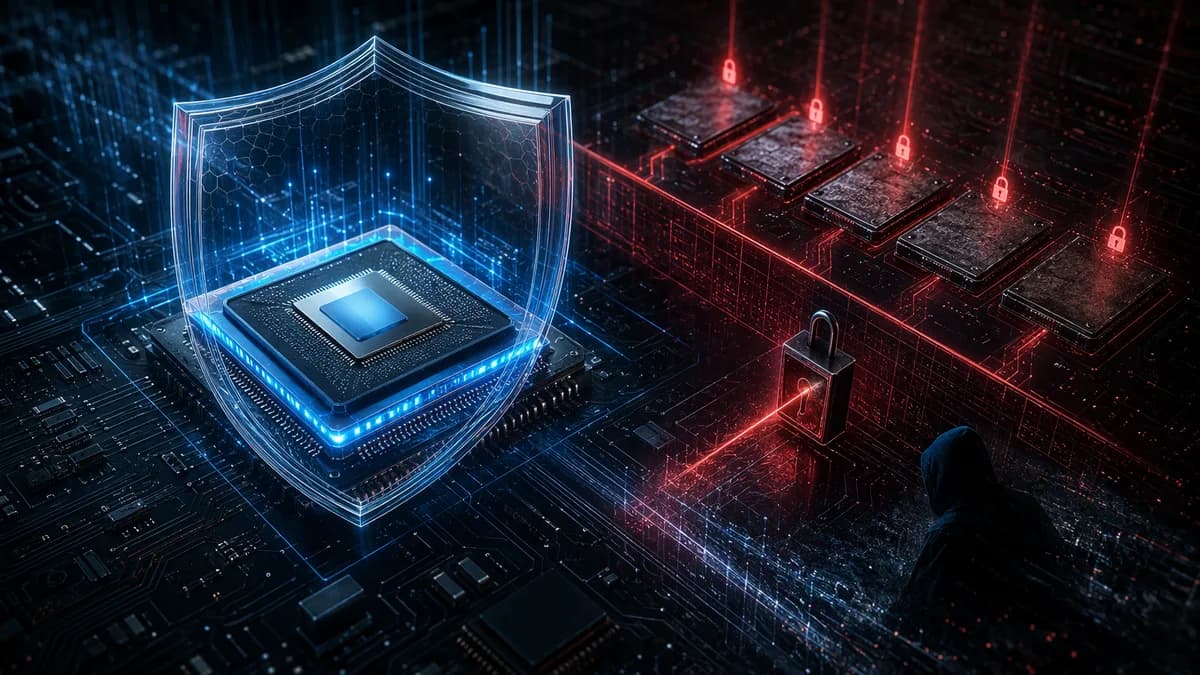
Secure Boot is meant to stop untrusted code before the operating system loads. This case flips that promise around: old code that remained trusted became the attacker’s possible entry pass.
A UEFI shim is a small boot component that lets Linux distributions and other UEFI-based tools work with Secure Boot without every vendor needing its own key embedded in motherboard firmware. Microsoft signs those shims, firmware trusts Microsoft’s third-party UEFI certificate, and the shim then extends trust to later boot components.
That model solved a practical compatibility problem. It also created a long-lived trust problem.
ESET said the vulnerable shims could be used to:
“bypass UEFI Secure Boot on any UEFI-based machine that trusts Microsoft’s Microsoft Corporation UEFI CA 2011 third-party UEFI certificate authority (CA) certificate, regardless of the installed operating system (OS).”
That “regardless of OS” line is the sharp edge. This wasn’t only a Linux distribution hygiene issue. If a system trusts the relevant Microsoft third-party UEFI certificate, an attacker could bring a vulnerable signed shim to the target environment, even if the affected software wasn’t already installed.
XOOMAR analysis: The deeper issue is not one bad bootloader. It’s delayed distrust. Once signed pre-OS components spread across hardware, recovery media, old installers, diagnostic tools, and enterprise images, revoking them becomes harder than patching a normal application. The industry treated this layer like plumbing. Attackers now understand that the plumbing sits below most alarms.
February disclosure exposed a bypass before the operating system wakes up
Public reporting on the findings highlighted a class of weakness that sits before the usual security stack comes online.
A simplified Secure Boot chain looks like this:
- UEFI firmware checks whether the next boot component is signed by a trusted authority.
- A Microsoft-signed shim bridges that firmware trust to Linux boot components or other UEFI utilities.
- The next-stage bootloader, kernel, or UEFI application runs.
- The operating system and security tools finally start.
The vulnerable shims came from “various tools and packages,” including, per ESET’s broader description, PC-diagnostic software, Linux distributions, and other UEFI-based utilities. Because they remained trusted, they could extend the attack surface through their own trusted second-stage bootloaders.
ESET’s researcher Martin Smolár put the problem bluntly:
“What makes these old shims dangerous is not a novel vulnerability; it’s that no new vulnerability is needed to bypass UEFI Secure Boot. An attacker needs no complicated exploitation primitives — only a copy of an old, still-trusted but unrevoked shim binary and a basic understanding of how UEFI shims work. That is enough to bypass such an essential security feature as UEFI Secure Boot.”
That does not make this a casual drive-by web exploit. XOOMAR analysis: A realistic attack usually needs meaningful control over the boot path, disk contents, boot order, firmware settings, physical access, privileged access, or a deployment pipeline. But for high-value systems, that’s enough. Once code runs during boot, endpoint agents, operating system protections, and EDR tools may not be active yet.
This is why pre-OS compromise is valuable. It lets attackers move before defenders have fully loaded their sensors.
The revocation gap: old shims and one fragile trust path
The concrete numbers are small. The trust problem is not.
ESET identified 11 old, forgotten Microsoft-signed UEFI shims, primarily version 0.9 and earlier. Microsoft later revoked the vulnerable applications, and administrators were advised to apply the latest UEFI revocations where available. The issue is tracked as CVE-2026-8863.
The revocation flow depends on firmware trust and revocation data being distributed reliably:
| Firmware trust element | Role in Secure Boot | Operational risk |
|---|---|---|
| Trusted boot material | Allows approved boot certificates, signatures, and components to run | If legitimate components are outdated, updates can expose compatibility gaps |
| Revocation data | Blocks known-bad or forbidden boot applications | If revocations do not reach systems, old trusted binaries may remain usable |
That rollout is the operational trap. Aggressive revocation strengthens security but can strand systems that still rely on old boot media or outdated boot components. Slow revocation preserves compatibility but leaves a trusted bypass path open.
Enterprises have seen this pattern before in other patch races. The firmware layer is less visible than the application layer, which makes it harder to manage than urgent software flaws like the exploited SharePoint bugs we covered in Exploited SharePoint Vulnerabilities Trigger 3-Day Race. The pressure is similar. The tooling is usually worse.
Old bootloader bugs keep surviving the fixes
ESET noted that applications trusted by the reported shims included old binaries that may be affected by publicly known vulnerabilities in boot components.
That pattern is ugly. It means Secure Boot can inherit unresolved risk from code that was once accepted into the chain and then never fully retired.
The recurring pattern is now clear:
- Signed component: A shim or bootloader gets signed and trusted.
- Bug discovery: Researchers find a flaw in that component or in what it allows.
- Vendor patching: Updated code becomes available.
- Revocation delay: Old signed binaries stay usable because removing trust may break machines.
- Attacker reuse: The old binary becomes a portable bypass if the platform still trusts it.
Microsoft’s signing role sits at the center because it became the practical trust anchor for mixed operating system environments. That convenience allowed Secure Boot to work across Windows, Linux distributions, diagnostic tools, and other bootable utilities. It also concentrated risk. A Microsoft-signed shim is not just a local artifact. On systems that trust the relevant Microsoft CA, it can become portable authority.
XOOMAR analysis: Firmware security has improved, but the update model still lags behind operating system and browser patching. A browser update can ship fast and fail relatively safely. A boot-chain revocation can leave a machine unable to start. That fear slows everything.
Our earlier look at Windows 11 Secure Boot Update Hits a Firmware Wall fits the same pattern: Secure Boot policy is only as strong as the hardware, firmware, and recovery workflows that can actually absorb the change.
Microsoft, Linux vendors, OEMs, and enterprises all share the June cleanup
No single party owns the whole shim revocation problem.
Microsoft controls a key part of the signing and revocation pipeline. Its likely priority is to protect the Secure Boot trust chain without triggering widespread boot failures. That requires staging, compatibility checks, and revocation updates that don’t punish legitimate systems still catching up.
Linux distribution maintainers need updated shims, validated boot paths, replacement installation media, and clear instructions for users. The technical fix is not enough if old ISOs, recovery drives, and admin habits keep reintroducing stale boot components.
OEMs and firmware vendors face a different constraint. BIOS and UEFI update quality varies. Devices age out of support. Recovery workflows often depend on older boot media. A clean revocation policy on paper can become a help desk crisis if the installed base isn’t ready.
Enterprises have the hardest inventory problem. Most asset systems know operating system versions, endpoint agent status, and application exposure. Far fewer can answer these questions quickly:
- Shim status: Which shim versions are present across the fleet?
- Revocation level: Which machines have Microsoft’s latest UEFI revocation updates?
- Boot media: Which recovery images or installer templates contain old signed components?
- Firmware posture: Which systems trust the Microsoft Corporation UEFI CA 2011 third-party UEFI certificate?
- Provisioning risk: Which deployment pipelines can reintroduce vulnerable binaries?
CERT/CC specifically called out enterprises, virtualization providers, and cloud operators managing large-scale deployments. That’s the right audience. Fleet scale turns boot hygiene from a technical chore into a risk management problem.
Windows, Linux, cloud, and server admins should treat old boot media as active risk
The most exposed environments are not random consumer laptops sitting untouched. The highest urgency belongs to managed fleets, servers, developer workstations, dual-boot devices, bare-metal provisioning systems, and environments where attackers may gain physical or privileged access.
For Windows systems, ESET’s related guidance says updates should be applied automatically. For Linux systems, updates should be available through the Linux Vendor Firmware Service. Admins still need to test and verify. Automatic does not mean complete.
Practical priorities are straightforward:
- Update shims: Install vendor-provided shim and bootloader updates where available.
- Apply UEFI revocations carefully: Follow vendor guidance and verify that systems can still boot after trust changes.
- Retire old boot media: Replace old installers, recovery USBs, PXE images, and diagnostic tools.
- Audit templates: Check golden images, bare-metal provisioning workflows, and cloud or hosting templates.
- Monitor boot changes: Treat unexpected boot order changes, unsigned loader attempts, and firmware configuration drift as security events.
- Avoid disabling Secure Boot: It may reduce friction, but it also removes a control that still blocks many lower-effort attacks.
Cloud and hosting providers should be especially careful with anything that preserves old boot artifacts across customers or tenants. The source material does not claim active exploitation in cloud environments. The risk is architectural: templates and provisioning systems can quietly preserve outdated boot components long after the main OS image looks patched.
After June 2026, Secure Boot needs faster distrust and better inventory
Since 2017, shims have been signed and documented after a vetting process, according to SecurityWeek’s summary of the issue. But shims approved before then are not documented in the same way, and many old, still-trusted shims may remain.
That is the next pressure point.
XOOMAR analysis: Enterprises will need boot-chain inventory that looks more like endpoint software inventory: firmware versions, shim versions, bootloader hashes, certificate trust state, and revocation status. Without that visibility, every revocation becomes a guessing exercise.
Vendors also have incentives to tighten signing practices. Shorter trust lifetimes, clearer documentation, better staged revocation, and stronger compatibility testing would reduce the chance that forgotten binaries remain accepted for years. None of that is painless. But the alternative is worse: old trusted code becomes a reusable pass through a security control that organizations assume is already handled.
Secure Boot still matters. This disclosure does not make it useless. It shows that Secure Boot’s credibility now depends on whether Microsoft, Linux vendors, OEMs, cloud operators, and enterprises can retire old trusted code before attackers turn it into a universal skeleton key.
The next evidence to watch is practical, not rhetorical: how quickly fleets receive the latest UEFI revocation updates, whether vendors replace old recovery and installation media, and whether more undocumented pre-2017 shims surface in future research.
Impact Analysis
- Old Microsoft-signed UEFI shims could let attackers bypass Secure Boot before the operating system loads.
- The risk affects any UEFI system trusting Microsoft’s Microsoft Corporation UEFI CA 2011 certificate, regardless of installed OS.
- Microsoft’s June 2026 revocation helps only after updated UEFI revocation lists reach deployed systems.
Primary Sources & Disclosures

Written by
XOOMAR Insights Team
Research and Editorial Desk
The XOOMAR Insights Team pairs automated research with human editorial judgment. We track hundreds of sources across technology, fintech, trading, SaaS, and cybersecurity, cross-check the facts, and explain what happened, why it matters, and what to watch next. We do not just rewrite headlines. Every article is fact-checked and scored for reliability before it goes live, and we link back to the original sources so you can verify anything yourself.