Has the Strait of Hormuz now become the main battlefield of the US-Iran war, rather than just the pressure point both sides threaten from a distance?
XOOMAR Intelligence
Analyst Take
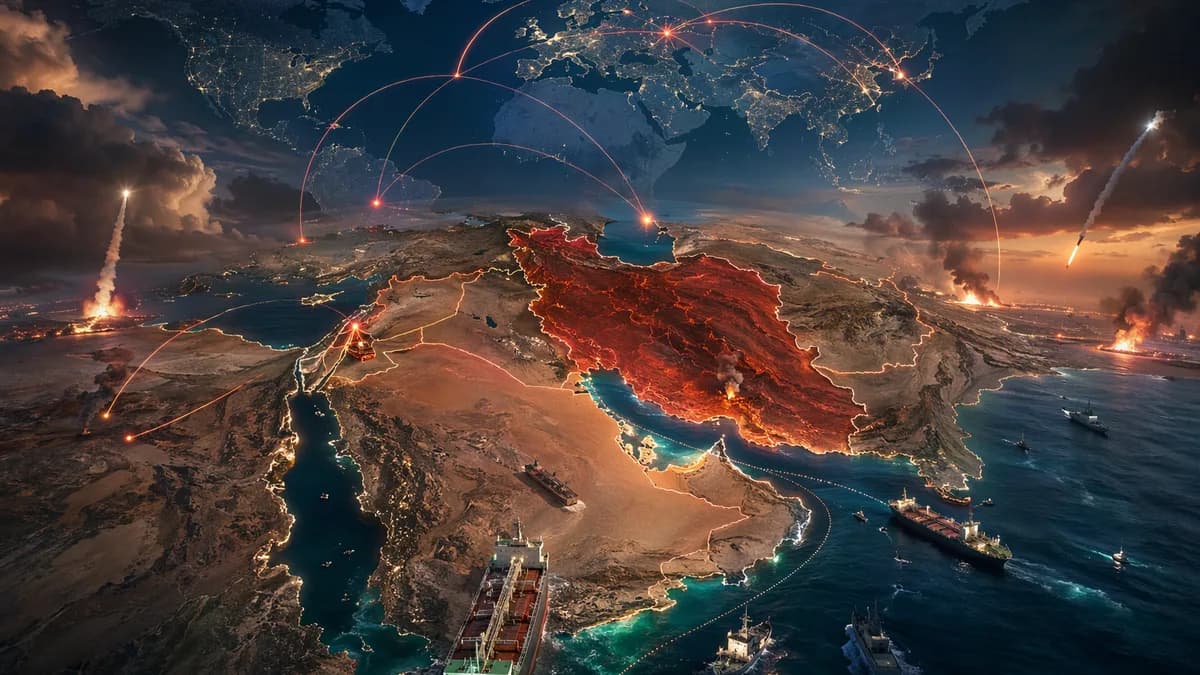
The latest US strikes on Iran’s Hormuz lifeline suggest the answer is moving toward yes. The US military says it hit Iranian targets meant to degrade Tehran’s ability to threaten ships transiting the strait, while Iran fired missiles and drones at Bahrain, Kuwait and Jordan, according to Guardian World. Centcom also said US aircraft fired missiles into an oil tanker’s smokestack in the Strait of Hormuz, disabling the vessel after it ignored multiple warnings while trying to violate the US naval blockade of Iran’s ports.
That changes the frame. This is no longer only a strike-and-response cycle over military sites. It is a contest over ports, global shipping routes, energy leverage and the infrastructure that lets states keep fighting.
Has the Strait of Hormuz blockade become Washington’s main instrument of pressure?
The obvious answer is that the US is trying to stop Iran from threatening commercial traffic. The harder answer is that Washington is turning access to the Strait of Hormuz into a military bargaining tool.
Centcom said targets included Bandar Abbas, the southern port city that hosts key facilities belonging to the Iranian navy and Revolutionary Guards. Iranian state media said explosions were also reported around Tehran, the first time the capital has been targeted in the latest round of attacks. Other reported blast sites included Rask, Chabahar, Ahvaz, Semnan province, Qeshm, Bandar Imam Khomeini and Bushehr.
“The US military is holding Iran accountable at the commander in chief’s direction,” Centcom said, referring to president Donald Trump.
That language matters. It ties the strikes directly to Trump’s command authority and to a wider pressure campaign, not a one-off retaliation.
The Hormuz tanker strike is the sharper signal. Disabling a vessel in the Strait of Hormuz introduces a new operational fact for shipowners, energy traders watching WTI and governments: ships are no longer only exposed to Iranian threats or regional spillover. They can also become targets of US enforcement if Washington judges them to be breaking the blockade.
For readers tracking the blockade mechanics, XOOMAR’s related analysis on Trump Turns Iran Strikes Into Strait of Hormuz Blockade is the cleaner companion piece. The new development is that the blockade is now being enforced with visible force.
Why are strikes around Tehran different from strikes near Bandar Abbas?
Bandar Abbas fits the immediate maritime logic. Tehran does not.
Iranian state media reporting strikes around the capital points to a broader US target set. AP, in related reporting, described the latest US action as strikes reaching further north and said areas around Tehran were hit for the first time in this latest round. That does not prove a campaign against national command systems, but it does show the fight moving beyond the southern coastal infrastructure tied most directly to Hormuz.
Trump has already raised the possibility of attacking Iranian bridges. Asked whether Tehran had a deadline before the US started hitting such targets, he said:
“They know the story … They better behave.”
Iran’s answer came in the language of infrastructure retaliation. Ebrahim Zolfaghari, a spokesperson for the Iranian military’s Khatam al-Anbiya central headquarters, warned that if Iranian infrastructure is attacked, “all infrastructure in the region will be crushed”.
This is the escalation that markets and regional governments will read hardest. Bridges, ports, fuel storage, radar sites, naval facilities and shipping lanes are not symbolic targets. They are state capacity. Once both sides start threatening them openly, the conflict shifts from punishment to disruption.
What is Iran trying to prove by firing on Bahrain, Kuwait and Jordan?
Iran’s reported fire on Bahrain, Kuwait and Jordan widens the battlefield around US partners that host or support American military operations in the region.
The Guardian feed says Iran targeted the three US-allied countries with missiles and drones in retaliation. Iran’s army said it used kamikaze drones to target US military communication systems and fuel storage facilities in Jordan. The Jordanian military said it shot down eight missiles launched at the kingdom. There was no immediate word on casualties from Iran’s strikes.
The strategic message is blunt: Tehran can impose costs on Washington without only striking US forces directly.
| Targeted country | Why it matters in this escalation | Source-supported signal |
|---|---|---|
| Bahrain | A US-allied Gulf state | Iran included it in retaliatory fire |
| Kuwait | A US-allied Gulf state | Iran included it in retaliatory fire |
| Jordan | A US-allied regional partner | Jordan said it shot down eight missiles |
XOOMAR analysis: Iran appears to be testing how much pressure it can apply around US positions while avoiding, or at least delaying, a direct spiral into full US-Iran war. That is a dangerous calibration. If a missile or drone kills Americans, or causes major damage at a partner base, Washington’s response options narrow fast.
This is why the crisis now resembles the dynamic explored in Iran-US Strikes Pull Gulf Bases Into a Wider Crisis. The fight is no longer contained inside Iran or at sea. It is touching the security architecture around US allies.
Which numbers will oil traders price before the politics?
The numbers are already uncomfortable.
Brent crude oil was trading above $85 a barrel on Wednesday, more than 15% higher than before the war, according to the Guardian feed. That is still well below the nearly $120 reached at the peak of the conflict, but the direction matters because the latest move involves both Hormuz shipping and infrastructure threats.
Iranian officials said the US strikes hit an Iranian army barracks, killed at least seven troops and wounded hundreds of people across the country. Iran’s health ministry said at least 30 people had been killed and 260 injured in southern Iran in US attacks in recent days.
The market question is not only whether physical supply is interrupted today. It is whether traders now have to price repeated interference with vessels, ports and military infrastructure around the Strait of Hormuz.
XOOMAR analysis: a disabled tanker can create an outsized shock even if cargo availability has not collapsed. Chokepoint risk is priced ahead of confirmed shortage. Shipping schedules, counterparty confidence and risk limits can tighten before barrels stop moving. The source material does not yet establish broader insurance, freight or payments disruption, so those remain watch items rather than confirmed consequences.
How do Gulf governments, shipowners and energy buyers act when every option raises risk?
Every stakeholder now faces a bad menu.
Washington wants to restore deterrence and enforce its blockade. Iran wants to prove retaliation has reach. Gulf states want US protection without becoming the primary target zone. Energy buyers want supply continuity while the route itself becomes more militarized.
Shipping firms face the most immediate operational dilemma. Continuing voyages through Hormuz preserves normal trade flows, but the latest tanker incident shows that compliance risk and military risk now sit on the same route. Stopping or delaying voyages lowers exposure but can create commercial strain.
Oil companies, refiners and commodity traders will focus on confirmed facts first: vessel movement, port access, damage assessments and further statements from Centcom or Iranian authorities. The speculative layer comes after that. If attacks repeat, contingency planning becomes less theoretical.
The domestic politics are equally unforgiving. Trump has threatened more force while also thanking Iran for allowing Dena Karari, described as a dual American and Iranian citizen by her lawyer, to leave the country after he said she was “wrongfully detained in December of 2024”. Tehran’s parliamentary speaker, Mohammad Bagher Ghalibaf, said Iran had “never welcomed war, nor do we now”, while also calling on Iranians to continue armed resistance and use diplomacy.
That split message is the whole crisis in miniature: fight hard enough not to look weak, negotiate enough not to lose control.
Which escalation path would prove this is now an infrastructure war?
Three paths define the next phase.
Contained retaliation would mean further strikes, but with limited casualties, no repeated tanker disablements and renewed diplomatic signaling. Evidence for this path would include restraint around bridges, power systems, ports and Gulf energy facilities.
Rolling maritime and infrastructure conflict would look different. More tanker incidents, more strikes on coastal radar, drone storage, naval sites or logistics nodes, and more threats against regional infrastructure would confirm that the Strait of Hormuz has become the operational center of the war.
Broader regional war would become more likely if attacks hit US bases directly, cause mass casualties, destroy major port or bridge infrastructure, or draw more Gulf and Levant partners into sustained fire.
XOOMAR’s position: markets can absorb a short shock better than a prolonged contest over infrastructure and shipping access. The current evidence does not prove a sustained regional infrastructure war is inevitable. It does show both sides now have incentives to threaten exactly the assets that energy markets, Gulf governments and global logistics depend on.
The next confirmation point is simple: whether the tanker strike remains an isolated enforcement action, or becomes the first of several incidents in and around the Strait of Hormuz.
The Stakes
- The Strait of Hormuz is shifting from a threatened chokepoint to an active battlefield.
- Attacks on Bahrain, Kuwait and Jordan widen the conflict’s regional risks.
- Targeting ports, tankers and naval infrastructure raises the stakes for global shipping and energy security.
US and Iranian Escalation Around the Strait of Hormuz
| Actor | Reported actions | Key locations | Strategic signal |
|---|---|---|---|
| United States | Struck Iranian targets and disabled an oil tanker after warnings | Bandar Abbas, Strait of Hormuz, Tehran and other reported Iranian sites | Using military force and a naval blockade to pressure Iran’s ports and shipping access |
| Iran | Fired missiles and drones at regional states | Bahrain, Kuwait and Jordan | Expanding retaliation beyond direct US-Iran targets into the wider Gulf region |
Primary Sources & Disclosures

Written by
XOOMAR Insights Team
Research and Editorial Desk
The XOOMAR Insights Team pairs automated research with human editorial judgment. We track hundreds of sources across technology, fintech, trading, SaaS, and cybersecurity, cross-check the facts, and explain what happened, why it matters, and what to watch next. We do not just rewrite headlines. Every article is fact-checked and scored for reliability before it goes live, and we link back to the original sources so you can verify anything yourself.